
Heavy (Carbon) Ion Therapy for Cardiac Tumors: A Clinical Report of 9 Cases with 100% Local Control
Heavy (Carbon) Ion Therapy for Cardiac Tumors: A Clinical Report of 9 Cases with 100% Local Control
Zhang Yanshan (Director of Wuwei Heavy Ion Center)
Cardiac tumors, whether primary or secondary, have always been a major challenge in oncology. Surgical risks are high, while the efficacy of chemotherapy and conventional radiotherapy is limited. Targeted drugs with clear actionable targets are scarce, often leaving patients with "no viable options." At the Wuwei Heavy Ion Center, we are rewriting this reality by leveraging the precision, high efficacy, low toxicity, and ability to directionally disrupt tumor DNA double strands—unique properties of heavy ion therapy.
What is heavy-ion (carbon-ion) therapy?
Heavy (carbon) ion therapy is an advanced form of radiotherapy that uses heavy charged particles, such as carbon ions, to deliver precise irradiation to tumors. Compared with conventional radiotherapy, heavy ions possess a unique Bragg peak property—very little energy is released before reaching the tumor, with the majority being deposited within the tumor, resulting in minimal damage to surrounding healthy tissues. More importantly, heavy ions can directly sever both strands of the tumor cell DNA, making repair difficult for the cells. This makes the therapy particularly effective against tumors that are resistant to conventional radiotherapy, such as sarcomas and mesotheliomas.
Our clinical data: The local response rate can reach 100%
Among the nine patients with cardiac malignancies treated at our center, various pathological types were represented, including primary cardiac angiosarcoma, pericardial mesothelioma, thymic carcinoma, and cardiac metastasis from liposarcoma. Following treatment with heavy (carbon) ion therapy, all patients achieved effective local tumor control, with imaging assessments showing a response rate (tumor shrinkage or stabilization) of 100%. At the same time, we carefully protected the patients' cardiac conduction system, as well as the critical heart valves, left coronary artery, and right coronary artery, while also preserving the left ventricular myocardium. Through precise protection of cardiac structures, heavy (carbon) ion therapy demonstrated a favorable safety profile, with no patients experiencing grade ≥3 cardiac-related adverse events.
Cardiac Tumor Case Information Form
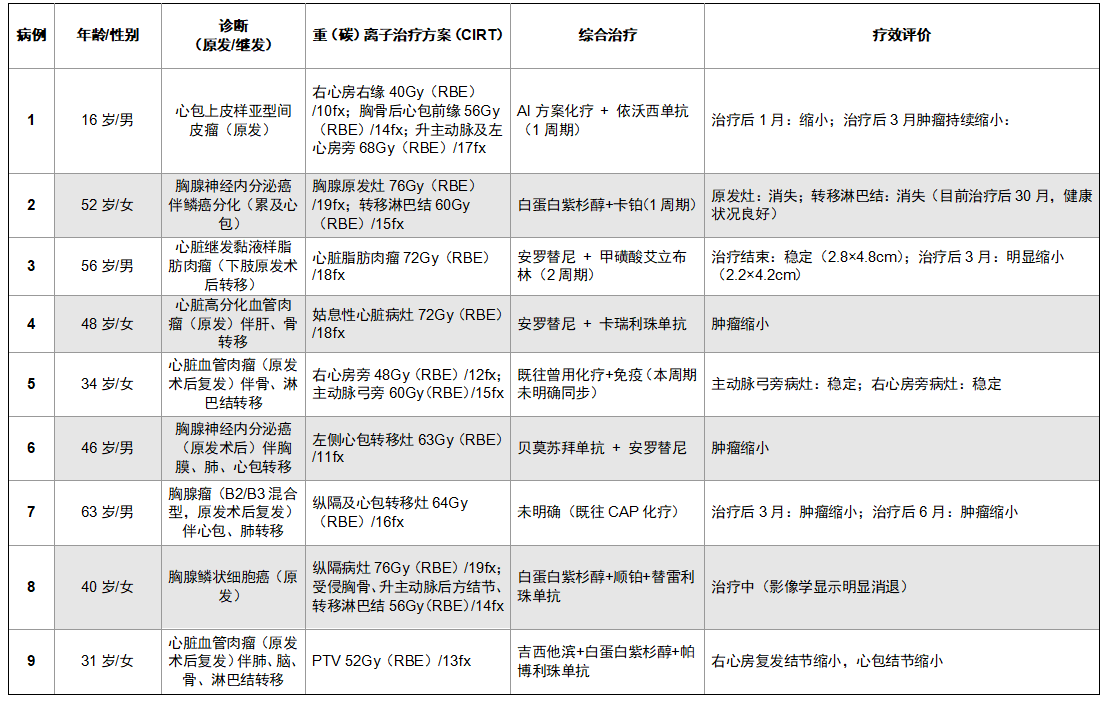
List of Typical Cases
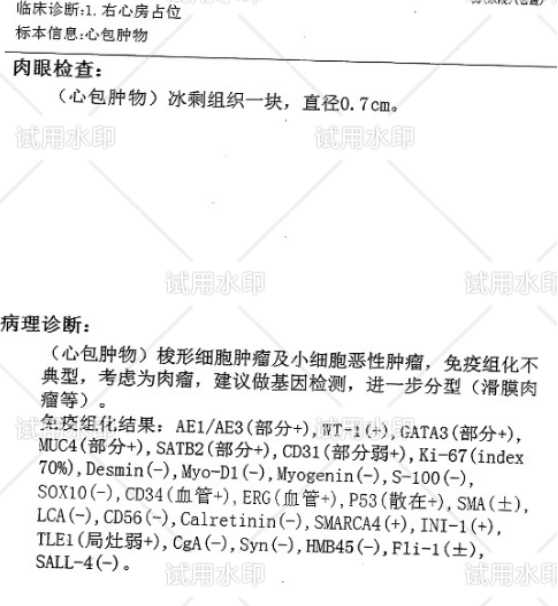
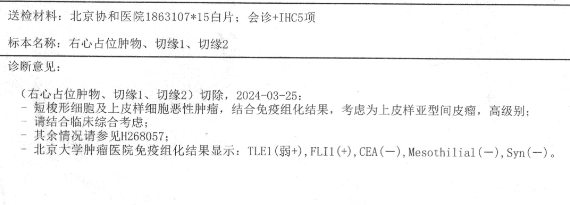
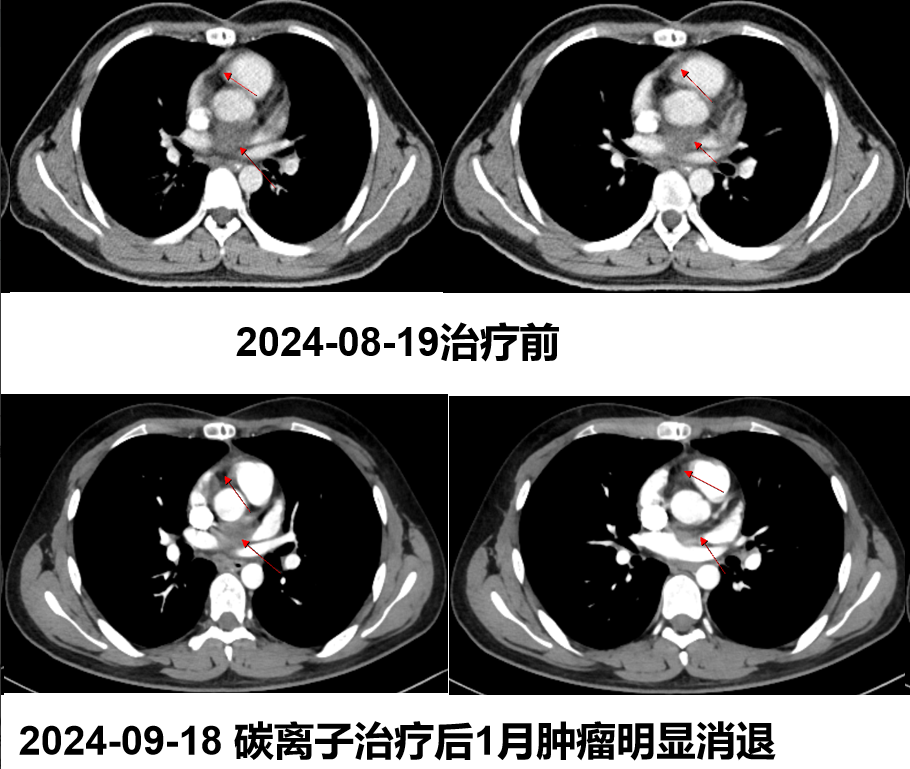
1: A 16-year-old boy with recurrent pericardial mesothelioma after surgery
Xiao Chen (pseudonym), a 16-year-old patient, experienced recurrence just one month after surgery for pericardial sarcoma. We administered carbon ion therapy combined with chemotherapy and immunotherapy. One month after treatment, the local lesion remained stable. At three months, although distant progression occurred, the local lesion had achieved effective control, and the patient's symptoms were significantly alleviated.
Case provided by: Director Zhang Yihe
Department: Radiation Oncology Center Ⅰ(International Medical Department Ⅰ)
2: A 56-year-old male with cardiac metastasis of lower extremity liposarcoma
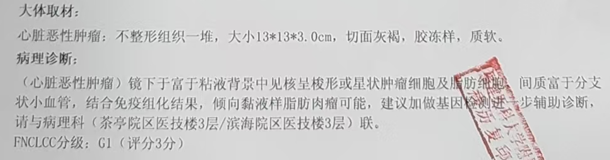
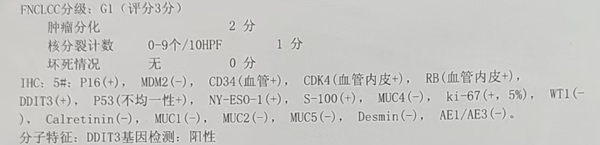
Mr. Wei, male, 56 years old, was admitted with the chief complaint of "diagnosed with left lower extremity liposarcoma for over 11 years, and 2 months post-surgery for pericardial metastasis." The patient initially presented on March 24, 2014, due to "a mass in the left calf noted for 2 months" and underwent "extended resection of the left calf mass" on March 26, 2014. Postoperative pathology showed: (left calf) myxoid liposarcoma. On July 11, 2025, the patient underwent partial resection of a cardiac tumor under general anesthesia. Some adjacent large vessels were not resected. Postoperative pathology suggested: (cardiac mass) likely myxoid liposarcoma. From August 16, 2025, to September 6, 2025, the patient received 2 cycles of "epirubicin + ifosfamide" chemotherapy. On September 25, 2025, the patient presented to the Wuwei Heavy Ion Center.
Diagnoses:
- Secondary malignant tumor of the left ventricular wall of the heart
- Soft tissue malignancy of the lower extremity — myxoid liposarcoma (postoperative) pT2N0M0, stage IB; cT0N0M1, stage IV; DDIT3 positive KPS score: 90
Heavy (Carbon) Ion Treatment Plan
- From September 29, 2025, to October 23, 2025, the patient underwent carbon ion radiotherapy for cardiac liposarcoma with a radiation dose of 72 Gy(RBE)/18 fractions.
- Combined therapy: Concurrently, on September 29, 2025, and October 20, 2025, the patient received 2 cycles of "anlotinib + eribulin mesylate" therapy.
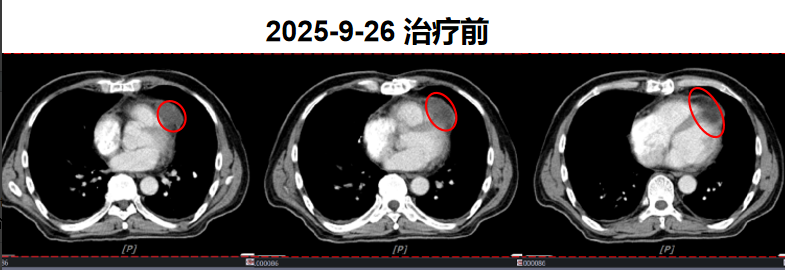
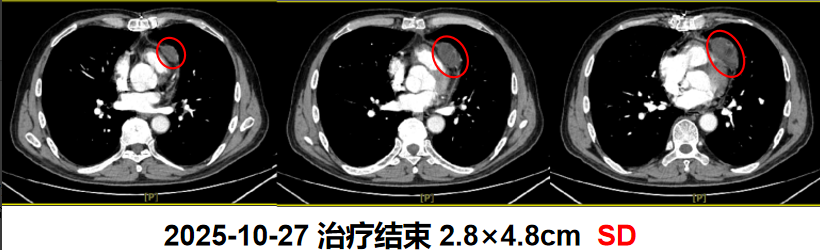
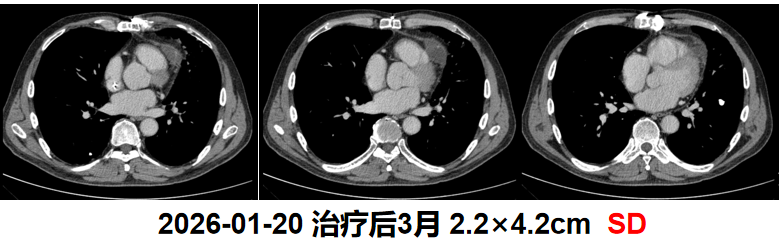
After treatment, the tumor has been slowly and continuously shrinking. The patient feels well and has no discomfort symptoms. In this case, the tumor was located directly in the myocardium of the left ventricular anterior wall, which posed a significant risk. Using heavy ion therapy, we precisely treated the tumor while preserving cardiac function.
Case provided by: Director Zhang Yihe
Department: Radiation Oncology Center Ⅰ(International Medical Department Ⅰ)
3: 48-year-old female with cardiac angiosarcoma
The patient experienced chest tightness and shortness of breath in January 2024 without obvious triggers. Chest and abdominal CT scans showed: 1. Massive pericardial effusion; 2. Bilateral pleural effusion with incomplete expansion of adjacent lung tissue on the right. On January 19, 2024, the patient presented to Peking Union Medical College Hospital. PET/CT revealed an irregular mass with heterogeneously increased metabolism near the right side of the aortic root at the level of the ascending aorta, the right atrial appendage, the right margin of the right atrium, and the proximal right side of the inferior vena cava, measuring approximately 4.1×6.0×3.9 cm, suggestive of a malignant lesion. Multiple liver metastases were also noted. A biopsy of the liver lesion was performed, and pathology suggested: well-differentiated angiosarcoma cannot be ruled out. The patient received one cycle of "anlotinib" therapy. From March 6, 2024, to July 31, 2024, the patient received 8 cycles of "liposomal doxorubicin + dacarbazine + toripalimab" therapy. After 2 cycles of chemotherapy, the response was assessed as SD (stable disease). After 6 cycles, the response was assessed as PD (progressive disease). The regimen was then changed to one cycle of "nab-paclitaxel + camrelizumab." Follow-up CT showed shrinkage of the right atrial mass, progression of liver lesions, and new T7 vertebral body bone destruction suggestive of possible metastasis. On September 25, 2024, the patient underwent interventional therapy for liver metastases, received one cycle of "camrelizumab" therapy, and started "anlotinib 8 mg" therapy on September 28, 2024. On October 8, 2024, the patient presented to our hospital.
Diagnoses:
- Cardiac malignancy — well-differentiated angiosarcoma, stage IV; KPS score: 80
- Secondary liver malignancy
- Secondary bone malignancy
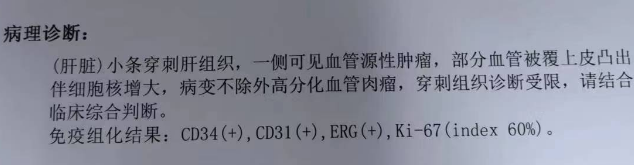
Treatment Plan at Wuwei Heavy Ion Center:
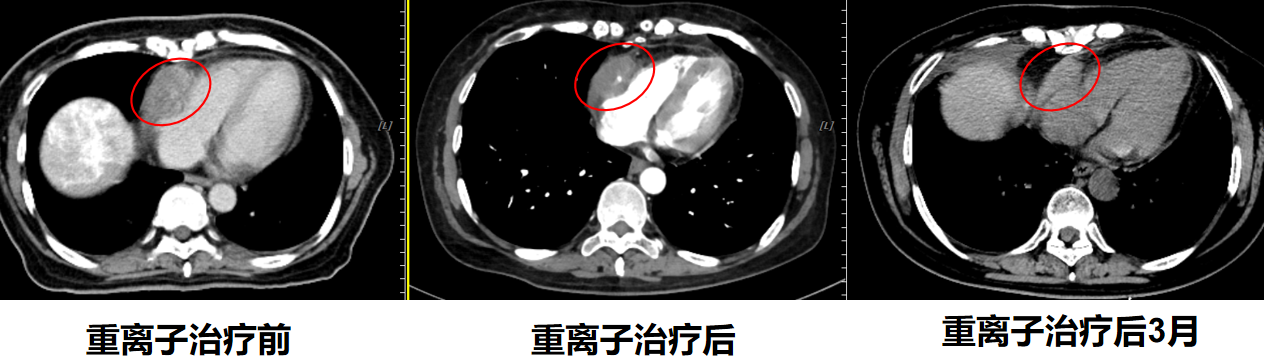
- Heavy (carbon) ion radiotherapy: Cardiac lesion dose of 72 Gy (RBE)/18 fractions.
- Continued combined systemic therapy: Anlotinib + Camrelizumab.
Case provided by: Dr. Zhang Yanshan
Department: Radiation Oncology Center Ⅰ(International Medical Department Ⅰ)
4: 34-year-old female with cardiac sarcoma
Ms. Cui, 34 years old, was admitted with the chief complaint of "diagnosed with cardiac sarcoma for over 1 year." In early October 2023, the patient experienced chest tightness and vomiting without obvious triggers. On November 10, 2023, a cardiac MRI showed: a tumor on the lateral wall of the right atrium with significant rim enhancement, measuring approximately 25.0 mm × 21.6 mm × 32.2 mm, invading the adjacent visceral pericardium, suggestive of a malignant tumor, possibly right atrial angiosarcoma. On December 6, 2023, the patient presented to Peking Union Medical College Hospital and underwent right atrial tumor resection, right atrial reconstruction, and De-Vega tricuspid valvuloplasty. Postoperative pathology revealed: (right atrial tumor) angiosarcoma. From December 28, 2023, to December 2024, the patient received nab-paclitaxel monotherapy. Regular follow-up during this period showed stable disease. On December 4, 2024, a PET/CT at Peking University Cancer Hospital revealed: post-surgery and post-treatment for right atrial sarcoma: (1) An abnormal hypermetabolic nodule/lymph node between the inferior vena cava and the right atrium, suspicious for malignancy (recurrence/metastasis); a metabolically active small lymph node in mediastinal zone 7, requiring close follow-up to rule out metastasis. (2) Bone metastasis in the right clavicle. Metabolically active foci in the T4-5 vertebrae, suggestive of metastasis. The patient then received 3 cycles of liposomal doxorubicin + dacarbazine combined with toripalimab. After 2 cycles, a chest CT on February 5, 2025, showed: post-surgery and post-treatment for right atrial sarcoma: the patchy hypodense area in the right atrial appendage remained largely unchanged; mediastinal group 4 lymph nodes had decreased in size from approximately 14×9 mm to approximately 8×5 mm. The patient currently experiences occasional palpitations. On February 20, 2025, she presented to the Wuwei Heavy Ion Center.
Diagnoses:
- Cardiac malignancy — angiosarcoma; KPS score: 90
- Secondary bone malignancy
- Secondary lymph node malignancy
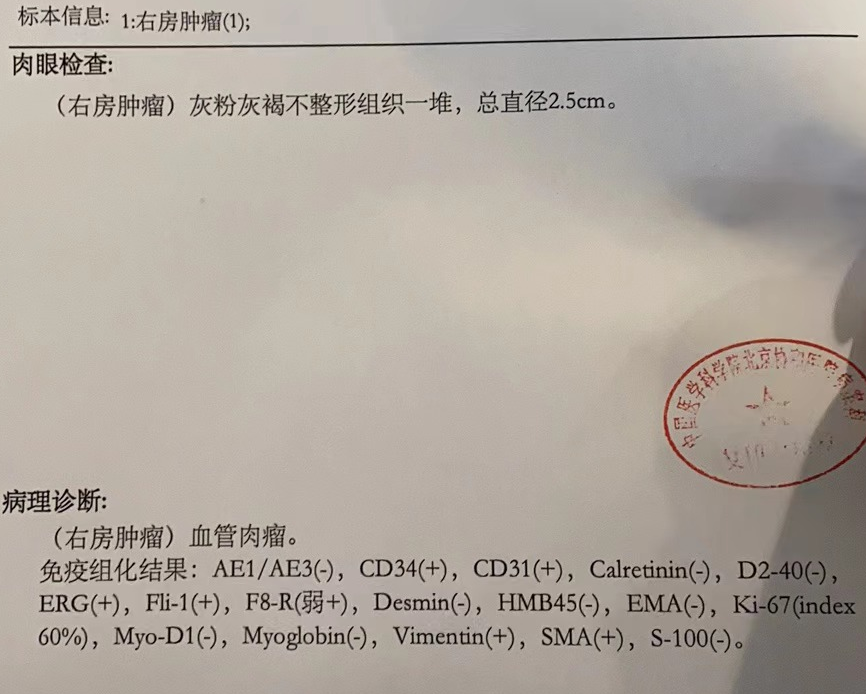
Treatment Plan at Wuwei Heavy Ion Center: Heavy (carbon) ion radiotherapy:
- Dose to the right atrial lesion: 48 Gy (RBE) / 12 fractions
- Dose to the lesion adjacent to the aortic arch: 60 Gy (RBE) / 15 fractions
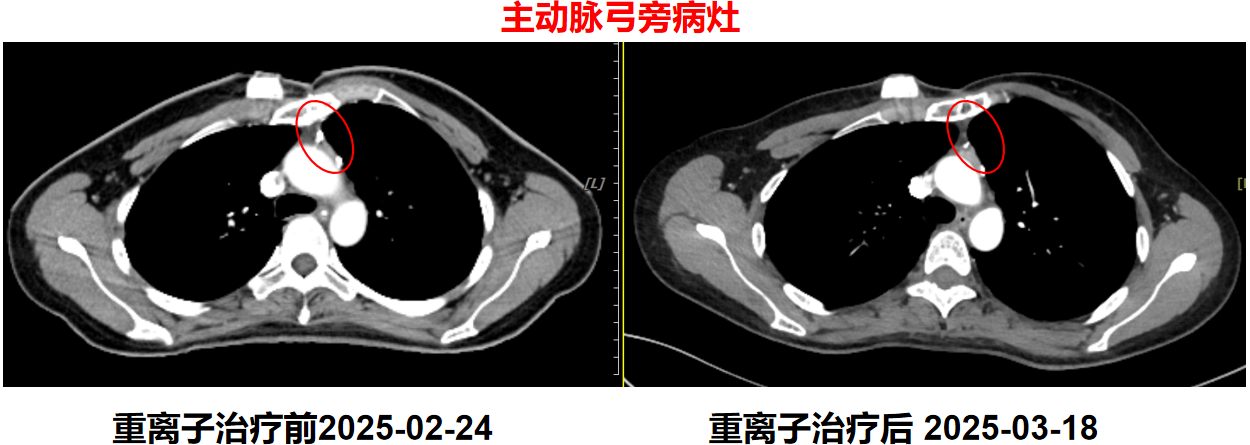
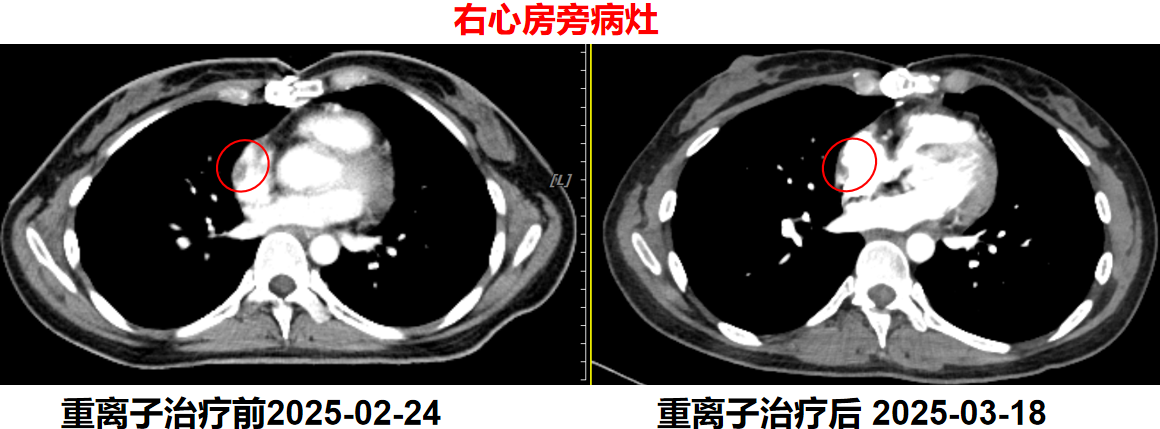
Case provided by: Director Zhang Yihe
Department: Radiation Oncology Center Ⅰ(International Medical Department Ⅰ)
Why are heavy ions particularly effective against cardiac tumors?
- Precision strike: The heart is located deep within the body and adjacent to critical structures (lungs, esophagus, great vessels). Heavy ions can attack tumors in a "stereotactic" manner while preserving cardiac function.
- Overcoming radioresistance: Sarcomas, mesotheliomas, and other tumor types are often insensitive to conventional radiotherapy. However, the high linear energy transfer (LET) of heavy ions can effectively eradicate these "refractory" cells.
- Synergy with systemic therapy: All of our patients receive a comprehensive treatment model combining heavy ion therapy with chemotherapy/targeted therapy/immunotherapy, addressing both local and systemic disease simultaneously, achieving a 1+1 > 2 effect.
Which cardiac tumor patients are suitable?
- Primary cardiac sarcomas (angiosarcoma, liposarcoma, etc.)
- Pericardial mesothelioma
- Thymic carcinoma, neuroendocrine carcinoma, and other tumors involving the heart or pericardium
- Cardiac metastases (e.g., cardiac metastasis from liposarcoma)
- Postoperative recurrence or inoperable cases
Conclusion: Bring hope to more patients
In the past, the question cardiac tumor patients asked most often was: "Doctor, is there still any hope for me?"
Today, at the Wuwei Heavy Ion Center, we can answer with confidence: "Yes."
As of April 2026, Professor Zhang Yanshan at the Wuwei Heavy Ion Center has treated over 2,000 patients with heavy ion therapy, making him the physician with the highest number of heavy ion treatments completed in China. He has treated more than 100 different disease types. Among these, heavy (carbon) ion therapy for cardiac malignancies has not yet been publicly reported elsewhere in the world in the context of heavy (carbon) ion treatment. Professor Zhang Yanshan has completed heavy (carbon) ion therapy for 9 patients with cardiac malignancies, covering various pathological types including angiosarcoma, leiomyosarcoma, myxoid liposarcoma, thymic carcinoma, and mesothelioma. Most of these were "refractory" cases involving postoperative recurrence or failure of conventional treatment. The local tumor control rate among these 9 cardiac tumor patients is 100%.
Through this article, I hope to help more doctors and patients learn about heavy (carbon) ion therapy — so that even when faced with seemingly insurmountable odds, there may still be a path forward: "Where the mountains end and rivers seem to block the way, a sudden turn reveals a land of bright willows and blooming flowers."

Wuwei Heavy Ion Center
The Wuwei Heavy Ion Center is a clinical application base for China's first heavy ion therapy system with complete independent intellectual property rights. The system is technically supported by the Institute of Modern Physics, Chinese Academy of Sciences, with clinical operations managed by Gansu Wuwei Cancer Hospital. The center officially began treating tumors in November 2018. To date, it has treated over 2,800 patients, with the range of treatable diseases expanding to more than 50 types, including lung cancer, pancreatic cancer, liver cancer, glioma, nasopharyngeal carcinoma, rectal cancer, various sarcomas, and others.
The center has achieved eight "global firsts" in technological innovation: pioneering precision treatment techniques under ventilator control, bladder cancer treatment under precise bladder volume control, and single-session treatment using surgically implanted spacers between organs and tumors; developing China's first 360° rotatable and height-adjustable ion radiotherapy chair; and being the first in the world to complete multiple cases of heavy ion therapy for cardiac tumors, among others.
The center leverages 30 research platforms, including the CAS Key Laboratory of Heavy Ion Radiation Biology and the University of Sydney Biomedical Data Analysis and Visualization Laboratory, and has conducted clinical research on more than 30 major disease types. To date, the center has published nine monographs, including the Standard Operating Procedure for Carbon Ion Radiotherapy, establishing a comprehensive knowledge system covering physical technology, clinical diagnosis and treatment, and health management.
Author: Zhang Yanshan (Director of Wuwei Heavy Ion Center)
Reviewer: Zhang Yanshan
Date: April 17, 2026