
Wuwei Heavy Ion Center: 78 Cases of Esophageal Cancer Treated with Heavy (Carbon) Ion Therapy
Wuwei Heavy Ion Center: 78 Cases of Esophageal Cancer Treated with Heavy (Carbon) Ion Therapy
I. Statistics on Basic Information
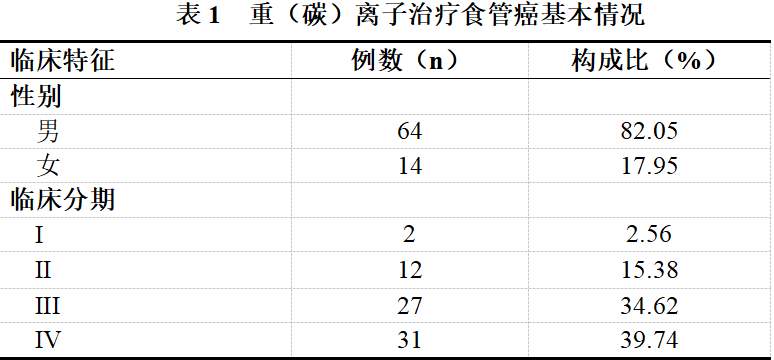
As of March 5, 2026, a total of 78 esophageal cancer patients have been treated. Among them, there were 64 males and 14 females, with a mean age of 60.86±8.84 years (range: 47 to 86 years). According to clinical staging, there were 2 cases of stage I, 12 cases of stage II, 27 cases of stage III, and 31 cases of stage IV (Table 1).
II. Examples of Typical Medical Cases
Case 1: Patient Zhang xx, male, 60 years old, from Xuzhou, Jiangsu Province. Diagnosed with esophageal cancer for over 3 months. In February 2022, the patient underwent a chest CT at Xuzhou Cancer Hospital, which revealed an occupying lesion in the lower thoracic esophagus. Gastroscopy showed a neoplasm in the lower esophagus; pathological examination confirmed squamous cell carcinoma. The patient received two cycles of "carboplatin + albumin-bound paclitaxel" chemotherapy with no significant effect. In April 2022, follow-up gastroscopy revealed an irregular mucosal elevation extending from approximately 25 cm from the incisors to the cardia, with firm texture, easy bleeding upon contact, and luminal stenosis. In May 2022, PET-CT showed: 1. Significantly increased glucose metabolism in the primary lesion of the mid-lower esophagus; multiple enlarged lymph nodes in the right upper mediastinum, paratracheal region, and hepatogastric space with moderately increased metabolism, suspected metastases; a nodular lesion in the left adrenal gland with significantly increased metabolism, suspected metastasis. Multiple lymph node metastases in the neck and abdomen. Diagnosis: Mid-lower esophageal squamous cell carcinoma (protruding type) with multiple lymph node metastases, left adrenal metastasis, left thyroid metastasis, cT4N2M1, Stage IV. KPS score: 70, ECOG score: 2. On May 20, 2022, the patient was only able to consume semi-liquid foods and experienced generalized weakness, and was admitted to our hospital for further treatment. During heavy ion therapy, the patient gained 10 kg in weight.
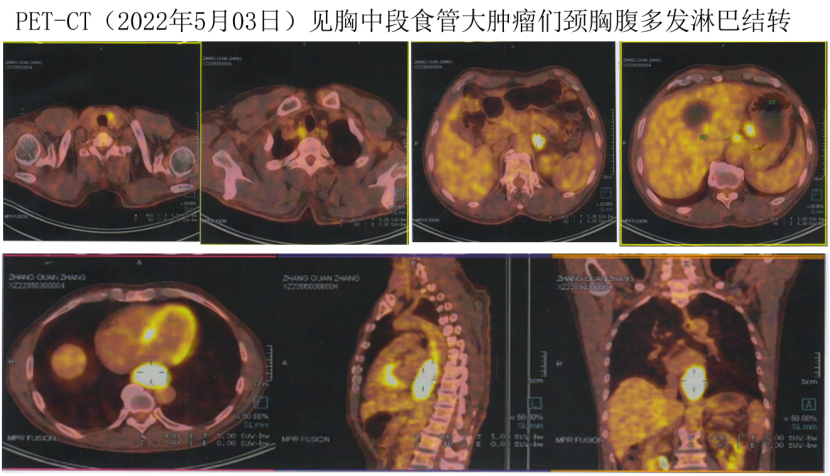
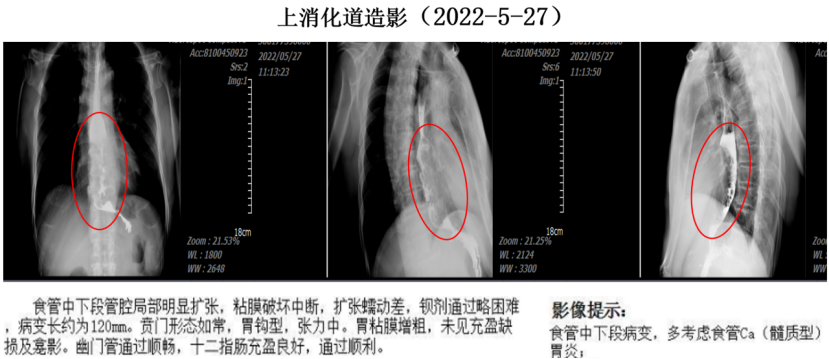
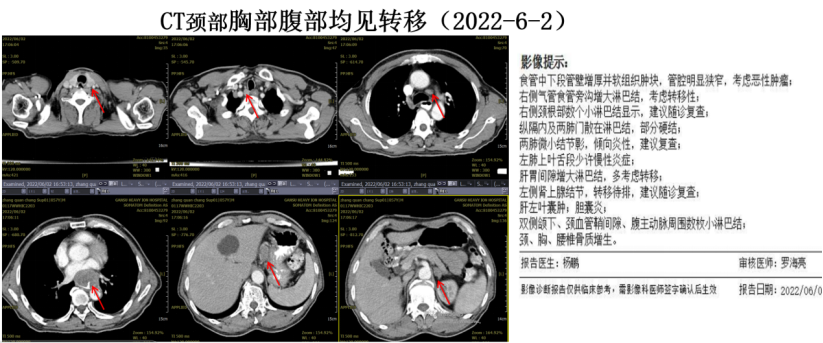
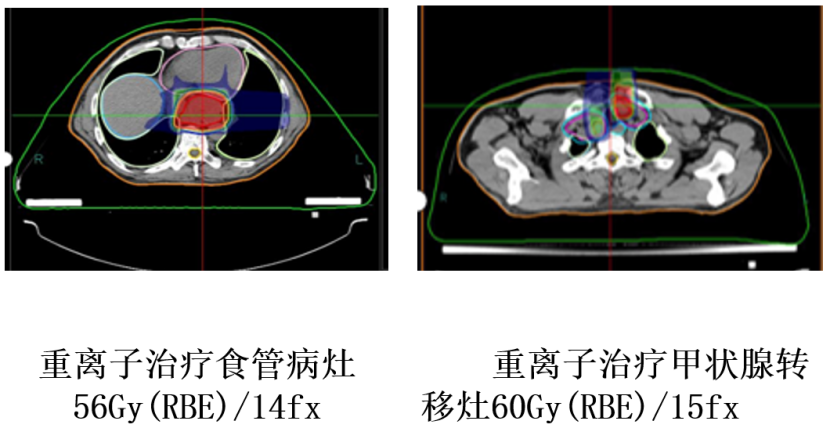
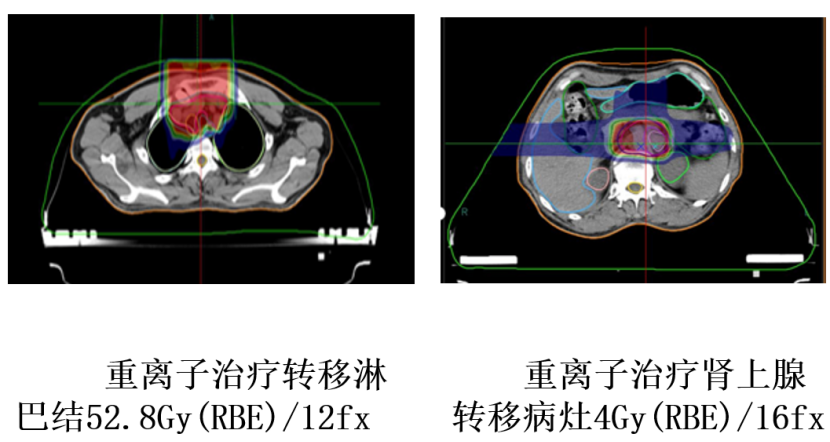
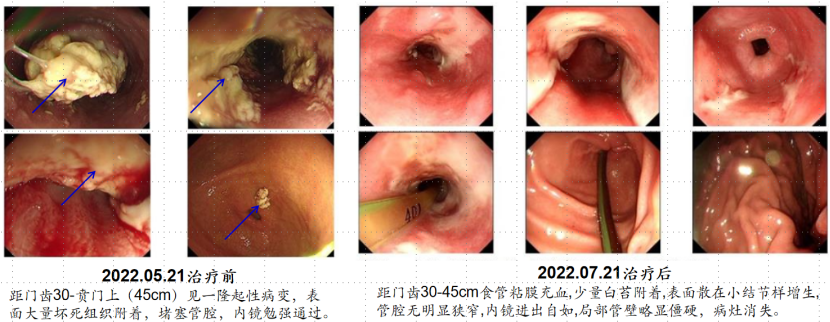
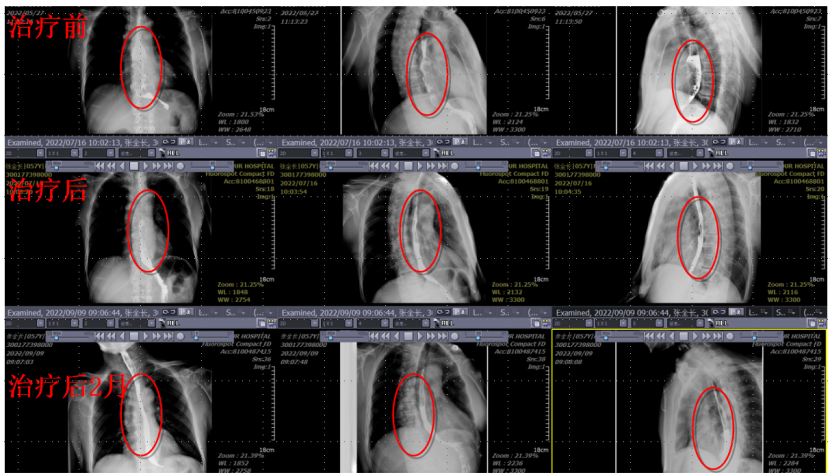
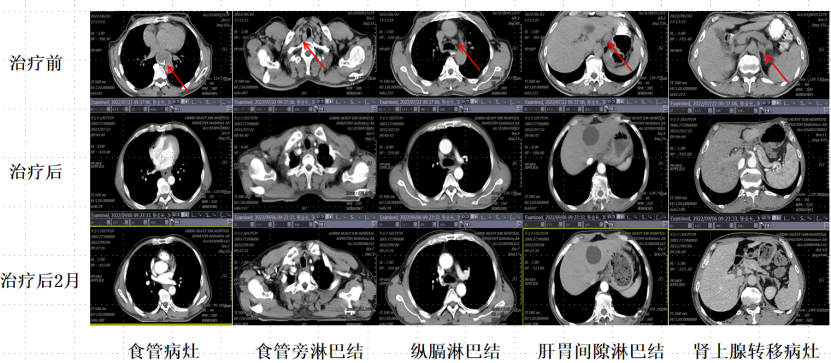
This case involved a very advanced stage of esophageal cancer. After receiving extensive heavy ion therapy, the patient achieved good outcomes and long-term survival. The tumor disappeared, and the patient's physical condition is good.
Case provided by: Director Zhang Yihe
Department: Radiation Oncology Center Ⅰ(International Medical Department Ⅰ)
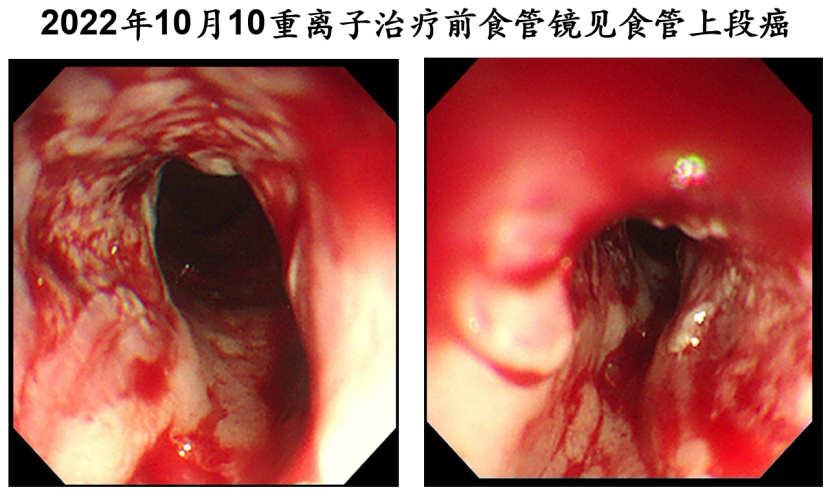
Case 2: Su xx, male, 73 years old, professor at a university in Lanzhou. In June 2022, the patient experienced mild dysphagia but did not undergo further examination due to the COVID-19 pandemic. On August 16, 2022, the patient was admitted to Lanzhou University Second Hospital, where an upper gastrointestinal series revealed eccentric narrowing with a filling defect in the upper esophagus, with a lesion length of approximately 2.1 cm. Biopsy confirmed esophageal squamous cell carcinoma. On August 30, 2022, the patient was admitted to Tianjin Cancer Hospital, where gastroscopy showed luminal narrowing approximately 20 cm from the incisors. CT of the neck and chest revealed localized thickening of the esophageal wall at the proximal esophagus, along with right cervical lymph node metastasis. Multiple enlarged lymph nodes were visible in the mediastinum. An upper gastrointestinal series showed luminal narrowing in the upper esophagus, rigidity of the esophageal wall, mucosal disorganization, and a filling defect of approximately 3.2 cm. The diagnosis was esophageal cancer, cT2N1M0, Stage II. As of the time of this report, 40 months after heavy (carbon) ion therapy, the patient's esophageal tumor has completely disappeared, the patient is eating normally, and overall physical condition is good.
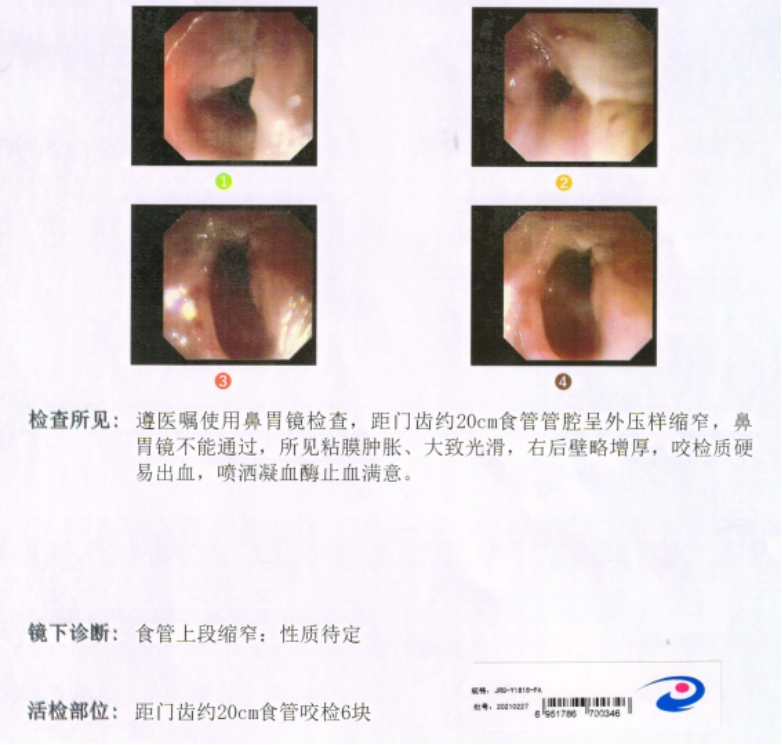
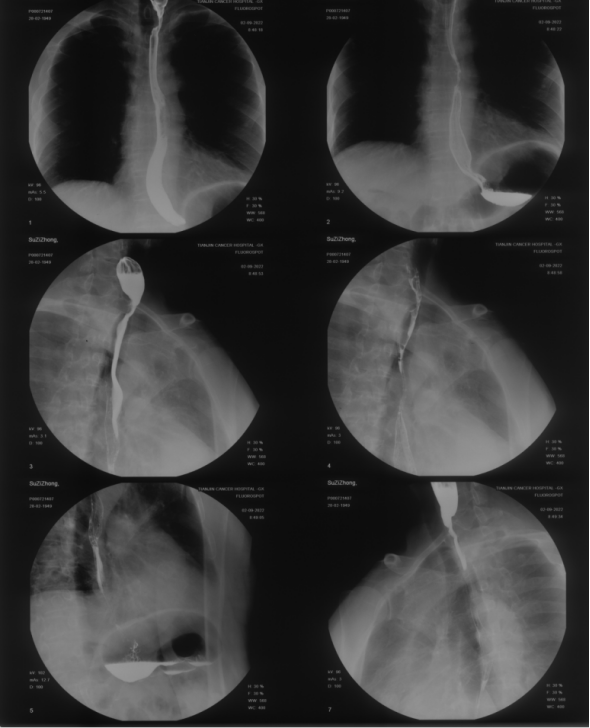
On September 2, 2022, an upper gastrointestinal series revealed luminal narrowing in the upper esophagus, rigidity of the esophageal wall, mucosal disorganization, and a filling defect of approximately 3.2 cm.
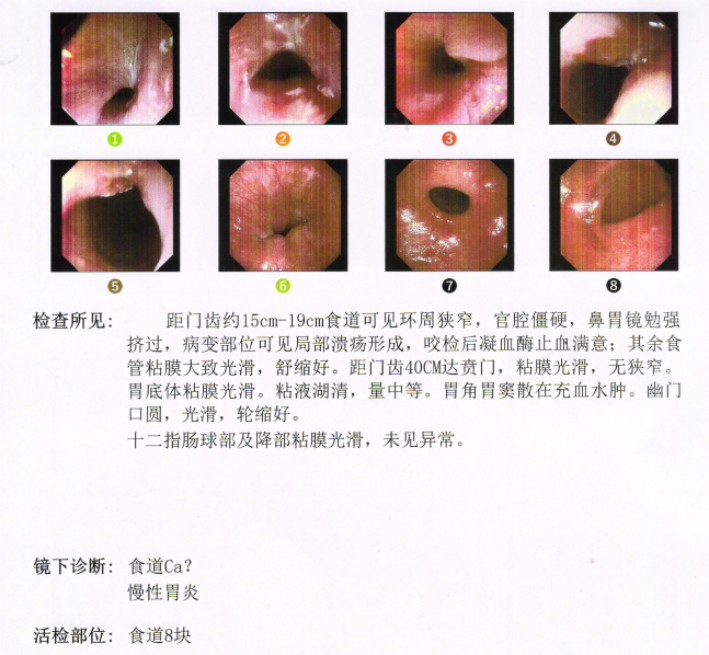
The picture above shows another esophagoscopy examination on September 10, 2022
The following picture shows the image after heavy (carbon) ion therapy
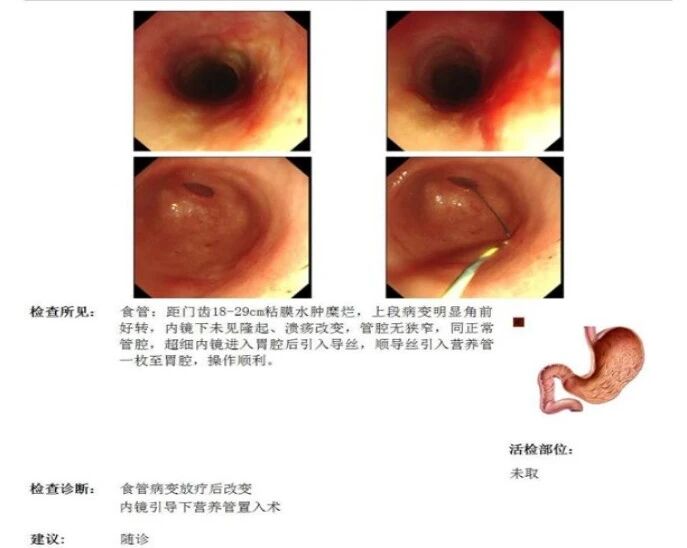
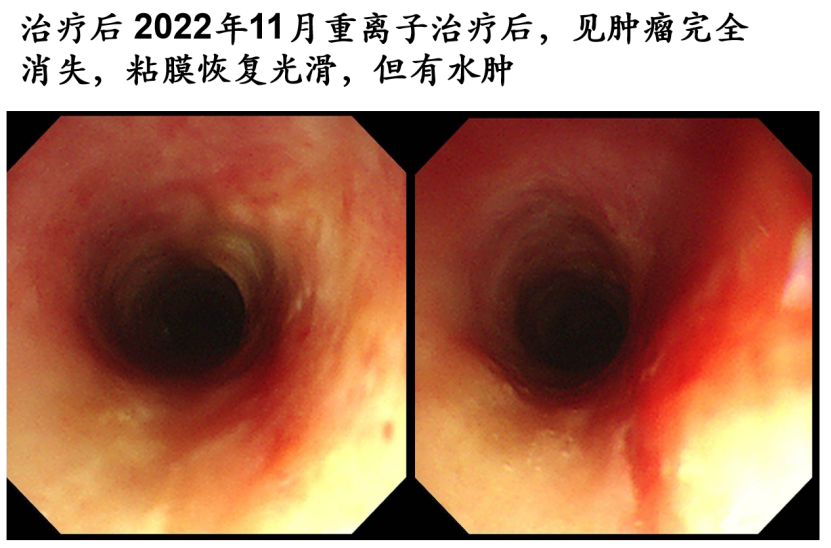
Forty months after heavy (carbon) ion therapy for the patient's upper esophageal cancer, the esophageal tumor has completely disappeared, the patient is eating normally, and overall physical condition is good.
Case provided by: Dr. Zhang Yanshan
Department: Radiation Oncology Center Ⅰ(International Medical Department Ⅰ)
III. Survival Situation
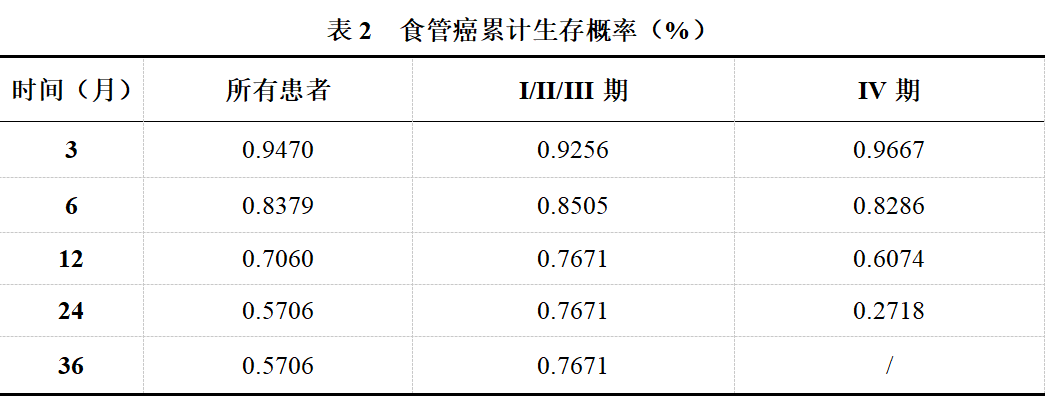
For the 78 patients with esophageal cancer, the follow-up period ranged from 0 to 47 months. Survival analysis was performed using the Kaplan-Meier method. The cumulative survival probability at the end of treatment was 1. The cumulative survival probabilities at 12, 24, and 36 months after treatment were 0.7060, 0.5706, and 0.5706, respectively (Table 2).
Among them, 41 patients with stage I–III esophageal cancer had a follow-up period ranging from 0 to 47 months. Kaplan-Meier survival analysis showed that the cumulative survival probability at the end of treatment was 1. The cumulative survival probabilities at 12, 24, and 36 months after treatment were 0.7671, 0.7671, and 0.7671, respectively (Table 2, Figure 1). For the 31 patients with stage IV esophageal cancer, the follow-up period ranged from 0 to 31 months. Kaplan-Meier survival analysis revealed a median survival time of 14 months (95% CI: 3–25). The cumulative survival probability at the end of treatment was 1, and the cumulative survival probabilities at 12 and 24 months after treatment were 0.6074 and 0.2718, respectively (Table 2, Figure 1).
IV. Conclusion
This study conducted a retrospective analysis of 78 patients with esophageal cancer treated at the Wuwei Heavy Ion Center. The results demonstrate that heavy (carbon) ion therapy has achieved encouraging preliminary efficacy in the treatment of esophageal cancer. The cumulative survival probabilities for the entire cohort at 12, 24, and 36 months were 70.60%, 57.06%, and 57.06%, respectively. Among patients with stage I–III disease, the 36-month survival probability reached 76.71%, while patients with stage IV disease achieved a median survival time of 14 months, highlighting the unique advantages of heavy ion therapy in the treatment of locally advanced and advanced esophageal cancer. Heavy (carbon) ion therapy for esophageal cancer eliminates concerns about radiation pneumonitis and overcomes tumor radioresistance. With accumulated experience, our data show that outcomes with heavy (carbon) ion therapy for esophageal cancer are continuously improving, with at least a 20% increase in survival compared to other treatments. Going forward, we aim to accelerate the pace of treatment volume.
Currently, large-scale clinical reports on heavy ion therapy for esophageal cancer remain limited internationally, and related research is still in the exploratory phase. Against this backdrop, the Wuwei Heavy Ion Center has consistently adhered to a prudent approach of "steady progress for long-term success." By strictly controlling indications and standardizing treatment protocols, the center has steadily accumulated cases and diligently advanced clinical practice and follow-up work. These real-world data not only lay a solid foundation for future prospective studies but also provide important references for the clinical application of heavy ion therapy for esophageal cancer in China.
With continuous accumulation of clinical experience and ongoing optimization of the treatment system, we have reason to believe that heavy ion therapy will demonstrate even broader prospects in the field of esophageal cancer. In the next phase, the center will accelerate the implementation of prospective clinical studies to further clarify optimal dose fractionation patterns, combination treatment strategies, and selection of optimal patient populations for heavy ion therapy in esophageal cancer. Additionally, clinical practice has shown that heavy ion therapy significantly reduces the risk of normal tissue damage such as radiation pneumonitis and effectively overcomes radioresistance, offering patients with esophageal cancer a safer and more effective treatment option.
Contributors: Chen Xuelian, Li Pengqing (Cancer Registration and Follow-up Office)
Reviewer: Zhang Yanshan (Vice President of Gansu Wuwei Cancer Hospital)
Date: March 21, 2026