
Wuwei Heavy Ion Center: Carbon Ion Therapy for 65 Cases of Small Cell Lung Cancer
Wuwei Heavy Ion Center: Carbon Ion Therapy for 65 Cases of Small Cell Lung Cancer
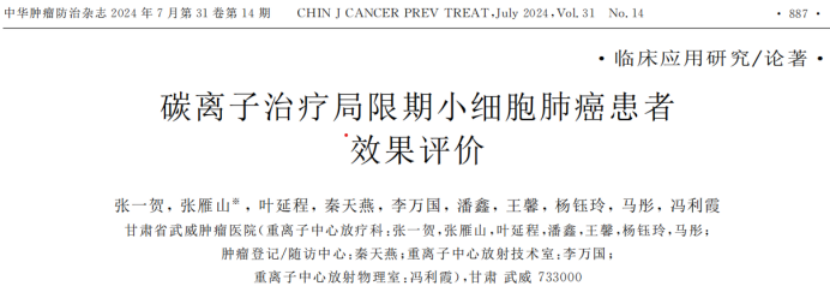
Wuwei Heavy Ion Center is China's first heavy (carbon) ion therapy center with independent intellectual property rights. Since commencing patient treatments in November 2018, we have accumulated eight years of practice, culminating in the compilation of heavy (carbon) ion therapy data and clinical experience tailored to the characteristics of the Chinese population. The application of heavy (carbon) ion therapy for small cell lung cancer has not yet been reported internationally. Through our clinical practice, we have observed remarkable efficacy of this modality in treating small cell lung cancer. This finding was initially reported in the Chinese Journal of Cancer Prevention and Treatment (Volume 31, Issue 14, July 2024) under the title Efficacy Evaluation of Carbon Ion Therapy in Patients with Limited-Stage Small Cell Lung Cancer (First Author: Director Zhang Yihe; Co-First Author: Professor Zhang Yanshan; Corresponding Author: Dean Ye Yancheng). The current study incorporates a longer follow-up period and a larger patient cohort to reassess and summarize the therapeutic outcomes, thereby offering a superior treatment option for small cell lung cancer.
I. Basic Information on Small Cell Lung Cancer
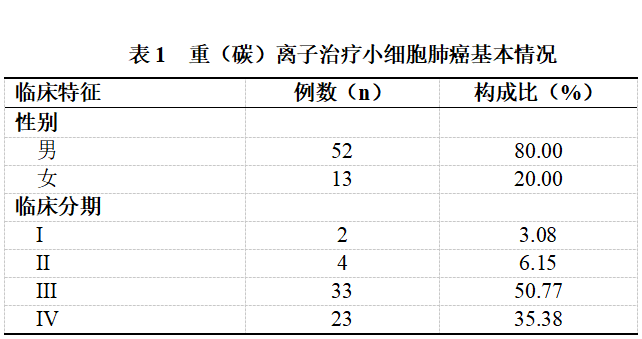
As of March 5, 2026, a total of 65 patients with small cell lung cancer have been treated. This cohort comprised 52 males and 13 females, with a mean age of 60.94±12.19 years (range, 24 to 84 years). According to clinical staging, there were 2 cases of stage I, 4 cases of stage II, 33 cases of stage III, and 23 cases of stage IV disease (see Table 1).
II. Typical Cases
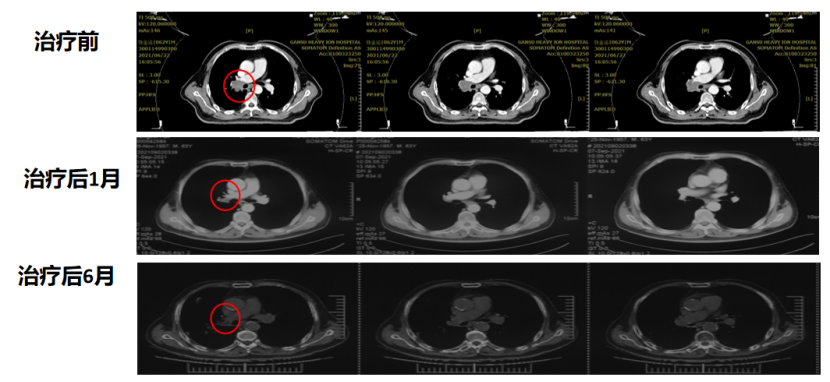
Case 1: Mr. Zhang, male, 63 years old, diagnosed with right lung small cell lung cancer (T2bN2M0, stage IIIA). At 48 months post-treatment with heavy (carbon) ion therapy, the patient remains in good condition as of the latest follow-up.
Case provided by: Director Zhang Yihe
Department: Radiation Oncology Center Ⅰ(International Medical Department Ⅰ)
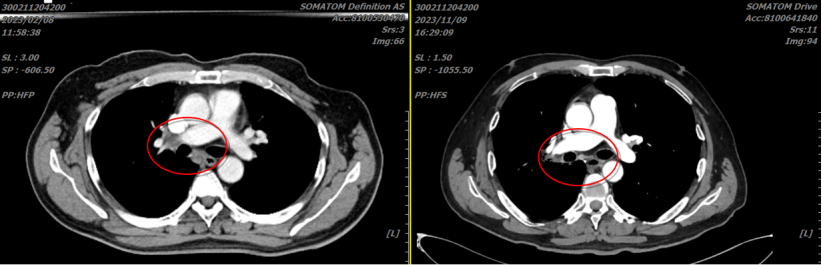
Case 2: Mr. Yang, male, 62 years old, diagnosis: 1. Small cell lung cancer; cT4N2M0 stage III; KPS score: 90; 2. Personal history of rectal malignancy; 3. Left bundle branch block; 4. Type 2 diabetes mellitus. Underwent pulmonary heavy (carbon) ion radiotherapy on 2023-02-14, and concurrent prophylactic cranial irradiation with photons. As of March 2026, 37 months after treatment, the patient is in good condition. The following figure shows a comparison before treatment and 9 months after treatment. The red circles indicate the changes of the primary hilar tumor and metastatic lymph nodes before and after treatment.
Case provided by: Dr. Ma Tong
Department: Radiation Oncology Center Ⅰ(International Medical Department Ⅰ)
Case 3: Ms. Wang, female, 69 years old, from Changji, Xinjiang. Diagnosis: 1. Malignant neoplasm of the left lung, small cell carcinoma, cT3N2M1b stage IVA (extensive stage), KPS score: 90; 2. Liver metastasis. The patient was found to have a soft tissue mass in the upper lobe of the left lung and a metastatic nodule in the inferior segment of the left lobe of the liver during a physical examination in August 2023. A puncture biopsy on 2023-10-31 confirmed small cell carcinoma, Ki-67 (80%+). The patient received heavy (carbon) ion radiotherapy at our hospital from 2023-12-20 to 2024-01-16; received heavy (carbon) ion radiotherapy for the liver metastasis from 2023-12-25 to 2023-12-27; concurrently received prophylactic cranial irradiation; and received 2 cycles of concurrent chemotherapy with the EP regimen from 2023-12-14 to 2023-12-17 and from 2024-01-04 to 2024-01-07. As of March 16, 2026, the patient is in good condition.
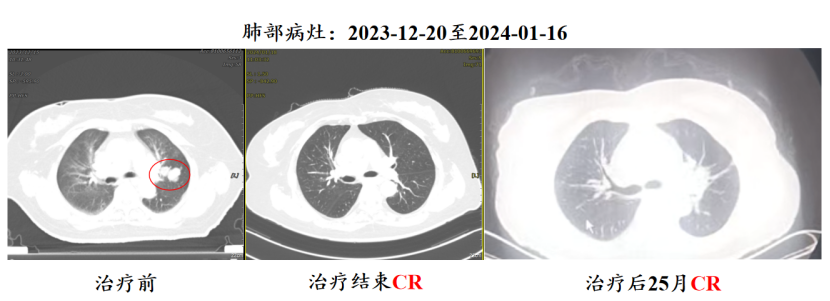
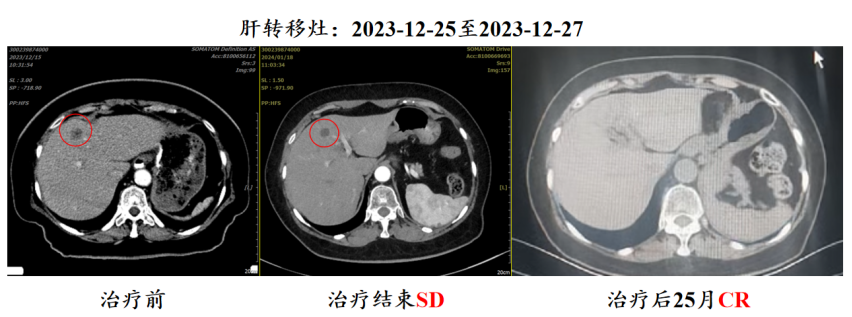
Case provided by: Dr. Yang Yuling
Department: Radiation Oncology Center Ⅰ(International Medical Department Ⅰ)
Case 4: Ms. Li, female, 68 years old, from Bengbu City, Anhui Province. Diagnosis: 1. Malignant neoplasm of the left lung, small cell neuroendocrine carcinoma, cT2N1M0 stage IIB, KPS score: 90; 2. Coronary artery stenosis. In January 2024, a CT coronary angiography performed due to chest pain revealed a mass in the left lower pulmonary hilum, approximately 3.3 cm in size. A bronchoscopic biopsy was performed, and the pathology report indicated small cell neuroendocrine carcinoma, Ki-67 (+, approximately 90%). Following the diagnosis, the patient received 3 cycles of chemotherapy with etoposide and carboplatin. In March 2024, the patient underwent heavy (carbon) ion therapy at our center. As of March 16, 2026, 24 months after heavy (carbon) ion therapy, the patient remains in good condition upon follow-up.
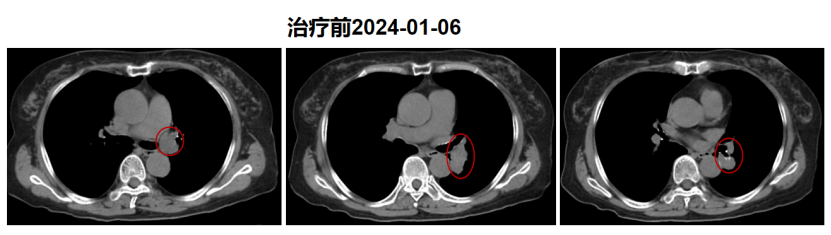
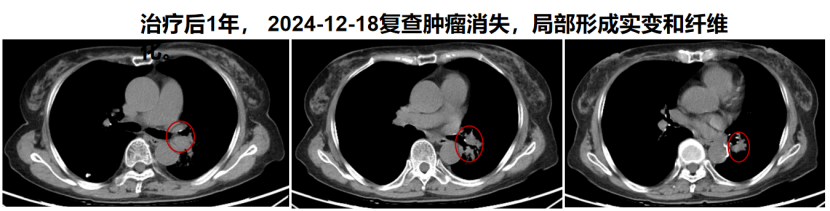
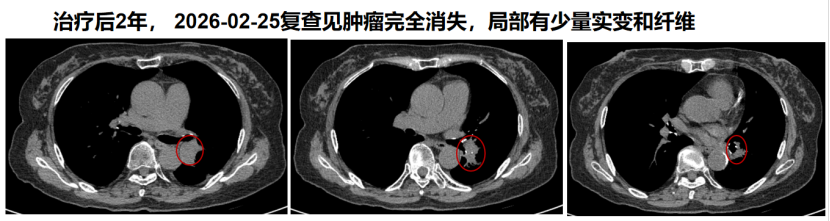
Case provided by: Dr. Ma Tong
Department: Radiation Oncology Center Ⅰ(International Medical Department Ⅰ)
III. Survival Status of Small Cell Lung Cancer
For the 65 patients with small cell lung cancer, the follow-up period ranged from 0 to 52 months. Kaplan-Meier survival analysis yielded a median survival time of 16±4.62 months. The cumulative survival probability was 1 at the end of treatment, and was 0.5785, 0.3636, and 0.2727 at 12, 24, and 36 months post-treatment, respectively (see Table 2). The local control rate at the heavy ion treatment site for small cell lung cancer was 100%.
Among these, 33 patients had stage III small cell lung cancer, with a follow-up period ranging from 0 to 52 months. Kaplan-Meier survival analysis showed a median survival time of 20±3.24 months. The cumulative survival probability was 1 at the end of treatment, and was 0.7030, 0.4686, and 0.3515 at 12, 24, and 36 months post-treatment, respectively (see Table 2, Figure 1). For the 23 patients with stage IV small cell lung cancer, the follow-up period ranged from 0 to 26 months. Kaplan-Meier survival analysis showed a median survival time of 10±2.41 months. The cumulative survival probability was 1 at the end of treatment, and was 0.4453 and 0.2968 at 12 and 24 months post-treatment, respectively (see Table 2, Figure 1). The local control rate at the heavy ion treatment site for small cell lung cancer was 100%.
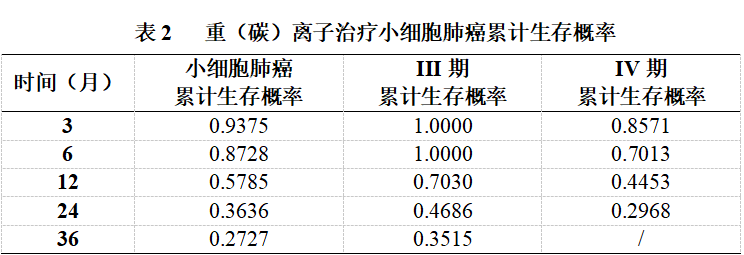
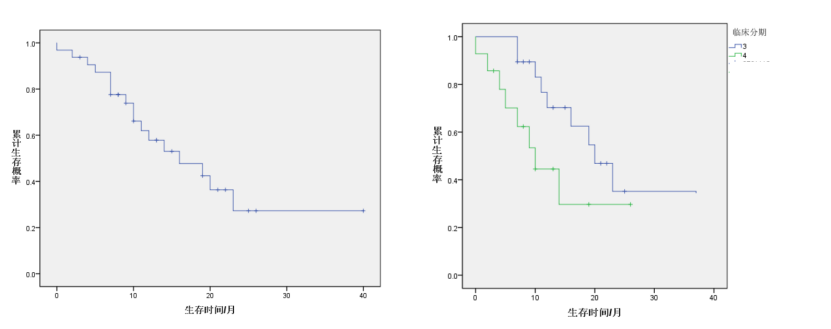
Figure 1 Survival curve from the end of treatment to 36 months
Ⅳ. Efficacy and Safety
This clinical analysis of 65 patients with small cell lung cancer (SCLC) treated with heavy (carbon) ion therapy at the Wuwei Heavy Ion Center demonstrates a clear overall therapeutic effect, with significant differences observed across disease stages. Patients with stage III limited-stage disease derived particularly prominent benefits. For the entire cohort, the median survival time was 16±4.62 months, with cumulative survival probabilities of 57.85%, 36.36%, and 27.27% at 1, 2, and 3 years, respectively. Notably, among the 33 patients with stage III disease, the median survival time was 20±3.24 months, with corresponding 1-, 2-, and 3-year cumulative survival probabilities of 70.30%, 46.85%, and 35.15%. The local control rate at the heavy ion treatment site for SCLC was 100%. This indicates a superior long-term survival benefit for stage III patients compared to those with stage IV disease. For the 23 patients with stage IV disease, the median survival time was 10±2.41 months, with 1- and 2-year cumulative survival probabilities of 44.53% and 29.68%, respectively, still demonstrating a degree of survival improvement. Heavy (carbon) ion therapy offers a favorable local control rate and survival benefit for small cell lung cancer, with a reliable safety profile. It can be considered a preferred treatment option for SCLC, particularly for patients with stage III locally advanced disease. Future combination with systemic therapies such as chemotherapy and immunotherapy holds promise for further enhancing therapeutic outcomes.
V. Conclusions and Prospects
1. Preliminary Efficacy: Analysis of this cohort of 65 SCLC patients indicates that heavy ion therapy provides favorable local control and survival benefits for patients with stage III limited-stage disease. The long-term survival rate data are excellent.
2. Stage Disparity: The prognosis for patients with stage III disease is significantly better than for those with stage IV disease, which aligns with the natural history of the disease and its treatment objectives.
3. Sample Size and Follow-up Limitations: The sample size of this study is limited (n=65). Furthermore, the follow-up period for patients with stage IV disease is relatively short, meaning some long-term survival data are not yet mature. This may have a certain impact on the stability and precision of the statistical results.
4. Future Outlook: It is recommended to expand the sample size, extend the follow-up duration, and conduct multicenter prospective studies. Additionally, exploring optimization strategies that combine heavy ion therapy with chemotherapy and immunotherapy is a crucial direction for future research to further validate the efficacy of heavy (carbon) ion therapy for small cell lung cancer.
Wuwei Heavy Ion Center
Wuwei Heavy Ion Center is the clinical application base for China's first heavy (carbon) ion therapy system with complete independent intellectual property rights. It is technically supported by the Institute of Modern Physics, Chinese Academy of Sciences, and clinically operated by Gansu Wuwei Tumor Hospital. The center officially commenced cancer treatment in November 2018 and has since treated over 2,800 patients, with the range of treated diseases expanding to more than 50 types, including lung cancer, pancreatic cancer, liver cancer, glioma, nasopharyngeal carcinoma, rectal cancer, and various sarcomas.
As the only medical institution in the world operating two heavy ion therapy systems simultaneously, the center has achieved eight "world-first" innovations in technological development. These include pioneering precision treatment techniques under ventilator control, bladder cancer treatment technology under precise bladder volume control, and single-session treatment using surgically implanted spacer pads between organs and tumors. The center also developed China's first 360° rotating and lifting ion radiotherapy chair and completed the world's first cases of heavy (carbon) ion therapy for cardiac tumors.
Leveraging 30 research platforms, including the Key Laboratory of Heavy (Carbon) Ion Beam Radiation Biology of the Chinese Academy of Sciences and the Biomedical Data Analysis and Visualization Laboratory at the University of Sydney, the center has conducted over 30 clinical studies on major disease types. To date, the center has published nine monographs, including the Standard Operating Procedures for Carbon Ion Radiotherapy, establishing a comprehensive knowledge system covering physical technology, clinical diagnosis and treatment, and health management.
Contributor: Zhang Yanshan (Vice President of Gansu Wuwei Cancer Hospital)
Data Providers: Chen Xuelian, Li Pengqing (Cancer Registration and Follow-up Office)
Date: March 18, 2026