
Wuwei Heavy Ion Center Surpasses 2,800 Treatments, Covering Over 100 Disease Types
Wuwei Heavy Ion Center Surpasses 2,800 Treatments, Covering Over 100 Disease Types
Wuwei Heavy Ion Center is equipped with the country's first heavyweight device with independent intellectual property rights—the heavy ion therapy system. Since the first patient received treatment in November 2018, as of March 15, 2026, the center has completed over 2,800 treatments covering more than 100 disease types. On February 23, 2026, CCTV-13's "Morning News" program aired a special report titled "Accelerating the Application of Cutting-Edge Technology to Benefit the People," in which Yang Jiancheng, Deputy Director of the Institute of Modern Physics, Chinese Academy of Sciences, provided a detailed introduction to the operation of China's first medical heavy ion accelerator with independent intellectual property rights.
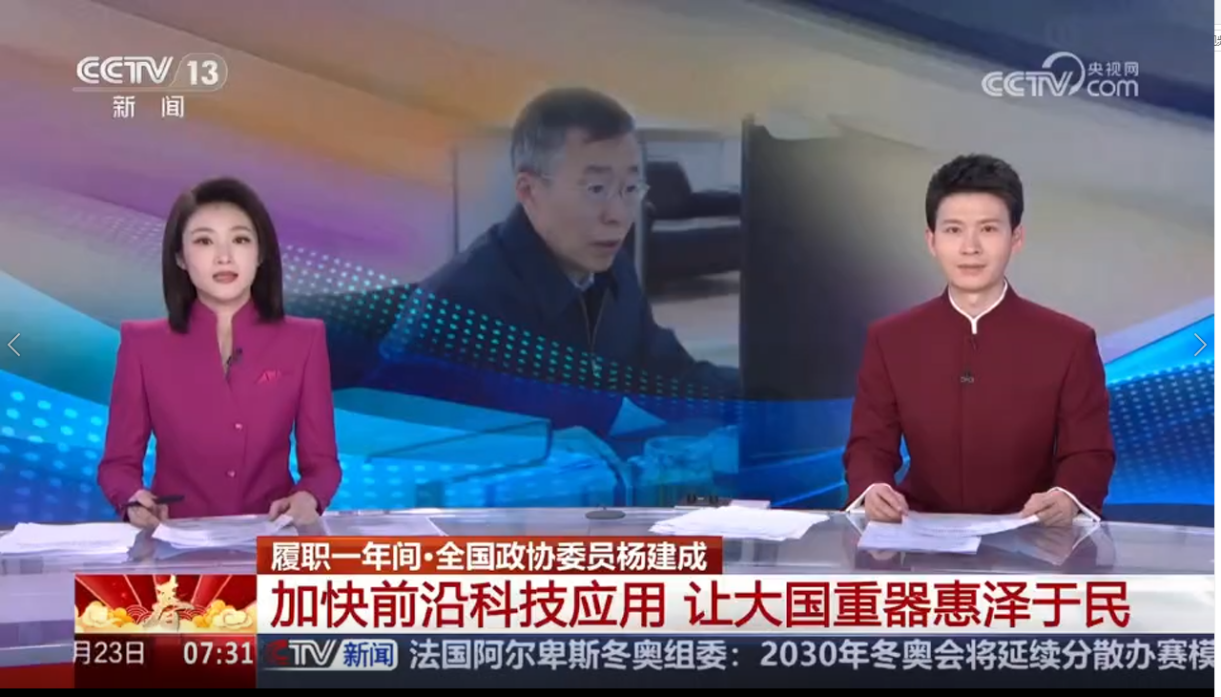
February 23, 2026, CCTV-13
Accelerating the Application of Cutting-Edge Technology to Benefit the People with National Heavyweight Equipment
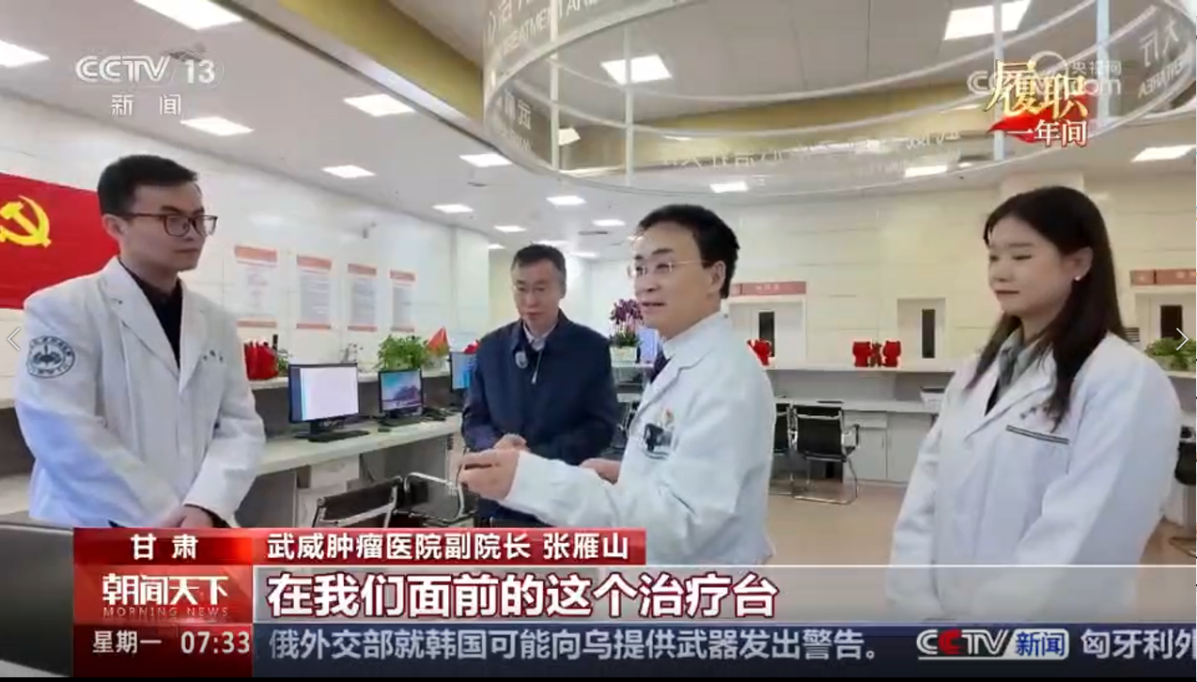
From "Technological Breakthrough" to "Clinical Accessibility":
Heavy Ion Therapy Service Capacity Continues to Soar
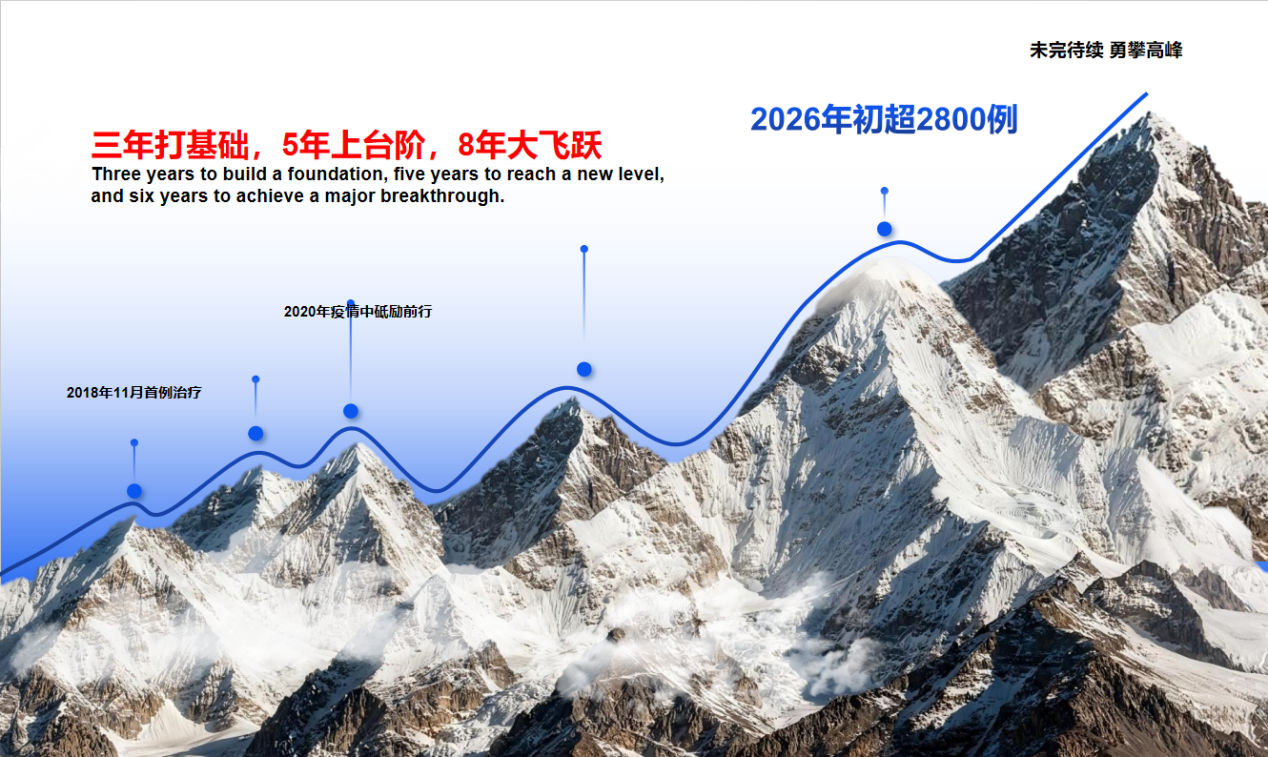
Over the past eight years, the Wuwei Heavy Ion Center has consistently prioritized quality and safety, continuously optimizing the clinical application of heavy ion therapy technology. Benefiting from the cost advantages and technological iterations of China's national heavyweight equipment, the annual treatment volume at the Wuwei Heavy Ion Center has steadily increased—from 200 cases in the initial operational phase to a current annual capacity exceeding 1,000 cases. As of the reporting date, the Wuwei Cancer Hospital has cumulatively treated over 2,800 patients with heavy ion therapy, and the treatment volume is now entering a phase of rapid growth.
More than 100 disease types have been treated. Ranked by number of cases treated, the top ten are: lung cancer, pancreatic cancer, liver cancer, esophageal cancer, chordoma, glioma, breast cancer, rectal cancer, adenoid cystic carcinoma, and prostate cancer. Other disease types treated include: cholangiocarcinoma, nasopharyngeal carcinoma (including nasopharyngeal sarcoma), bladder cancer, colon cancer, renal cancer, oral malignant tumors, soft tissue sarcoma of the extremities, cervical cancer, laryngeal cancer, pelvic soft tissue malignant tumors, mediastinal malignant tumors, tongue cancer, gastric cardia malignancies (including cardia cancer and malignant tumors of the gastric antrum), nasal and sinus malignant tumors, thymic malignancies, osteosarcoma, ovarian cancer, bone malignancies, meningioma, gastric cancer, malignant melanoma, hypopharyngeal malignancies, endometrial cancer, soft tissue tumors of the head and neck, gallbladder cancer, parotid gland malignancies, thyroid malignancies, other malignant tumors of the brain, ocular malignancies, secondary bone malignancies, synovial sarcoma, primary and secondary cardiac tumors, multiple brain metastases, pelvic malignancies, extremity malignancies, liver metastases, cerebellar malignancies, chest wall soft tissue malignancies, tonsillar malignancies, retroperitoneal tumors, peritoneal metastases, ureteral malignancies, secondary malignant lymph node tumors of the neck, skin malignancies, maxillary bone malignancies, duodenal malignancies, acoustic neuroma, brainstem malignancies, maxillary sinus malignancies, gingival malignancies, tracheal tumors, pituitary tumors, abdominal malignancies, buccal malignancies, cervical spine malignancies, oropharyngeal malignancies, skull base malignancies, head and neck soft tissue malignancies, vulvar malignancies, pleural mesothelioma, secondary mediastinal malignancies, urachal malignancies, mandibular malignancies, presacral malignancies, sacrococcygeal malignancies, sellar region malignancies, palatal malignancies, non-Hodgkin lymphoma, peritoneal malignancies, anal canal malignancies, submandibular gland malignancies, rhabdomyosarcoma, ampullary tumors, myofibroblastic tumors, secondary thyroid malignancies, acetabular malignancies, secondary lymph node malignancies, benign intracranial tumors, other intracranial malignancies, soft tissue malignancies, adrenal malignancies, renal pelvis malignancies, supraglottic malignancies, ependymoma, spindle cell sarcoma, external auditory canal malignancies, inferior vena cava malignancies, adamantinoma of the lower limb, primary and secondary pericardial tumors, chest wall malignancies, pleural malignancies, thoracic malignancies, thoracic spine malignancies, lumbar and sacral spine malignancies, axillary malignancies, penile malignancies, and tracheal cancer—totaling 107 sites and disease types to date.
1. From "Introduction and Digestion" to "Independent Innovation": Domestic Heavy Ion Technology Matures and Leads the Way
As a pioneer in domestic heavy ion therapy systems, the Wuwei Heavy Ion Center has accumulated extensive experience in equipment commissioning, clinical application, and technological optimization, forging a development path characterized by "independent innovation, clinical validation, and continuous iteration." The center maintains close collaboration with the R&D team of domestic equipment, continuously optimizing key components such as the treatment planning system, beam control system, and image guidance system, thereby driving continuous improvement in equipment performance and significantly enhancing treatment accuracy and efficiency. To date, the center has established standard operating procedures (SOPs) for domestic heavy ion therapy covering major tumor types, and has developed standardized treatment protocols for specialized diseases including lung cancer, pancreatic cancer, liver cancer, and chordoma. The center has also taken the lead globally in conducting multiple clinical studies on domestic heavy ion equipment, and has participated in formulating national standards for the clinical application of domestic heavy ion devices, making significant contributions to the standardization and normalization of heavy ion therapy technology in China. In 2025, the series of books titled "China's Heavy Ion, New Hope for Life," spearheaded by the center, was officially published. This series systematically covers multidimensional aspects of heavy ion therapy, encapsulating the core achievements of years of clinical practice and scientific innovation at the Wuwei Heavy Ion Center, and providing operational guidelines for the nationwide implementation of heavy ion therapy.
2. From "Clinical Practice" to "Talent Incubation": Building a Hub for Domestic Heavy Ion Expertise
The Wuwei Heavy Ion Center places great emphasis on workforce development. Leveraging the comprehensive advantages of independent control over the entire process of domestic heavy ion equipment, it has established a multidisciplinary talent team covering radiotherapy, medical physics, equipment operation and maintenance, and scientific research translation.
The center currently has more than 100 professionals, including medical physicists, radiation oncologists, and treatment therapists. Relying on 30 scientific research platforms, such as the Institute of Modern Physics, Chinese Academy of Sciences (CAS), the Key Laboratory of Heavy Ion Radiation Biology of CAS, Lanzhou University, and the Biomedical Data Analysis and Visualization Laboratory of the University of Sydney, the center has carried out clinical research on more than 30 key disease types. It has established an integrated talent training mechanism combining "production, education, research, and application," and has launched postgraduate training and continuing education programs in areas such as heavy ion radiation physics, radiobiology, and treatment techniques. This has initially formed an "incubator" function for cultivating professionals in domestic heavy ion therapy.
3. From "Pioneering in the West" to "Radiating Across the Nation": Domestic Heavy Ion Therapy Enters an Accelerated Development Phase, with Treatment Volumes at the Wuwei Center Hitting the Fast-Forward Button
As the clinical application base for China's first domestically produced heavy ion device, the Wuwei Heavy Ion Center has, through eight years of study, summarization, and continuous experience accumulation, successfully validated the safety, efficacy, and reliability of the domestic heavy ion therapy system. This has laid a solid foundation for the rapid promotion of heavy ion therapy technology across China.
4. Looking Ahead: Building a World-Class Heavy Ion Therapy Hub
To further consolidate and enhance China's leading position in the field of heavy ion therapy, the Wuwei Cancer Hospital began operating two heavy ion therapy systems—one in Wuwei and one in Lanzhou—simultaneously at the end of 2024. This makes the Wuwei Cancer Hospital the only medical institution in the world to operate two heavy ion systems, with an annual treatment capacity exceeding 2,000 cases, providing more cancer patients with "accessible, affordable, safe, and efficient" domestic heavy ion therapy services.
From "technological breakthrough" to "clinical accessibility," and from "pioneering in the west" to "radiating across the nation," the Wuwei Heavy Ion Center has, over eight years, written a chapter of struggle in the development of domestic heavy ion therapy—from scratch, and from existence to excellence. Standing at a new historical starting point, domestic heavy ion therapy has now entered a phase of rapid development. Looking to the future, the center will continue to uphold its original mission and commitment to "benefiting the people with national heavyweight equipment," following the development trajectory of "three years to build a foundation, five years to reach a new level, and eight years to achieve a great leap forward." It will seize the momentum to contribute even greater strength to building a healthy China and benefiting cancer patients.
Contributors: Li Pengqing, Chen Xuelian (Tumor Registration and Follow-up Office)
Reviewer: Zhang Yanshan (Vice President)
Date: March 16, 2026