
Wuwei Heavy Ion Center: Analysis of 538 NSCLC Cases Treated with Carbon Ion Therapy
Wuwei Heavy Ion Center: Clinical Analysis of 538 Cases of Heavy Ion (Carbon Ion) Therapy for Non-Small Cell Lung Cancer
Abstract
Wuwei Heavy Ion Center is China's first heavy ion (carbon ion) treatment center with independent intellectual property rights, having commenced patient treatments in November 2018. The center is equipped with a national treasure—China's first domestically produced heavy ion (carbon ion) therapy system—which leverages the unique Bragg peak physical properties and high relative biological effectiveness of heavy ions to achieve precise tumor killing while maximally protecting surrounding normal tissues. Lung cancer is the leading disease indication at the Wuwei Heavy Ion Center, where extensive experience has been accumulated in its treatment. For non-small cell lung cancer, heavy ion (carbon ion) therapy is suitable for all stages—early, intermediate, and advanced—and offers irreplaceable advantages over other treatment modalities, particularly for patients with locally advanced disease, those who are inoperable, or those unable to tolerate surgery due to comorbidities. As of March 5, 2026, a total of 538 patients with non-small cell lung cancer have been treated at the Wuwei Heavy Ion Center. The clinical efficacy and safety outcomes are summarized as follows.
1. Statistics on the Basic Situation of Non-Small Cell Lung Cancer
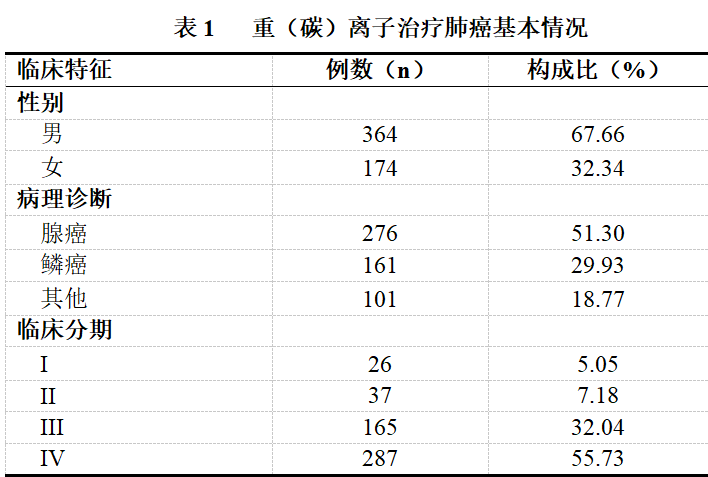
Among the 538 patients with non-small cell lung cancer, there were 364 males and 174 females. The mean age was (61.10±11.09) years, with a maximum age of 87 years and a minimum age of 26 years. By pathological type, there were 276 cases of adenocarcinoma, 161 cases of squamous cell carcinoma, and 101 cases of other types. By clinical stage, there were 26 cases of stage I, 37 cases of stage II, 165 cases of stage III, and 287 cases of stage IV (see Table 1).
II. Survival Analysis of Non-Small Cell Lung Cancer
(1) Survival status of all patients
For the 538 patients with non-small cell lung cancer, the follow-up period ranged from 0 to 69 months. Survival analysis using the Kaplan-Meier method showed a median survival time of (66.00±17.64) months. The cumulative survival probability at the end of treatment was 1, and the cumulative survival probabilities at 3, 6, 12, 24, 36, 48, and 60 months after treatment were 0.9699, 0.9156, 0.8143, 0.6760, 0.6227, 0.5676, and 0.5676, respectively (see Table 2, Figure 1).

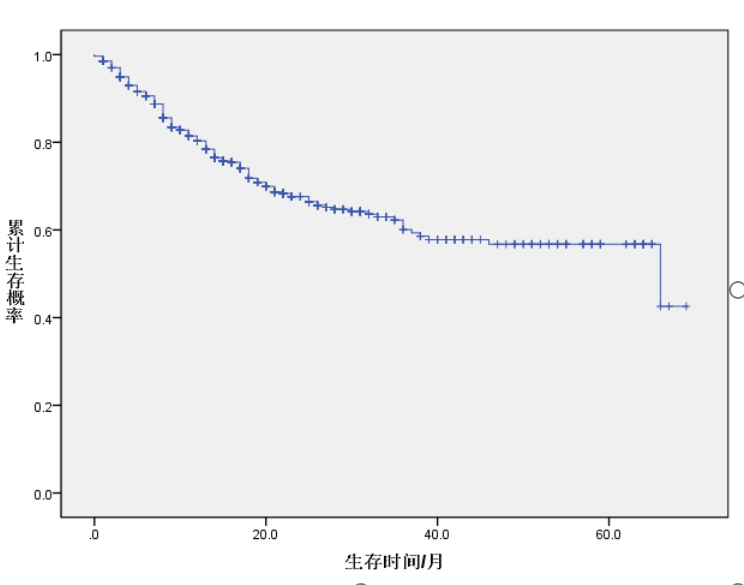
Figure 1 Survival curve from the end of treatment to 60 months after the end of treatment
(2) Survival Status of Phase III Patients
Among these, 165 patients with stage III non-small cell lung cancer had a follow-up period ranging from 0 to 65 months. Survival analysis using the Kaplan-Meier method showed that the cumulative survival probability at the end of treatment was 1, and the cumulative survival probabilities at 3, 6, 12, 24, 36, 48, and 60 months after treatment were 0.9877, 0.9498, 0.8652, 0.7028, 0.6501, 0.6068, and 0.6068, respectively (see Table 3, Figure 2).
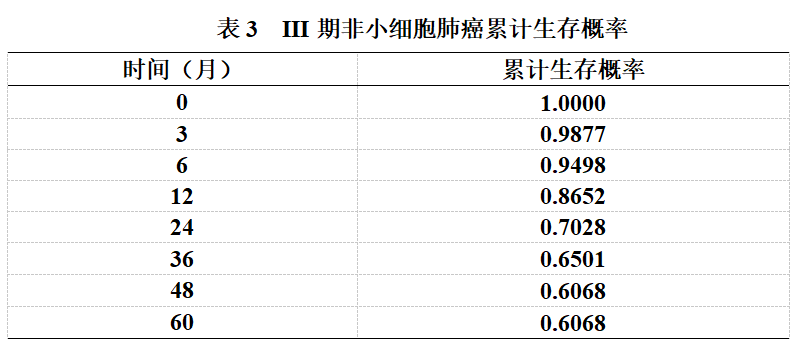

Figure 2 Survival curve from the end of treatment to 60 months after the end of treatment
III. Analysis of Efficacy and Safety
The Wuwei Heavy Ion Center has achieved promising outcomes in the treatment of non-small cell lung cancer with heavy ion (carbon ion) therapy. For the entire cohort of 538 patients, the median survival time was 66 months, with 1-, 2-, 3-, and 5-year survival rates of 81.4%, 67.6%, 62.3%, and 56.8%, respectively (see Table 2). Among these, the 165 patients with stage III disease had 1-, 2-, 3-, and 5-year survival rates of 86.5%, 70.3%, 65.0%, and 60.7%, respectively (see Table 3). These results are consistent with data reported both domestically and internationally on heavy ion (carbon ion) therapy for non-small cell lung cancer.
Comparison of Efficacy with Photon Therapy: Multiple clinical studies have confirmed that heavy ion (carbon ion) therapy offers significantly superior survival benefits compared to conventional photon radiotherapy. A meta-analysis incorporating several observational studies showed that for patients with inoperable stage I non-small cell lung cancer, the 5-year overall survival rate with conventional photon radiotherapy was approximately 20%, compared to 42% with heavy ion (carbon ion) therapy, a statistically significant difference. For patients with locally advanced (stage III) disease, the survival advantage of heavy ion (carbon ion) therapy is even more pronounced. The literature reports 2-year survival rates of approximately 61%-74% following heavy ion (carbon ion) therapy, compared to only 53% for conventional photon radiotherapy. The 5-year survival rate of 60.7% achieved in our stage III patients aligns with the 42%-60% range reported internationally for heavy ion (carbon ion) therapy and is substantially superior to historical data for photon therapy (where 5-year survival rates for locally advanced non-small cell lung cancer are approximately 15%-30%).
Clinical Safety Data: Leveraging the aforementioned physical and biological advantages, radiation-induced injuries following heavy ion (carbon ion) therapy are predominantly grade 1-2. The literature reports that the incidence of severe lung injury (≥ grade 3) with photon stereotactic body radiotherapy ranges from 0-28%, whereas all reports on heavy ion (carbon ion) therapy indicate an incidence below 8%. In our patient cohort, both during treatment and in subsequent follow-up, grade 3 or higher acute or late adverse effects were very low and manageable, demonstrating that heavy ion (carbon ion) therapy for non-small cell lung cancer is safe, feasible, and well-tolerated by patients.
Case illustrations
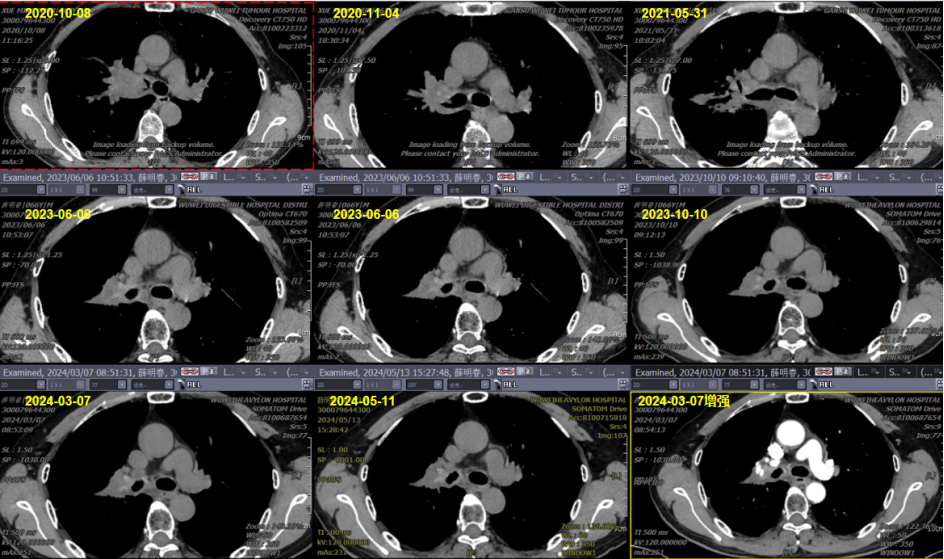
Case 1: Xue XX, 63 years old, diagnosed with central-type squamous cell carcinoma of the right lung, stage cT2N3M0, IIIB. The patient underwent heavy ion (carbon ion) therapy in October 2020. Follow-up to date indicates the patient is in good condition.
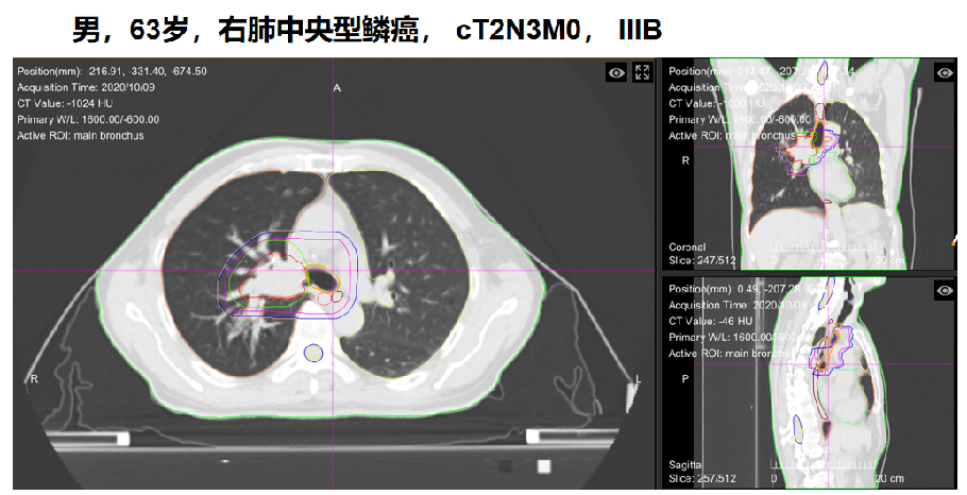
该患者治疗前后的长期随访,右肺中央型病变完全消失
Case provided by: Dr. Wang Xin
Department: Radiation Oncology Center Ⅰ(International Medical Department Ⅰ)
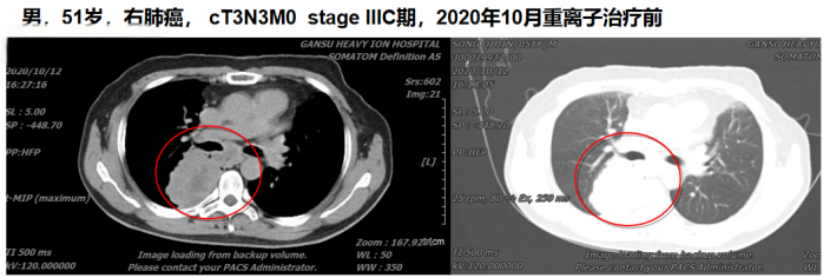
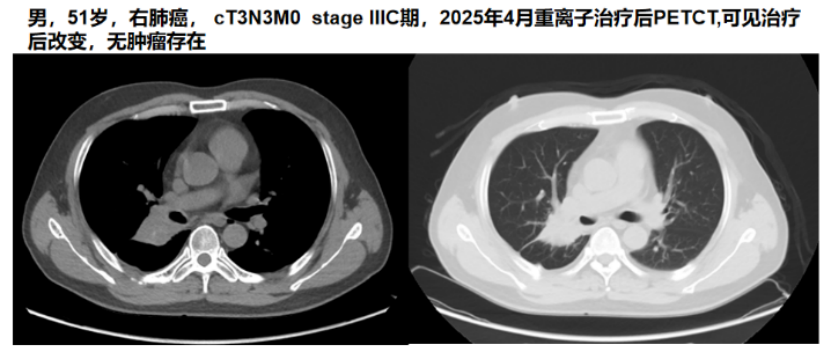
Case 2: Song XX, male, 51 years old, diagnosed with large cell carcinoma of the right lung, stage cT3N2M0 IIIB. The patient initially received heavy ion (carbon ion) therapy in 2020. In 2025, an adrenal metastasis was detected, and the patient underwent a second course of heavy ion therapy targeting the adrenal metastatic lesion. The disease is currently well-controlled.
Case provided by: Director Zhang Yanshan
Department: Radiation Oncology Center Ⅰ(International Medical Department Ⅰ)
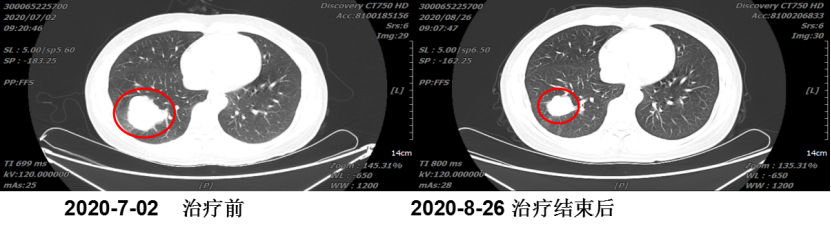
Case 3: Zhang XX, 41 years old, diagnosed with adenocarcinoma of the right lung, stage cT3N1M0 IIIA. Significant tumor shrinkage was observed 9 months after treatment.

Case provided by: Dr. Zhang Yihe
Department: Radiation Oncology Center Ⅰ(International Medical Department Ⅰ)
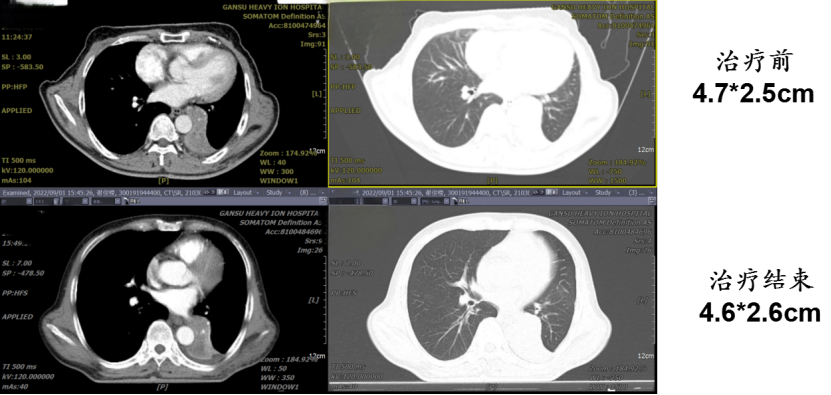
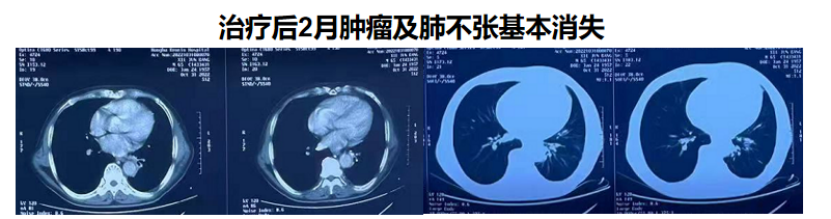
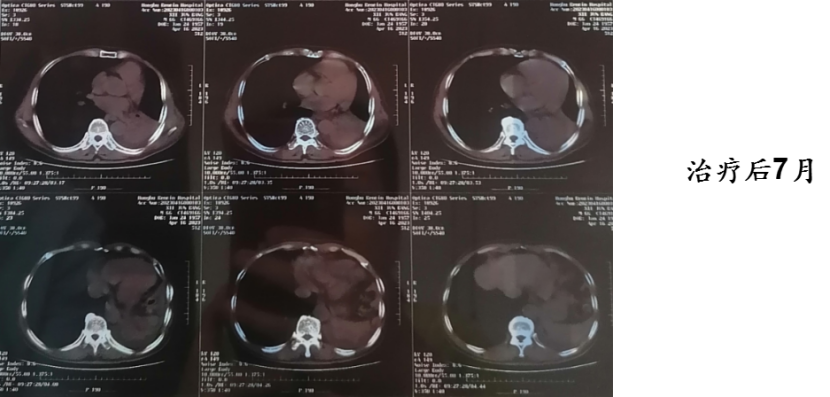
Case 4: Xie XX, male, 65 years old; Admission Date: August 5, 2022; Initial Diagnosis: Squamous cell carcinoma of the left lower lobe, Stage cT2bN1M0 IIIA. In June 2022, the patient underwent an open thoracotomy under general anesthesia at a hospital affiliated with Huazhong University of Science and Technology. During the procedure, severe pleural adhesions, multiple pulmonary bullae, and emphysema were found, and the lesion could not be resected due to extremely poor lung function. In August 2022, the patient received heavy ion (carbon ion) therapy at our center. Twenty months post-treatment, local atelectasis and pulmonary consolidation were observed, with no evidence of viable tumor. Follow-up to date indicates the patient is in good condition.
Case provided by: Director Zhang Yanshan
Department: Radiation Oncology Center Ⅰ(International Medical Department Ⅰ)
Case 5: Yang XX, male, 82 years old, from Chengdu City, Sichuan Province; Diagnosis: Malignant tracheal tumor - Squamous cell carcinoma; Chief Complaint: Chest tightness and shortness of breath for 2 weeks. Following the completion of treatment on November 26, 2024, the tumor significantly shrank, and the patient was weaned from nasal cannula oxygen therapy.

Case provided by: Director Zhang Yanshan
Department: Radiation Oncology Center Ⅰ(International Medical Department Ⅰ)
IV. Conclusion
Heavy ion (carbon ion) therapy for non-small cell lung cancer at the Wuwei Heavy Ion Center has achieved excellent therapeutic outcomes. Despite advanced-stage cases accounting for the vast majority (55.73%) of the cohort, the 5-year survival rate reached 56.8%. This demonstrates the advantages of heavy ion (carbon ion)-based therapy for lung cancer and establishes lung cancer as a leading indication at the Wuwei Heavy Ion Center. We will report further on the efficacy of heavy ion (carbon ion) therapy for stage III lung cancer in subsequent publications.
This large-sample study of 538 patients from our center provides further confirmation of the effectiveness, safety, long-term survival benefits, and high cure rates of heavy ion (carbon ion) therapy for non-small cell lung cancer. Patients treated with heavy ion therapy experience high cure rates, short hospital stays, minimal treatment-related suffering, excellent quality of life, and the ability to live with greater dignity.
It is worth noting that this cohort includes many stage IV patients, whose long-term survival benefits from our comprehensive treatment strategy centered on heavy ion (carbon ion) therapy fully reflect the value of total cancer cycle management. In the future, we will continue to accumulate cases and conduct prospective randomized controlled studies to provide higher-level evidence-based medical evidence.
V. Introduction to Wuwei Heavy Ion Center
Wuwei Heavy Ion Center is the clinical application base for China's first heavy ion therapy system with completely independent intellectual property rights. It is technically supported by the Institute of Modern Physics, Chinese Academy of Sciences, and clinically operated by Gansu Wuwei Cancer Hospital. The center officially commenced cancer treatment in November 2018 and has treated over 2,800 patients to date, with the scope of treated diseases expanding to more than 50 types, including lung cancer, pancreatic cancer, liver cancer, glioma, nasopharyngeal carcinoma, rectal cancer, and various sarcomas.
As the only medical institution in the world operating two heavy ion therapy systems simultaneously, the center has achieved eight "world-first" innovations in technological development: pioneering precision treatment technology under ventilator control; bladder cancer treatment technology under precise bladder volume control; single-session treatment technology using surgically placed isolation pads between organs and tumors; developing China's first 360° rotating and elevating ion radiotherapy chair; and completing the world's first multiple cases of heavy ion therapy for cardiac tumors, among others.
Leveraging 30 research platforms, including the Key Laboratory of Heavy Ion Beam Radiation Biology, Chinese Academy of Sciences, and the Biomedical Data Analysis and Visualization Laboratory at the University of Sydney, the center has initiated over 30 clinical studies on major disease types. To date, the center has published nine monographs, including "Standard Operating Procedures for Carbon Ion Radiotherapy," establishing a comprehensive knowledge system covering physics technology, clinical diagnosis and treatment, and health management.
Contributor: Chen Xuelian (Tumor Registry and Follow-up Office)
Reviewer: Zhang Yanshan (Director of Heavy Ion Center)
Date: March 12, 2026