
Wuwei Heavy Ion Center: Pioneer in Heavy Ion (Carbon) Therapy for Adenoid Cystic Carcinoma
Wuwei Heavy Ion Center: Pioneer in Heavy Ion (Carbon) Therapy for Adenoid Cystic Carcinoma
Since treating its first patient in November 2018, the Wuwei Heavy Ion Center has been dedicated to transforming cutting-edge particle technology into a beacon of hope for patient survival. As of February 28, 2026, the center has treated a total of 124 patients with adenoid cystic carcinoma. Its treatment volume, follow-up data, and long-term efficacy have all reached internationally advanced levels, establishing it as a key center for heavy ion (carbon) therapy for adenoid cystic carcinoma in China and globally. It also offers a superior non-invasive treatment option for adenoid cystic carcinoma.
I. Patient’s Basic Information
Among the 124 patients with adenoid cystic carcinoma treated, there were 58 males and 66 females, ranging in age from 19 to 87 years, with a mean age of (49.27 ± 14.55) years. Of these, 86 patients (69.4%) were at stage IV, with the majority being complex cases involving locally advanced disease, post-surgical residual tumors, or recurrent and metastatic conditions. This fully demonstrates the Wuwei Heavy Ion Center's commitment and expertise in treating complex adenoid cystic carcinoma, and further validates the unique value of heavy ion therapy for patients with advanced-stage cancer.
II. Typical Cases
Case 1: Liu XX, female, 24 years old, was admitted to the hospital with a primary diagnosis of "nasal adenoid cystic carcinoma confirmed 2 weeks ago." Diagnosis: Malignant neoplasm of the nasal cavity, adenoid cystic carcinoma (nasal cavity), cT4bN2M1, stage IVC. Due to the large size and advanced stage of the lesion, surgical treatment was not performed. Instead, the patient underwent radical radiotherapy with heavy ion (carbon) therapy, achieving a good outcome.
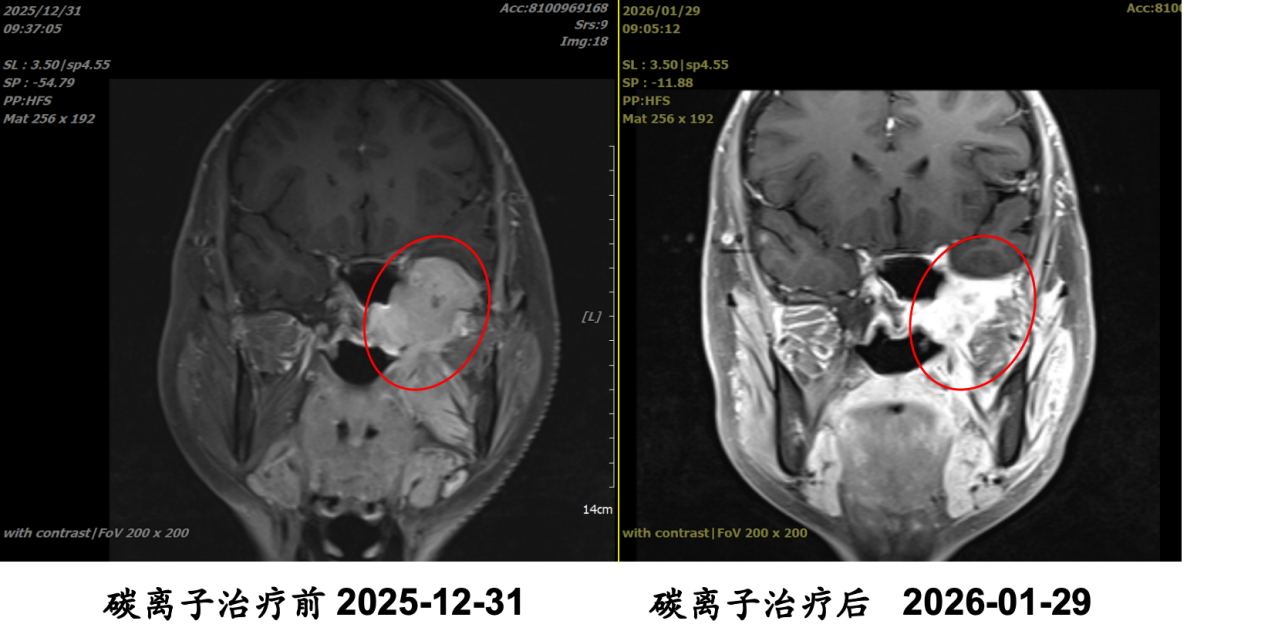
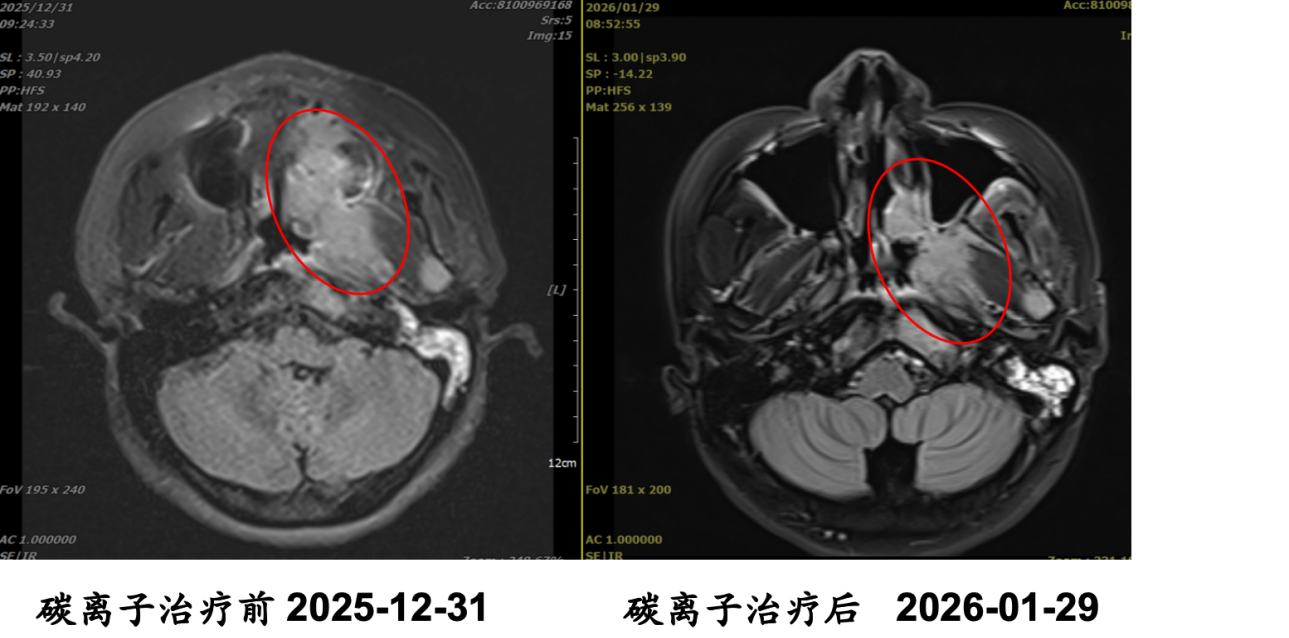
Case provided by: Dr. Yang Yuling
Department: Radiation Oncology Center Ⅰ(International Medical Department Ⅰ)
Case 2: Li XX, male, 34 years old, from Guangdong Province; Diagnosis: Adenoid Cystic Carcinoma of the Maxillary Sinus, cT4N1M0 Stage IV, KPS score: 90. Due to the large size and advanced stage of the lesion, surgical treatment was not performed. Radical radiotherapy with heavy ion (carbon ion) therapy was administered, achieving a good treatment outcome.
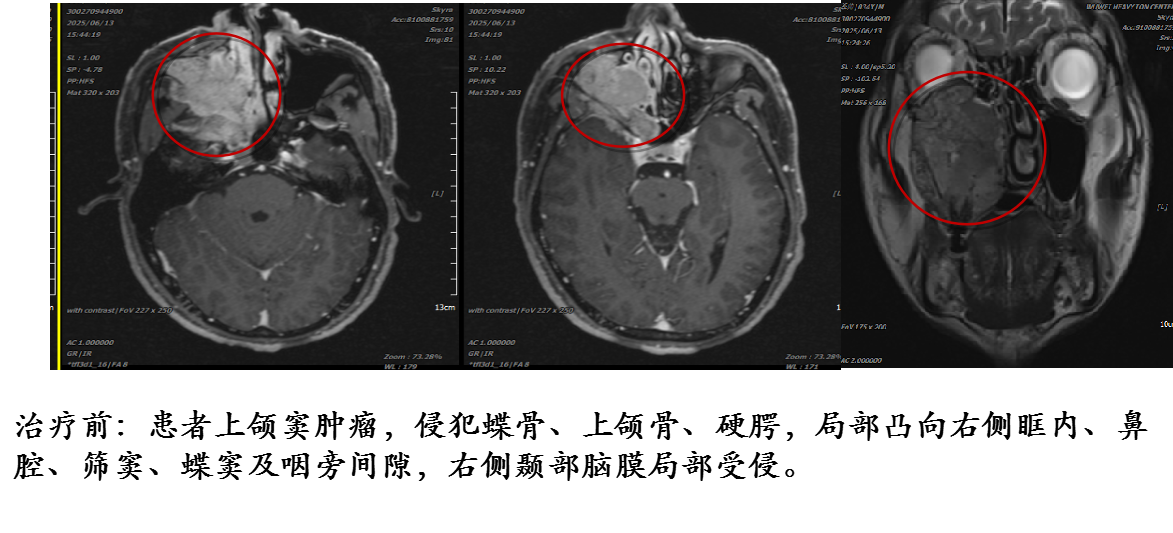
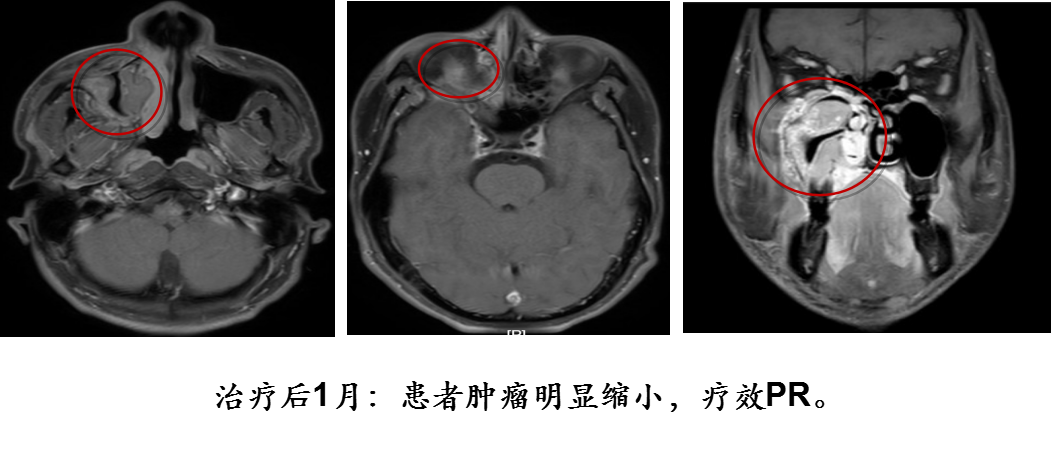
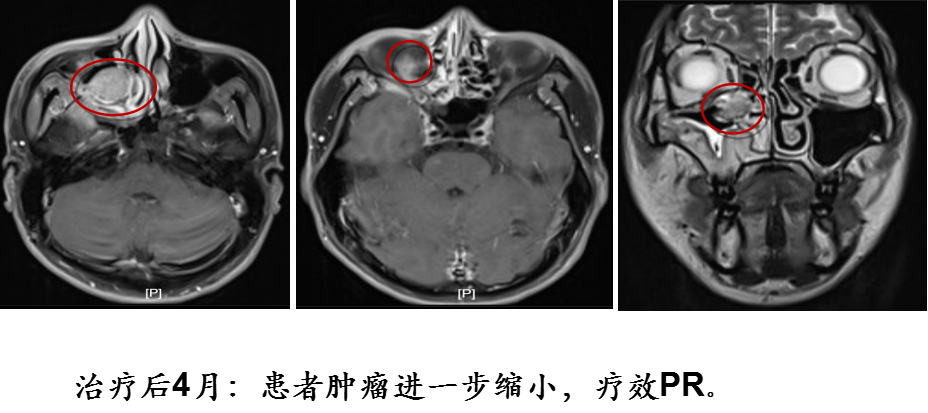
Case provided by: Dr. Ma Tong
Department: Radiation Oncology Center Ⅰ(International Medical Department Ⅰ)
Case 3: Fu XX, male, 68 years old; Diagnosis: Adenoid Cystic Carcinoma of the Tongue; Treatment Period: 2021/12/13 to 2022/01/05. Follow-up at 5 years shows complete remission. The patient declined surgical treatment and underwent radical radiotherapy with heavy ion (carbon ion) therapy. At 65 months of follow-up, the patient is disease-free.
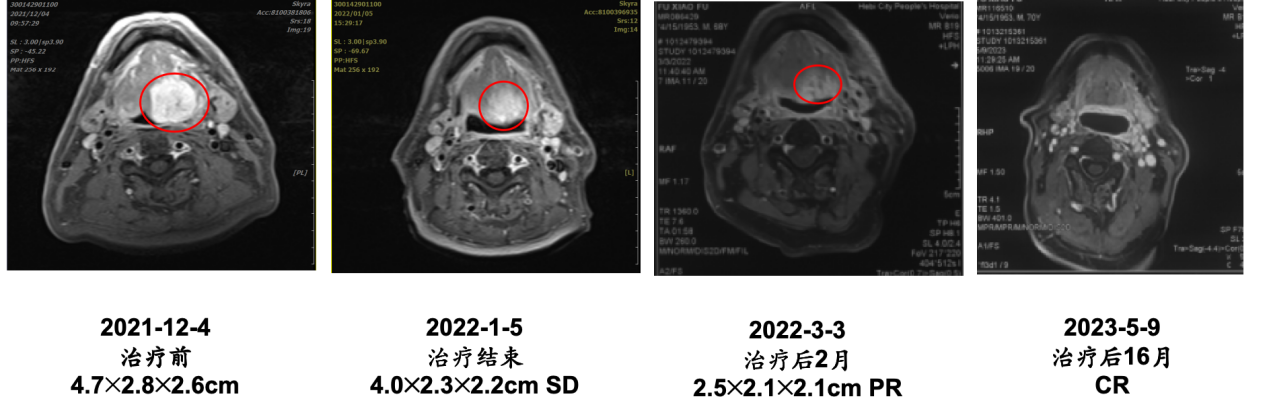
Case provided by: Dr. Wang Xin
Department: Radiation Oncology Center Ⅰ(International Medical Department Ⅰ)
Case 4: Mao XX, female, 67 years old, from Qiqihar, Heilongjiang Province; Diagnosis: Malignant neoplasm of the nasal cavity, post-operative adenoid cystic carcinoma, multiple secondary metastatic adenoid cystic carcinoma lesions in the lung, rpT0N0M1 Stage IV. In October 2020, the patient received heavy ion therapy at the Wuwei Heavy Ion Center, with no other treatments administered. At 64 months of follow-up, the lesions show complete remission, and the patient is now disease-free.
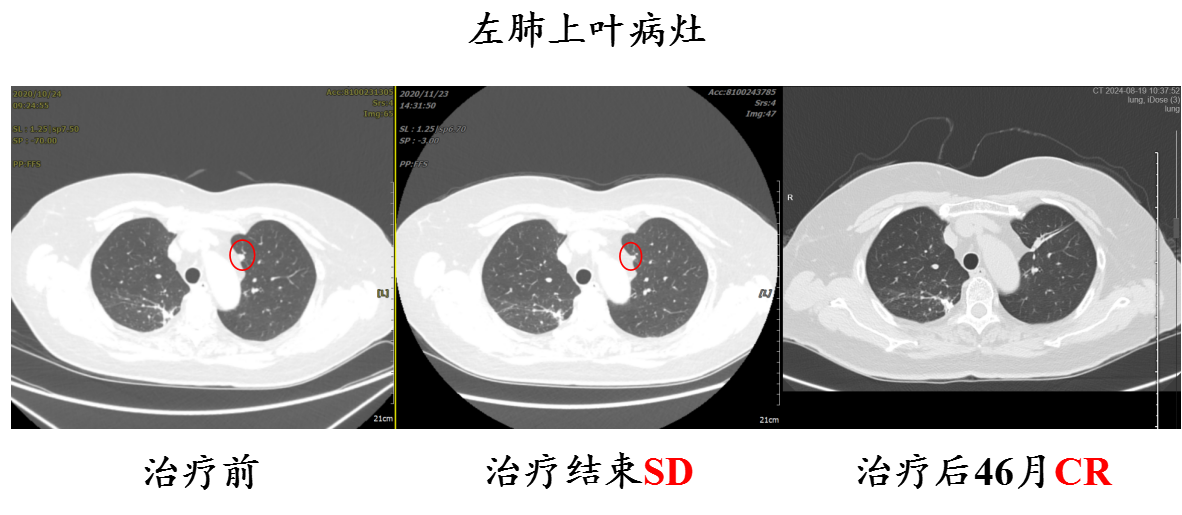
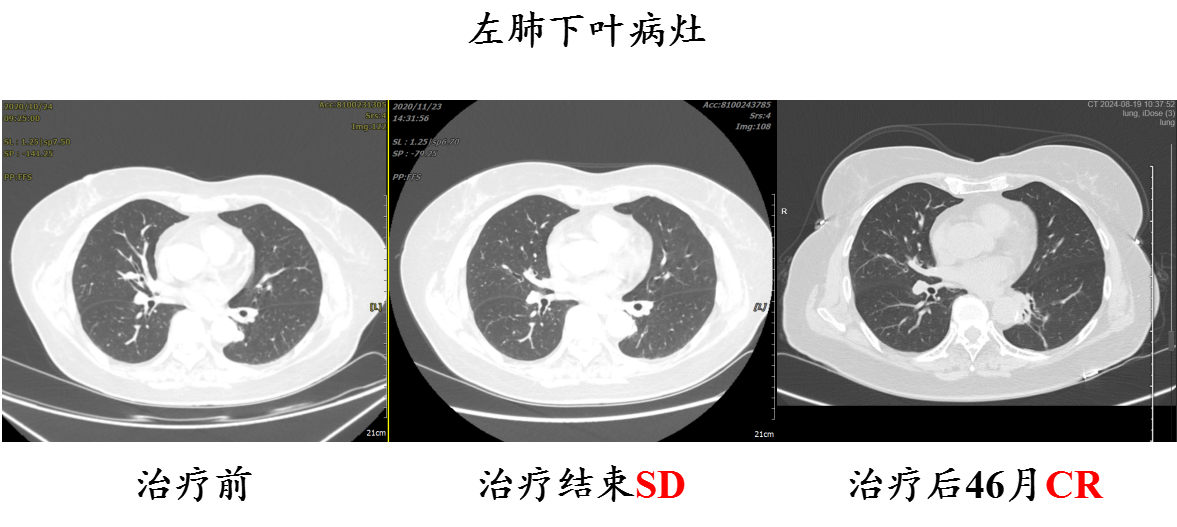
Case provided by: Dr. Yang Yuling
Department: Radiation Oncology Center Ⅰ(International Medical Department Ⅰ)
III. Survival Status
All patients were followed up for a maximum of 64 months, and survival analysis was performed using the Kaplan-Meier method. The results showed: mean survival time was (53±3.46) months; the 1-year local control rate at the treated site was 100%, and the cumulative survival probability at the end of treatment was 100%; the cumulative survival probabilities at 12, 24, 36, 48, and 60 months were 97.92%, 94.65%, 91.01%, 91.01%, and 75.84%, respectively (see Table 1). Achieving such excellent survival data, even with Stage IV patients accounting for as high as 69.4% of the cohort, highlights the center's technological advantages in treating complex and difficult cases.
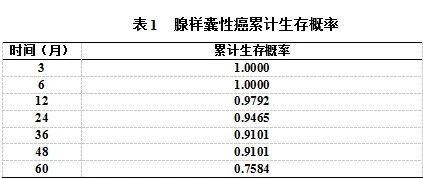
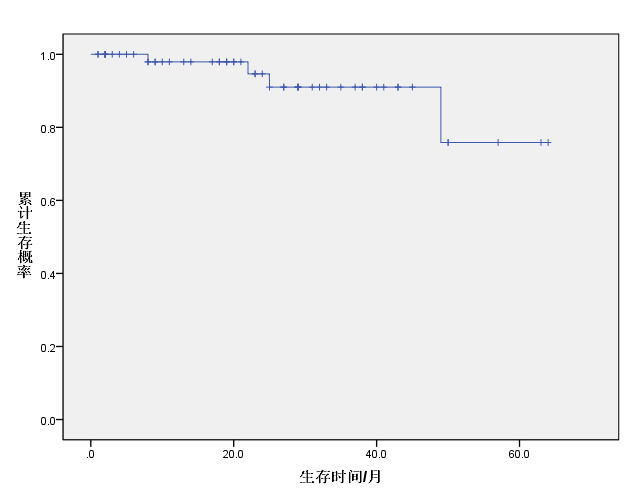
Figure 1. Survival curves from the end of treatment to 60 months after treatment completion
IV. Efficacy and Safety
1. A Historic Breakthrough Compared to Photon Radiotherapy
Adenoid cystic carcinoma has historically been regarded as a radioresistant tumor, with traditional photon radiotherapy yielding suboptimal results. Historical data show that the 5-year local control rate with photon radiotherapy alone was only 26%–61%, and the 5-year overall survival rate was only approximately 37.3%. Even with modern intensity-modulated radiotherapy techniques, the 5-year overall survival rate for inoperable locally advanced patients is only about 50%. In stark contrast, our center achieved a 5-year cumulative survival rate of 75.84%, despite having a patient cohort with 69.4% Stage IV cases, representing a leapfrog improvement in efficacy over photon radiotherapy. Furthermore, the local control rate and response rate for heavy ion (carbon ion) therapy both reached 100%.
2. Running Alongside International Heavy Ion (Carbon Ion) Therapy Centers
Globally, clinical research on heavy ion (carbon ion) therapy for adenoid cystic carcinoma is vigorously advancing. An international systematic review indicates that the 5-year overall survival rate for head and neck adenoid cystic carcinoma treated with heavy ion (carbon ion) therapy is approximately 74%, with a 5-year local control rate of about 68.6%. Our center achieved a 5-year overall survival rate of 75.84%, despite generally treating patients with more advanced disease. This outcome is superior to or comparable with data reported by various international centers. It is particularly noteworthy that 69.4% of this patient cohort were Stage IV, demonstrating that the Heavy Ion Center achieves excellent therapeutic outcomes even when treating a patient population with more complex conditions and poorer prognoses.
V. Analysis of the Advantages of Carbon Ion Therapy for Adenoid Cystic Carcinoma
Adenoid cystic carcinoma has two major characteristics that make it difficult to treat:
1. Radioresistance (Innate "Shield"): Conventional photon radiotherapy often fails to completely eradicate it. In the past, surgery was the only curative treatment option.
2. Neurotropism ("Nerve-Seeking" Tendency): The tumor tends to invade along nerve bundles, making complete surgical clearance difficult and leading to high local recurrence rates.
Heavy ion (carbon ion) therapy, with its unique physical and biological advantages, perfectly addresses these challenges:
1. Precision Strike (Bragg Peak): Heavy ions release minimal energy while passing through normal tissue but deposit their full energy precisely at the tumor site, accurately destroying the lesion while maximally protecting surrounding healthy tissue.
2. Armor-Piercing Effect (Overcoming Resistance): Heavy ions directly cause double-strand breaks in tumor cell DNA, rendering the cells unable to repair themselves and effectively overcoming radioresistance.
3. Precision Clearance (Addressing Neurotropism): Heavy ions can be precisely targeted to release energy along the neural pathways invaded by the tumor, clearing "vine-like" spreading cancer cells while preserving nerve function (such as vision and facial sensation).
Therefore, treating adenoid cystic carcinoma with heavy ion (carbon ion) therapy is akin to using a powerful, precision-guided intelligent weapon against a tenacious, nerve-infiltrating enemy. This approach achieves both complete tumor eradication and maximal preservation of bodily functions.
VI. Conclusion
Despite patients with advanced adenoid cystic carcinoma accounting for nearly 70% of the cases treated at the Wuwei Heavy Ion Center, the achievement of a 5-year cumulative survival rate of 75.84% fully validates the significant advantages of heavy ion (carbon ion) therapy for this disease. It also demonstrates the center's profound expertise in the field of particle therapy and its status as having the largest treatment experience in China. The center has led the development of multiple consensus guidelines for heavy ion (carbon ion) therapy and is actively conducting clinical research to explore new models combining heavy ion (carbon ion) therapy with immunotherapy and targeted therapy, aiming to further improve the survival rates and quality of life of patients with advanced disease. As a pioneer in China's heavy ion (carbon ion) therapy endeavor, the Wuwei Heavy Ion Center will continue to ignite the light of life for more patients with adenoid cystic carcinoma and propel China's particle therapy technology to the forefront of the world.
VII. Introduction to the Wuwei Heavy Ion Center
Wuwei Heavy Ion Center is the clinical application base for China's first heavy ion (carbon ion) therapy system with completely independent intellectual property rights. It is technically supported by the Institute of Modern Physics, Chinese Academy of Sciences, and clinically operated by Gansu Wuwei Tumor Hospital. The center officially commenced cancer treatment in November 2018 and has treated over 2,800 patients to date, with the scope of treated diseases expanding to more than 50 types, including lung cancer, pancreatic cancer, liver cancer, glioma, nasopharyngeal carcinoma, rectal cancer, and various sarcomas. As the only medical institution in the world operating two heavy ion (carbon ion) therapy systems simultaneously, the center has achieved nine "world-first" innovations in technological development: pioneering precision treatment technology under ventilator control; bladder cancer treatment technology under precise bladder volume control; single-session treatment technology using surgically placed isolation pads between organs and tumors; developing China's first 360° rotating and elevating ion radiotherapy chair; completing the world's first multiple cases of heavy ion (carbon ion) therapy for cardiac tumors; and pioneering the world's first double-Bragg-peak-enhanced heavy ion (carbon ion) lattice radiotherapy technology, among others. Leveraging 30 research platforms, including the Key Laboratory of Heavy Ion Beam Radiation Biology, Chinese Academy of Sciences, and the Biomedical Data Analysis and Visualization Laboratory at the University of Sydney, the center has initiated over 30 clinical studies on major disease types. To date, the center has published nine monographs, including "Standard Operating Procedures for Carbon Ion Radiotherapy," establishing a comprehensive knowledge system covering physics technology, clinical diagnosis and treatment, and health management.
Contributor: Chen Xuelian (Tumor Registry and Follow-up Office)
Reviewer: Zhang Yanshan (Vice President)
Date: March 11, 2026