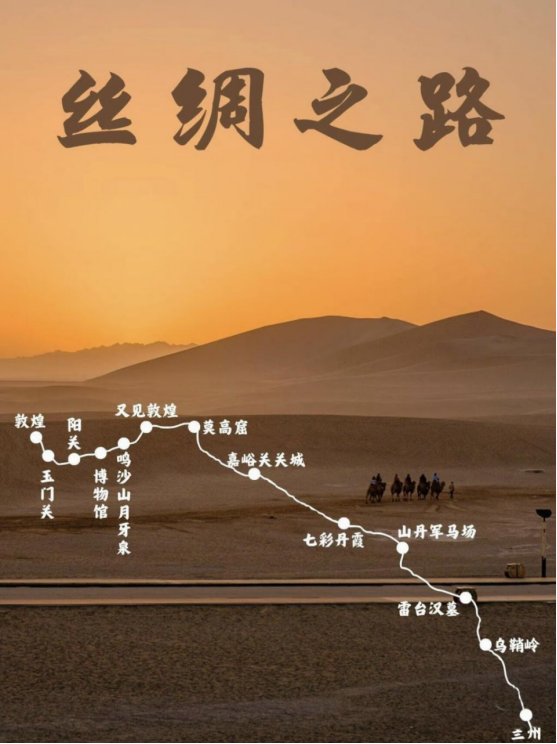
Gansu, the east-west Silk Road corridor, is both a witness to history and a place of natural wonders. In the Gansu Provincial Museum, the robust posture of the bronze galloping horse ‘Horse Treading Flying Swallow’ and the ink on the Han Jian tell of the prosperity of the Silk Road in the Han Dynasty; and the deep dungeon of the Leitai Han Tomb hides the military and trade codes of the Hexi Corridor. Travelling to Wuwei, Hatomo Roshi Temple's curling sound, witnessing the thousand years of Buddhism to the east of the Buddhist destiny.
Ride to the west, nature's magnificent scroll slowly unfolded - seven-coloured Danxia splashes of colour as heavenly craftsmen splashing ink, the jagged gullies of the Pingshan Lake Grand Canyon seems to be the epic of the earth's fissure. Modernity and antiquity converge here: the aerospace feats of the Jiuquan Satellite Launch Base, the Ming Great Wall of Jiayuguan Pass, and the desolate remnants of the Yumen Pass form a wonderful dialogue between time and space.
At the end of Dunhuang, the desert oasis of Mingsha Mountain and Crescent Springs has stood still for thousands of years, while the murals and coloured sculptures of the Mogao Caves have united the most splendid artistic beliefs on the Silk Road. Gansu is both a memory of the Silk Road and an eternal legend.
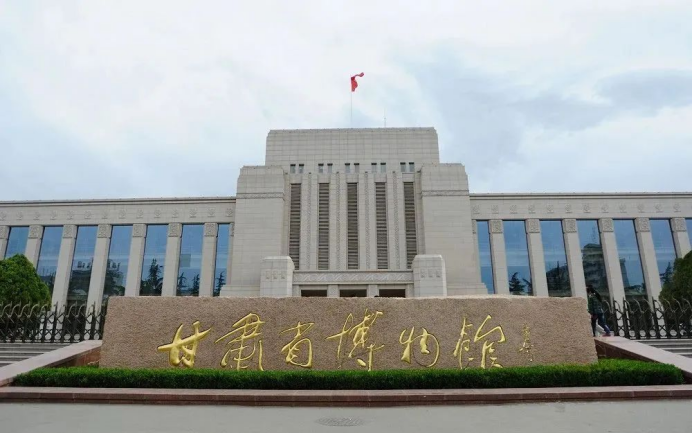
Gansu Provincial Museum: A Hall of Civilisation Through the Millenniums
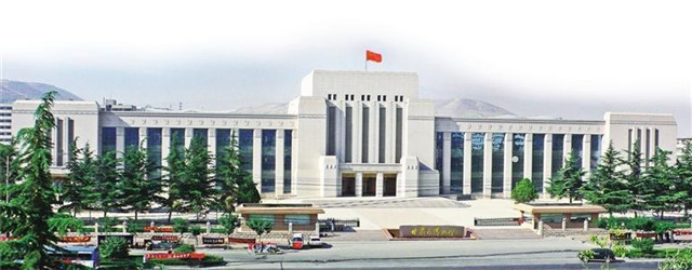
Gansu Provincial Museum is like a three-dimensional epic of Northwest China, with a collection of treasures linking the splendour of the Silk Road and the source of Chinese civilisation. Silk Road civilisation exhibition to the camel bell travel as a clue, the Eastern Han copper galloping horse in the air on the Yan, the mechanics and aesthetics of the condensed in a flash; the Wei and Jin Dynasties postal map mural bricks to frame the instant of the Pegasus, witnessing the earliest postal system in China. In the exhibition hall of the crown of coloured pottery, Majiayao swirl pattern coloured pottery basin dancing with the waves of the Yellow River 5,000 years ago, and the mysterious smile of the first bottle of Dadiwan people, unveiling the faith code of the ancestors in the Neolithic era. In the Buddhist Art Museum, the Northern Wei stone pagoda reliefs of the flying sky when the wind, the Western Xia ‘Diamond Sutra’ engraved in writing like a star, telling of the intermingling of multiple religions in the Hexi Corridor. Each object is the light of civilisation that cannot be hidden by the yellow sand.
The treasure of the museum
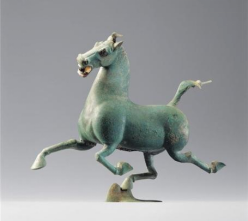

Bronze Galloping Horse (Horse Stepping on Flying Swallow): Bronze ware of the Eastern Han Dynasty, a symbol of Chinese tourism, a perfect combination of mechanics and art
Local Food Recommendations
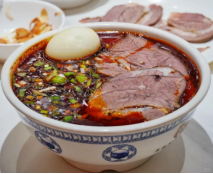
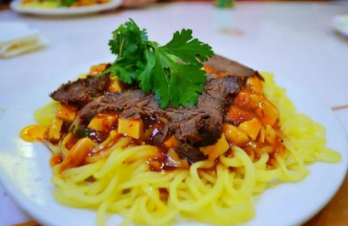
Lanzhou Beef Noodles ("China's No. 1 Noodle")
Features: Known for its "clear broth, white radish, red chili oil, green garlic sprouts and cilantro, and yellow noodles." The noodles come in various shapes like thin, medium-thick, and wide, paired with beef bone broth and secret-recipe chili oil, offering a chewy and refreshing t

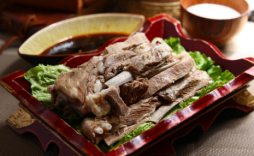
Hand-Grabbed Lamb
Features: Made with Jingyuan lamb, boiled in clear water and served with salt or garlic paste. The tender meat has no gamey flavor and becomes even more delicious when paired with pepper salt or vinegar.
Leitai Han Tomb (Excavation Site of the Bronze Galloping Horse)
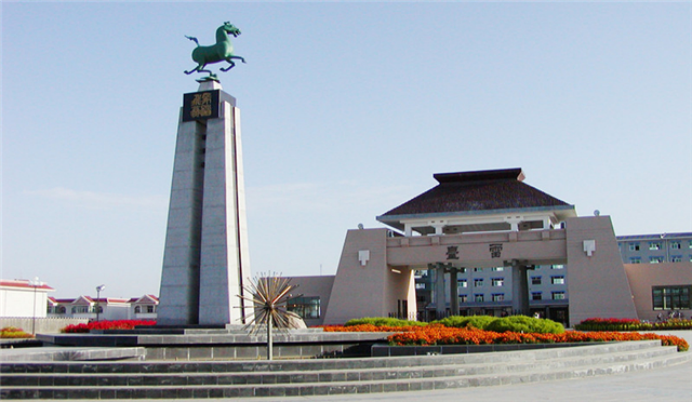
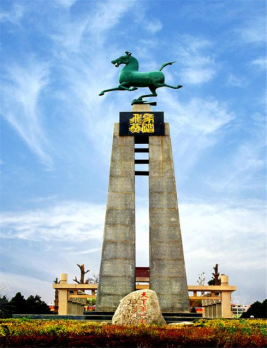
The Leitai Han Tomb gained international fame for yielding the world-renowned "Horse Treading on a Flying Swallow" bronze statue. This late Eastern Han Dynasty tomb perfectly embodies the majestic Han-style culture of the Hexi Corridor. The brick-arched "inverted funnel" structure of the tomb chamber showcases the advanced architectural wisdom of the Han Dynasty, while the procession of bronze chariots and horse figurines along the tomb passage recreates the grandeur of noble outings. The bronze horse, with three hooves mid-air, combines mechanics and art in an instant, with the swallow beneath its hooves symbolizing the romantic imagination of "a heavenly steed soaring through the skies." This artifact stands as a superb representation of cultural exchange along the Silk Road. The Leitai Taoist Temple complex from the Ming and Qing Dynasties atop the tomb features red eaves and green tiles, offering views of the Qilian Mountains to the north and the ancient city's life to the south, where history and reality intertwine into an eternal poetic scene.
Wuwei Confucian Temple (Largest Confucian Temple in Northwest China)
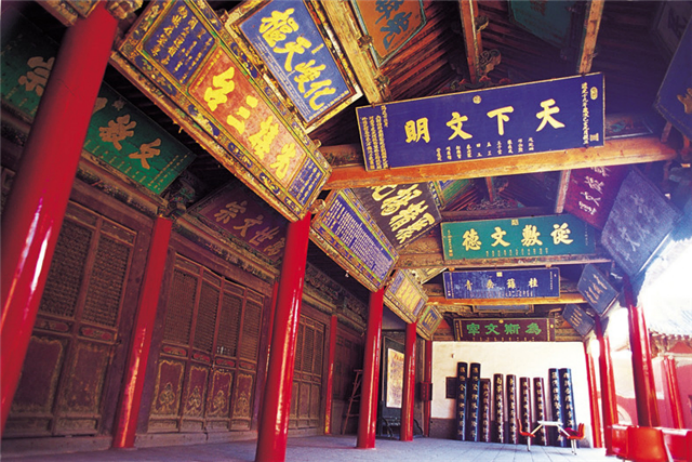
As the largest and best-preserved Confucian temple complex in Northwest China, the Wuwei Confucian Temple bears witness to the transmission of Confucian civilization along the Silk Road. The Lingxing Gate's Ming Dynasty stone-carved coiling dragons are lifelike, while the glazed roof ornaments of the Dacheng Hall's nine-ridged hip-and-gable roof reflect the snow-capped Qilian Mountains. Inside the hall, the "Teacher of All Ages" golden plaque and the 72 disciples' painted sculptures outline the complete Confucian orthodoxy. Particularly precious is the Western Xia Stele in the courtyard—the most intact bilingual stele with Western Xia and Chinese scripts. The tadpole-like Western Xia characters juxtaposed with square regular script narrate the blending of multicultural traditions. The 44 Ming and Qing plaques in the Wenchang Palace, such as "Civilization Under Heaven" and "The Culture Resides Here," along with the inscriptions of past literati echoing between the red pillars, keep the essence of Chinese civilization alive in this frontier Confucian temple.
Tiantishan Grottoes (Cradle of Chinese Grotto Art)
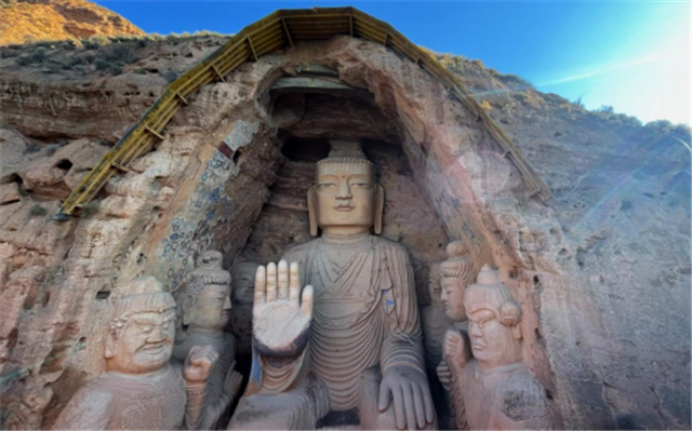
The Tiantishan Grottoes
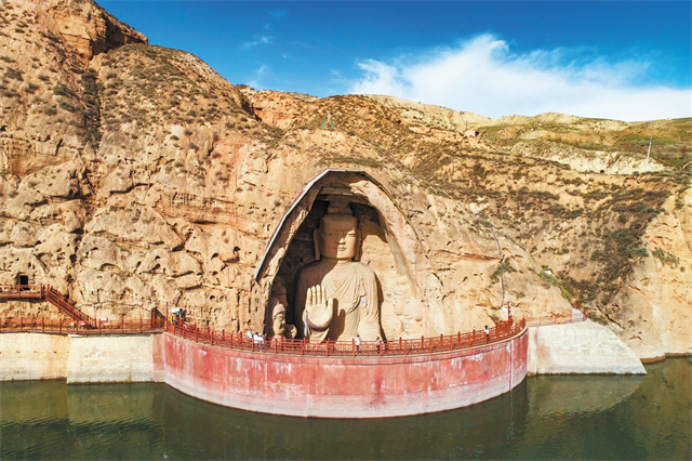
The Tiantishan Grottoes, carved during the Northern Liang period, pioneered the "Liangzhou style" of Chinese grotto art, directly influencing the Yungang and Longmen Grottoes. The 13 niches are scattered along the mountain, with the 28-meter-tall Tang Dynasty Maitreya Buddha seated in meditation, its lowered eyelids exuding compassion, and robes flowing like water, reflecting the "mountain as Buddha, Buddha as mountain" harmony with the blue reservoir. The remnants of Northern Wei murals feature flying apsaras with fluttering ribbons, their vermilion and mineral green hues still vibrant after millennia, revealing a blend of Gandhara art and Central Plains aesthetics. This site is not only a testament to Buddhism's eastward spread but also a history of civilizational dialogue carved into cliffs. The ripples of the Huangyang River still echo the chiseling sounds of fifth-century monks.
Kumarajiva Temple: A Millennium-Old Sanctuary of Silk Road Buddhism
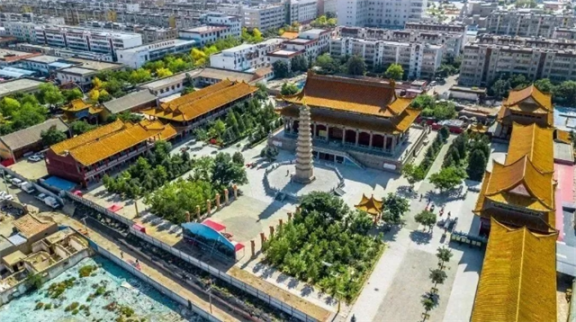
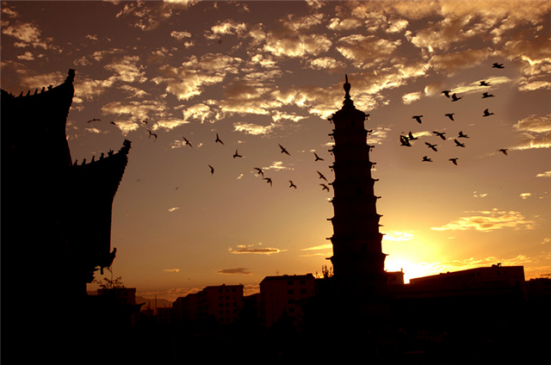
This ancient temple, named after the Western Regions monk Kumarajiva, carries the historical memory of Buddhism's Sinicization. Though rebuilt over time since its founding in the Later Liang period, it continues the millennium-old legacy of "thatched hall scripture translation." The twelve-cornered Kumarajiva Pagoda stands tall, its glazed bricks adorned with flying apsaras, while the base is engraved with Diamond Sutra verses, bearing witness to the legend of the master's "unburned tongue relic." Inside the Mahavira Hall, Kumarajiva's statue holds a scripture scroll, his expression capturing the compassion and wisdom he embodied while translating the Lotus Sutra in Wuwei. The steles and reliefs of translation scenes in the ancient locust-shaded corridor resonate with the eternal chant of "form is emptiness."
Local Cuisine Recommendations
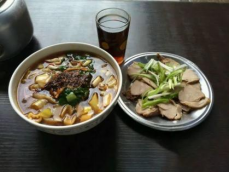
Liangzhou Xing Noodles
Features: Hand-pulled noodles served with braised meat and fermented tea. The noodles are chewy, the meat rich but not greasy, and the tea sweet and refreshing—collectively known as the "Three Sets."
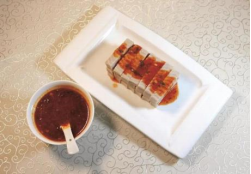

Sand Rice Noodles
Features: Made from sand oat seeds, the noodles have a smooth texture and are served with lamb or pickled vegetable soup, embodying Northwest flavors.
Zhangye Danxia National Geological Park
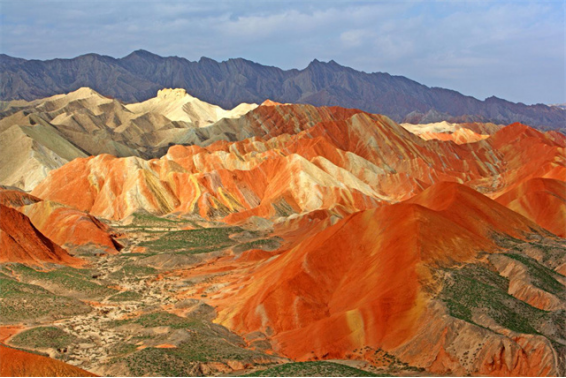
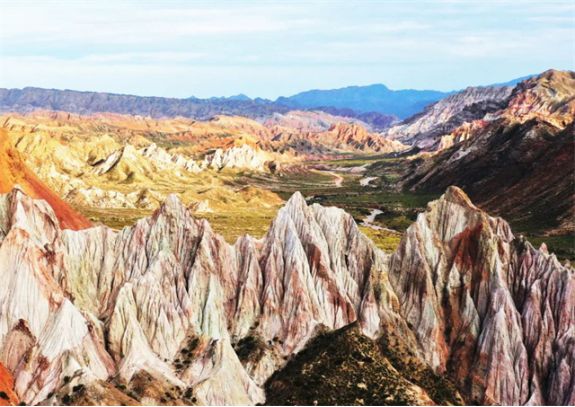
This fantastical landform, forged hundreds of millions of years ago from red sandstone, is hailed by China National Geography as "God's Palette." The colorful ridges resemble winding dragons, with layers of ochre, gold, and gray-white bands shifting like flowing flames under dawn or dusk light. The wind-carved "Colorful Screen" resembles a flying apsara's robe, while formations like the "Turtle Asking Heaven" speak of nature's marvels. The ancient Silk Road once traversed these vibrant mountains, and though the camel bells have faded, rock carvings and legends from nomadic peoples endure. At sunset, the Danxia glows like burning embers, reviving the ancient poetic vision of "red as cinnabar, bright as rosy clouds."
Shandan Horse Ranch
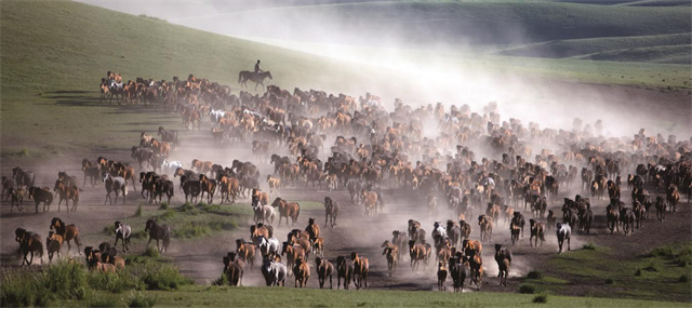
Founded by Huo Qubing, this imperial horse ranch is a living epic carved beneath the Qilian Mountains. For two millennia, the neighs of Ferghana horses and the hoofbeats of Han and Tang cavalry have intertwined here, while the dust of Silk Road caravans and armies has turned into prairie winds. In summer, ten thousand galloping horses resemble a moving Dunhuang mural; in autumn, herders' songs echo the rock-carved hunting scenes of the Xiongnu. The scattered beacon towers in the grasslands were once part of the Great Wall's defense system, while the Qilian snow peaks reflect in drinking pools that mirror the shadows of nomadic tribes like the Yuezhi, Wusun, and Mongols. As Asia's largest horse ranch, it condenses the clashing arms of the cold weapon era into an enduring frontier poem.
Local Cuisine Recommendations
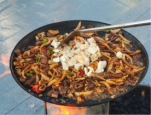
Stir-Fried Bolaa
Features: A Shandan specialty, lamb and offal are stir-fried with onions and chili on a griddle over high flames, locking in a smoky, spicy aroma.
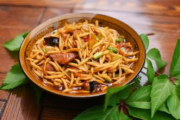
Cuo Yu Noodles
Features: Dough shaped into small fish, boiled, and stir-fried with braised meat or vegetables. The noodles resemble silverfish and are chewy and flavorful.
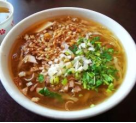
Sao Noodles
Features: A sour-spicy broth with thin, chewy noodles, served with wood ear mushrooms, daylily, and minced meat—a Zhangye breakfast staple.
Jiuquan Satellite Launch Center
(Located at the border of Jinta County, Jiuquan City, and Inner Mongolia)
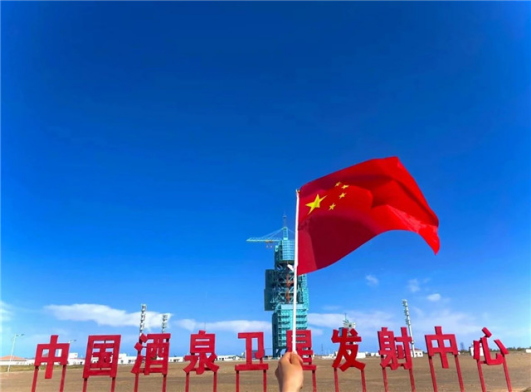
This Gobi desert launch site resembles a modern myth. The 100-meter-tall launch tower once propelled Shenzhou spacecraft into the heavens, and Yang Liwei's footprints remain clear outside the Wentian Pavilion. The martyrs' cemetery, with over 700 tombstones facing the launch site, and Qian Xuesen's manuscripts on the Dongfeng Auditorium walls form a three-dimensional aerospace epic. The slogans of "extraordinary endurance" shine even brighter in sandstorms.
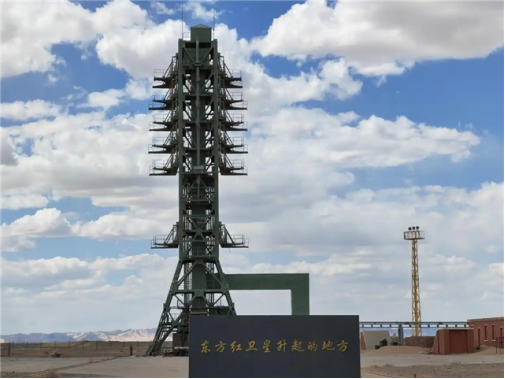
Manned Launch Site: Witnessing the Birth of the "Divine Arrow"
The manned launch site is a critical hub for China's space program, handling rocket assembly, testing, transport, and launch. From Shenzhou-5, which inaugurated China's manned space missions, to subsequent missions, it has witnessed monumental achievements, making indelible contributions to the nation's aerospace endeavors. The 921 launch tower, a landmark of the Jiuquan center, is currently China's only tower capable of launching manned rockets.
Local Cuisine Recommendations
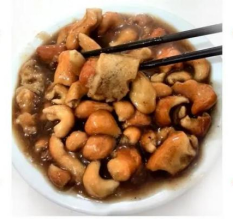
Hu Guo
Features: A thick chicken soup with starch, mixed with bean starch sheets, gluten, and fried dough twists—a spicy, rich breakfast "soul food" for Jiuquan locals.
Jiayuguan Pass
At the narrowest throat of the Hexi Corridor, Jiayuguan stands like a bronze lock, securing the Silk Road's millennia of history. Built in 1372 as the western starting point of the Ming Great Wall, it took 168 years to complete, becoming China's best-preserved ancient military defense system. The plaque "First Pass Under Heaven" hangs atop the Guanghua Gate, witnessing countless caravans, envoys, and beacon fires.
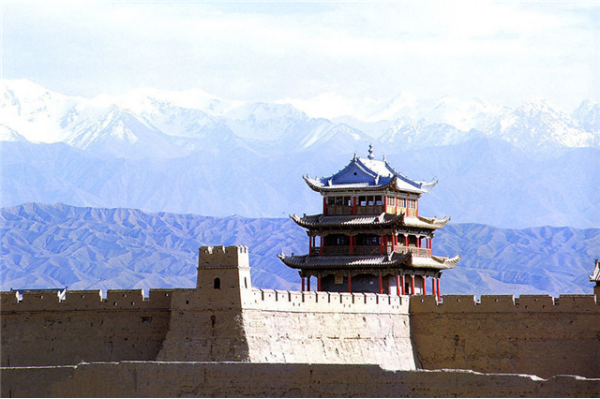
The triple-layered defense is a textbook example of cold-weapon-era fortification: the outer wall's arrow towers and moats form the first line of death, the town's "catch in a jar" design leaves invaders no escape, and the inner wall's 17-meter height allows three chariots to run abreast. Hidden sound-transmitting holes and ice paths for stone transport on the horse ramparts still speak to ancient craftsmen's ingenuity. From the Rouyuan Gate's battlements, the Qilian snow peaks and Hei Mountain cliffs form natural barriers, creating a "mountains and rivers united in defense" grandeur.
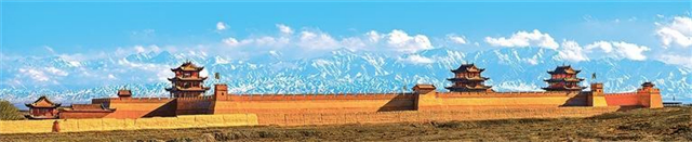
Jiayuguan Pass—First Pass in the world (Shi Yonghong)
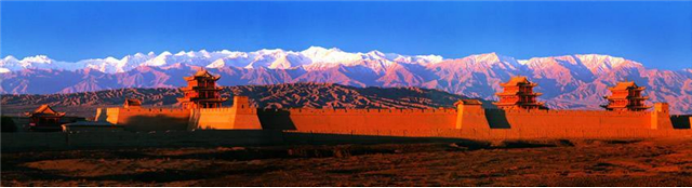
The western starting point of the Ming Great Wall and the best-preserved ancient military defense system. Its triple-layered defense (outer wall,middle wall,inner wall) showcases peak cold-weapon-era wisdom, with majestic gates like Guanghua and Rouyuan and marvels like the "stone-striking swallow chirp."
The guerrilla general's residence inside displays Ming frontier life: rusted "Jiayuguan" cannons, faded ink on soldiers' letters, and dried millet in granaries piece together the "general's white hair, soldier's tears" frontier memory. The Great Wall Museum's brick and stone specimens from the Warring States to Ming periods let visitors touch the complete timeline of China's Great Wall civilization.
Dunhuang Mogao Grottoes: A Millennium-Old Buddhist Art Sanctuary on the Silk Road
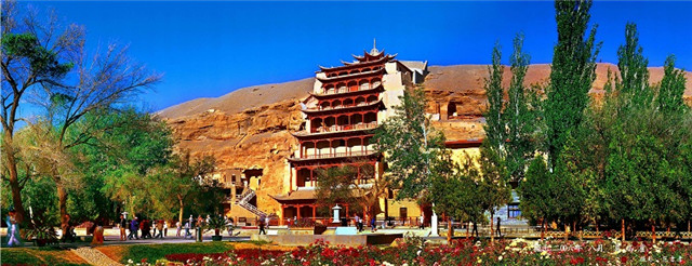
Located on the cliffs of Mingsha Mountain, 25 km southeast of Dunhuang, the Mogao Grottoes were founded in 366 AD. After continuous construction across ten dynasties from the Sixteen Kingdoms to the Yuan Dynasty, 735 caves, 45,000 square meters of murals, and 2,415 painted sculptures remain, making it the world's largest and richest Buddhist art treasure trove. It preserves masterpieces spanning the 4th to 14th centuries: the Northern Wei's "elegant figures" reflect Western Regions styles, Tang Dynasty sutra illustrations depict golden age grandeur, and Western Xia's Green Tara murals blend Tibetan Buddhism elements. The 1900 discovery of the Library Cave yielded over 50,000 manuscripts in Chinese, Tibetan, Uighur, and other scripts, spawning the international field of "Dunhuangology." The 35-meter-tall Maitreya Buddha in Cave 96, the Library Cave (Cave 17), and the Zhenguan-era murals in Cave 220 all narrate Buddhism's eastward journey and Sinicization. Now a UNESCO World Heritage Site, digital technology ensures these millennia-old artworks endure, continuing to tell the Silk Road's most moving tales of civilizational dialogue.
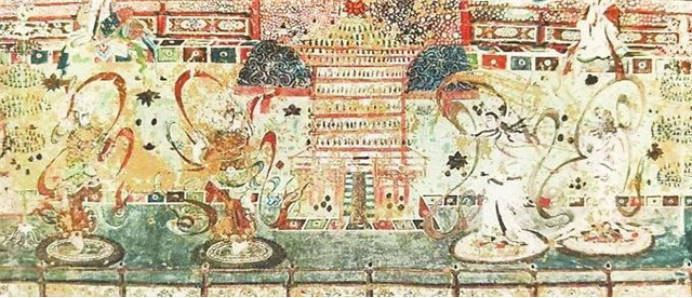
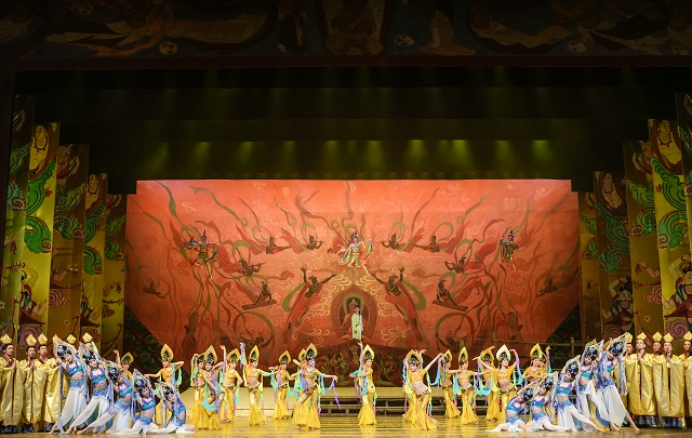
Music and Dance, Mogao Cave 220, Early Tang
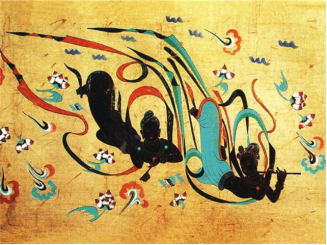
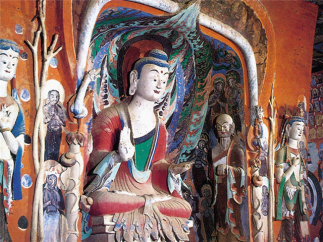
The mural depicts Dunhuang Mogao Grottoes
"The Dream of Dunhuang" is a love story spanning millennia against Dunhuang's cultural backdrop. Young painter Mogao, seeking artistic perfection, journeys to Dunhuang. Near death en route, he is saved by a woman, Yueya. Reunited in Dunhuang, they fall in love but face opposition from Yueya's father, a general. Ultimately, Yueya sacrifices her life to protect Mogao, transforming into a clear spring, while Mogao uses its water to complete his artistic masterpiece.
Mingsha Mountain and Crescent Lake: A Natural Wonder in the Desert
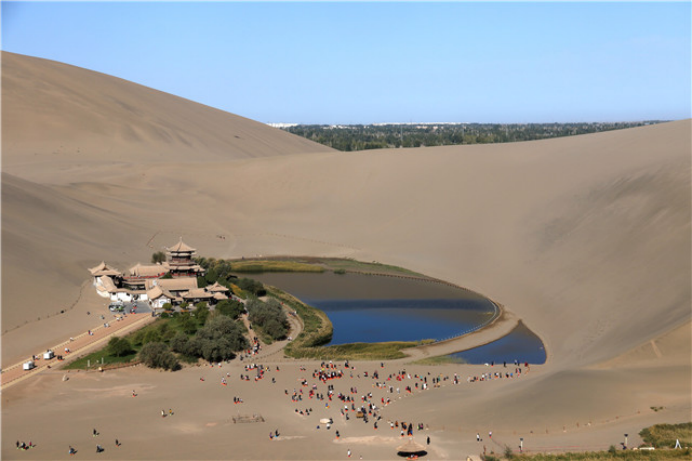
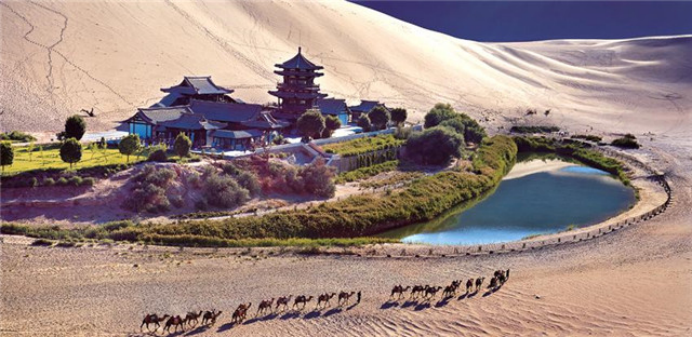
Five kilometers south of Dunhuang, Mingsha Mountain and Crescent Lake present the ancient marvel of "mountain and spring coexisting, sand and water harmonizing." The 40 km-long golden dunes resemble knife-cut waves, and sliding down the sand produces thunderous roars—a unique acoustic phenomenon called "singing sands." The crescent-shaped spring, nestled between dunes, remains clear and sweet, never drying up despite being surrounded by shifting sands, its depth steady at 1.5 meters due to a unique geological structure—fault water recharge and monsoon-induced circulation.
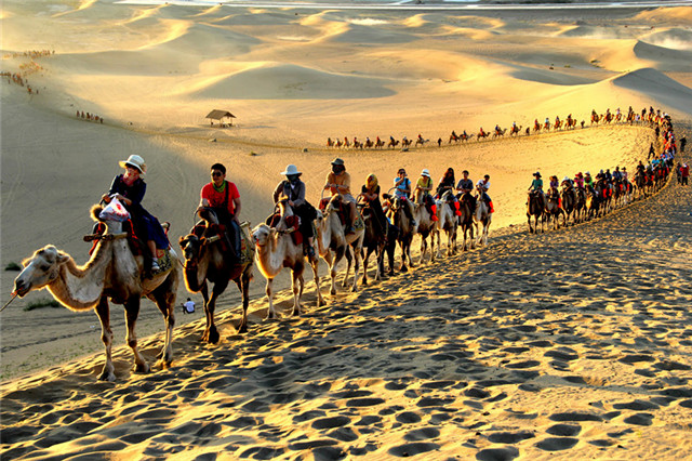
Han Dynasty records already noted "sand sounds heard in the city." The Qing-era Yaowang Temple complex by the spring creates the "Crescent Lake Dawn" vista. At sunset, when the dunes glow red-gold, camel silhouettes cross the ridges, and the spring mirrors stars and snow peaks, this oasis becomes the Silk Road's most dreamlike natural scenery, showcasing nature's miraculous artistry.
Yumenguan Pass: The Poetic Soul of Frontier Fortresses
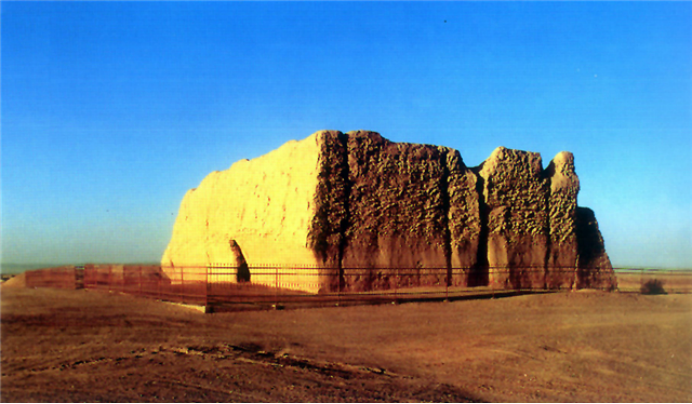
Standing 90 km northwest of Dunhuang, this Han Dynasty pass (Little Square Pan Fortress) was built in 121 BC as a Silk Road choke point. Its 9.7-meter-high earthen walls, along with nearby Han Great Wall and Hecang military granary, formed a complete frontier system. Ban Chao's lament—"I dare not hope for Jiuquan County, only to re-enter Yumenguan alive"—and Li Bai's verse—"Winds blow for miles, crossing Yumenguan"—turned this ruin into a literary landmark.
Excavated "Yumen Commandant" slips confirm Han customs protocols, while the wall's reed-layered construction remains visible. At sunset, when the fort turns blood-red, the weathered walls still whisper the homesickness of sentries two millennia ago, composing a timeless frontier ballad with the distant train whistles of modernity.
Local food Recommendations