
Wuwei Heavy Ion Therapy for Liver Cancer: 170 Cases Reveal Survival Breakthrough
Wuwei Heavy Ion Therapy for Liver Cancer: 170 Cases Reveal Survival Breakthrough
Liver cancer is often called the "king of cancers" due to its high incidence, high mortality, and complex treatment challenges. For many patients with inoperable or advanced liver cancer, traditional treatment methods often face difficulties such as significant trauma, high recurrence rates, and intolerable side effects. However, in Wuwei, Gansu Province, a cutting-edge technology hailed as a "national heavy weapon"—heavy (carbon) ion therapy—is opening a new path for liver cancer patients with detailed clinical data.
Since November 2018, when China's first heavy (carbon) ion therapy system with complete independent intellectual property rights was put into clinical use, the Wuwei Heavy Ion Center has completed eight years of practice. As of March 2026, the center has treated over 2,800 patients across more than 100 cancer types. Among these, liver cancer has become the third most common indication, with treatment volumes continuing to grow, forming the largest real-world dataset for heavy ion therapy in liver cancer in China. These data not only validate the safety and efficacy of domestically produced heavy ion equipment but also reveal its unique value in liver cancer treatment.
I.Baseline Characteristics of 170 Patients: Covering All Stages
As of March 20, 2026, the Wuwei Heavy Ion Center has treated a total of 170 liver cancer patients. As the third most common cancer type at the center, the volume of liver cancer treatments has shown a steady upward trend, with an increasing number of patients choosing and benefiting from this "national heavy weapon." The clinical characteristics of these patients are as follows:
- Sex distribution: 147 males (86.47%), 23 females (13.53%).
- Age distribution: Mean age (55.34 ± 11.07) years, with the oldest patient aged 83 and the youngest 25. The peak age range is 50–70 years, with some young and middle-aged patients (<40 years) also represented.
- Clinical staging: Among the 170 patients, 159 had clear clinical staging:
o Stage I: 10 cases (6.29%)
o Stage II: 23 cases (14.47%)
o Stage III: 44 cases (27.67%)
o Stage IV: 82 cases (51.57%)
It is worth noting that patients with stage III and stage IV disease together account for over 79%, meaning that advanced-stage patients make up the vast majority. This fully reflects the treatment philosophy of the Wuwei Heavy Ion Center—"no patient is turned away." Regardless of the stage, as long as the patient has a willingness to receive treatment and the multidisciplinary team (MDT) assesses that the patient can benefit, the center will strive to secure a valuable treatment opportunity for them. It is this commitment to never giving up on any patient that has led to a steady annual increase in the number of liver cancer cases treated and has brought hope to more patients with advanced disease.
2. Survival data analysis: The median survival time is 37 months, and the 5-year survival rate is 41.01%
Survival data is the "gold standard" for evaluating the value of a treatment modality. The Wuwei Heavy Ion Center conducted long-term follow-up on these 170 liver cancer patients, with the longest follow-up period reaching 69 months. Survival analysis was performed using the Kaplan-Meier method, and the results are as follows:
1. Overall Survival
- Median survival time: 37 months (95% confidence interval: 27–45 months). This means that half of the patients survived for nearly four years.
- Cumulative survival rates:
12 months: 84.51%
24 months: 68.85%
36 months: 60.79%
48 months: 46.01%
60 months: 41.01%
Key interpretation: Among liver cancer patients treated with heavy (carbon) ion therapy, over 80% survived beyond one year, nearly 70% beyond two years, and nearly half survived beyond four years. For liver cancer—often referred to as the "king of cancers"—this is a remarkable achievement, especially given that advanced-stage patients account for more than half of the cohort. These outcomes are not only significantly better than historical data from conventional treatments but also fully demonstrate the clinical value of heavy (carbon) ion therapy.
2. Stratified Analysis by Stage
Based on detailed stratified data:
- Patients with stage I–II disease: The median survival time was longer, with most patients surviving beyond three years, and some early-stage patients have been followed for over five years.
- Patients with stage III disease: The median survival time ranged from approximately 25 to 35 months, demonstrating the advantages of heavy ion therapy in the treatment of locally advanced liver cancer.
- Patients with stage IV disease: The median survival time ranged from approximately 14 to 18 months. Among these, patients with oligometastasis (e.g., lung metastases only or bone metastases only) survived beyond one year, and some achieved long-term disease control through heavy ion therapy combined with systemic treatment.
III. Comparison with Historical Data: Significant Improvement in Survival Rates
To better understand the value of heavy (carbon) ion therapy, we compared it with historical data on radiotherapy for liver cancer:
- Conventional non-surgical treatment: For inoperable locally advanced liver cancer, the 5-year survival rate of conventional non-surgical treatment is generally between 10% and 30%, with a median survival time of typically less than 2 years.
- Heavy (carbon) ion therapy: In this cohort, the 5-year survival rate reached 41.01%, with a median survival time of 37 months, representing a significant leap over conventional treatment.
- Comparison with international heavy ion studies: The 5-year survival rate for liver cancer reported by heavy ion centers in countries such as Japan is approximately 40%–50%, and the results from our center are comparable. It is worth emphasizing that in this cohort, patients with advanced-stage (stage III–IV) disease accounted for over 79%, representing a more complex patient population. Achieving such results under these circumstances is particularly remarkable and fully demonstrates that China’s independently developed heavy (carbon) ion therapy system has reached internationally advanced levels in the treatment of complex liver cancer.
IV. Why Can Heavy (Carbon) Ion Therapy Achieve Such Efficacy?
The excellent efficacy of heavy (carbon) ion therapy in liver cancer stems from its unique physical and biological advantages:
1. Physical advantage – The "precision strike" of the Bragg peak
Heavy (carbon) ion beams release minimal energy as they penetrate human tissue, only unleashing their full energy upon reaching the tumor target, forming a sharp energy peak that rapidly declines afterward. This characteristic enables highly precise delivery of high-dose radiation to the tumor site while maximizing protection of surrounding normal liver tissue, gastrointestinal tract, spinal cord, and other critical organs. Liver cancer patients often present with cirrhosis and poor liver function reserve, making the protection of normal liver tissue particularly crucial.
2. Biological advantage – The "armor-piercing" destructive power
The relative biological effectiveness of heavy (carbon) ions is 2 to 5 times that of conventional photons. They can directly induce double-strand breaks in tumor cell DNA, rendering cancer cells unable to repair and leading to cell death. This advantage is especially effective against "hypoxic cells," which are commonly found in liver cancer—conventional radiotherapy relies on oxygen to generate free radicals for tumor killing, but liver cancer tissues often grow rapidly and become hypoxic, leading to radiation resistance. Heavy (carbon) ions are not subject to this limitation and can effectively eliminate these "stubborn" cancer cells.
3. Foundation for combination therapy
As seen in the data, heavy (carbon) ion therapy, as a local treatment modality, plays a key role in prolonging patient survival when combined with systemic therapies (targeted therapy, immunotherapy, chemotherapy). For example, a 48-year-old patient with stage II liver cancer received heavy (carbon) ion therapy followed by combination therapy with lenvatinib and sintilimab, achieving survival beyond 69 months (nearly six years) with high-quality long-term disease control.
V. Treatment Safety: Well Tolerated with Low Incidence of Severe Toxicities
Heavy (carbon) ion therapy not only achieves excellent efficacy but also demonstrates a very low incidence of severe adverse events (such as radiation-induced hepatitis and gastrointestinal perforation) during treatment and follow-up. Among the 170 patients in this cohort, no grade 3 or higher radiation-induced hepatitis was observed. The majority of patients experienced only mild grade 1–2 reactions (such as fatigue and local skin reactions), indicating good tolerability. The safety profile is reassuring:
- Non-invasive and painless treatment process: Each treatment session lasts only 10–20 minutes, requires no anesthesia, and allows patients to maintain normal daily activities and diet.
- Mild toxicities: During treatment and follow-up, the incidence of severe adverse events (such as radiation-induced hepatitis and gastrointestinal perforation) is extremely low. Most patients experience only mild grade 1–2 reactions (e.g., fatigue, local skin reactions), with good tolerability.
- Minimal impact on liver function: Due to the precision of the heavy ion beam, normal liver tissue is better protected, which is especially important for liver cancer patients with concurrent cirrhosis.
VI. Which Liver Cancer Patients Are Suitable for Heavy (Carbon) Ion Therapy?
Based on clinical experience from 170 cases, heavy (carbon) ion therapy is suitable for the following liver cancer patients:
- Early-stage liver cancer (stage I–II): Can serve as a curative approach, offering a "non-invasive cure" option for patients who are unsuitable for or unwilling to undergo surgery.
- Locally advanced liver cancer (stage III): For patients with tumors invading major blood vessels or located in unfavorable positions that preclude surgical resection, heavy (carbon) ions can effectively control the local lesion.
- Oligometastatic liver cancer (stage IV): For patients with a limited number of metastases (e.g., intrahepatic, lung, bone), heavy (carbon) ion therapy can treat both the primary tumor and metastatic lesions simultaneously, combined with systemic therapy to achieve long-term disease control.
- Re-irradiation: For patients with local recurrence or new oligometastatic lesions, re-irradiation with heavy (carbon) ions is also safe and effective. The center has accumulated extensive experience in re-irradiation, providing patients with additional treatment options.
VII. Conclusion: China's Heavy Weapon – A New Hope in Liver Cancer Treatment
Eight years of dedication have honed this achievement. From the first liver cancer patient treated in November 2018 to the present day, the Wuwei Heavy Ion Center has spent eight years writing a chapter on the development of domestically produced heavy ion therapy for liver cancer—from scratch to excellence. The real-world data from 170 liver cancer patients, supported by detailed statistics and long-term follow-up, powerfully demonstrate the outstanding value of heavy (carbon) ion therapy in the field of liver cancer:
- Significant efficacy: Median survival time of 37 months, with a 5-year survival rate of 41.01%
- Broad applicability: Advanced-stage patients account for over 79%, truly reflecting the center's commitment to "not selecting patients" and embodying the public welfare mission of a public hospital
- Safe and controllable: Extremely low incidence of severe toxicities, with good patient tolerability
- Sustained growth: As the third most common cancer type at the center, the volume of liver cancer treatments continues to increase year by year, with more patients choosing heavy ion therapy
With its high efficacy, low toxicity, and precision, heavy (carbon) ion therapy is becoming an indispensable component of comprehensive liver cancer treatment. It not only offers a curative new option for early-stage patients but also brings hope for prolonged survival, pain relief, and improved quality of life for patients with intermediate and even advanced disease. Standing at a new historical starting point, domestically produced heavy ion therapy for liver cancer has entered a phase of rapid development, poised to illuminate the path forward for more liver cancer patients.
VIII. Typical Cases
[Case 1] Chen XX, male, 65 years old, admitted on August 10, 2020.
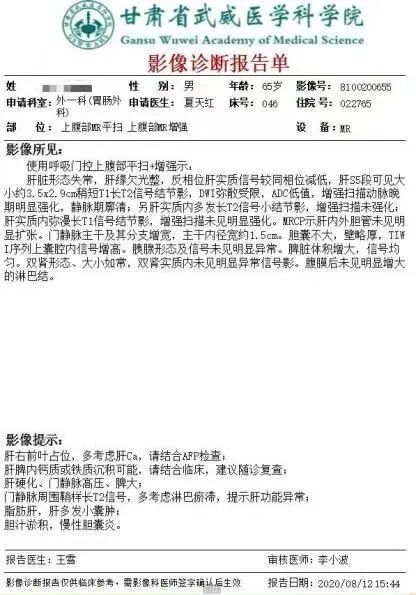
Chief Complaint: Diagnosed with liver malignancy for over 2 years. The patient reported that 2 years prior to admission, in September 2018, he visited the Third Military Medical University in Shanghai and was diagnosed with "primary liver malignancy." At that time, he underwent one session of transcatheter arterial chemoembolization (TACE). In November 2018, he underwent a second session of TACE at the same institution. Subsequently, the tumor was found to be slowly enlarging. By August 2020, the tumor had grown to 5 cm in size.
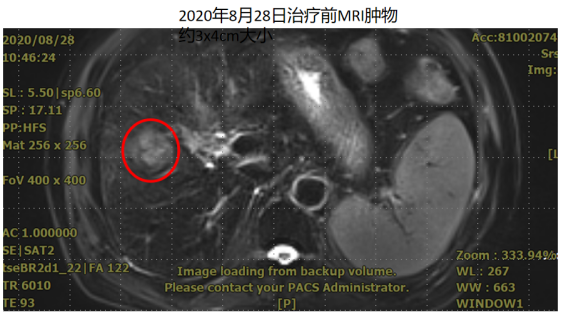
On August 28, 2020, the MRI showed that the mass was approximately 3x4 cm in size before treatment
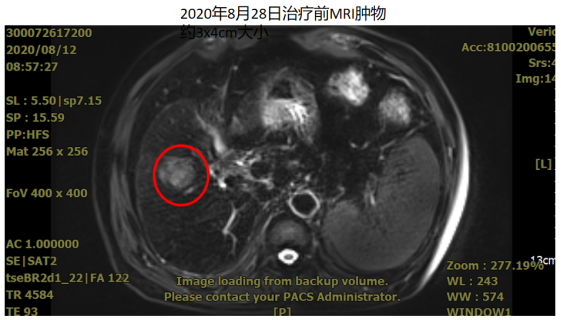
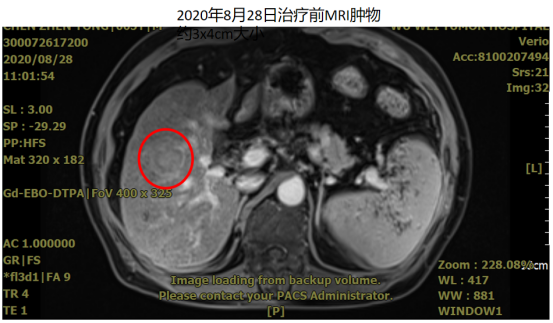
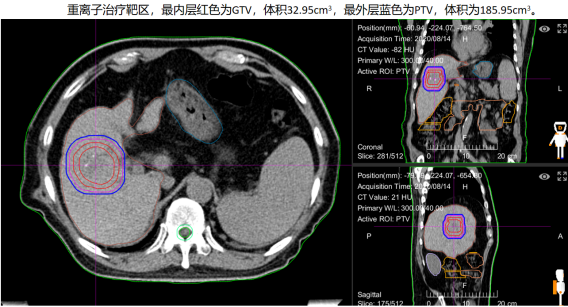
For the target area of heavy ion therapy, the innermost red part is the GTV with a volume of 32.95 cm³,
and the outermost blue part is the PTV with a volume of 185.95 cm³.
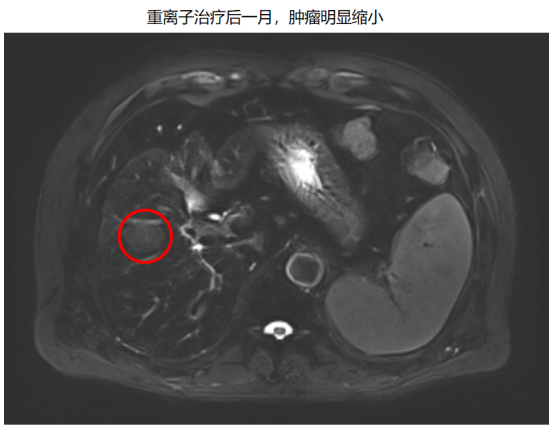
One month after heavy ion therapy, the tumor has significantly shrunk
After heavy (carbon) ion therapy, the patient did not receive any further medication and was followed up regularly. As of the date of this report, 67 months after heavy (carbon) ion therapy, the patient's tumor has completely disappeared, and he has fully recovered without any medication, achieving complete remission.
Case provided by: Dr. Zhang Yanshan
Department: Radiation Oncology Center Ⅰ(International Medical Department Ⅰ)
[Case 2] Heavy (Carbon) Ion Therapy for Liver Cancer with Multiple Intrahepatic Metastases
Patient: Lei XX, female, 55 years old, from Shaanxi Province. Medical History: On December 2, 2022, the patient underwent an abdominal MRI during a routine health check-up, which revealed a space-occupying lesion in the right lobe of the liver, measuring approximately 5.0 cm × 4.8 cm, along with multiple intrahepatic nodules ranging from 1.0 to 1.8 cm, highly suggestive of liver cancer. Tumor marker testing showed AFP at 390.80 ng/ml. On December 7, 2022, the patient visited our hospital. PET-CT showed a slightly hypodense mass in segment VIII of the liver, measuring approximately 41.5 × 40.2 × 32.8 mm, with metabolic activity similar to the liver background. Combined with the external MRI findings, it was considered highly suggestive of well-differentiated hepatocellular carcinoma (HCC). Abdominal MRI indicated multiple space-occupying lesions within the liver, suggestive of HCC with intrahepatic metastasis. Ultrasound-guided percutaneous liver biopsy was performed. Postoperative pathology confirmed moderately differentiated hepatocellular carcinoma. Immunohistochemistry results showed: CD34 (vascular+), Glypican-3 (+), Hepatocyte (+), Ki-67 (index approximately 5%), CK8/18 (+), CK19 (-), CK7 (-). Diagnosis: Liver malignancy, hepatocellular carcinoma (moderately differentiated), rcT2N0M0 stage II, BCLC stage B (intermediate), CNLC stage IIb, Child-Pugh class A, KPS score: 90. The patient received heavy (carbon) ion therapy for the liver lesions from December 21, 2022, to January 3, 2023.
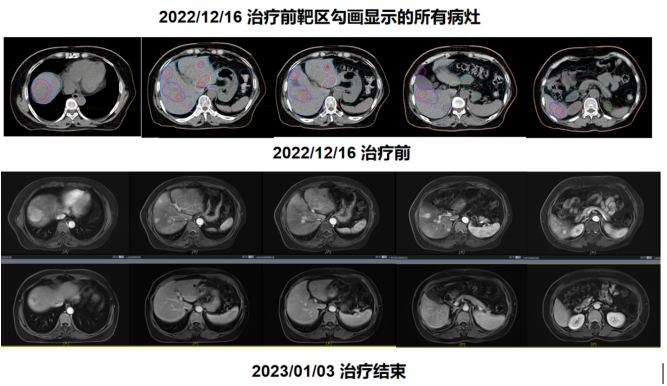
The above images respectively show all the lesions outlined in the target area before treatment on 2022/12/16,
and the comparison between before treatment on 2022/12/16 and after the end of treatment on 2023/01/03.
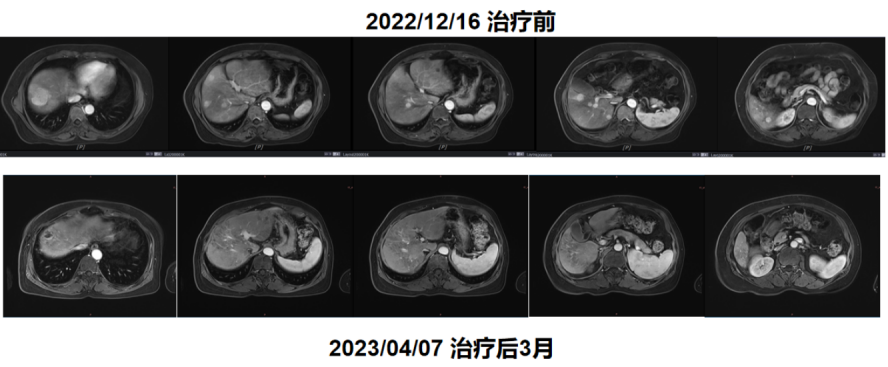
The above figure shows the comparison between before treatment on 2022/12/16 and 3 months after treatment on 2023/04/07
Case provided by: Dr. Zhang Yanshan
Department: Radiation Oncology Center Ⅰ(International Medical Department Ⅰ)
[Case 3] Patient Wu, female, artist, 67 years old.
In June 2022, a liver space-occupying lesion was discovered. In July 2022, she underwent yttrium-90 (⁹⁰Y) therapy at Hainan Cancer Hospital (costing over 400,000 RMB). Three months after ⁹⁰Y therapy, the tumor was found to be uncontrolled. On February 21, 2023, she visited the Affiliated Hospital of China Medical University and underwent ultrasound-guided liver biopsy. Pathology indicated: (liver) consistent with intrahepatic cholangiocarcinoma, Ki-67 (70%+). Genetic testing revealed no clinically significant mutations. PD-L1 testing showed TPS <1%, CPS = 1. On February 23, 2023, she underwent transarterial chemoembolization (TACE) with fluorouracil and lobaplatin. In April 2023, she visited the Wuwei Heavy Ion Center. Abdominal ultrasound revealed a 59 × 41 mm hypoechoic mass in the right lobe of the liver, with the tumor encasing the intrahepatic bile duct. PET-CT indicated: post-⁹⁰Y therapy status for cholangiocarcinoma; now an irregular, slightly hypodense mass in segment IV of the liver with dense small nodules within and uneven ring-like increased metabolic activity at the margins, suggesting tumor progression. Abdominal MRI showed an enhancing mass with marginal enhancement at the interface between the left and right lobes of the liver, crossing the hepatic fissure, measuring 6.0 × 3.6 cm, with no obvious central enhancement and peripheral ring-like enhancement. After multidisciplinary team (MDT) evaluation at the Wuwei Heavy Ion Center, the patient was assessed as having indications for heavy (carbon) ion therapy. On April 17, 2023, she underwent heavy (carbon) ion therapy, with tumor dose escalation under high-frequency oscillatory ventilation (HFOV) organ motion management, along with heavy (carbon) ion therapy to the hepatic portal regional lymphatic drainage area. After discharge, the patient developed grade 1 radiation-induced skin reaction; no other radiation-related reactions were observed. Three months after treatment (July 2023), the patient underwent a follow-up abdominal ultrasound at a local hospital, which showed fatty liver with no evidence of tumor disease. She subsequently visited Shenyang Fourth People's Hospital, where abdominal ultrasound also revealed no tumor-related lesions. In August 2023, she returned to our hospital for abdominal MRI, which showed post-heavy (carbon) ion therapy changes, with tumor markers returning to normal. Other indicators remained within normal ranges.
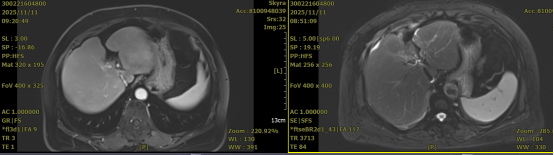
The image above shows the re-examination imaging of our hospital in November 2025, and the tumor has completely disappeared.
This patient had intrahepatic cholangiocarcinoma that was poorly controlled after yttrium-90 therapy (costing over 400,000 RMB). Following non-invasive heavy ion therapy, the treatment outcome was satisfactory. As of the date of this report, 30 months after heavy (carbon) ion therapy, the patient's tumor has completely disappeared, her physical condition is good, and she is living a completely normal life.
Case provided by: Dr. Zhang Yanshan
Department: Radiation Oncology Center Ⅰ(International Medical Department Ⅰ)
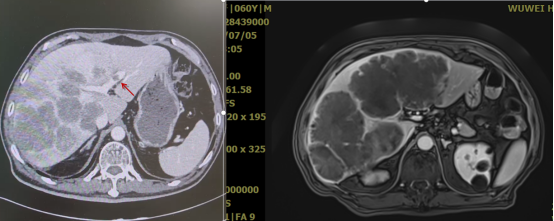
[Case 4] For a patient with advanced disease who was unable to receive drug therapy or undergo liver transplantation, we first precisely treated the tumor thrombus in the left portal vein branch to preserve the left liver lobe. After the left liver lobe had enlarged, we then used heavy (carbon) ion therapy to treat the multiple large tumors in the right liver lobe. The patient's liver function was stabilized, quality of life returned to normal, and life was effectively prolonged with high quality.
Case provided by: Dr. Zhang Yanshan
Department: Radiation Oncology Center Ⅰ(International Medical Department Ⅰ)
[Case 5] Male, 49 years old, with hilar hepatocellular carcinoma. We utilized Wuwei Heavy Ion Center's unique high-frequency oscillatory ventilation (HFOV) technology to address respiratory motion, enabling precise treatment of the tumor located between the portal vein and bile duct. After treatment, the tumor rapidly disappeared.
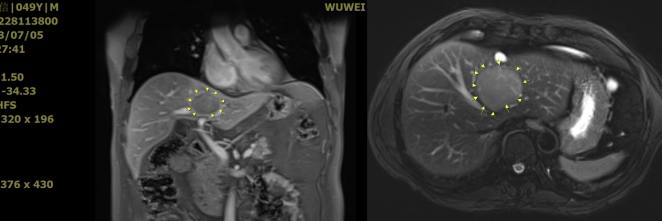
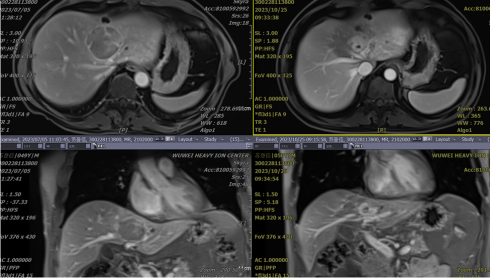
The left image shows the condition before heavy (carbon) ion therapy in July 2023, and the right image shows the condition after heavy (carbon) ion therapy. Following heavy (carbon) ion therapy, the tumor rapidly disappeared, with fibrous tissue observed. During treatment, the patient experienced no discomfort, and liver function remained normal throughout. As of the date of this report, 26 months after heavy (carbon) ion therapy, the patient's tumor has completely disappeared, his physical condition is good, and he is living a completely normal life.
Case provided by: Dr. Zhang Yanshan
Department: Radiation Oncology Center Ⅰ(International Medical Department Ⅰ)
Contributor: Zhang Yihe (Director of the Radiation Oncology Center Ⅰ)
Reviewer: Zhang Yanshan (Vice President of Gansu Wuwei Cancer Hospital)
Data Providers: Chen Xuelian, Li Pengqing (Cancer Registration and Follow-up Office)
Date: March 27, 2026