
Wuwei Heavy Ion Center Pioneers Bladder Cancer Treatment with Precision Capacity Control
World's First! Wuwei Heavy Ion Center Achieves Clinical Breakthrough in Bladder Cancer Heavy Ion Treatment with Precise Bladder Capacity Control Technology
In recent years, the Wuwei Heavy Ion Center at Gansu Wuwei Cancer Hospital has been continuously dedicated to the independent innovation and clinical expansion of heavy ion therapy technology. Its pioneering "Wuwei Protocol" (Galloping Scheme), developed for the treatment of muscle-invasive bladder cancer, has successfully addressed the worldwide challenge of treatment target displacement through the application of a self-developed "bladder capacity-pressure control assistive device." This protocol has provided 37 bladder cancer patients with an efficient, non-invasive treatment option that perfectly preserves bladder function—the "Wuwei Protocol."
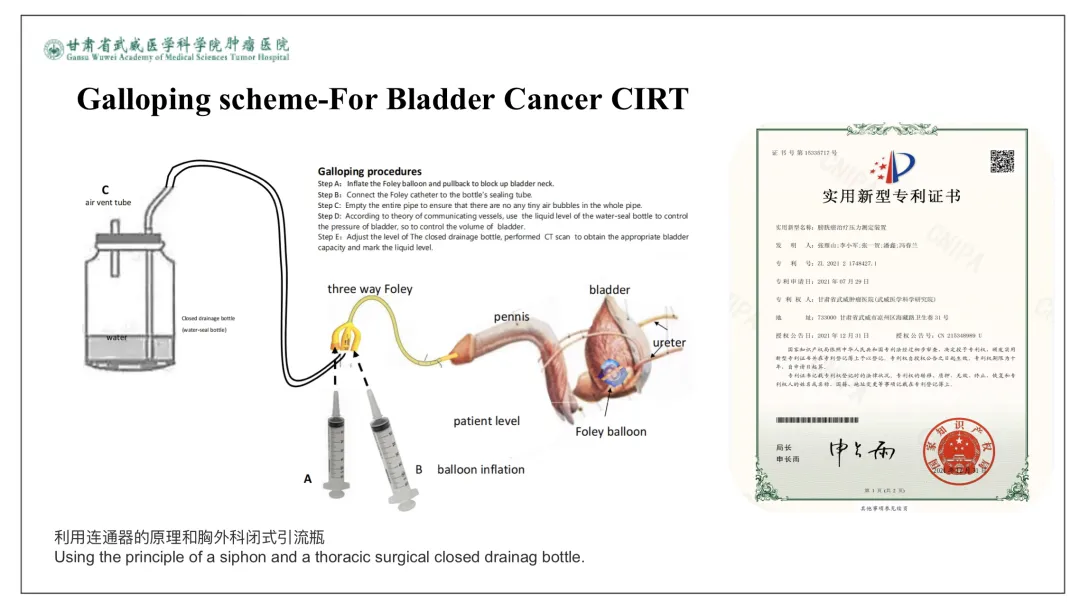
The bladder, as a stretchable urinary storage organ, experiences significant displacement of tumor target areas due to changes in capacity and tension. This has long been a core bottleneck restricting the precision of radiotherapy and affecting treatment efficacy. Traditional radiotherapy techniques struggle to achieve accurate dose coverage, while other international carbon ion centers have yet to initiate clinical research on bladder cancer due to the inability to effectively control this dynamic variability. Faced with this technological gap, the Wuwei Heavy Ion Center took a unique approach by innovatively developing bladder capacity-pressure control technology. Through a patented device, it precisely regulates and maintains the ideal bladder state before and during treatment, creating a stable and reproducible "dose delivery space."
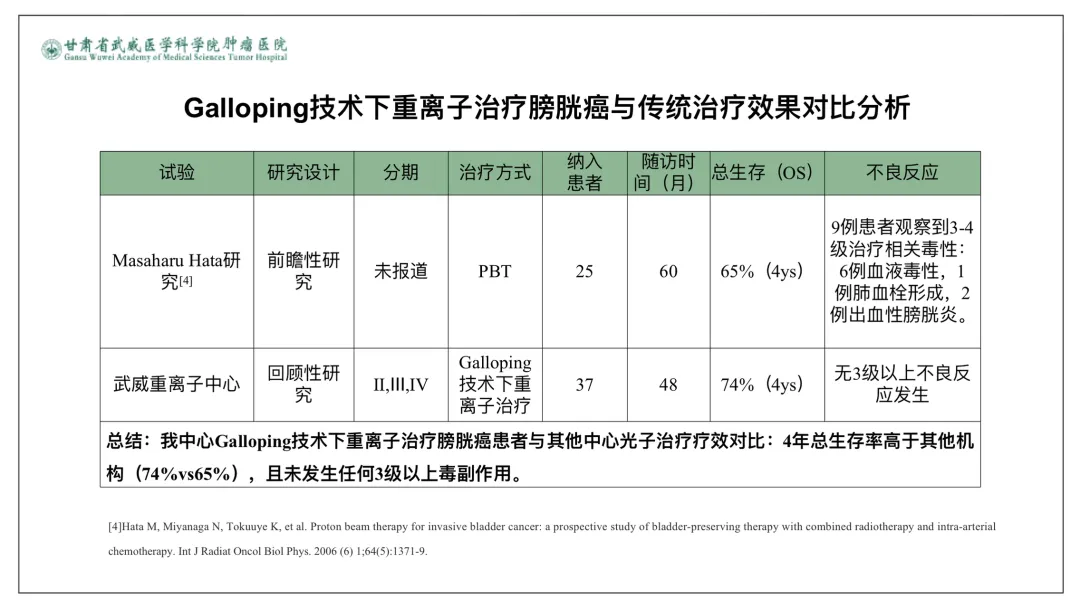
Compared to traditional treatment approaches, this technology achieves three core breakthroughs:
1. Millimeter-Level Precision in Radical Treatment: By stabilizing bladder capacity, dynamic target areas are transformed into static ones, ensuring that the Bragg peak of heavy ions perfectly aligns with the tumor. This enables "precision targeting" of the dose deep within the lesion, significantly improving tumor control rates.
2. Excellent Organ Function Preservation: While delivering a radical dose to the tumor, precise target area control greatly reduces radiation exposure to surrounding healthy tissues (such as the rectum and small intestine). This allows for the successful preservation of complete bladder function in most patients, fundamentally improving their quality of life while eradicating the tumor.
3. Efficient and Non-Invasive Treatment Model: This approach is non-invasive, well-tolerated by patients, and features a smooth treatment process. It avoids the trauma, complications, and lengthy recovery periods associated with surgery, opening a new curative pathway for elderly patients or those unsuitable for surgery.
The core of this technological breakthrough lies in establishing a new three-dimensional treatment paradigm of "precision eradication + functional preservation + process optimization." This approach seamlessly integrates the physical and biological advantages of heavy ion beams with precise organ motion management, enabling radiotherapy-based comprehensive bladder-preserving treatment to transition from theoretical feasibility to clinical efficacy. In stark contrast, the standard treatment for traditional muscle-invasive bladder cancer is radical cystectomy. This surgery not only requires complete removal of the bladder but also involves reconstructing the urinary tract using colon or rectal tissue to form a substitute bladder. The physical and psychological trauma inflicted by this procedure is profound and irreversible: Physically, a colon or rectal substitute bladder cannot replicate the normal functions of urine storage and control, often necessitating lifelong use of a urine collection bag. This leads to significant inconvenience and a high risk of complications such as urinary tract infections and hydronephrosis. Even patients who undergo orthotopic neobladder reconstruction frequently struggle with issues like urinary incontinence and difficulty urinating, severely impacting their quality of life. Psychologically, the loss of bodily function, changes in physical appearance, and the long-term burden of care can easily trigger negative emotions such as low self-esteem, depression, and anxiety. These factors profoundly affect patients’ social and family lives and may even erode their confidence in living a fulfilling life.
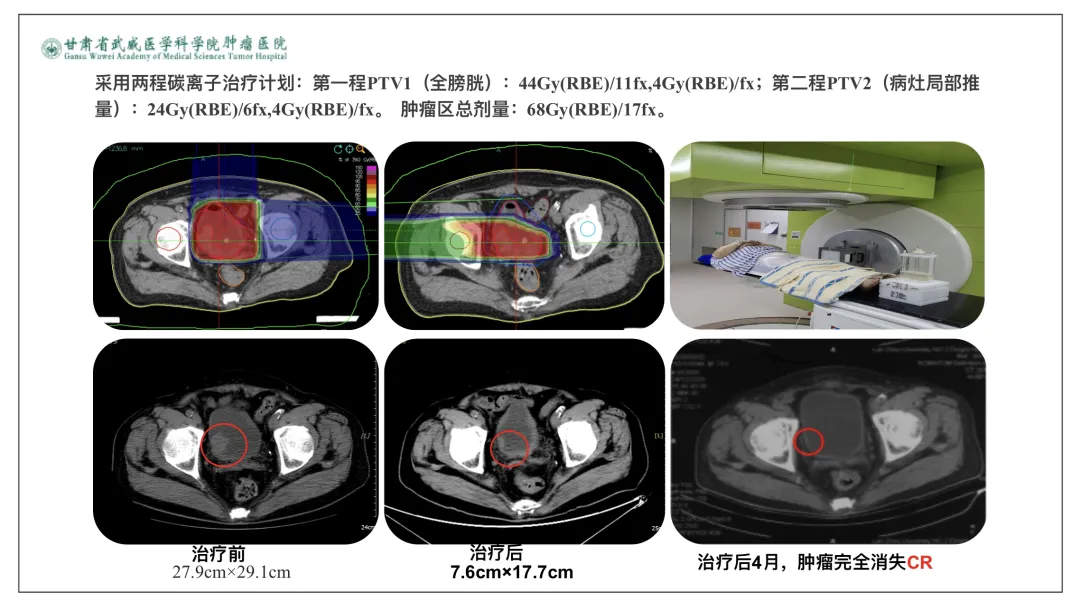
Mr. Zhang, aged 76, is one of the beneficiaries of the "Wuwei Protocol." Diagnosed with bladder cancer (cT2N0M0), he would have faced not only the trauma of bladder removal but also a significant decline in quality of life if he had undergone traditional surgery. After receiving two courses of carbon ion irradiation under the "Wuwei Protocol," Mr. Zhang's total dose to the tumor area reached 68 Gy(RBE). By the end of the treatment, symptoms such as hematuria had completely disappeared, and follow-up examinations showed significant tumor shrinkage. At the three-month follow-up, CT evaluation revealed that the tumor had completely vanished, and bladder function remained fully intact, truly achieving the dual goals of tumor control and organ preservation.
As a pioneering hub of China's heavy ion therapy technology, the "Wuwei Protocol" has not only overcome international clinical technical barriers in carbon ion therapy for bladder cancer and filled a global gap in this field, but also, through its original "Chinese innovation," driven a revolutionary shift in bladder cancer treatment philosophy—from traditional "organ removal" to a balanced focus on "precision eradication and functional preservation." In the future, as this technology is further refined and promoted, it will offer a superior treatment option for a vast number of bladder cancer patients worldwide, fully demonstrating China's independent innovation capabilities and international leadership in high-end medical technology.