
Nation's First Clinical Use of Heavy Ion Breast-Conserving Radiotherapy
Nation's First Application of Heavy Ion Breast-Conserving Radiotherapy Technology in Clinical Practice
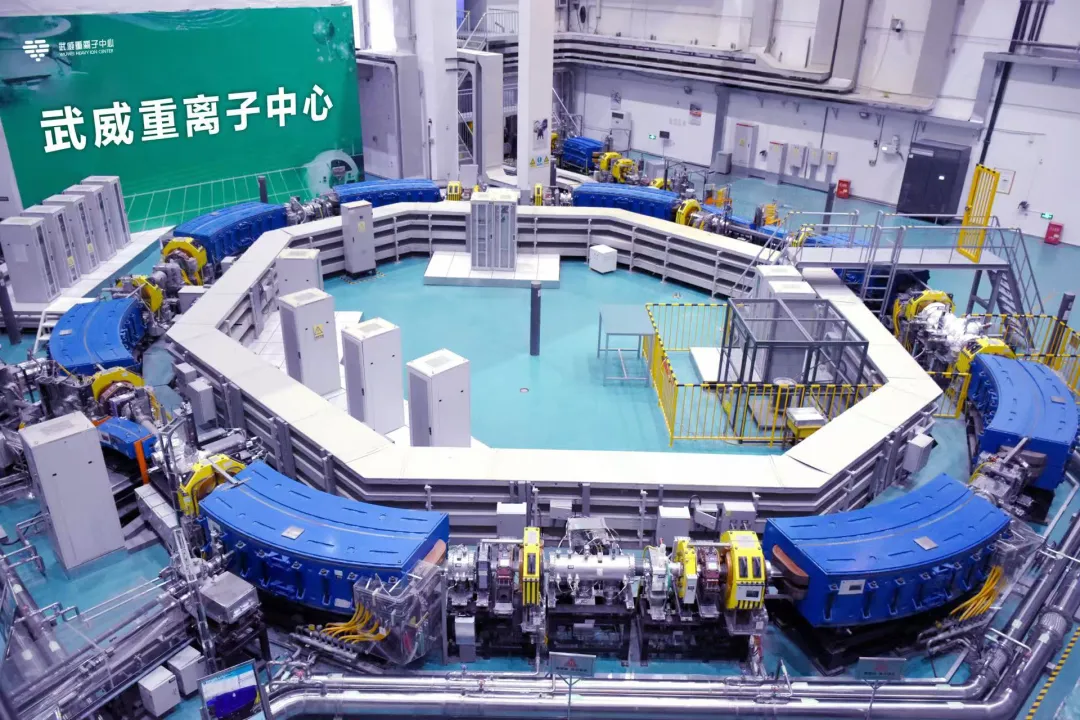
As the "number one threat" to women's health, breast cancer treatment has long faced the global dilemma of "balancing efficacy and quality of life." For early-stage patients, surgical resection was once the primary path to a cure. However, the physical and psychological trauma caused by breast loss, postoperative complications, and the resulting issues such as diminished self-esteem and social anxiety have become insurmountable life challenges for countless women. Today, this dilemma has seen a breakthrough solution. The Wuwei Heavy Ion Center of Gansu Wuwei Cancer Hospital has successfully applied its independently developed radical carbon ion breast-conserving radiotherapy technology in clinical practice. Building on international research while achieving key innovations, this technology not only fills a domestic gap but also provides an upgraded "Chinese solution" for global breast-conserving treatment, offering broader indications, more precise dose control, and superior safety outcomes.
Japan has been an early pioneer in the field of heavy ion breast-conserving radiotherapy for breast cancer. As early as the late 1980s, Japan initiated clinical research on breast-conserving surgery combined with radiotherapy for early-stage breast cancer, confirming the feasibility of conservative treatment for stages I and II, with an 8-year disease-free survival rate reaching 95.8%.
Although Japan has since made iterative advancements in technologies such as image guidance and combination therapy strategies and has attempted to optimize treatment plans through high-precision radiotherapy techniques, certain areas remain to be improved: the indications are largely limited to early-stage patients, with coverage for intermediate to advanced cases and special populations such as the elderly or those with underlying conditions yet to be expanded; the dosing protocols are relatively uniform, leaving room for more individualized and precise adjustments; and the synergy of comprehensive treatment has yet to be fully optimized, requiring further enhancement in balancing long-term survival with quality of life. As the "Jinggangshan" of China's heavy ion technology, the Wuwei Heavy Ion Center leverages the core advantages of carbon ion radiotherapy—"highly concentrated dosing, significant biological effects, and minimal damage to normal tissues." By precisely addressing the shortcomings of Japanese research, the center has developed a more comprehensive and precise radical breast-conserving radiotherapy system for breast cancer, achieving three key breakthroughs:
Breakthrough 1: Expanded Indications, Enabling Breast-Conservation for More Patients
This study breaks through Japan’s limitation of targeting only stage I patients, explicitly including primary breast cancer patients aged >18 years who meet the UICC 8th edition cT1-3N1-2M0 staging criteria. It particularly focuses on special groups who are "unwilling or unable to undergo surgery"—including elderly, frail patients, those with underlying conditions, or those with a strong desire for breast conservation. This breakthrough not only extends the applicability of breast-conserving treatment to intermediate and advanced stages but also offers women who resist treatment due to fears of physical disfigurement the possibility of "curing the tumor while preserving their complete selves," significantly enhancing the clinical inclusivity of the technology.
Breakthrough 2: Personalized Precision Treatment, Achieving Dual Improvement in Efficacy and Safety
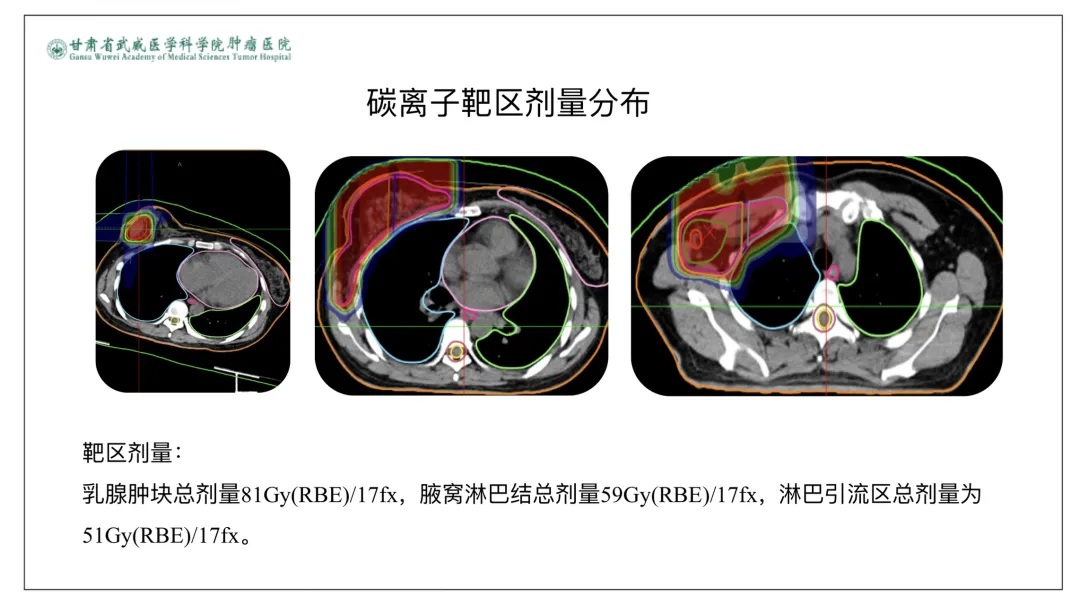
In the target area immobilization stage, the center employs a triple immobilization technique using its self-developed breast fixation device (Utility Model Patent No.: ZL202221125437.4) combined with a vacuum cushion and thermoplastic body film. This approach fundamentally addresses the challenge of target area displacement, laying a solid foundation for precise radiotherapy. In terms of dosage planning, the center moves away from Japan’s single-dose model, instead tailoring precise plans based on individual differences such as tumor size, distance from the skin, and pathological type. A curative dose of 72–80 Gy(RBE) is administered to the tumor target area, while a preventive dose of 40 Gy(RBE) is delivered to the whole breast and lymphatic drainage areas. Positive lymph nodes are adjusted to receive 48–60 Gy(RBE) based on their size. Furthermore, multi-field irradiation technology is utilized to optimize dose distribution, minimizing skin exposure and significantly reducing the risk of complications such as radiation dermatitis. This approach truly achieves the dual goals of "precisely targeting tumors while rigorously protecting normal tissues."
Breakthrough 3: Integrated Diagnosis and Treatment System, Ensuring Long-Term Survival and High-Quality Life
Building upon and enhancing Japan’s integrated treatment philosophy, the center ensures that all patients receive personalized comprehensive therapies—including endocrine therapy, targeted therapy, and chemotherapy—based on ER, PR, and Her-2 molecular profiling results and in strict accordance with the latest NCCN guidelines. This creates a synergistic system of "carbon ion radiotherapy + precision integrated treatment." The treatment is completed in 12 sessions, administered once daily from Monday to Friday, significantly shortening the treatment cycle compared to traditional approaches. This model not only reduces the patient's medical burden and improves the efficiency of healthcare resource utilization but also enables patients to quickly return to their families and careers, preventing social isolation due to prolonged recovery or physical impairment. It achieves dual assurance of "long-term survival" and "high-quality life."
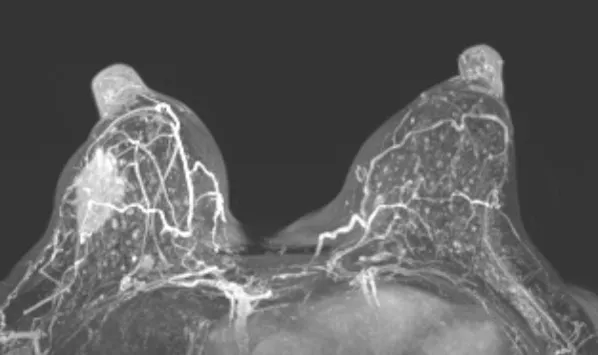
Li **, female, 50 years old, from Tianjin. Diagnosis: 1. Malignant tumor of the breast, lateral (right side); invasive carcinoma; ER(+), PR(+), HER-2(-); Luminal A type; cT2N1M0 stage IIB; KPS score: 90. 2. Benign breast tumor (right breast - fibroadenoma). 3. Auxiliary examination: PET-CT performed at our hospital on May 30, 2022, indicated a soft tissue mass approximately 10 mm lateral to the right nipple near the areola, with increased metabolism and slight skin dimpling in the corresponding area; multiple lymph nodes in the right axilla showing increased metabolism. The findings are suggestive of right breast cancer with metastasis to the right axillary lymph nodes.
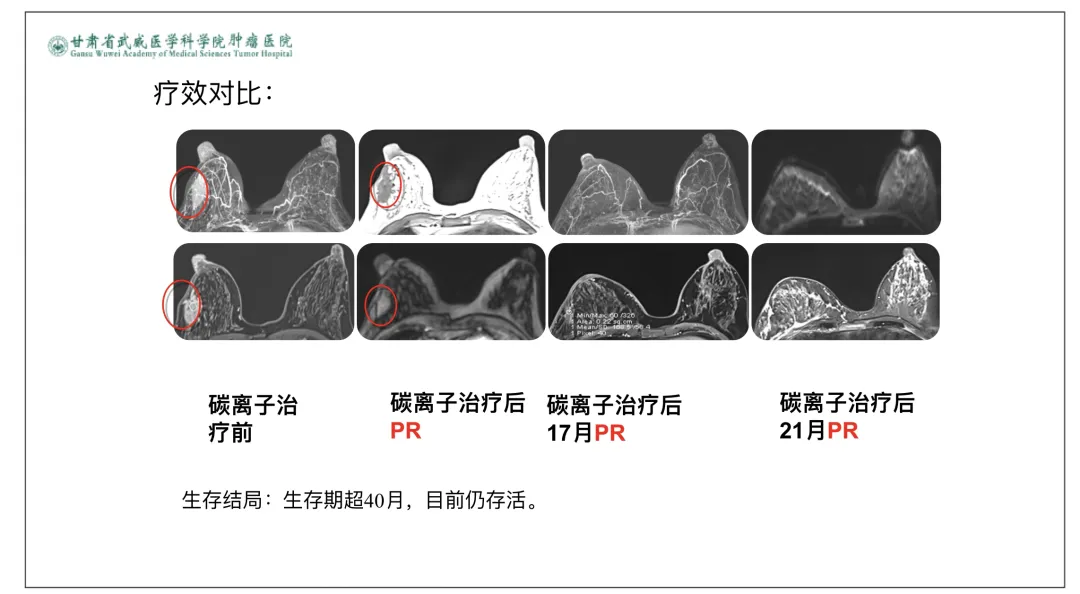
This technological breakthrough not only represents an iterative upgrade of Japan's early-stage research but also marks a critical leap for China from "catching up to leading the way" in the field of heavy-ion breast-conserving therapy for breast cancer. Leveraging its independently innovative technical system, the Wuwei Heavy Ion Center has provided a "Chinese solution" that is more universal, precise, and effective for global breast cancer treatment. This achievement not only reshapes the clinical landscape of breast cancer therapy but also upholds women's bodily integrity and dignity with the power of technology, illuminating a hopeful path for countless patients to regain confidence and rebuild their lives.