The Story of Heavy Ion Therapy for Thoracic Tumors
The Story of Heavy Ion Therapy for Thoracic Tumors
—A Classic Case of Precise Heavy Ion Therapy for Lung Cancer
Ms. Zhang from Gansu had once enjoyed a life of perfect happiness—a loving family, a thriving career, and an overwhelming sense of fulfillment. But in 2020, a sudden, deep pain in her chest shattered everything.
At the time, she began experiencing frequent irritability and a persistent lack of energy. "Back then, I was always full of vigor—speaking quickly, working efficiently, busy every day with boundless energy. I had a good appetite and stayed active. But gradually, even walking or cooking became exhausting. While working, I felt fine, but as soon as I sat down, fatigue would hit me. Sometimes at night, I’d even feel sudden stabbing pain in my chest," Ms. Zhang recalled.
Pressed by her family, she sought medical examinations. Since the pain was primarily internal, targeted tests were conducted—but no clear cause was found.
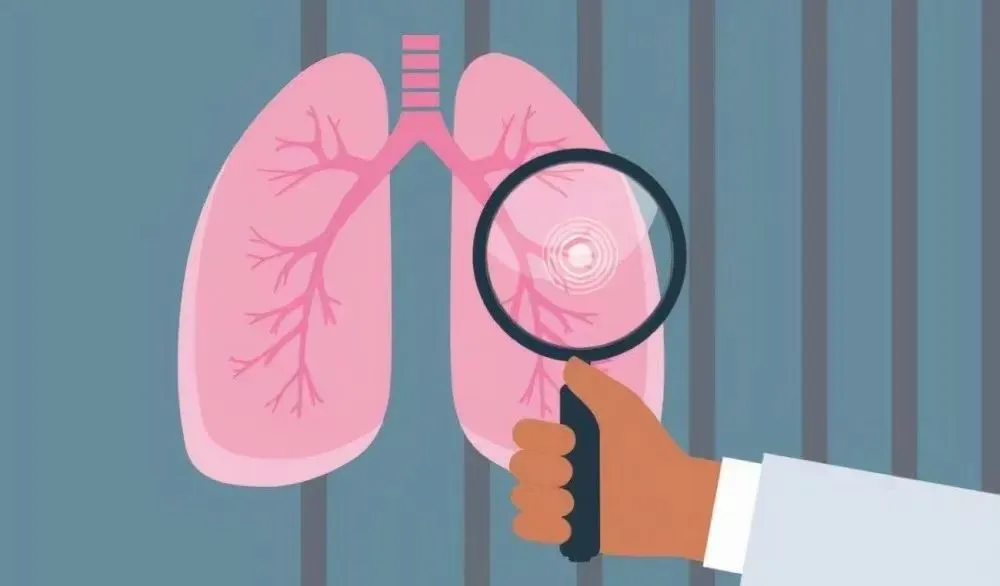
By March 2021, Ms. Zhang's pain had intensified dramatically, with the discomfort persisting for five to six hours each day, severely disrupting her work and daily life. Then in May, she began experiencing unexplained coughing. Neither loquat syrup nor anti-inflammatory medications provided any relief—the dry cough persisted without any apparent cause. Finally, she sought examination at the Heavy Ion Therapy Center of Gansu Wuwei Academy of Medical and Science Cancer Hospital. A PET-CT scan revealed a space-occupying lesion in the basal segment of the right lower lobe of her lung, accompanied by elevated glucose metabolism, leading to a diagnosis of lung cancer.
The moment she received her lung cancer diagnosis, Ms. Zhang was overwhelmed with helplessness. Her once-vibrant sense of happiness, like colorful clouds in the sky, quickly dissipated without the blue sky of health to sustain it. She felt as though death was imminent—losing all motivation to do anything, finding no joy in daily activities. "What's the point?" she thought. "Even if I do something today, it won't matter tomorrow. There's no drive left in me."
However, with the unwavering support of our hospital's medical team, Ms. Zhang found the courage to fight her illness. She actively researched carbon ion therapy cases from multiple sources, while Director Chen from the Heavy Ion Therapy Center closely monitored her condition. Through genetic testing, Director Chen identified an EGFR21 exon L858R mutation. After ruling out radiation therapy contraindications, Ms. Zhang began receiving carbon ion radiotherapy in July 2021, combined with the targeted oral medication osimertinib.
As she recalled, "The medical staff at Wuwei Medical Science Academy's Heavy Ion Therapy Center are incredibly dedicated. Every glance, every action—they made me feel like they never gave up on me. Their care sent a powerful message: 'Your life matters to us. We need you to survive.' This support was intangible yet deeply empowering."
The treatment yielded remarkable results: Ms. Zhang experienced no chest tightness, shortness of breath, or coughing post-therapy. Imaging showed significant tumor shrinkage, with efficacy assessed as partial response (PR). After 20 months of follow-up, there has been no recurrence or metastasis.
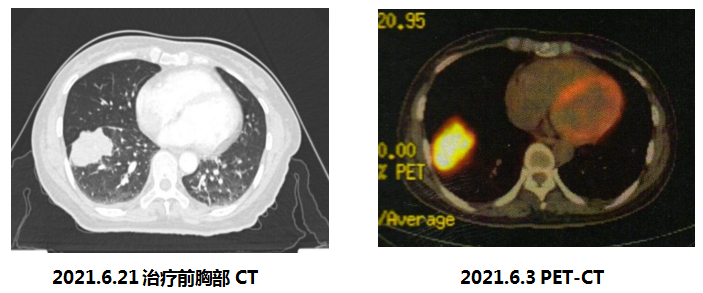
Left: Chest CT scan before treatment (June 21, 2021)
Right: PET-CT scan (June 3, 2021)
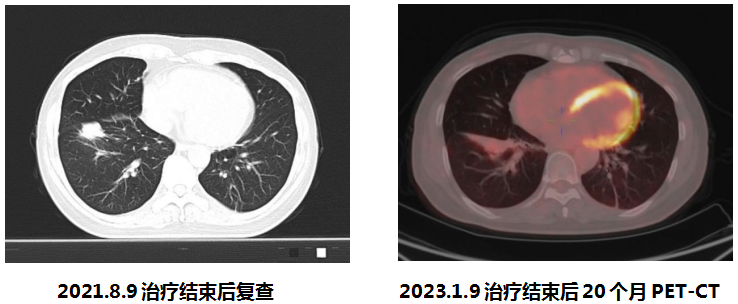
Left: Follow-up CT scan after treatment completion (August 9, 2021)
Right: PET-CT scan at 20-month post-treatment follow-up (January 9, 2023)
Case 2
The patient was a 68-year-old male from Qingyang, Gansu. A chest CT scan in October 2022 revealed partial bronchial stenosis and obstruction in the left lower lobe of the lung, along with an abnormally enhanced mass shadow. Bronchoscopic biopsy confirmed the diagnosis: (mucosal tissue of the dorsal segment of the left lower lobe) non-keratinizing squamous cell carcinoma. Genetic testing showed no actionable mutations.
The final diagnosis was:
- Malignant tumor of the left lower lobe of the lung
- Squamous cell carcinoma
- Secondary malignant neoplasm of mediastinal lymph nodes
- Secondary malignant neoplasm of hilar lymph nodes
- Clinical stage: cT2bN3M0, IIIB
The patient's Karnofsky Performance Status (KPS) score was 70. After excluding contraindications for radiotherapy, he underwent carbon ion radiotherapy in November 2022, concurrently with two cycles of chemotherapy (albumin-bound paclitaxel + cisplatin).
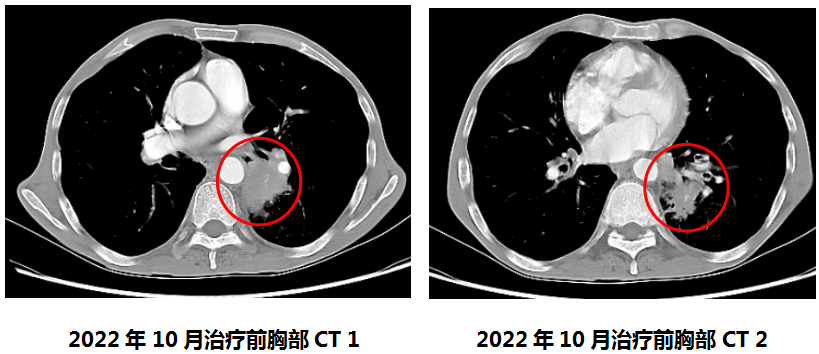
Left: Pretreatment chest CT (October 2022, Scan 1)
Right: Pretreatment chest CT (October 2022, Scan 2)
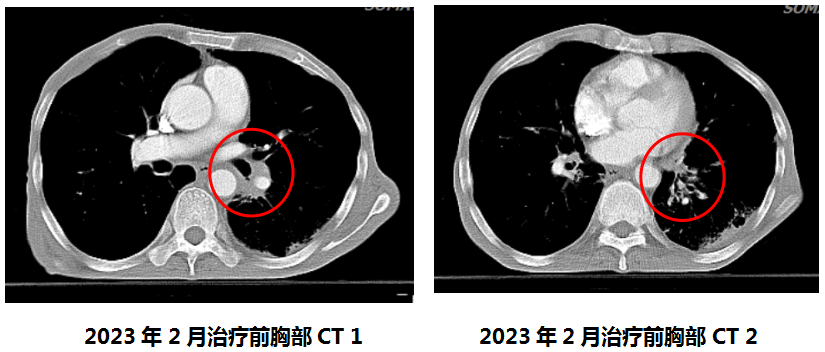
Left: Pretreatment chest CT (February 2023, Scan 1)
Right: Pretreatment chest CT (February 2023, Scan 2)
The patient reported no significant discomfort after treatment. Follow-up imaging at 3 months post-treatment showed significant tumor reduction compared to baseline, with treatment efficacy evaluated as PR
Since 2018, the Heavy Ion Therapy Center of Wuwei Academy of Medical and Science Cancer Hospital has been conducting heavy ion therapy for tumors. Based on the clinical characteristics of esophageal cancer, we designed a clinical trial protocol combining photon and heavy ion therapy. This approach utilizes conventional photon radiotherapy to target radiosensitive tumor cells, while employing heavy ion therapy for photon-resistant components. To date, we have treated over 10 patients with this regimen, achieving promising therapeutic outcomes. Notably, this combined approach has significantly reduced photon-related side effects, such as radiation pneumonitis.
Introduction to Wuwei Heavy Ion Center
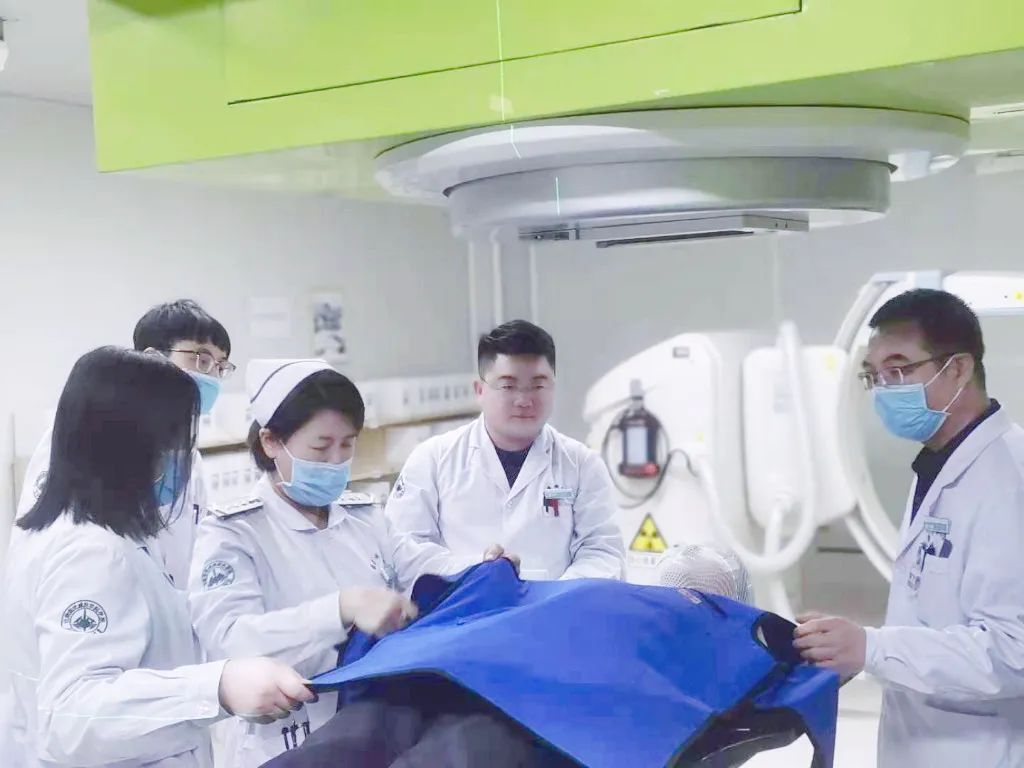
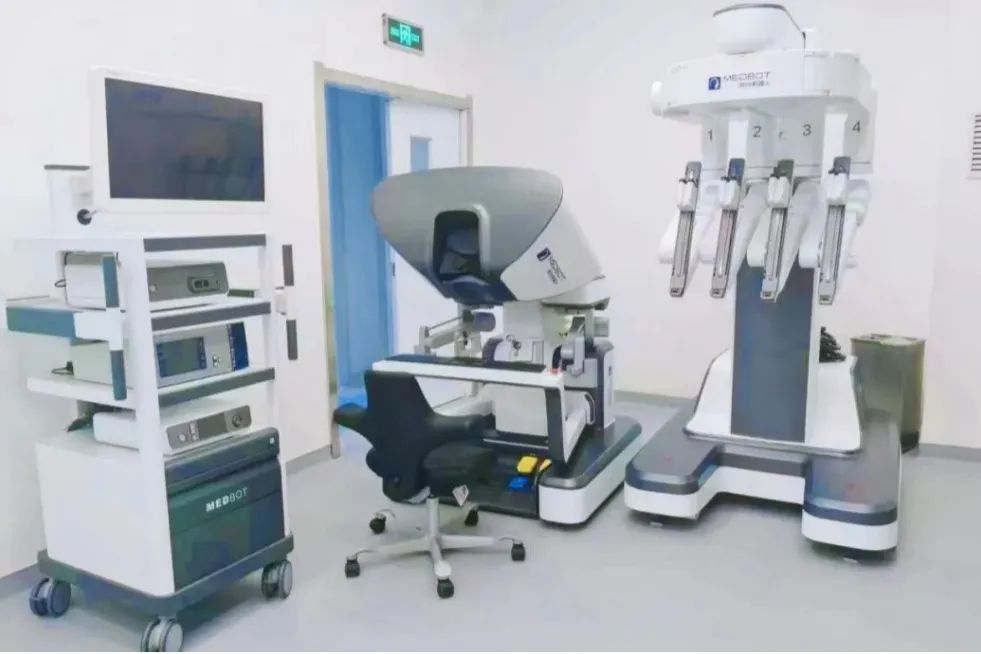
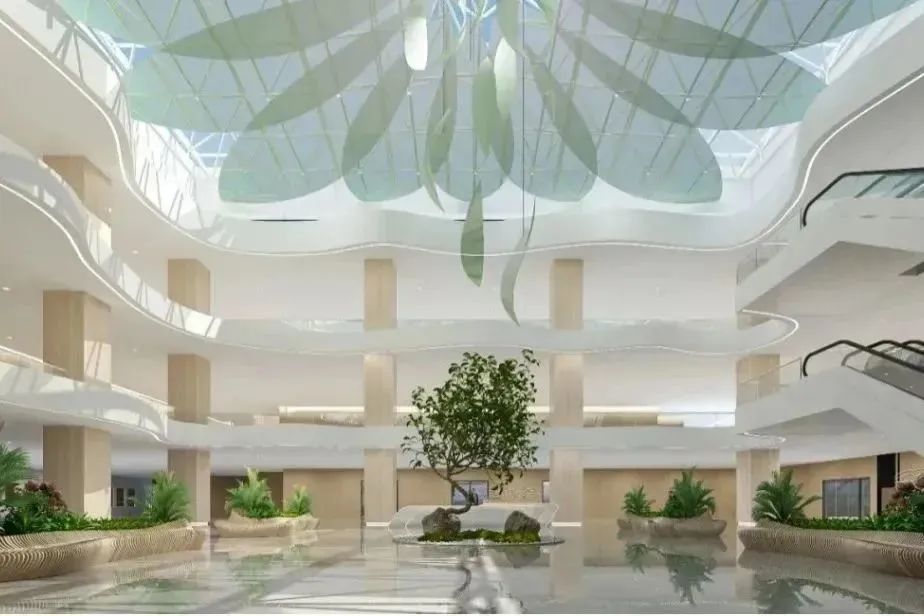
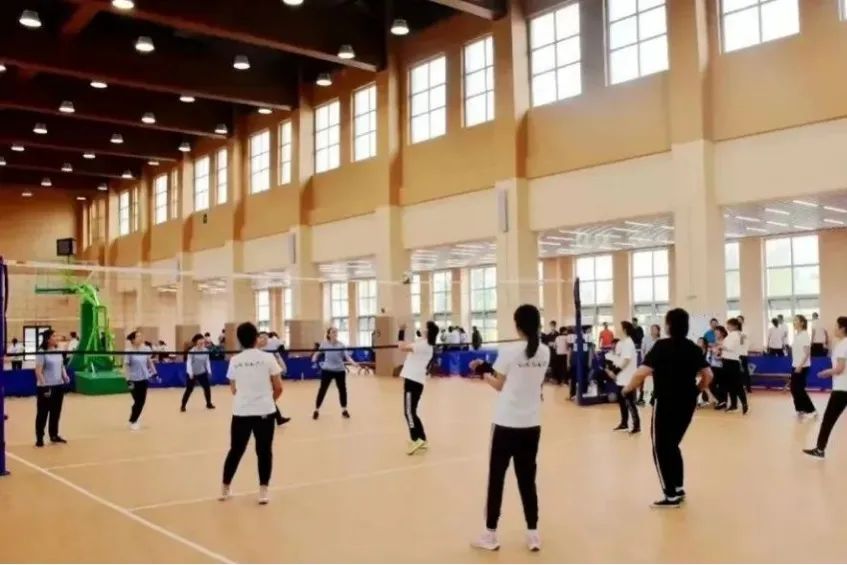
The Heavy Ion Therapy Center of Wuwei Academy of Medical and Science Cancer Hospital is China's first clinical application center for heavy ion radiotherapy systems. Since its official launch in March 2020, the center has been in successful operation for three years. As of now, it has treated 882 patients, achieving remarkable therapeutic outcomes for complex lesions in the skull, pancreas, lungs and other challenging anatomical sites. Patients have come from all regions of China and European countries. Building upon its three-year successful operation, the center has established China's first tumor rehabilitation town, creating a comprehensive health management system characterized by: integrated oncology treatment, dietary therapy, psychosomatic health management, traditional Chinese medicine syndrome differentiation therapy, rehabilitation physiotherapy, biological immunocellular therapy, agritherapy, and cultural therapy - providing holistic care throughout the entire patient lifecycle.
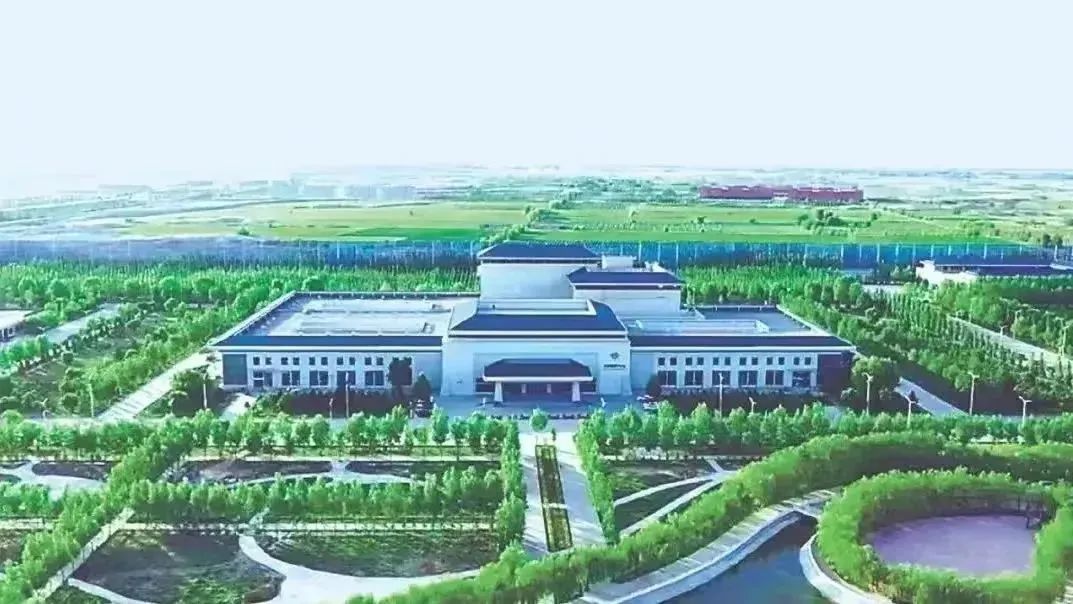
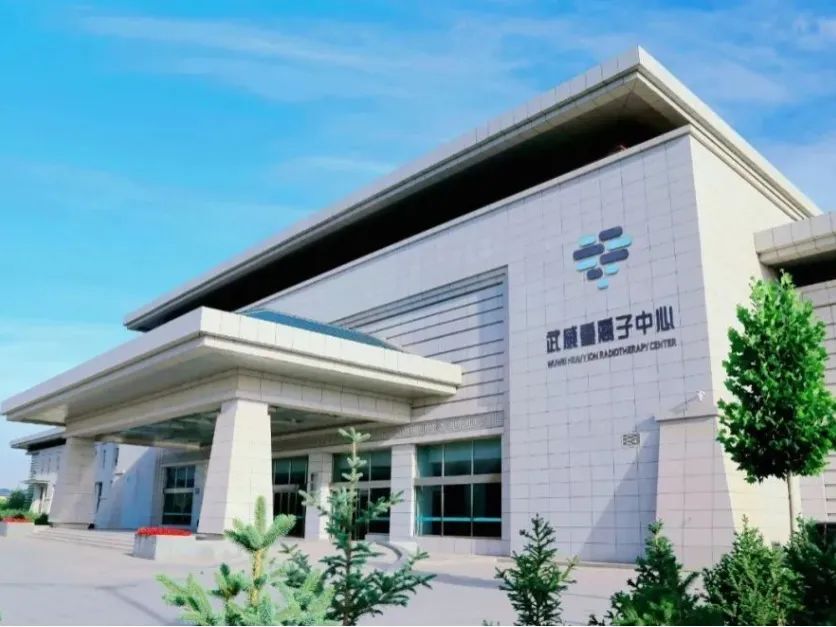

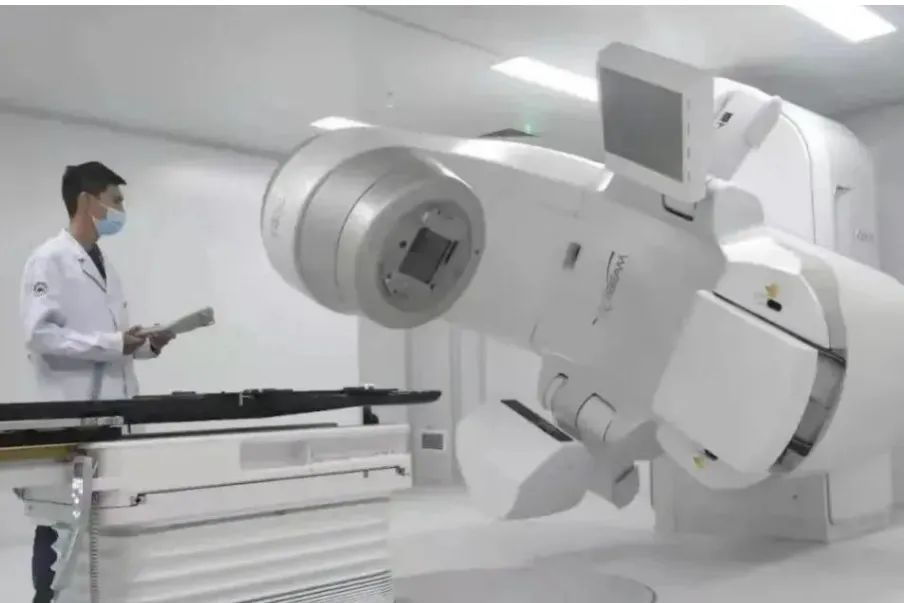

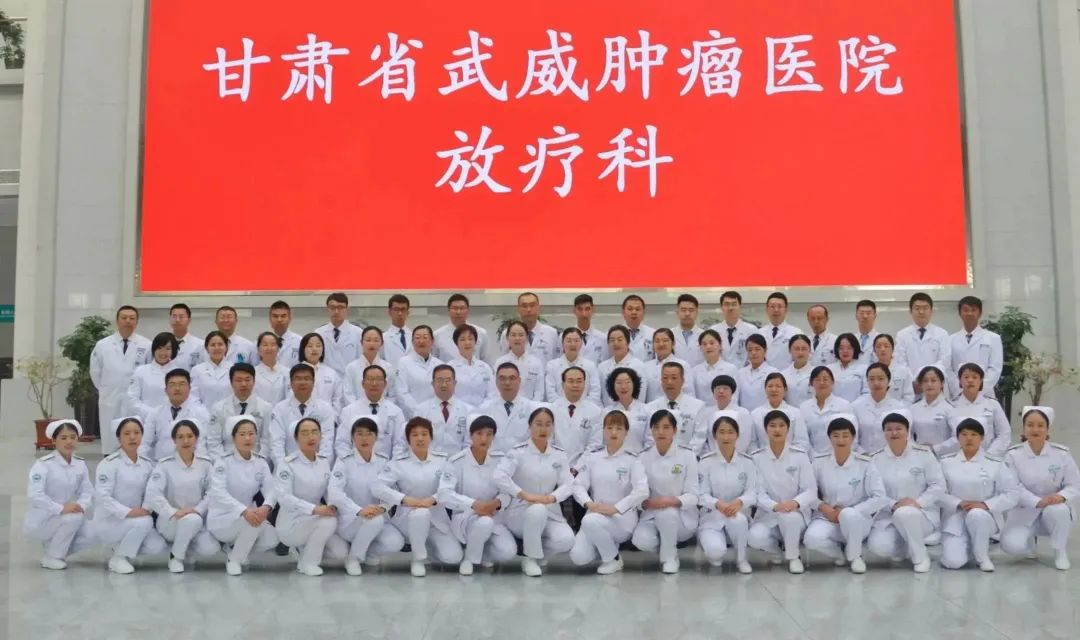
Introduction to the Radiotherapy Department II
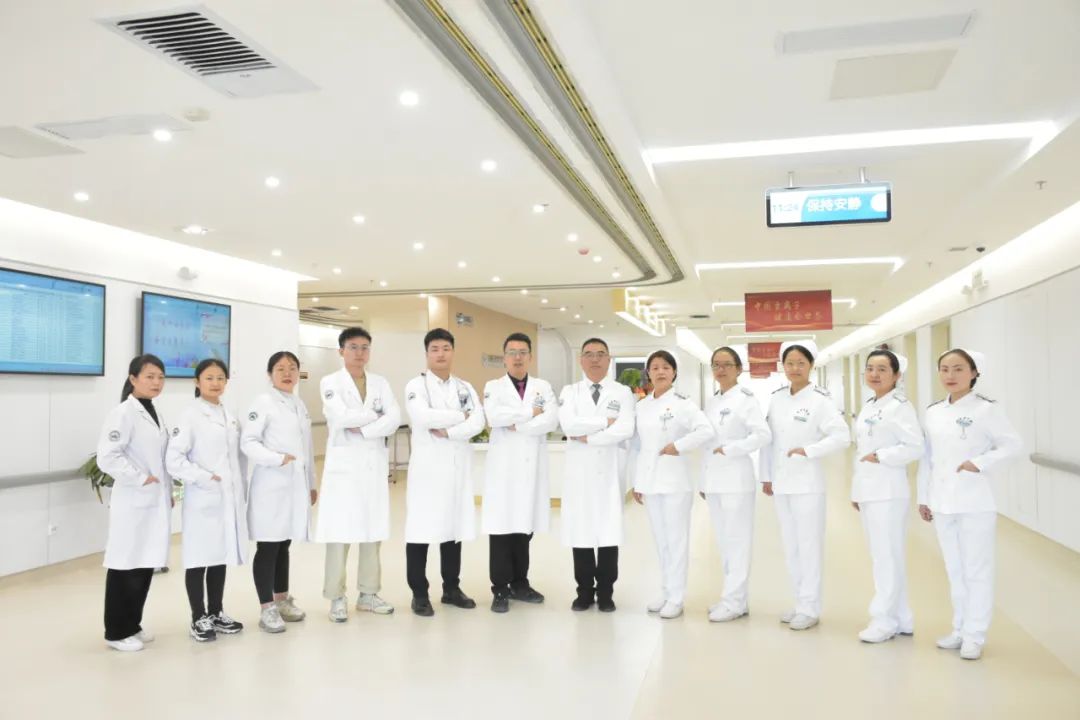
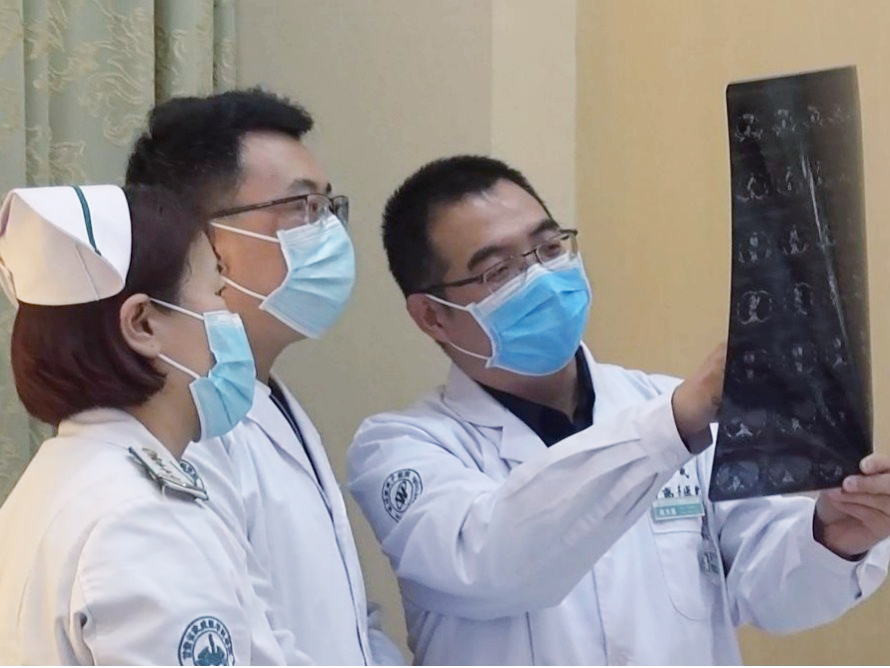
The Heavy Ion Therapy Department for Thoracic and Bone/Soft Tissue Tumors specializes in heavy ion and photon radiotherapy for cancers including lung cancer, esophageal cancer, thymic cancer, breast cancer, bone tumors, and soft tissue tumors. The department currently has 16 staff members, including 1 chief physician and 1 associate chief physician. We have appointed Professor Qu Baolin from Beijing 301 Hospital and Professor Wei Shihong from Gansu Provincial Cancer Hospital as visiting professors. The department head, Chen Dongji, is a chief physician who serves as the vice president and trade union chairman of Gansu Heavy Ion Hospital, as well as the director of the Thoracic and Bone/Soft Tissue Tumors Heavy Ion Radiotherapy Department (Radiotherapy Department II). He completed advanced studies at the Munich Proton Therapy Center in Germany. Under the long-term guidance of Professor Yee-Min Jen and Professor Jia-Ming Wu from Taiwan, China, the department has conducted clinical work and teaching research, achieving remarkable results including 3 provincial second-class scientific and technological progress awards, 5 municipal first- and second-class awards, and over 30 academic publications. Department staff have received training at renowned oncology centers worldwide, including Germany's RPTC Center, Cancer Hospital of the Chinese Academy of Medical Sciences, Shanghai Proton and Heavy Ion Center, Beijing 301 Hospital, Peking University Third Hospital, Sichuan Cancer Hospital, and Zhejiang Cancer Hospital. The department offers state-of-the-art radiotherapy techniques including heavy ion therapy, stereotactic radiotherapy, SRS/SABR/SBRT, rotational/static intensity-modulated radiotherapy, image-guided radiotherapy, 3D conformal radiotherapy, 3D brachytherapy, and hyperthermia. With its strong professional expertise, rigorous quality management, and comprehensive cancer treatment approach, the department has achieved excellent clinical outcomes. Its treatment standards, medical quality, and ethical practices have earned widespread recognition and high praise from patients. We are committed to providing patients with exceptional technical expertise, high-quality services, and the highest ethical standards in medical care.