Twin-Scope Innovation: Organ-Sparing Cancer Care
Dual Endoscopy Revolution: Gut Safeguarding Campaign - Pioneering the Organ/Function-Preserving Era in Cancer Care
--Minimally Invasive Technologies Redefine Life's Dignity: Precision and Elegance in Cancer Care
1. Case Direct Hit: The gastric Anatomic Resection of a Middle-aged Patient
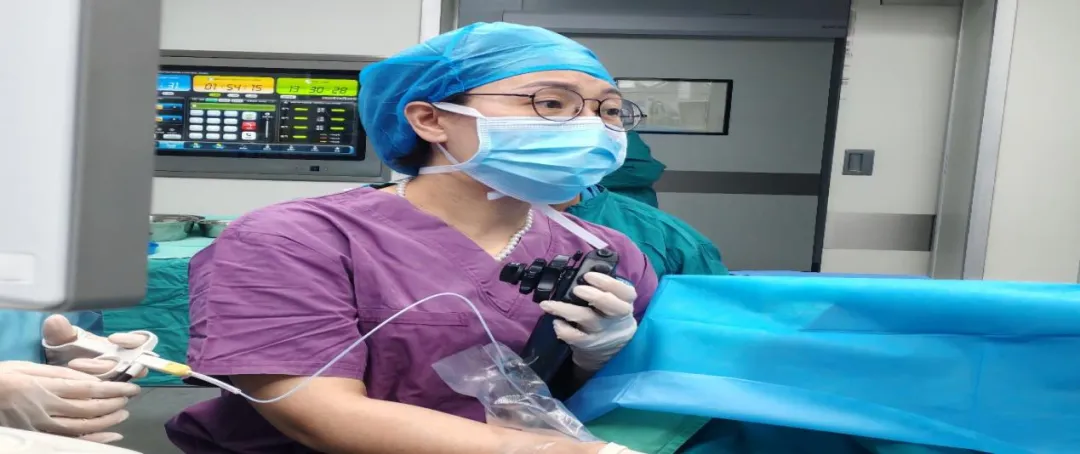
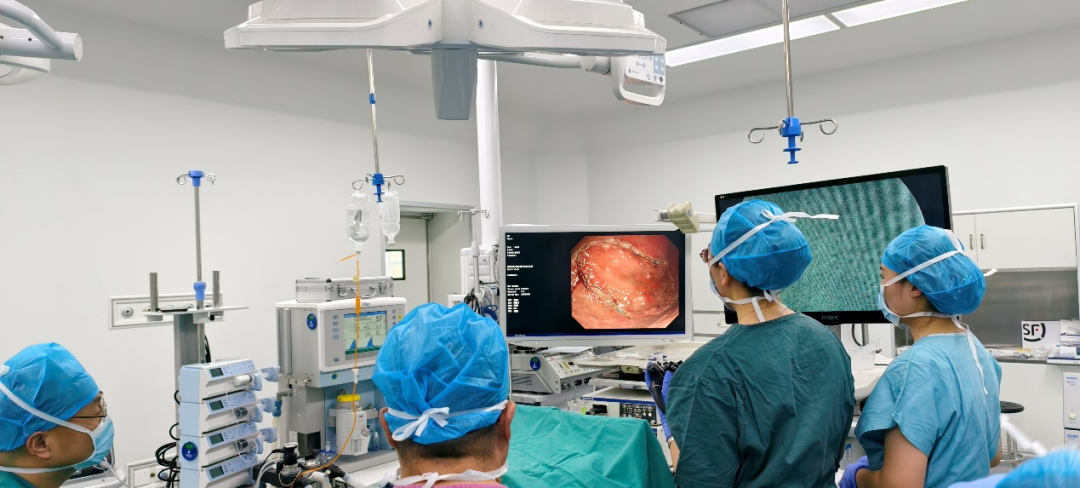
A 54-year-old female patient (pseudonym: Ms. Yang) was diagnosed with early-stage gastric cancer in the gastric body during routine examination. To achieve complete tumor eradication while maximally preserving gastric function, our hospital's Gastroenterology and Gastric Surgery MDT team performed a dual endoscopic-laparoscopic radical gastrectomy: Endoscopic precision mapping of tumor margins enabled successful tumor resection, Laparoscopic approach accomplished lymph node dissection and partial gastrectomy, The 2-hour procedure successfully preserved complete gastric functionality. The operation lasted only 2 hours, and the function of the gastric organs was completely preserved. The patient resumed liquid diet 3 days post-op after surgery, and was discharged from the hospital in one week, and the quality of life was fully guaranteed.
2. Surgical Team: The "Golden Duo" in Minimally Invasive Field
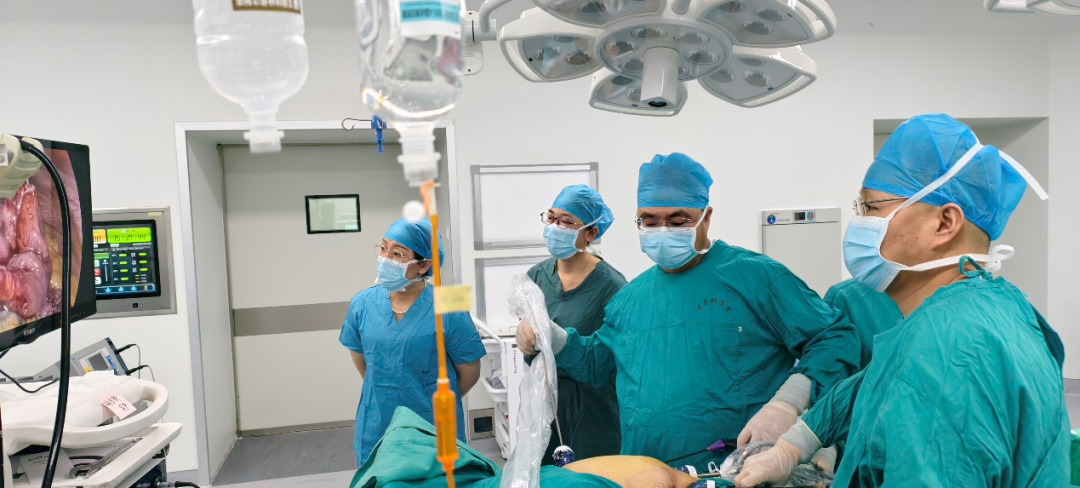
The surgery was jointly performed by a multidisciplinary team (MDT) from our hospital consisting of Dr. Linzhi Lu (Chief Physician, Gastroenterology Department), Dr. Chunfang Xie (Associate Chief Physician, Gastroenterology Department), and Dr. Yongjin Wang (Associate Chief Physician, Gastrointestinal Surgery Department). Dr. Lu's team successfully established a standardized treatment pathway of "precise localization - minimally invasive resection - functional preservation" through the seamless integration of endoscopic precise positioning and laparoscopic minimally invasive techniques. This MDT model not only ensured the safety and precision of the surgery, but also fully demonstrated our hospital's technical advantages and teamwork capabilities in the comprehensive diagnosis and treatment of gastrointestinal tumors.
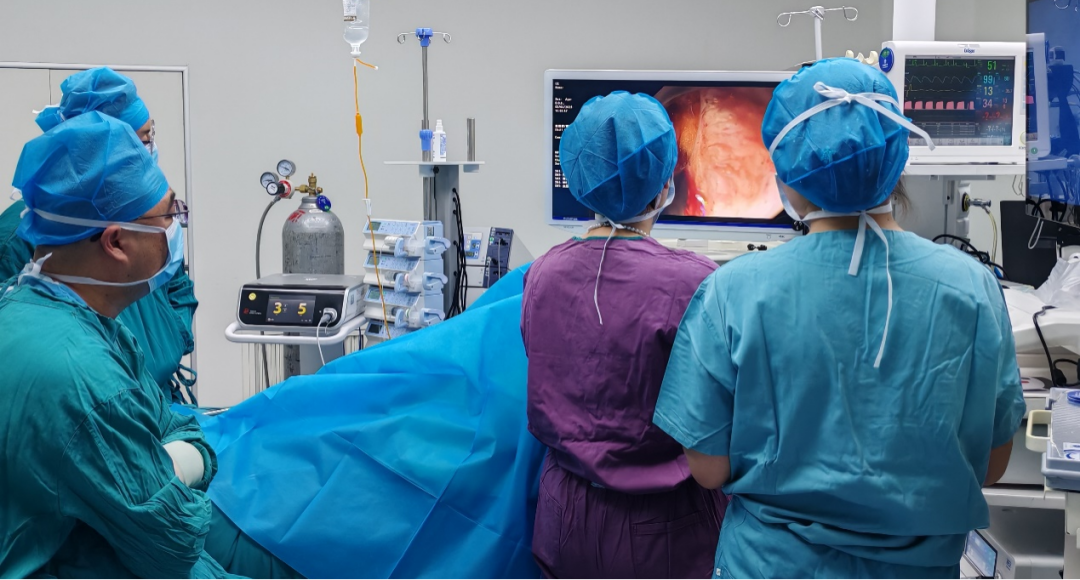
3. Dual Endoscopy: Pioneering the Organ-Function Preservation Era in Cancer Therapy
Traditional radical gastrectomy and intestinal tumor resection often require partial gastrectomy or segmental bowel resection, which can lead to impaired digestive function and nutritional metabolic disorders postoperatively. The dual endoscopic-laparoscopic technique (combining laparoscopy with endoscopy) offers a revolutionary minimally invasive treatment approach for early-stage gastric cancer and colorectal cancer through its three key technical advantages.
1. Precise "bomb disposal", minimal trauma
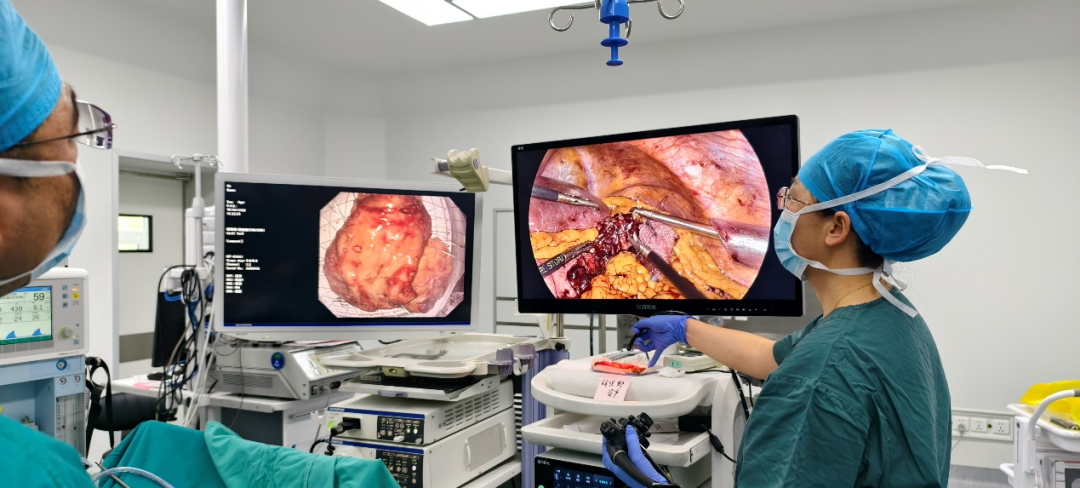
The endoscope acts as a "scout," using high-definition imaging to directly locate the lesion and achieve millimeter-level precision in tumor margin marking. Meanwhile, the laparoscope serves as the "scalpel," performing the resection through just 3-4 tiny incisions (0.5 cm-1 cm each), with intraoperative blood loss under 50ml. The cosmetically sutured incisions require no stitch removal.
2. Organ preservation, function first
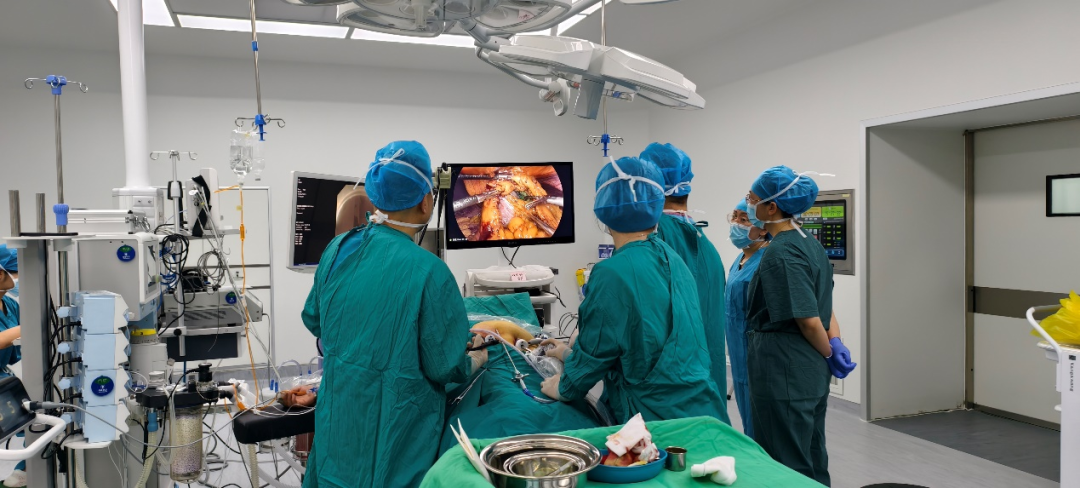
Breaking through the limitations of traditional radical resection techniques, this approach precisely preserves normal gastric tissue and intestinal integrity while maximally maintaining postoperative stomach capacity. This effectively safeguards physiological digestive functions and significantly improves patients' postoperative quality of life.
3. Rapid recovery, shortened cycle
The procedure results in significantly reduced postoperative pain scores, decreased complication rates, earlier ambulation time compared to traditional surgery, shorter average hospital stay, and effectively alleviates both physical/psychological trauma and medical financial burden for patients.
4. Discipline Strength: The "Wuwei Solution" for Safeguarding Digestive Health
As a regional center for gastrointestinal tumor diagnosis and treatment, our hospital has established an integrated "screening-diagnosis-treatment-rehabilitation" system with minimally invasive techniques as our specialty. The clinical application of dual endoscopic-laparoscopic technology has achieved a paradigm shift in early gastrointestinal tumor treatment - from "radical tumor resection" to "balancing radical treatment with functional preservation". Looking ahead, we will continue to enhance the multidisciplinary team (MDT) approach, and through precise, minimally invasive and personalized treatment strategies, provide higher quality medical services for patients with gastrointestinal diseases in Wuwei and surrounding regions.
Population-Based Screening Protocol: Early-stage gastrointestinal tumors (gastric and colorectal cancers) often progress silently. Medical experts recommend that high-risk individuals aged 40+ undergo annual combined gastroscopy and colonoscopy screening. Early diagnosis and intervention are key measures to improve prognosis and preserve organ function.