
Heavy (Carbon) Ion Therapy for Pancreatic Cancer Achieves 27.3 Months Average Survival
Heavy (Carbon) Ion Therapy for Pancreatic Cancer Achieves 27.3 Months Average Survival — Wuwei Heavy Ion Center’s “Isotoxic Dose Prescription” Strategy Extends Survival and Nearly Halves Mortality Risk
As of March 2026, the Wuwei Heavy Ion Center has reported a national record in pancreatic cancer treatment! The center has completed over 345 cases of pancreatic cancer treatment using heavy (carbon) ion therapy, breaking through the “forbidden zone of life” with this national heavyweight technology. Based on this largest dataset of heavy (carbon) ion therapy for pancreatic cancer in China to date—from Wuwei Heavy Ion Center, which has treated the most pancreatic cancer patients in the country with this technology—the median overall survival for the entire patient group reached 17 months as of February 2026. This outcome is significantly better than data reported from other large case series, demonstrating the unique advantages of Wuwei heavy ion technology in treating pancreatic cancer, known as the “king of cancers.”
Although a median survival of 17 months is superior to other treatment modalities, it remains unsatisfactory for both medical professionals and patients.
An in-depth analysis of the data from the 345 pancreatic cancer patients revealed significant benefits from a prospective clinical study titled “Carbon Ion Radiotherapy Using Isotoxic Dose Prescription to Increase Pancreatic Tumor Dose,” initiated by Professor Zhang Yanshan in July 2021. A comparison between the high-dose group (>64 Gy (RBE)) and the conventional-dose group (60–64 Gy (RBE)) yielded remarkably positive results: the clinical trial of carbon ion radiotherapy using isotoxic dose prescription to increase pancreatic tumor dose has demonstrated clear benefits.
In simple terms, we have found a “dose code” that can significantly extend the survival of pancreatic cancer patients.
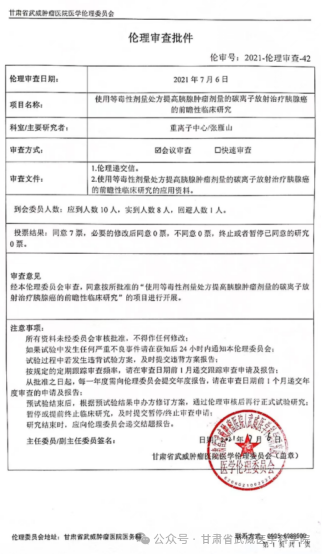
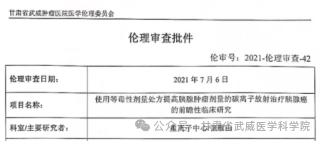
I. What have we done regarding equivalent toxic dose prescriptions?
In heavy (carbon) ion therapy for pancreatic cancer, the radiation dose delivered to the tumor is often kept conservative to ensure the safety of the gastrointestinal tract. We took a different approach: under the premise of protecting normal organs such as the stomach and intestines from injury, we push the tumor dose as high as possible (up to 68.8 Gy (RBE)). This is what we call the "Isotoxic Dose Prescription (IDP)" — no fixed dose, but as high as safely achievable.
II. Stunning Effects
We analyzed the data of 345 patients with pancreatic cancer and compared different dose groups:
Radiation dose distribution and median survival time (patients were divided into three groups according to total dose and fractional dose)
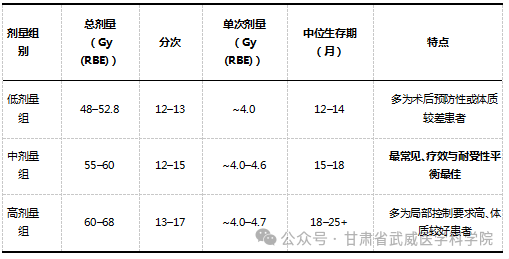
Further subdivide the high-dose group into a higher subgroup and a high-dose subgroup.
The conclusion is clear: the higher-dose group achieved a median survival of 20.5 months, while the high-dose group reached an average survival time of 27.3 months. The difference is statistically significant (p = 0.042). The risk of death was reduced by approximately 49%, representing a substantial improvement compared to the medium- and low-dose groups. This means that for patients with locally advanced, unresectable pancreatic cancer, the two-year survival rate increased from 40% to 55% using the isotoxic dose prescription (IDP) strategy. This represents the most remarkable achievement in domestic heavy (carbon) ion therapy for pancreatic cancer to date, and it marks a major breakthrough after eight years of experience at the Wuwei Heavy Ion Center. Building upon the pancreatic cancer treatment expertise of multiple heavy ion centers in Japan, we have achieved significant progress, offering a better treatment option for pancreatic cancer.
III. Typical Cases
Case 1: Patient Liu TR, male, 70 years old, from Gansu Province. Admission date: July 5, 2021. Chief complaint: Abdominal pain and discomfort for 2 months. The patient experienced abdominal distension and pain 2 months prior to admission. CT examination revealed a mass in the pancreatic body and tail, suggestive of pancreatic cancer. On May 28, 2021, an exploratory laparotomy was performed, during which the tumor was found to be unresectable; only an exploratory procedure was conducted, and biopsy pathology confirmed poorly differentiated pancreatic cancer. In July 2021, the patient received heavy (carbon) ion therapy with no adverse reactions, and completed treatment after 4 cycles of concurrent chemotherapy. Regular follow-up has been conducted, and as of now, the patient has survived 56 months post-treatment with good health status.
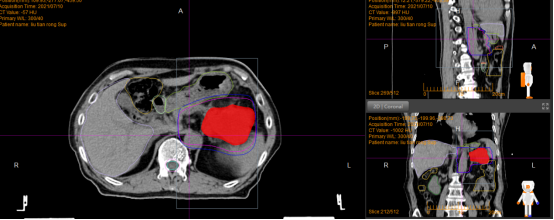
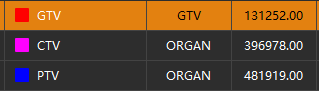
Before treatment, the pancreatic tumor volume was 131 cm³, and the carbon ion therapy coverage was 481 cm³
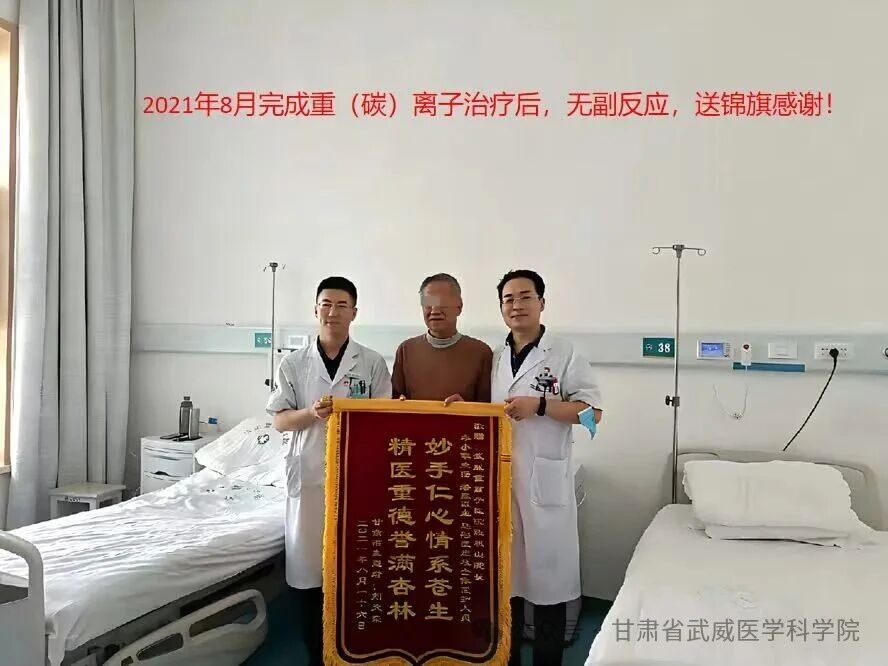
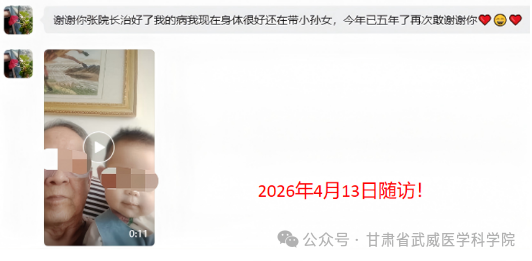
(Case provided by: Zhang Yanshan)
Case 2: Cao YF, female, 57 years old, from Weiyang District, Xi’an City, Shangxi Province. Admission date: March 21, 2021. Chief complaint: Pancreatic space-occupying lesion detected during health examination for 10 months, with significant growth. In May 2019, MRI at Tangdu Hospital of the Fourth Military Medical University revealed two space-occupying lesions in the pancreatic body and tail, round in shape, with long T1 and STIR high signal intensity, clear borders, measuring approximately 0.9 cm and 1.8 cm in diameter. Biopsy indicated poorly differentiated adenocarcinoma.
' fill='%23FFFFFF'%3E%3Crect x='249' y='126' width='1' height='1'%3E%3C/rect%3E%3C/g%3E%3C/g%3E%3C/svg%3E)
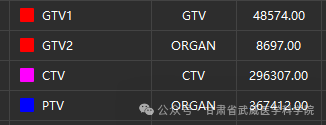
Before treatment, the volume of GTV1 for the tumor in the body of the pancreas was found to be 8.7 cm³, and the volume of GTV2 for the tumor in the tail of the pancreas was 48.5 cm³
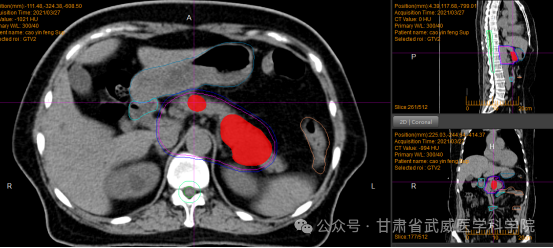
This image is a heavy (carbon) ion planning diagram, with red indicating the primary tumor and blue indicating the treatment scope.
The patient received heavy (carbon) ion therapy in March 2021 with no adverse reactions. After completing 4 cycles of concurrent chemotherapy, the treatment was concluded. Regular follow-up has been carried out, and as of now, the patient has survived 60 months post-treatment, is in good health, and has fully recovered.
(Cases provided by Director Zhang Yihe)
IV. Why are heavy ions so powerful?
Heavy ions have two major advantages:
Physical advantage: The energy is concentrated in the tumor, causing minimal damage to the normal tissues in front of and behind it.
Biological advantage: The killing power against hypoxic and drug-resistant cancer cells is 2–5 times greater than that of conventional radiotherapy. This is significantly higher than that of protons (~1.1) and photons (1.0). This high relative biological effectiveness (RBE) is the core reason why heavy (carbon) ion therapy can overcome hypoxia resistance and achieve a high biologically effective dose in the treatment of pancreatic cancer
(参考文献:[1]Abousaida B, Seneviratne D, Hoppe BS, Ko SJ, Asaithamby A, Cucinotta FA, et al. Carbon ion radiotherapy in the management of hepatocellular carcinoma. J Hepatocell Carcinoma. 2021;8:1169-1182. (Table 1, reproduced with permission from Kavanagh BD. Introduction to clinical radiation oncoloGy (RBE). RadioloGy (RBE). 1998;209(1):168.
[2]Apisarnthanarax S, Bowen SR, Combs SE. Proton beam therapy and carbon ion radiotherapy for hepatocellular carcinoma. Semin Radiat Oncol. 2018;28(4):309-320.
[3]El Shafie et al. (2013) 标题:In vitro evaluation of photon and raster-scanned carbon ion radiotherapy in combination with gemcitabine in pancreatic cancer cell lines.期刊:Journal of Radiation Research.RBE范围:1.5 – 4.5(取决于细胞系和存活水平)原文语句:“Relative biological effectiveness (RBE) of carbon ion irradiation ranged from 1.5 to 4.5 depending on survival level and dose.”
V. What should be noted?
Heavy ion therapy is a form of local treatment, equivalent to a non-invasive "surgery." It is best combined with systemic therapy to prevent distant metastasis. If there is already diffuse liver metastasis or peritoneal metastasis, the effectiveness of heavy ion therapy is limited, and systemic therapy should be prioritized.
VI. Conclusion
Over eight years and 345 cases, we have accumulated the largest number of heavy (carbon) ion therapy treatments for pancreatic cancer in China. Our clinical data and experience demonstrate that by using the isotoxic dose prescription (IDP) to push the heavy ion dose above 64 Gy (RBE), the average survival time for pancreatic cancer patients can reach 27.3 months. And as follow-up continues, this figure is expected to improve further. This is not theoretical speculation — it is real data, and real lives saved.
Writer: Zhang Yanshan (Vice President of Gansu Wuwei Cancer Hospital)
Data Support: Chen Xuelian, Li Pengqing (Cancer Registry and Follow-up Office)
Date: April 2026
Individual differences exist objectively.
Specific plans vary from person to person.
Gansu Wuwei Cancer Hospital (Wuwei Institute of Medical Sciences)
(Gan) Yiguang [2025] No. 11-14-387