
Crossing the "Forbidden Zone" of Life: A Sexagenarian Regains the Freedom to Walk
Crossing the "Forbidden Zone" of Life: A Sexagenarian Regains the Freedom to Walk
Recently, the Department of Bone and Soft Tissue at Wuwei Cancer Hospital once again challenged the surgical "forbidden zone," successfully performing a highly difficult hemipelvectomy combined with hip reconstruction on a 61-year-old patient, Mr. Chen, who was suffering from a massive pelvic chondrosarcoma. The patient is currently recovering well and has been able to walk independently. After more than a decade of continuous advancement and exploration, our hospital has reached a leading domestic level in the diagnosis and treatment of complex pelvic tumors.
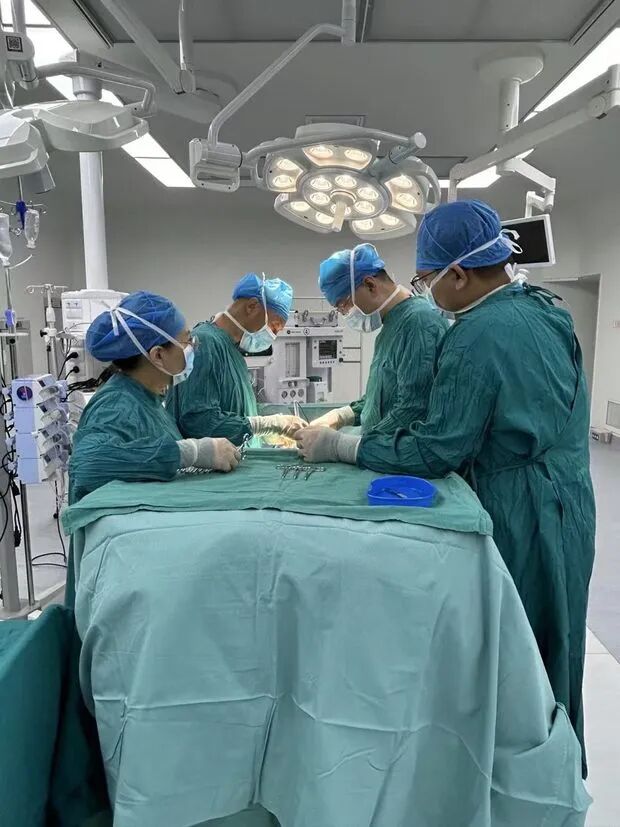
Mr. Chen, a resident of Liangzhou District, was diagnosed with a pelvic tumor at another hospital due to severe pain in his right hip and was urgently transferred to our hospital on November 11, 2025. Following comprehensive and systematic examination, his condition was definitively diagnosed as chondrosarcoma of the left pelvis. Alarmingly, the tumor was massive, involving zones 1, 2, and 4 of the left pelvis. It not only protruded into the pelvic cavity but also invaded important pelvic vessels and pelvic floor muscles, making his condition critical and extremely complex.
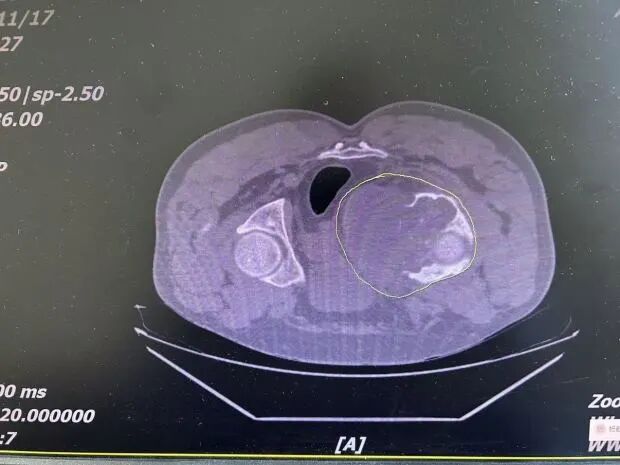
The pelvic region, with its intricate anatomy, dense network of blood vessels and nerves, and rich blood supply, has always been considered a "life-threatening forbidden zone" in surgery. The hemipelvectomy and reconstruction procedure, in particular, is regarded as an "extreme surgery" that only a few top-tier medical centers in China can perform, due to its supreme technical difficulty, significant risks, and the complexity of postoperative functional reconstruction. Although our hospital's Department of Bone and Soft Tissue has accumulated considerable experience since first performing pelvic tumor resection and reconstruction surgeries in 2012, the hospital attached great importance to this case. Vice President Nie Peng personally led the effort, promptly convening a multidisciplinary team (MDT) consultation involving experts from Imaging, Pathology, Vascular Surgery, Anesthesiology, Intensive Care, and Rehabilitation departments. After multiple rounds of meticulous analysis and discussion, the expert team ultimately developed a personalized surgical plan of "Hemipelvectomy + Hip Reconstruction" for the patient and designated Director Yang Qianzi from the Department of Bone and Soft Tissue Tumors as the chief surgeon.
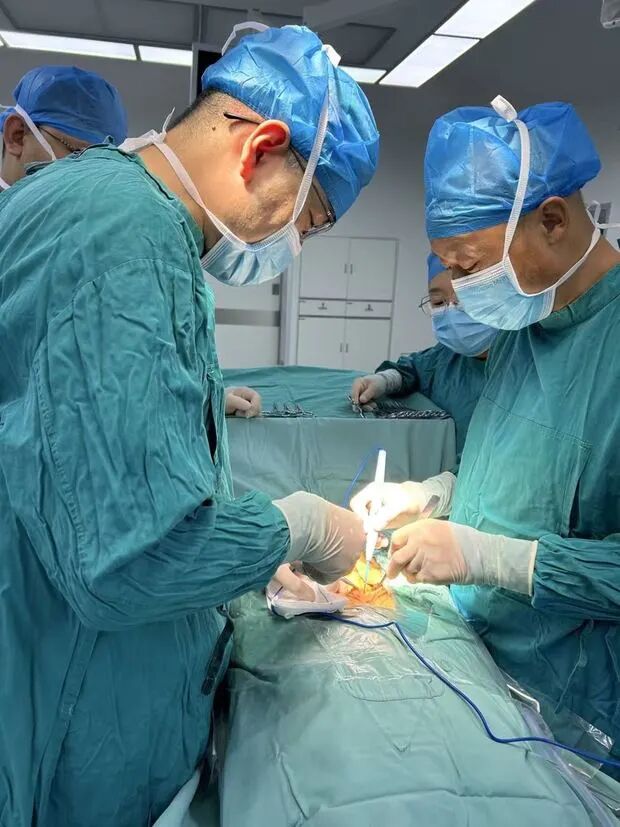
Under general anesthesia and with close coordination from multiple departments, Director Yang Qianzi's team proceeded with the challenging surgery on December 2. The surgical team first adopted an anterior ilioinguinal approach, carefully avoiding critical structures like the external iliac vessels, nerves, ureter, and bladder, and gradually separated the tumor from the surrounding key tissues. Subsequently, at the precisely calculated osteotomy line, they completely resected the tumor-involved left parts of the pubis, ilium, and acetabulum. Finally, a custom-made metal hemipelvic prosthesis, perfectly matching the patient's bone morphology, was implanted and securely connected to the preserved healthy-side pelvis and a femoral head prosthesis, successfully reconstructing the integrity and stability of the pelvis.

Postoperatively, guided by the concept of enhanced recovery after surgery (ERAS), the department formulated an individualized treatment and rehabilitation exercise plan for the patient. Thanks to the meticulous care provided by the medical staff and the active cooperation of the patient, the recovery progress has exceeded expectations. The patient has now regained the ability to stand and walk, leading to a significant improvement in his quality of life. The successful execution of this highly complex surgery has not only relieved the patient of years of suffering from a stubborn illness but also fully demonstrates our hospital's strong comprehensive capabilities and sense of responsibility as a regional medical center in treating extremely critical and complex cases.

Department Introduction
Our hospital was among the early adopters in the province to establish a specialized discipline for bone and soft tissue tumors. The Department of Bone and Soft Tissue was founded in 2012, and over the past 23 years, through the diligent work of several generations, it has grown into a department with considerable reputation and influence within the region . The department has achieved several groundbreaking milestones, including performing the world's first heavy-ion therapy surgery with tumor and organ isolation, and the world's first anterior approach C2 vertebroplasty for metastatic cancer . It is also the only department in the country to perform anterior approach cervical vertebroplasty . Other pioneering achievements include performing the nation's first lower lumbar spondylectomy via an anterior approach followed by 3D-printed vertebral body reconstruction, and Gansu Province's first tibial osteosarcoma resection with massive allograft reconstruction and wrist joint tumor resection with 3D-printed reconstruction . The department's surgical experience encompasses patients from across China .
In the fields of spinal tumors, pelvic tumors, and retroperitoneal tumor resection and reconstruction, the department is at the leading domestic level . It has pioneered numerous innovative and constructive surgical techniques and treatment protocols, filling gaps both globally, nationally, and regionally . Leveraging its advantage in heavy-ion therapy, the department attracts patients from across the country and even from abroad who seek its expertise . This has provided the department with the opportunity to offer medical services to patients from all over China, with surgical patients hailing from 30 different provinces, and has also performed surgeries for international patients from countries such as Vietnam and South Korea .