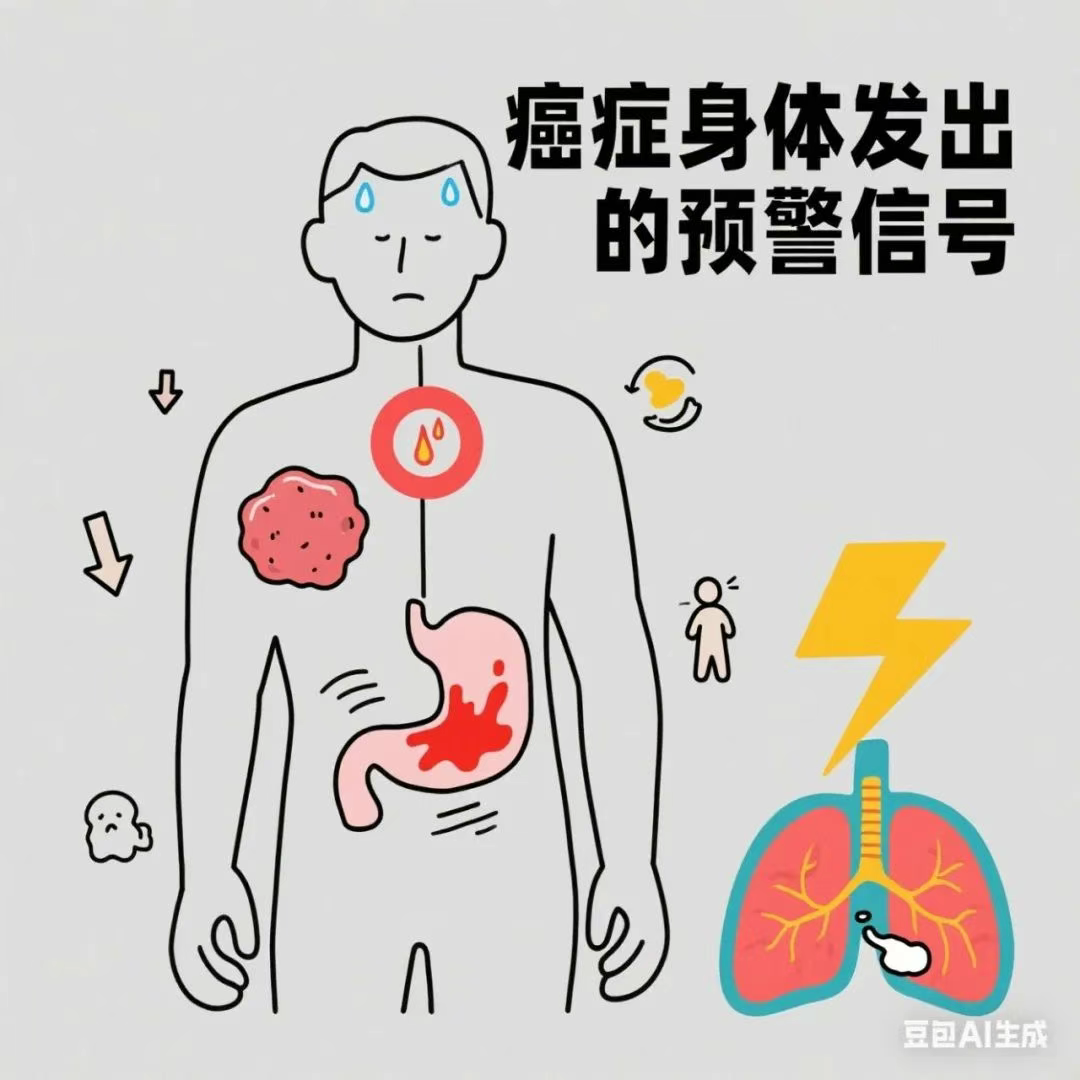
It is widely perceived that cancer is often already in its advanced stages when first diagnosed. Sadly, many patients find that the disease has progressed beyond being easily treatable and curable by the time it is identified, contributing to cancer's alarmingly high mortality rate. But the truth is, cancer doesn't progress to an advanced stage overnight; it undergoes a gradual development. During this process, the body usually produces warning signs, though these signals are easily overlooked.
1.Lumps
Any unexplained lumps in areas like the neck, armpits, breasts, or abdomen should be taken seriously. Be especially alert if the lump is hard, has irregular borders, shows poor mobility, or grows rapidly. For example:
A painless breast lump may signal early-stage breast cancer.
Swollen neck lymph nodes could indicate metastasis from nasopharyngeal or thyroid cancer.
Note: Not all lumps are malignant (e.g., benign cysts), but prompt medical evaluation is essential.
2. Abnormal Bleeding
Non-traumatic bleeding requires urgent attention:
● Coughing up blood → Possible lung cancer.
● Bloody or black stools → May indicate colorectal or stomach cancer.
● Non-menstrual vaginal bleeding → Screen for endometrial or cervical cancer.
● Painless blood in urine → Potential bladder or kidney cancer.
Immediate medical consultation is crucial.
3.Indigestion or Difficulty Swallowing
● Persistent indigestion, bloating, or appetite loss unresponsive to treatment → May signal gastric, liver, or pancreatic cancer.
● Progressively worsening swallowing difficulty (starting with solid foods, then liquids) → Early sign of esophageal cancer.
4.Unexplained Weight Loss and Fatigue
Losing >10% body weight without dieting/exercise, combined with unrelieved fatigue, may indicate cancer (e.g., leukemia, gastric/colorectal cancer). Tumors consume nutrients, causing metabolic strain. 111213
5. Fever
Persistent low-grade fever (≈38°C/100.4°F) for weeks without infection may link to:
● Blood cancers (e.g., lymphoma, leukemia).
● Tumor-induced cytokines (e.g., TNF) disrupting body temperature.
6. Pain
Unexplained pain lasting >1 week warrants investigation:
● Abdominal pain → Colorectal cancer.
● Chest pain → Lung cancer.
● Bone pain → Possible metastasis.
Pain often indicates advanced disease but should never be ignored.
7. Persistent Cough or Hoarseness
● Chronic dry cough, especially with blood-tinged sputum → Suspect lung cancer (high risk in smokers).
● Hoarseness unrelieved by rest/medication → May result from tumor pressure on nerves (thyroid/lung cancer).
Why Are Early-Stage Cancer Symptoms Easily Overlooked?
1.Organ Characteristics:Internal organs like the liver, lungs, and kidneys have few pain-sensing nerves. Even if tumors develop, they may cause no pain in the early stages. Pain or pressure symptoms typically arise only when the tumor invades the organ's capsule or surrounding tissues.
2.Cancer Cell Camouflage:Cancer cells are very cunning and can disguise themselves as normal cells, thereby evading the surveillance of the immune system. In the early stages, cancer cells grow slowly as tiny lesions, often failing to trigger inflammation or noticeable discomfort, making them difficult to detect.
3.Body's Compensatory Function:Human organs possess a strong compensatory ability. When part of the tissue is damaged, the remaining healthy tissue can compensate and maintain normal function, masking abnormalities. For example, in patients with early-stage liver cancer, the tumor may damage part of the liver's function, but other healthy liver tissue can take over, so the patient may experience no obvious symptoms.
4.Limitations of Routine Checkups:Standard routine physical exams, such as blood tests and liver function tests, primarily assess basic health indicators. Early-stage cancer often does not cause abnormalities in these standard markers. Only through specialized, targeted examinations can it be effectively detected. For instance, early-stage gastric cancer might only present as minor mucosal lesions, which can only be identified via gastroscopic biopsy.
Early Detection and Early Treatment Are Key
Cancer is not invincible. Early detection, early diagnosis, and early treatment are crucial for improving cancer cure rates and enhancing patients' quality of life. It is recommended that the general population begin regular cancer risk assessments from age 40. High-risk groups – including those with a family history of cancer, chronic smokers or alcohol abusers, individuals exposed to carcinogens, and patients with chronic diseases – must be even more vigilant and start specialized screenings earlier.
In daily life, it's essential to cultivate healthy habits: quit smoking, limit alcohol, maintain a balanced diet, engage in moderate exercise, control weight, and avoid excessive sun exposure, all of which help lower cancer risk. Always pay attention to signals from your body and take responsibility for your health to better prevent and fight cancer.