
Cold, Back Pain, Fatigue? Try Du Meridian Moxibustion for Yang & Qi Support
Cold, Back Pain, Fatigue? Try Du Meridian Moxibustion for Yang & Qi Support
Recently, many patients have been consulting our department's doctors with complaints like: "Doctor, my hands and feet are cold all year round," "When the weather gets cold, my lower back hurts so much I can barely straighten up," or "I always feel tired, no matter how long I sleep, I can't recover." In fact, these are mostly signs of insufficient Yang energy and accumulated cold‑dampness in the body. Today, we will introduce a traditional Chinese medicine method for reinforcing Yang and supplementing Qi: Du Meridian Moxibustion.
1. What Is Du Meridian Moxibustion?
The Du Meridian is known as the "Sea of Yang Meridians," governing the Yang energy of the entire body. It runs along the midline of the back, connecting all the Yang meridians throughout the body, serving as the body's "sun channel."
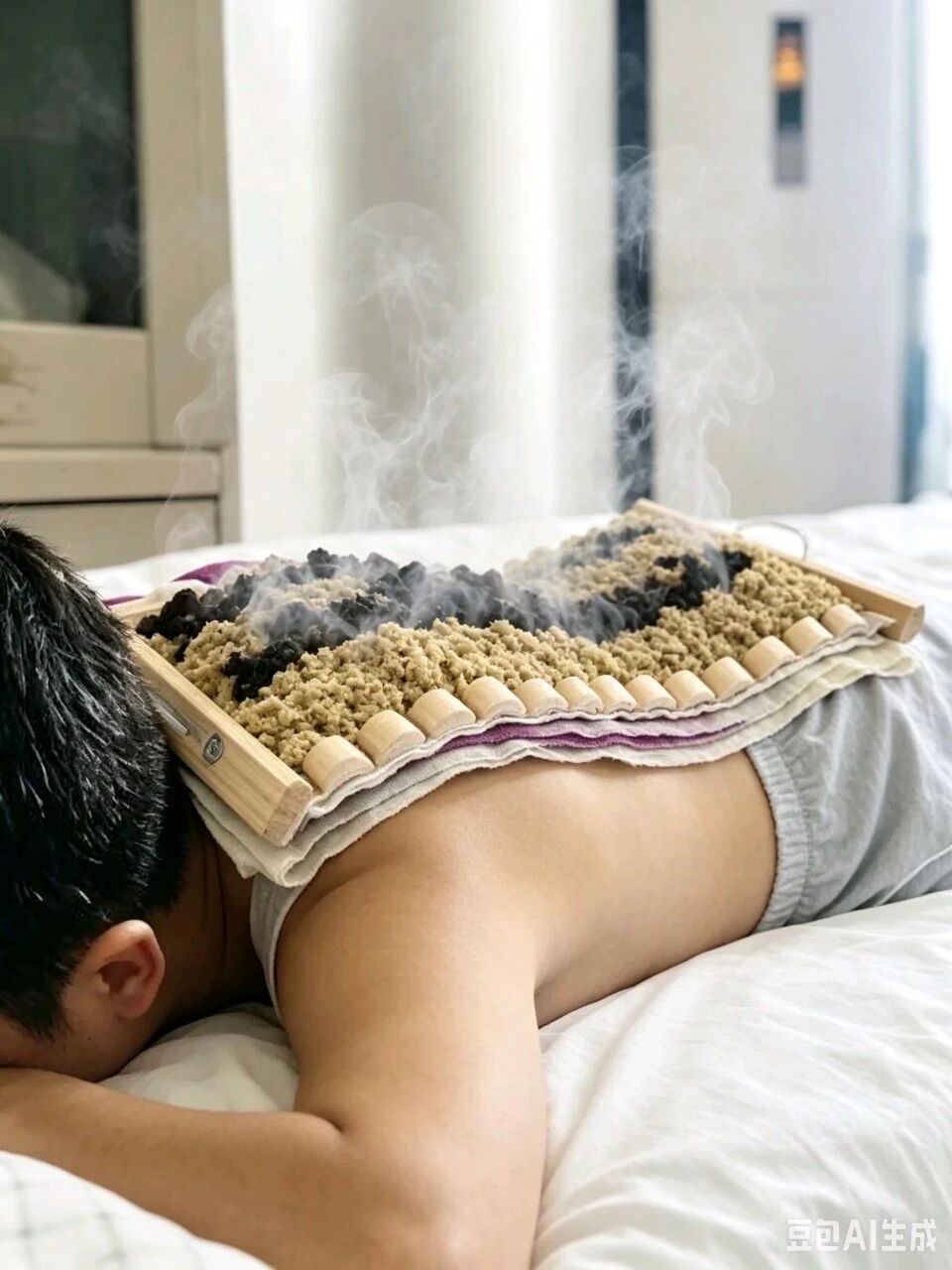
Du Meridian Moxibustion, also called "blanket moxibustion," is a form of large‑scale moxibustion in which moxa wool is spread along the Du Meridian on the back and ignited. Compared to standard moxibustion, it has a larger stimulation area, deeper heat penetration, and stronger effects in warming Yang, dispersing cold, and unblocking meridians. It is a classic green external treatment in traditional Chinese medicine.
2. Who Is Suitable for Du Meridian Moxibustion?
People with Yang deficiency constitution: Cold hands and feet all year round, more sensitive to cold than others, diarrhea after eating cold foods, tightness and heaviness in the back.
Sub‑healthy individuals: Chronic fatigue, poor sleep, low immunity, frequent colds. Du Meridian Moxibustion can help lift your Yang energy, leaving you feeling much more relaxed.
Patients with chronic pain: Lumbar disc herniation, cervical spondylosis, chronic lower back pain, rheumatoid arthritis – pain that worsens with cold exposure. Du Meridian Moxibustion effectively disperses cold and alleviates pain.
Women’s health regulation: Uterine coldness with dysmenorrhea, irregular menstruation, cold and lower back pain during menstruation. Du Meridian Moxibustion warms Yang and the uterus, effectively improving these discomforts.

3. What Precautions Should Be Taken for Du Meridian Moxibustion?
Before treatment: Do not eat too much or go hungry. Relax and wear loose, comfortable clothing.
After treatment: Do not bathe or shower for 4‑6 hours, avoid direct exposure to cold drafts, refrain from eating raw, cold, or spicy foods, and keep warm. A few people may develop small blisters on the skin after moxibustion; this is a normal reaction indicating the expulsion of cold. Small blisters require no special treatment; keep the area dry, and they will be reabsorbed on their own. For larger blisters, seek assistance from medical staff; do not puncture them yourself.
As the Yellow Emperor's Inner Canon states: Nourish Yang in spring and summer, and nourish Yin in autumn and winter. Regulate winter conditions in summer. Now is a good time to nourish Yang. If you are troubled by sensitivity to cold, chronic lower back pain, or persistent fatigue, come to our Rehabilitation Department to experience Du Meridian Moxibustion and supplement your body's Yang Qi.
Department of Gastroenterology & Oncology Rehabilitation
The Department of Gastroenterology and Oncology Rehabilitation at the Lanzhou Campus of Gansu Wuwei Cancer Hospital is a flagship specialty center integrating medical care, education, and research. It comprises two outpatient clinics (Gastroenterology and Oncology Rehabilitation) and one inpatient ward.
The department boasts a team of 13 medical professionals, including 1 senior-level physician, 2 attending physicians, and 10 junior-level physicians. The team includes 1 PhD and 5 Master's degree holders, supported by 4 long-term practicing Provincial-level Renowned Traditional Chinese Medicine (TCM) doctors. Our diverse staff includes clinicians, TCM practitioners, rehabilitation therapists, psychological counselors, psychotherapists, health managers, and nutritionists. Team members have received specialized training in areas such as rehabilitation techniques, meridian hypnotherapy, mindfulness-based stress reduction (MBSR), cognitive behavioral therapy (CBT), and psychological drawing analysis.
We are committed to the diagnosis and treatment of digestive system diseases and specialize in integrated Chinese-Western rehabilitation, physical rehabilitation, sports rehabilitation, psychological rehabilitation, and nutritional rehabilitation. Operating under a Multidisciplinary Team (MDT) model, we formulate rational diagnosis, treatment, and rehabilitation plans tailored to each patient.
1. Scope of Diagnosis and Treatment
A. Digestive System Diseases:
Esophageal diseases, gastrointestinal disorders, hepatobiliary and pancreatic diseases, digestive psychosomatic diseases, palliative care for gastrointestinal tumors, and TCM-based treatments.
B. Integrated Rehabilitation:
- Musculoskeletal: Lumbar disc herniation, cervical spondylosis, degenerative osteoarthropathy, muscle atrophy, peripheral nerve injury.
- Oncology Supportive Care: Management of tumor-related complications and adverse reactions to non-surgical treatments, including nausea, vomiting, diarrhea, abdominal pain, cancer-related fatigue, skin lesions, bone marrow suppression, alopecia (hair loss), and lymphedema.
2. Diagnostic and Therapeutic Technologies
A. Routine Procedures:
Painless gastroscopy and colonoscopy; endoscopic therapies including polypectomy, hemostasis, stricture dilation, stent placement, Endoscopic Mucosal Resection (EMR), and Endoscopic Submucosal Dissection (ESD).
B. Specialized Techniques:
- Advanced Endoscopy: Peroral Endoscopic Myotomy (POEM), Endoscopic Ultrasound (EUS), EUS-guided radioactive seed implantation, Endoscopic Retrograde Cholangiopancreatography (ERCP), and dual-endoscope assisted full-thickness resection.
- Integrative Oncology: Combined TCM and Western medicine for managing gastrointestinal side effects of radiotherapy/chemotherapy, especially radiation proctitis.
- Psychological Rehabilitation: Physical therapy combined with CBT and MBSR for anxiety, depression, and insomnia.
- Holistic Cancer Care: Integrated TCM and psychotherapy for cancer-related fatigue; prevention and treatment of radiation-induced lymphedema; TCM management of chemotherapy-induced hand-foot syndrome.
- Pain Management: Comprehensive rehabilitation for cancer pain and various chronic pains.
3. Equipment and Facilities
A. Advanced Endoscopic Equipment:
Olympus High-Definition Electronic Gastroscopes, Duodenoscopes, Colonoscopes, Ultrasound Endoscopes, Magnifying Endoscopes, and Enteroscopes.
B. Advanced Rehabilitation Equipment:
Fully automatic constant temperature wax therapy machines, Waldmann light therapy, interferential current therapy devices, deep muscle stimulators, shockwave therapy units, ultrasound therapy devices, lymphedema treatment systems, air pressure wave therapy devices, medium-frequency and low-frequency therapy devices, transcranial magnetic stimulation (TMS) devices, Psychological CT, mental stress analyzers, computerized mindfulness training systems, sandplay therapy kits, and polysomnography (sleep study) monitors.
Department Philosophy: To alleviate suffering with medical excellence, and to enhance quality with humanistic warmth.
Outpatient Address: Room 418, 4th Floor, Inpatient Department, Lanzhou Campus of Gansu Wuwei Cancer Hospital
Inpatient Ward Address: 10th Floor, Inpatient Department, Lanzhou Campus of Gansu Wuwei Cancer Hospital
Author: Wan Shunmei
Initial Review: Liu Qiong
Secondary Review: Guo Yishan
Secondary Review:Cai Qinghua