
Separating the Mountain, Striking Through Sinew and Bone" – The Pain Terminator: Shockwave Therapy
Separating the Mountain, Striking Through Sinew and Bone" – The Pain Terminator: Shockwave Therapy
Have you ever suffered from heel pain so severe that you couldn't put your foot on the ground, shoulder pain that prevented you from raising your arm, or recurrent tennis elbow that just wouldn't go away? These lingering, stubborn "old ailments" actually share a common nemesis: shockwave therapy.
It sounds like something out of a sci-fi movie, but today it is a genuine "miracle tool" in rehabilitation departments.
Without the need for surgery or medication, a special beam of acoustic waves reaches deep into the lesion and precisely "dismantles" the source of pain.
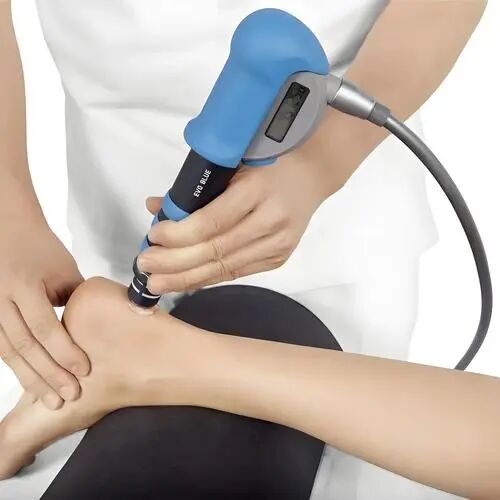
1. What Exactly Is a Shockwave?
Don't be intimidated by the name—a shockwave is not an electric shock. It is a high-energy, high-pressure acoustic wave. Think of it as an "invisible scalpel." In daily life, sound is a type of wave with very little energy. A shockwave, however, generates enormous pressure changes in an extremely short time, allowing its energy to penetrate instantly through skin and fat to reach deep tissues such as muscles, tendons, and bones. Rehabilitation departments commonly use two types:
Radial shockwave: Like the beam of a flashlight, the energy spreads out. It is suitable for treating larger, more superficial areas, such as lumbar muscle strain.
Focused shockwave: Like a magnifying glass focusing sunlight, the energy is highly concentrated at a single point, enabling precise targeting of deep pain sources, such as nonunion fractures after orthopedic surgery.
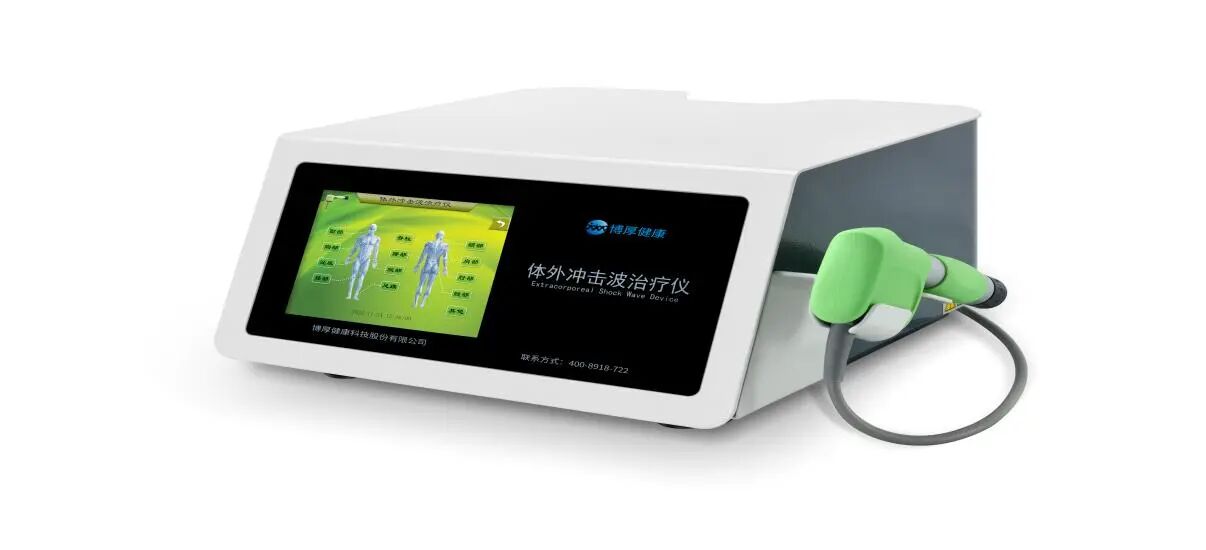
2. What Are the "Stubborn" Conditions It Can Treat?
Shockwave therapy has a wide range of applications in rehabilitation, particularly showing significant effects in chronic soft tissue injuries and musculoskeletal disorders:
Plantar fasciitis: Severe pain with the first step out of bed in the morning, which eases after a few steps but worsens again after prolonged standing. Shockwave therapy effectively releases adhesions and reduces inflammation, with a total effective rate of 80%–90%.
Achilles tendinitis, tennis elbow, golfer's elbow: For these chronic inflammatory conditions at entheses, where conventional physical therapy has limited effects, shockwave therapy stimulates angiogenesis and promotes tendon repair.
Shoulder periarthritis (frozen shoulder): It alleviates joint adhesions and pain, and when combined with rehabilitation exercises, helps patients restore shoulder mobility more quickly.
Calcific tendinitis: When "small stones" form within the rotator cuff tendons, shockwave therapy can directly fragment the calcific deposits, allowing the body to absorb them naturally.
Delayed fracture healing or nonunion: This is an advanced application of shockwave therapy. It stimulates osteoblast activity and promotes bone healing, potentially helping some patients avoid a second surgery.
Muscle strain and trigger point pain: For lower back stiffness after prolonged sitting or "knots" in muscles, shockwave therapy quickly relaxes the fascia and relieves soreness and tightness.
3. Is the Treatment Painful? How Long Does It Take?
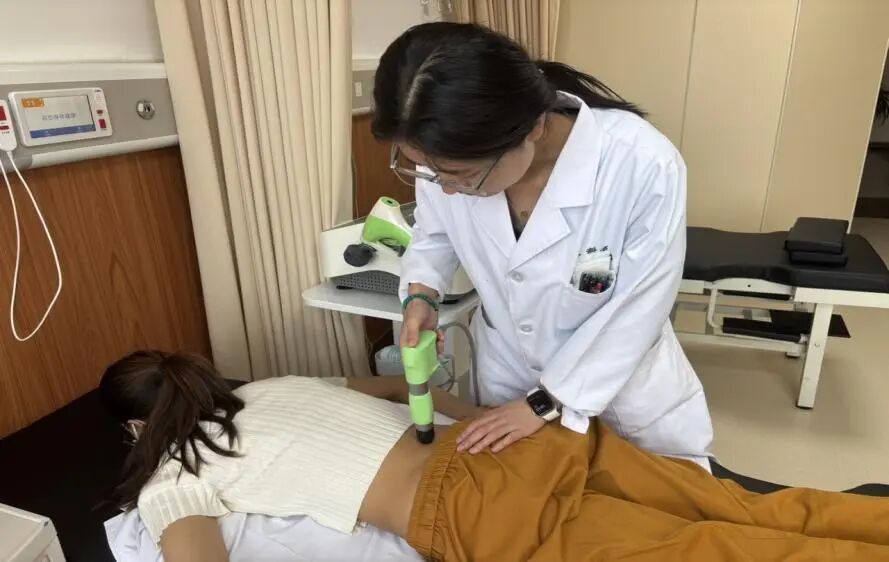
This is the most common concern. During treatment, the doctor holds the therapy probe and moves it over the painful area and surrounding regions. You will feel a rhythmic tapping or a dull, aching sensation—this "comfortable pain" is actually a sign that the treatment is working, indicating that the energy is taking effect in the deep tissues.
A single treatment session usually lasts only 5 to 15 minutes, after which you can resume normal activities. A typical course consists of 3 to 5 sessions, with an interval of 2 to 3 days between sessions. Some people feel significant relief after the very first session, while others may experience a slight worsening of pain within the first 24 hours—a normal reaction indicating that tissue repair is underway—followed by marked improvement.
4. Who Is Not Suitable for Shockwave Therapy?
The following conditions require avoidance of shockwave therapy:
- Pregnant women (especially over the lower back and abdomen)
- Presence of tumors, infections, open wounds, or hemophilia in the treatment area
- Current use of anticoagulant medication or presence of local thrombosis
- Children under 14 years of age (due to open epiphyseal plates)
- Areas overlying the head, neck, lungs, major blood vessels, and major nerve pathways
If you are troubled by persistent "old ailments," consider visiting the rehabilitation department. A beam of acoustic waves—separating the mountain, striking through sinew and bone—may just help you bid farewell to those lingering pains.
Department of Gastroenterology & Oncology Rehabilitation
The Department of Gastroenterology and Oncology Rehabilitation at the Lanzhou Campus of Gansu Wuwei Cancer Hospital is a flagship specialty center integrating medical care, education, and research. It comprises two outpatient clinics (Gastroenterology and Oncology Rehabilitation) and one inpatient ward.
The department boasts a team of 13 medical professionals, including 1 senior-level physician, 2 attending physicians, and 10 junior-level physicians. The team includes 1 PhD and 5 Master's degree holders, supported by 4 long-term practicing Provincial-level Renowned Traditional Chinese Medicine (TCM) doctors. Our diverse staff includes clinicians, TCM practitioners, rehabilitation therapists, psychological counselors, psychotherapists, health managers, and nutritionists. Team members have received specialized training in areas such as rehabilitation techniques, meridian hypnotherapy, mindfulness-based stress reduction (MBSR), cognitive behavioral therapy (CBT), and psychological drawing analysis.
We are committed to the diagnosis and treatment of digestive system diseases and specialize in integrated Chinese-Western rehabilitation, physical rehabilitation, sports rehabilitation, psychological rehabilitation, and nutritional rehabilitation. Operating under a Multidisciplinary Team (MDT) model, we formulate rational diagnosis, treatment, and rehabilitation plans tailored to each patient.
1. Scope of Diagnosis and Treatment
A. Digestive System Diseases:
Esophageal diseases, gastrointestinal disorders, hepatobiliary and pancreatic diseases, digestive psychosomatic diseases, palliative care for gastrointestinal tumors, and TCM-based treatments.
B. Integrated Rehabilitation:
- Musculoskeletal: Lumbar disc herniation, cervical spondylosis, degenerative osteoarthropathy, muscle atrophy, peripheral nerve injury.
- Oncology Supportive Care: Management of tumor-related complications and adverse reactions to non-surgical treatments, including nausea, vomiting, diarrhea, abdominal pain, cancer-related fatigue, skin lesions, bone marrow suppression, alopecia (hair loss), and lymphedema.
2. Diagnostic and Therapeutic Technologies
A. Routine Procedures:
Painless gastroscopy and colonoscopy; endoscopic therapies including polypectomy, hemostasis, stricture dilation, stent placement, Endoscopic Mucosal Resection (EMR), and Endoscopic Submucosal Dissection (ESD).
B. Specialized Techniques:
- Advanced Endoscopy: Peroral Endoscopic Myotomy (POEM), Endoscopic Ultrasound (EUS), EUS-guided radioactive seed implantation, Endoscopic Retrograde Cholangiopancreatography (ERCP), and dual-endoscope assisted full-thickness resection.
- Integrative Oncology: Combined TCM and Western medicine for managing gastrointestinal side effects of radiotherapy/chemotherapy, especially radiation proctitis.
- Psychological Rehabilitation: Physical therapy combined with CBT and MBSR for anxiety, depression, and insomnia.
- Holistic Cancer Care: Integrated TCM and psychotherapy for cancer-related fatigue; prevention and treatment of radiation-induced lymphedema; TCM management of chemotherapy-induced hand-foot syndrome.
- Pain Management: Comprehensive rehabilitation for cancer pain and various chronic pains.
3. Equipment and Facilities
A. Advanced Endoscopic Equipment:
Olympus High-Definition Electronic Gastroscopes, Duodenoscopes, Colonoscopes, Ultrasound Endoscopes, Magnifying Endoscopes, and Enteroscopes.
B. Advanced Rehabilitation Equipment:
Fully automatic constant temperature wax therapy machines, Waldmann light therapy, interferential current therapy devices, deep muscle stimulators, shockwave therapy units, ultrasound therapy devices, lymphedema treatment systems, air pressure wave therapy devices, medium-frequency and low-frequency therapy devices, transcranial magnetic stimulation (TMS) devices, Psychological CT, mental stress analyzers, computerized mindfulness training systems, sandplay therapy kits, and polysomnography (sleep study) monitors.
Department Philosophy: To alleviate suffering with medical excellence, and to enhance quality with humanistic warmth.
Outpatient Address: Room 418, 4th Floor, Inpatient Department, Lanzhou Campus of Gansu Wuwei Cancer Hospital
Inpatient Ward Address: 10th Floor, Inpatient Department, Lanzhou Campus of Gansu Wuwei Cancer Hospital