Can't Stand the Laxative for Colonoscopy? 5 Tips to Ease the Pain
Can't Stand the Laxative for Colonoscopy? 5 Tips to Ease the Pain
"I've already scheduled the gastroscopy and colonoscopy, but I heard the laxative is really tough to take, so I'm not going through with it." "The hardest part of a gastroscopy and colonoscopy isn't the procedure itself, but the laxative you have to drink beforehand. Besides constantly running to the bathroom, the taste is indescribable. After chugging down a large cup, you feel nauseous and want to vomit even before the bowel movements start."
Many people give up halfway, or even vomit it out directly, resulting in inadequate bowel cleansing and making the examination a waste of time.
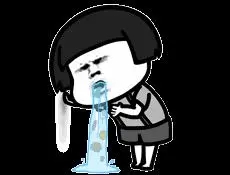
In fact, if you take it the right way, you can avoid suffering, prevent nausea, and still achieve a clean bowel preparation in one go.
I. How to choose your diet before the examination?
Suggestions for 1–3 days before the examination:
1. Allowed foods: Plain congee, noodles, steamed buns, steamed egg, tofu, etc.
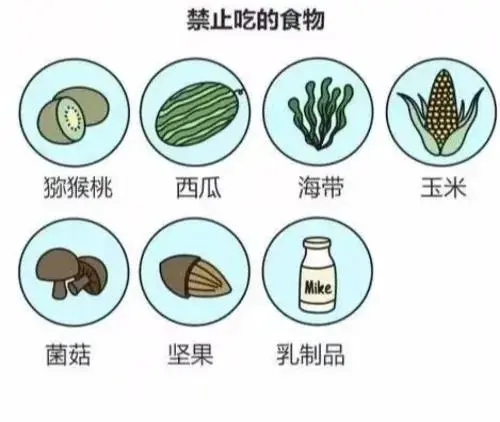
2. Avoid: High‑fiber vegetables (chives, celery, enoki mushrooms), dragon fruit, sesame seeds, seaweed, nuts, greasy foods, spicy foods, and foods with seeds. These may leave excessive residue and make bowel cleansing more difficult.
II. How to take laxatives without
1. The evening before the examination: As prescribed, take three‑quarters of the total volume within 2–3 hours. Drink about 200 ml each time, with an interval of 15–20 minutes between each drink.
2. On the day of the examination (3–4 hours before the procedure): Finish the remaining dose. This is the most critical phase for bowel cleansing.
3. Walk around or gently massage your abdomen while drinking – do not remain seated.
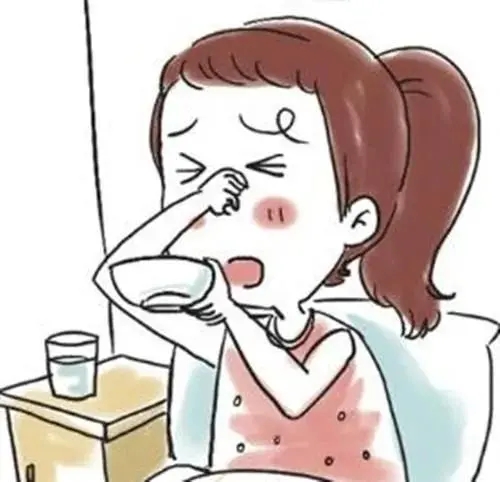
4. If you feel nauseated, pause temporarily and take deep breaths. Once the nausea subsides, continue.
Remember: Do not gulp down large amounts quickly – chugging is most likely to irritate the throat and stomach, triggering nausea, vomiting, and bloating. Also, do not stop halfway or cut the dose short just because it tastes bad, and do not stop on your own just because you have had a few bowel movements.
III. How to season for a better taste?
The taste of the laxative – some describe it as pineapple‑flavored, others as bitter and salty like mucus. As described, it can indeed be hard to swallow. Pairing it with a colorless beverage can greatly improve the taste. Suitable options include: M (colorless version), C100 (colorless flavor), plain water with a few slices of lemon, etc.
Remember: Always choose colorless, transparent beverages. Avoid colored drinks such as black tea, green tea, cola, fruit juice, etc., as they can affect the endoscopic view and compromise the clarity of the examination.
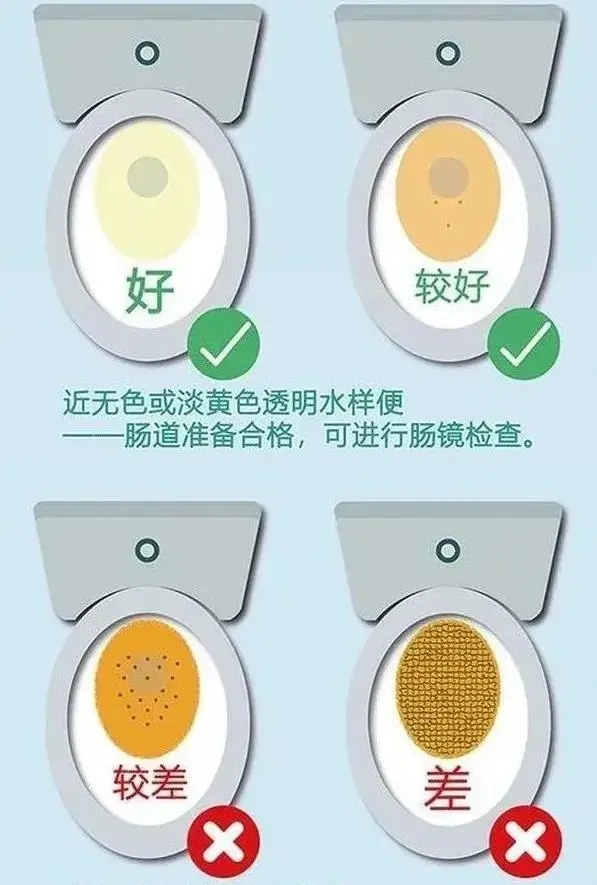
IV. How to tell if the bowels have been completely emptied?
1. Inadequate: Yellowish‑brown, with solid residue or fecal matter.
2. Adequate: Passage of colorless or pale yellow clear liquid, with no solid stool or residue.
V. Who are recommended to undergo gastroscopy and colonoscopy?
If any of the following applies to you, it is recommended to undergo the examination as soon as possible:
1. Age ≥40 years, with or without symptoms;
2. Frequent stomach pain, bloating, acid reflux, or heartburn;
3. Chronic abdominal pain, diarrhea, constipation, or unformed stools;
4. Blood in the stool, mucus in the stool, or black stool;
5. Unexplained significant weight loss over a short period;
6. Family history of gastrointestinal polyps or gastrointestinal tumors;
7. Long‑term irregular eating habits, staying up late, alcohol consumption, frequent takeout meals, or grilled foods.
Gastroscopy and colonoscopy are not as frightening as you might think. By following the methods described above, you can make the experience much more comfortable.
Department of Gastroenterology & Oncology Rehabilitation

The Department of Gastroenterology and Oncology Rehabilitation at the Lanzhou Campus of Gansu Wuwei Cancer Hospital is a flagship specialty center integrating medical care, education, and research. It comprises two outpatient clinics (Gastroenterology and Oncology Rehabilitation) and one inpatient ward.
The department boasts a team of 13 medical professionals, including 1 senior-level physician, 2 attending physicians, and 10 junior-level physicians. The team includes 1 PhD and 5 Master's degree holders, supported by 4 long-term practicing Provincial-level Renowned Traditional Chinese Medicine (TCM) doctors. Our diverse staff includes clinicians, TCM practitioners, rehabilitation therapists, psychological counselors, psychotherapists, health managers, and nutritionists. Team members have received specialized training in areas such as rehabilitation techniques, meridian hypnotherapy, mindfulness-based stress reduction (MBSR), cognitive behavioral therapy (CBT), and psychological drawing analysis.
We are committed to the diagnosis and treatment of digestive system diseases and specialize in integrated Chinese-Western rehabilitation, physical rehabilitation, sports rehabilitation, psychological rehabilitation, and nutritional rehabilitation. Operating under a Multidisciplinary Team (MDT) model, we formulate rational diagnosis, treatment, and rehabilitation plans tailored to each patient.
1. Scope of Diagnosis and Treatment
A. Digestive System Diseases:
Esophageal diseases, gastrointestinal disorders, hepatobiliary and pancreatic diseases, digestive psychosomatic diseases, palliative care for gastrointestinal tumors, and TCM-based treatments.
B. Integrated Rehabilitation:
- Musculoskeletal: Lumbar disc herniation, cervical spondylosis, degenerative osteoarthropathy, muscle atrophy, peripheral nerve injury.
- Oncology Supportive Care: Management of tumor-related complications and adverse reactions to non-surgical treatments, including nausea, vomiting, diarrhea, abdominal pain, cancer-related fatigue, skin lesions, bone marrow suppression, alopecia (hair loss), and lymphedema.
2. Diagnostic and Therapeutic Technologies
A. Routine Procedures:
Painless gastroscopy and colonoscopy; endoscopic therapies including polypectomy, hemostasis, stricture dilation, stent placement, Endoscopic Mucosal Resection (EMR), and Endoscopic Submucosal Dissection (ESD).
B. Specialized Techniques:
- Advanced Endoscopy: Peroral Endoscopic Myotomy (POEM), Endoscopic Ultrasound (EUS), EUS-guided radioactive seed implantation, Endoscopic Retrograde Cholangiopancreatography (ERCP), and dual-endoscope assisted full-thickness resection.
- Integrative Oncology: Combined TCM and Western medicine for managing gastrointestinal side effects of radiotherapy/chemotherapy, especially radiation proctitis.
- Psychological Rehabilitation: Physical therapy combined with CBT and MBSR for anxiety, depression, and insomnia.
- Holistic Cancer Care: Integrated TCM and psychotherapy for cancer-related fatigue; prevention and treatment of radiation-induced lymphedema; TCM management of chemotherapy-induced hand-foot syndrome.
- Pain Management: Comprehensive rehabilitation for cancer pain and various chronic pains.
3. Equipment and Facilities
A. Advanced Endoscopic Equipment:
Olympus High-Definition Electronic Gastroscopes, Duodenoscopes, Colonoscopes, Ultrasound Endoscopes, Magnifying Endoscopes, and Enteroscopes.
B. Advanced Rehabilitation Equipment:
Fully automatic constant temperature wax therapy machines, Waldmann light therapy, interferential current therapy devices, deep muscle stimulators, shockwave therapy units, ultrasound therapy devices, lymphedema treatment systems, air pressure wave therapy devices, medium-frequency and low-frequency therapy devices, transcranial magnetic stimulation (TMS) devices, Psychological CT, mental stress analyzers, computerized mindfulness training systems, sandplay therapy kits, and polysomnography (sleep study) monitors.
Department Philosophy: To alleviate suffering with medical excellence, and to enhance quality with humanistic warmth.
Outpatient Address: Room 418, 4th Floor, Inpatient Department, Lanzhou Campus of Gansu Wuwei Cancer Hospital
Inpatient Ward Address: 10th Floor, Inpatient Department, Lanzhou Campus of Gansu Wuwei Cancer Hospital
Written by: Wan Shunmei
First review: Liu Qiong
Second review: Guo Yishan
Third review: Cai Qinghua
Lanzhou Campus of Gansu Wuwei Cancer Hospital Consultation Numbers
Director Li: 166 0931 3666
Teacher Yan: 176 9325 0603