A Common Spring and Summer Condition: Allergic Purpura (IgA Vasculitis)
A Common Spring and Summer Condition: Allergic Purpura (IgA Vasculitis)
Hello everyone! Today, I’d like to talk about a condition that is more common in spring and summer. Its name sounds like an “allergy,” and its symptoms can look quite alarming – allergic purpura (IgA vasculitis). But this is not simply a skin allergy; rather, it is a condition in which small blood vessels become “upset” and inflamed.
01 What is allergic purpura?
Imagine that the tiny blood vessels throughout your body suddenly become “inflamed in protest” – that is the essence of allergic purpura (IgA vasculitis). It also has a rather distinguished alias: Schönlein‑Henoch syndrome.
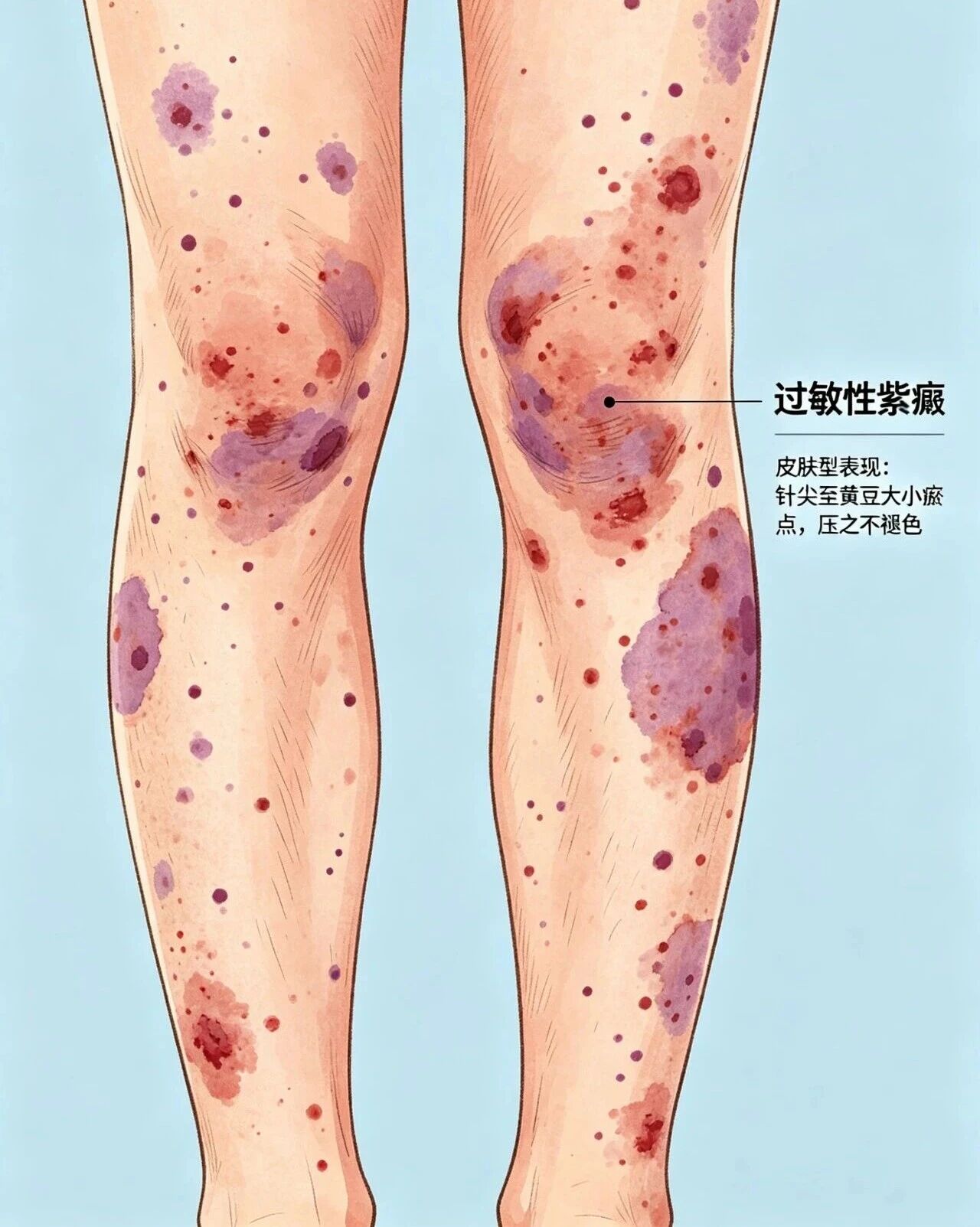
Who do you like to tease the most?
1. Children and adolescents are the primary targets (especially preschool‑ and school‑aged children).
2. Boys are more likely to be affected than girls (approximately 2.5:1).
3. Spring and autumn are peak seasons.
Although the condition has a tendency toward self‑resolution, it should not be taken lightly. Approximately 5% of patients may develop serious complications such as kidney failure – and whether the kidneys are involved is a key factor in determining prognosis. About 1% of patients may develop central nervous system (brain) involvement, with symptoms such as headache and seizures, which makes the condition more severe.
02 Empower all things with wisdom, break boundaries to emerge
Blood vessels do not become inflamed without reason; they typically react to certain "triggers" they do not like:
1. Infectious "assassins": Streptococci, influenza viruses, and others are often the hidden culprits.
2. Dietary "troublemakers": High‑protein foods such as fish, shrimp, crab, milk, and eggs are common triggers.
3. Drug "sparks": Certain antibiotics, pain relievers, and even some herbal medicines may ignite inflammation.
4. Other "provocateurs": Pollen, dust mites, insect bites, or even cold temperatures and emotional stress.
03 "Protest Signals" from the Body (Symptom Recognition)
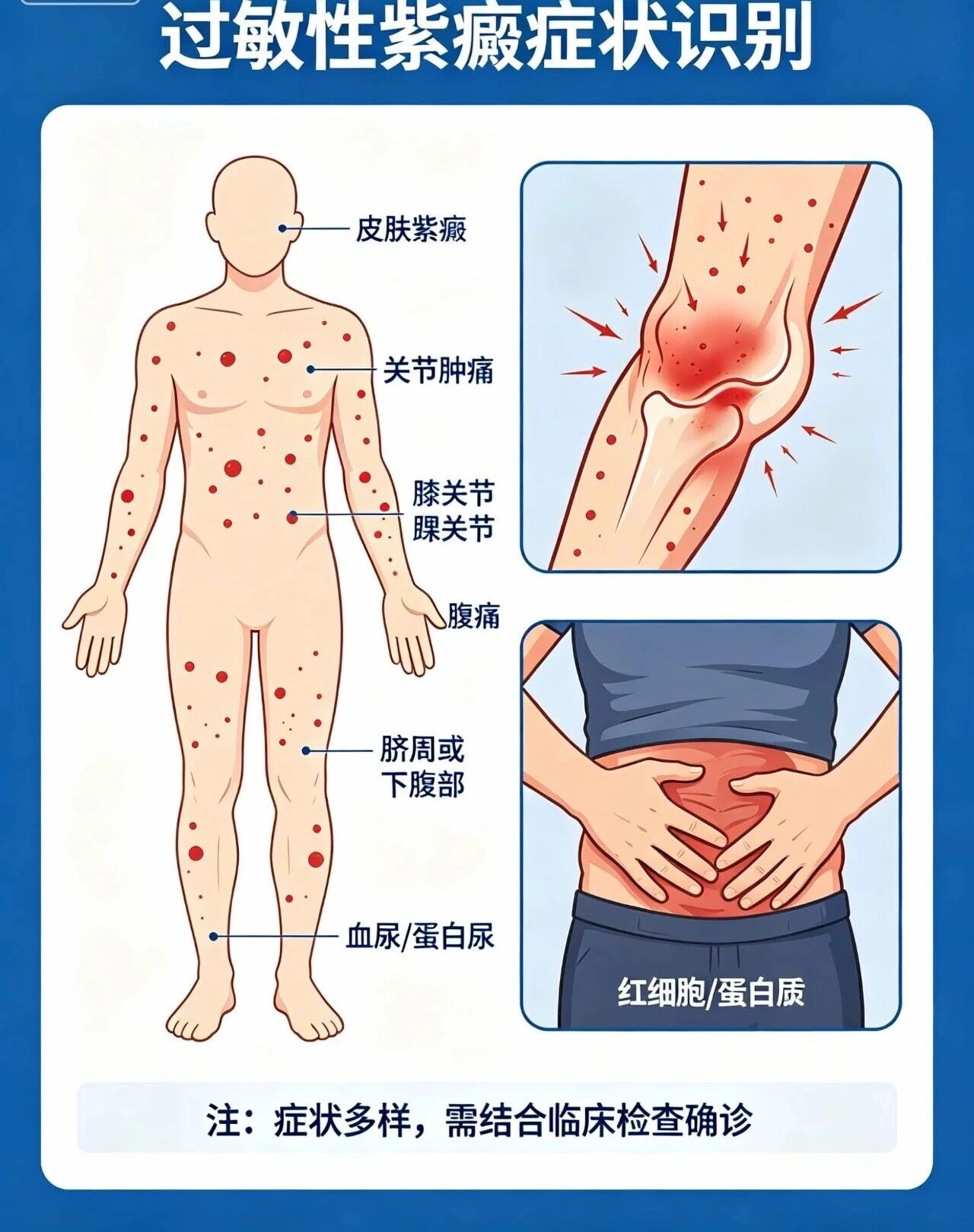
When blood vessels become inflamed, the symptoms can go far beyond just skin purpura:
1. Skin "flashing purple": Red‑purple rashes appear on the limbs and buttocks (like sprinkled chili powder) that do not fade with pressure. They may appear in batches and can be accompanied by itching or pain.
2. Joints "popping and locking": Swelling, pain, and stiffness in large joints such as knees and ankles – you may find yourself walking like a penguin. This could be a sign of the condition.
3. Abdomen "throwing a party": Severe colicky pain, nausea, vomiting, and even blood in the stool – often misdiagnosed as an "acute abdomen" surgical emergency.
4. Kidneys "taking a hit" (most concerning!): Blood in the urine, proteinuria, edema, and hypertension – in severe cases, kidney function can be affected.
5. Rare "surprise attacks": Headache and seizures (involving the brain), hemoptysis, and chest pain (involving the lungs).
04 Why do blood vessels target the kidneys?
The key culprit is "immune complexes" – those harmful combinations of antibodies and antigens. These complexes have a particular fondness for setting up camp in the glomeruli (the filtering units of the kidneys).
1. The glomerulus acts like a "filter screen," and medium‑sized immune complexes are especially prone to getting stuck.
2. The kidneys have an abundant, tortuous blood flow, making it easy for immune complexes to deposit and cause damage.
3. Once deposited, these complexes activate an inflammatory "bomb," damaging the blood vessels – and that is how Henoch‑Schönlein purpura nephritis (IgA vasculitis with nephritis) develops.
05 Treatment: Calm the "irritable" blood vessels
As hematologists, our goal is to calm the inflammatory "anger" in the blood vessels as quickly as possible.
1. Identify the "culprit": Make every effort to find and avoid the trigger (source of infection, suspicious foods, medications, etc.).
2. Basic "fire‑fighting":
- Antihistamines (e.g., chlorpheniramine), vitamin C, and rutin help strengthen blood vessel integrity.
- Severe abdominal pain? The physician may prescribe antispasmodics (e.g., atropine).
- Rest is essential during the acute phase; if gastrointestinal symptoms are severe, brief fasting may be necessary.
3. Corticosteroids for "strong rescue": Effective for joint swelling, pain, and abdominal symptoms, and can rapidly reduce vascular edema (must be used under strict medical guidance).
4. Immunosuppressants as a "last resort": Considered when kidney injury is severe and corticosteroids are ineffective (e.g., cyclophosphamide).
5. Traditional Chinese medicine (TCM) regulation: Treatment based on syndrome differentiation. Commonly used formulas include Jingfang Siwu Tang, Danggui Yinzi, Xiaofeng San, Xijiao Dihuang Tang, and Guipi Tang – aiming to dispel wind, clear heat, remove toxins, cool the blood, and strengthen the spleen and qi.
06 Life "Avoid Pitfalls" Guide (A Must-Read for Patients)
Want to keep your blood vessels “calm and stable”? Daily protection is key:
1. Be an “allergy detective” (allergen monitoring): Work hard to identify and stay away from your triggers – such as certain foods, pollen, pet dander, etc.
2. Don’t let your body “overwork”: Rest more during the acute phase, and even during recovery, exercise should be increased gradually.
3. Protect your “respiratory defense line”: Prevent colds and promptly address sources of infection (such as tonsillitis).
4. Watch your diet – this is essential:
- Avoid: Spicy foods, seafood, lamb, alcohol, raw onions and garlic, and processed or instant foods.
- Keep it light: Choose rice, noodles, corn, and other grains as staples, and eat plenty of fresh vegetables and fruits. If you suspect a particular food, avoid it completely!
5. Keep both body and mind “warm”: Stay warm, maintain a pleasant mood, and avoid major emotional ups and downs.
Doctor’s emphasis: If you suddenly develop purple spots (purpura) on the skin, especially if accompanied by joint pain or abdominal pain, do not treat it as a common allergy! See a hematologist or pediatrician promptly. With early diagnosis, standardized treatment, and careful care, the vast majority of patients can successfully overcome this condition. Remember – protecting your kidney health is something we should work on together!
Department of Medical Oncology / Hematology
Department Introduction
The Department of Medical Oncology / Hematology at the Lanzhou Campus of Gansu Wuwei Cancer Hospital was established in May 2025 as a regional specialty department. The department features a well-structured professional team, mature diagnostic and treatment techniques, and comprehensive equipment. It includes a specialized inpatient ward, outpatient clinic, and a Hematology Center Laboratory. The inpatient unit is equipped with 30 fixed beds, one cell apheresis treatment bed, and two Class 100 laminar flow beds. The department specializes in the precise diagnosis and treatment of hematologic diseases such as leukemia, lymphoma, and multiple myeloma, as well as solid tumors including lung cancer, gastric cancer, colorectal cancer, and breast cancer. It excels in the management of refractory and relapsed cases and the treatment of complications arising from radiotherapy and chemotherapy. Leveraging MICM-based precise diagnostics, personalized treatment plans, and laminar flow wards, the department provides refined medical care and comprehensive, full-cycle health support to safeguard the health of the regional population.
Physician Team
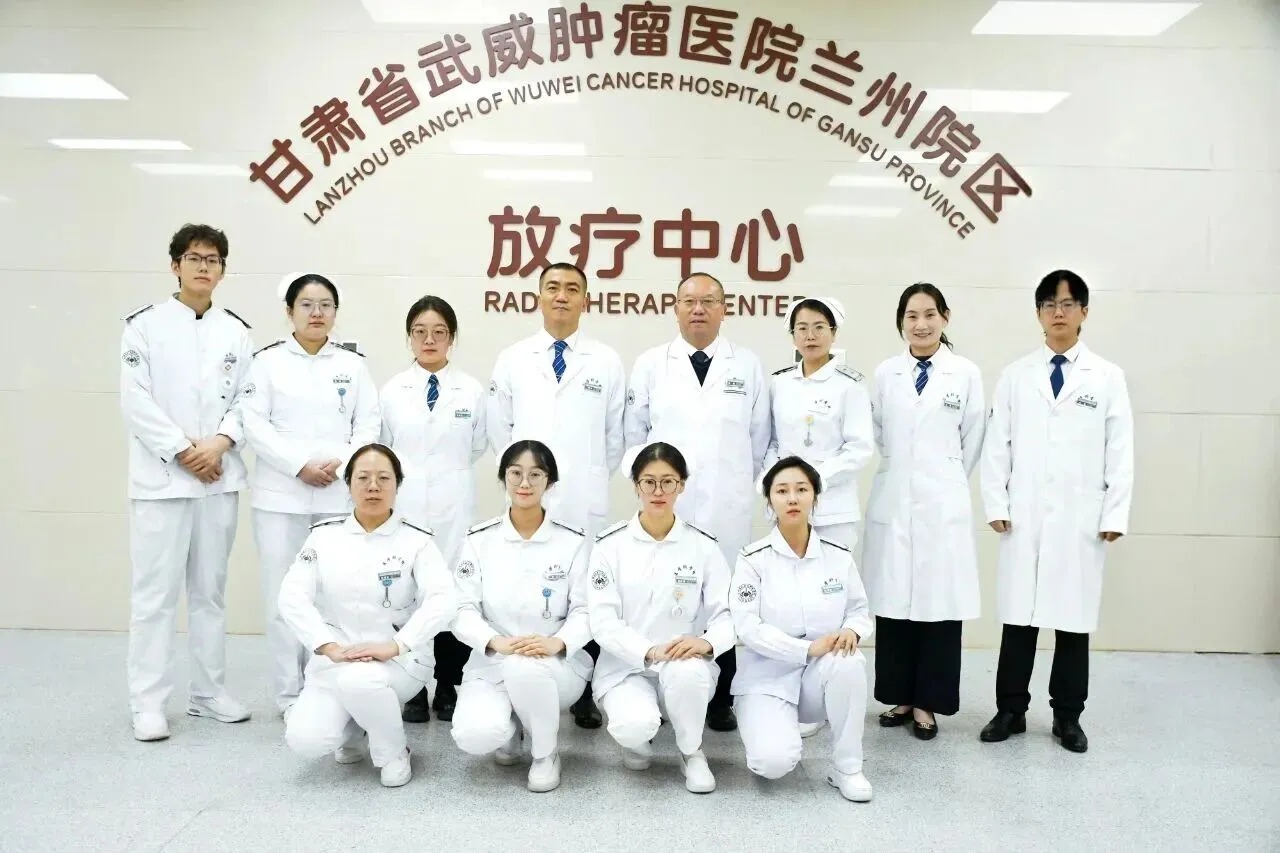
The department is led by Professor Pan Ming, a First‑Grade Chief Physician and Chief Expert. The medical team consists of 12 healthcare professionals, including 1 chief physician, 1 associate chief physician, 1 attending physician, and 3 resident physicians (among whom 1 holds a Ph.D. and 3 hold master’s degrees), along with 6 charge nurses and registered nurses. The team has a well-structured talent echelon with solid professional expertise. With extensive clinical experience in the field of oncology and hematology, the team skillfully applies cutting-edge techniques such as chemotherapy, targeted therapy, immunotherapy, and integrated traditional Chinese and Western medicine to precisely diagnose and treat various benign and malignant tumors and hematologic disorders. With rigorous medical skill, they customize individualized treatment plans for each patient, safeguarding their health.
Treatment Philosophy
Patient-centered, precision‑focused, and efficacy‑driven. The department places equal emphasis on professional diagnosis/treatment and humanistic care. Relying on advanced technology and standardized practices, it provides every patient with individualized, refined, and compassionate medical services, dedicating responsibility and expertise to protecting patients’ lives and health.
Medical Resources
The Hematology Center Laboratory provides same‑day diagnostic services through bone marrow cell morphology analysis and also offers MICM‑based precision typing technologies including bone marrow pathology, flow cytometry, chromosome analysis, and mutation gene testing. The inpatient unit is equipped with standardized laminar flow wards, providing a safe and clean environment for high‑dose chemotherapy and hematopoietic stem cell transplantation. The department routinely performs cutting-edge procedures such as blood cell separation apheresis, plasma exchange, and adult unrelated cord blood hematopoietic stem cell transplantation. With advanced equipment and comprehensive technical capabilities, the department provides solid hardware and technical support for precise diagnosis and treatment as well as the management of severe and complex conditions.
Address: 11th Floor, Inpatient Building, Lanzhou Campus of Gansu Wuwei Cancer Hospital (No. 100 Yanbei Road, Chengguan District, Lanzhou City)
Contact Numbers:
Physicians’ Office: 0931-2169583
Nursing Station: 0931-2169535
Lanzhou Campus of Gansu Wuwei Cancer Hospital – Consultation Hotline:
Director Li: +86 16609313666
Ms. Yan: +86 17693250603
Written by: Pan Ming
First review: Du Xiaoting
Second review: Guo Yishan
Third review: Cai Qinghuai