Bone Marrow Metastatic Carcinoma
Bone Marrow Metastatic Carcinoma
When we talk about cancer, the first things that come to mind are usually tumors of the lung, stomach, breast, or liver. But here's something many don't realize — cancer cells can also find their way into the bone marrow. And that's exactly what we're going to explore today: a special type of secondary cancer known as bone marrow metastatic carcinoma (BM-Ca).
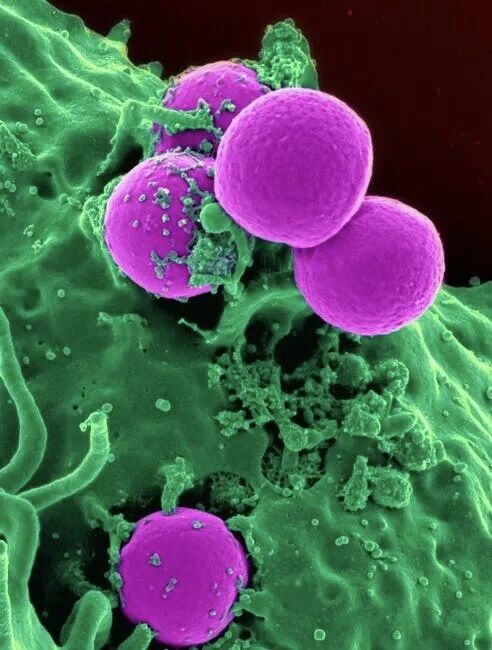
I. What Is Bone Marrow Metastatic Carcinoma (BM-Ca)?
Simply put, bone marrow metastatic carcinoma doesn't start in the bone marrow. It begins elsewhere in the body — say, in the lung, breast, or liver — and then cancer cells travel through the blood or lymph system and settle in the bone marrow, where they grow and multiply. Think of it like weeds creeping into a garden from outside: they invade, take over, and squeeze out the healthy cells that should be there.
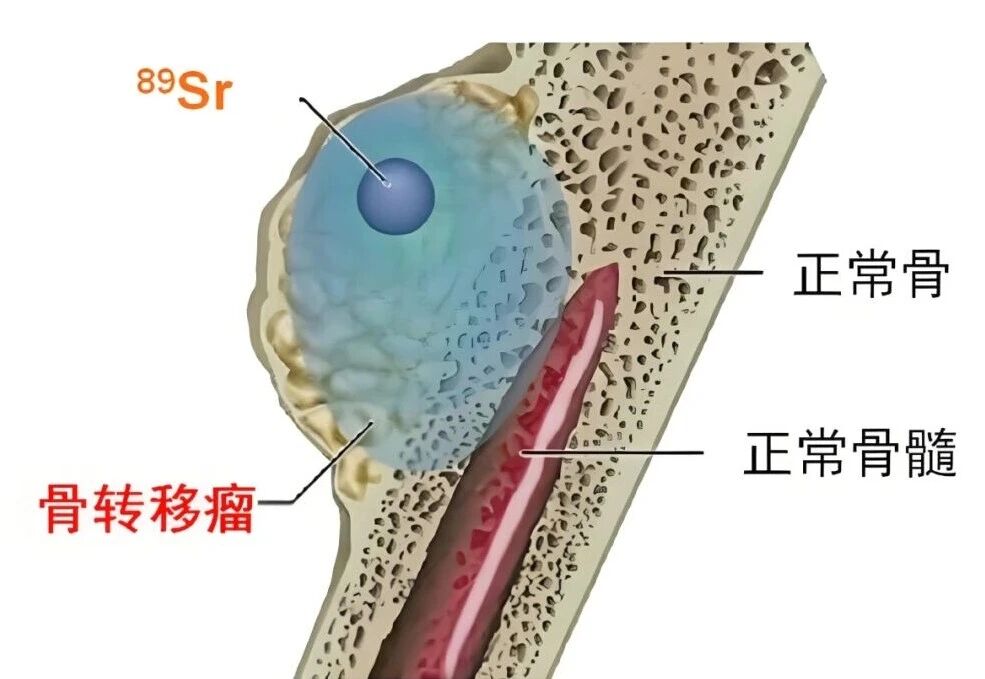
Cancers that commonly spread to the bone marrow include breast, prostate, lung, stomach, colorectal, apocrine, and bone cancers. Once these cancer cells make their way into the bone marrow, they can interfere with its normal day-to-day operations — disrupting the very factory that produces your blood cells.
II. What "signals" will the body send out?
The bone marrow is essentially the body's blood cell factory — producing red cells, white cells, and platelets. When cancer cells invade, they disrupt this production line, leading to a range of symptoms:
- Anemia: You may feel dizzy and tired often, and look unusually pale — that's because red blood cell production has dropped.
- Bleeding tendencies: Gums that bleed easily or unexplained bruises on your skin signal a shortage of platelets.
- Recurrent infections: With fewer white blood cells, your immune defense weakens — you catch colds at the slightest chill, and minor wounds tend to get inflamed.
- Bone pain (the hallmark symptom): Cancer cells eat away at bone tissue, causing pain that can be felt all over the body, especially in the back and limbs, and worsens with movement. In severe cases, it may even lead to fractures from minor stress (pathological fractures).
III. How to detect and diagnose?
If you have a known cancer history or are noticing the signs we just discussed, the next step is to get a clear diagnosis through the following tests:
- Blood Work: A complete blood count to check your red cells, white cells, and platelets, plus tests for liver and kidney function, blood calcium, and other relevant markers.
- Bone Marrow Aspiration or Biopsy — This is the definitive "golden key" to diagnosing bone marrow metastasis. Sometimes, a single puncture isn't enough, and your doctor may need to sample from multiple sites. It's also important that the procedure is performed by an experienced hematologist, especially when the sternum (breastbone) is chosen as the puncture site.
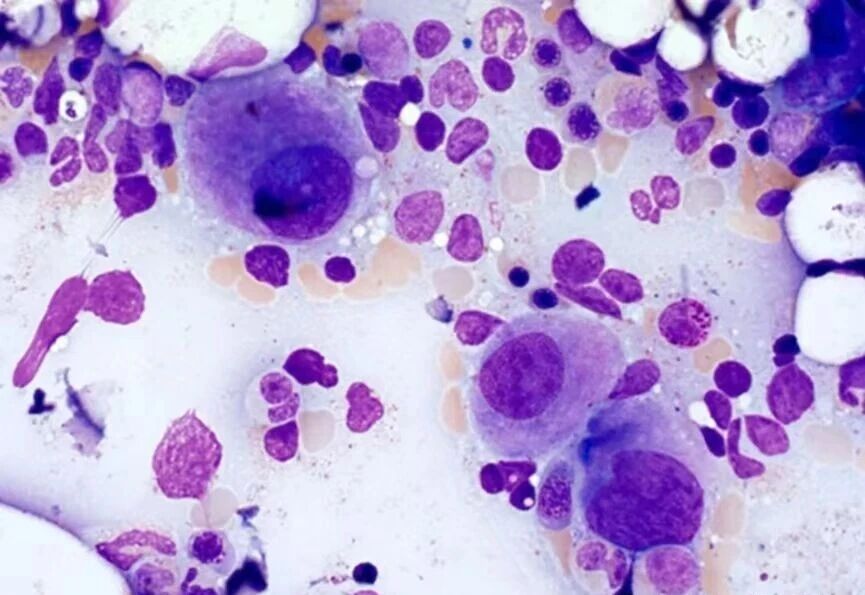
★ Bone Marrow Smear — Showing Nest-Like Clusters of Metastatic Carcinoma Cells:
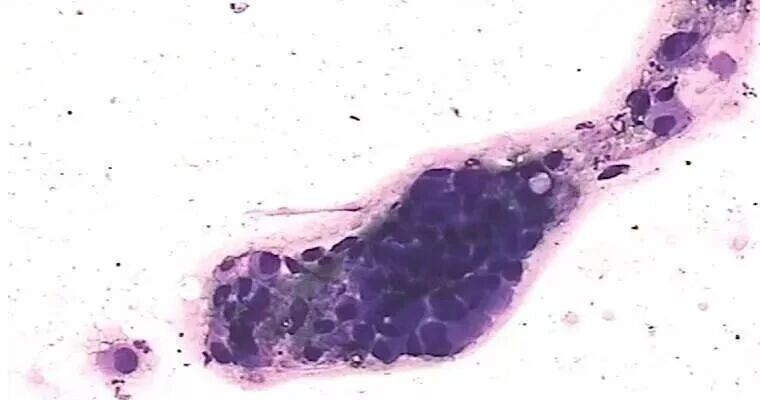
★ Bone Marrow Cytomorphology Report — Issued by the Laboratory of our Hematology Center:
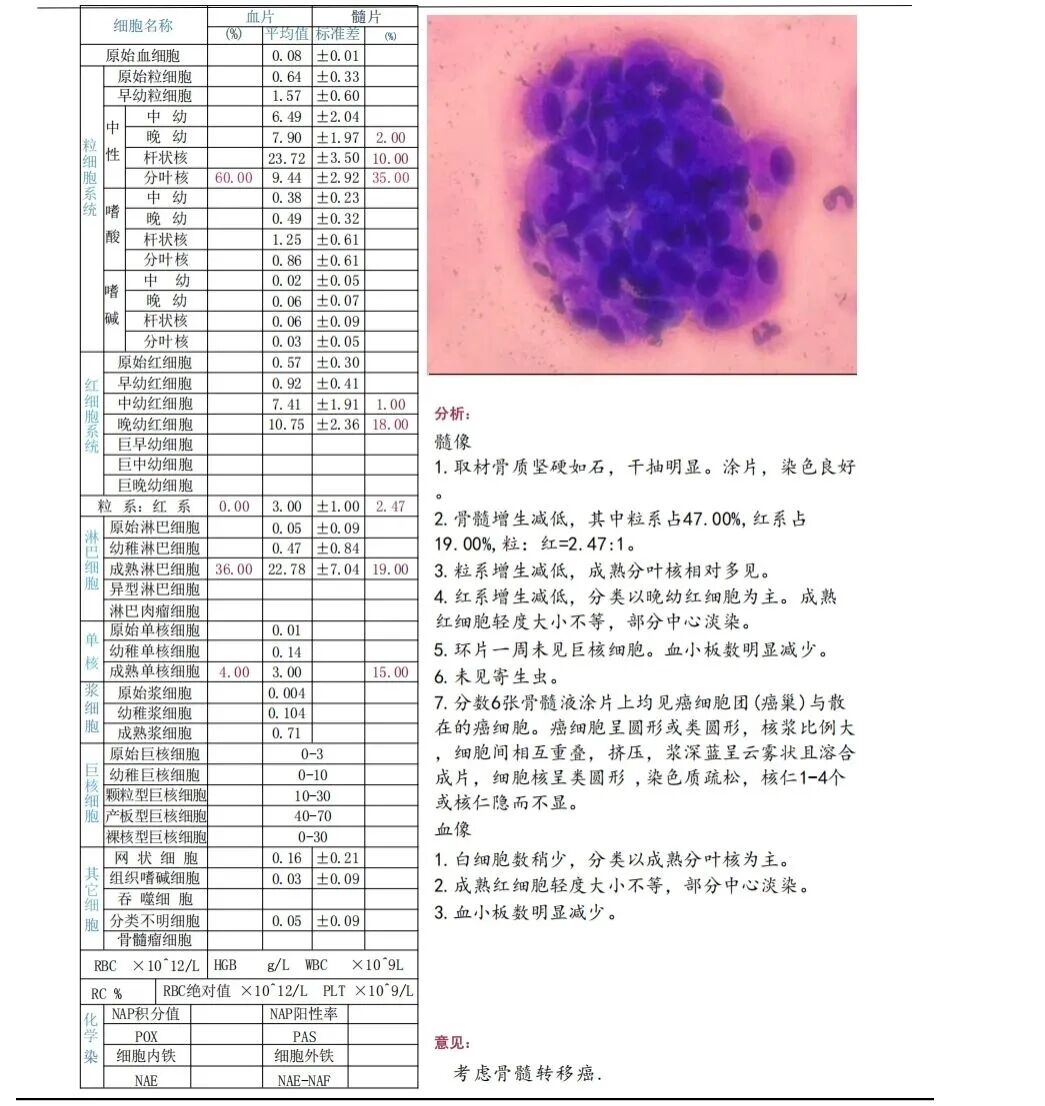
3. Imaging Tests: Imaging tools like bone scans, CT, MRI, or PET/CT help pinpoint where cancer has damaged the bones, giving a clear picture of the affected areas.
IV. What should you do if you have metastatic bone marrow cancer?
As frightening as it sounds, bone marrow metastatic carcinoma is not a dead end. Treatment focuses on four key goals: controlling cancer growth, relieving symptoms, improving quality of life, and extending survival. Common strategies include:
- Treating the primary cancer: For instance, if breast cancer has spread to the marrow, we use breast-cancer-specific chemotherapy and targeted therapies — going after the source.
- Managing symptoms: Boosting red blood cells, platelets, and white cells; controlling bone pain with painkillers or drugs that slow bone breakdown.
- Supportive care: Good nutrition, adequate rest, and strengthening your overall immune function.
- Strengthening bones and preventing fractures: Medications like bisphosphonates and denosumab help protect your bones.
- Radiation therapy (RT) — precisely targeted to affected areas.
- Radionuclide therapy — using agents like strontium-89, radium-223, lutetium-177, iodine-131, and actinium-225 (alpha emitters), available at the Radionuclide Therapy Unit of Lanzhou Heavy Ion Hospital.
- In recent years, our department has adopted a combination regimen of chemotherapy, umbilical cord blood hematopoietic stem cell transplantation, and mesenchymal stem cell transplantation — achieving remarkable results, with significant gains in both survival time and quality of life for our patients.
Bone marrow metastasis is often seen in advanced cancer, but early detection and prompt treatment can make a real difference — reducing suffering and prolonging life. If you are a cancer patient, be sure to keep up with your regular checkups.
Watch out for bone pain! If you develop unexplained bone pain, fatigue, or other concerning symptoms, don't brush them off — see a doctor.
Think of your body as a finely tuned machine — every unusual signal matters. Learning about bone marrow metastatic carcinoma isn't about fear; it's about taking charge and protecting what matters most: your health.
A Quick Word of Reassurance
Please don't let fear stop you from getting a bone marrow aspiration or biopsy when your doctor recommends one. These are completely routine tests for anyone suspected of having a blood or lymphatic disorder. Think of it like this: if you have a bad cough and fever, and pneumonia is on the table, your doctor listens to your lungs and then orders an X-ray, maybe even a CT or MRI, to get a clear picture. A bone marrow test is no different — it's just a standard diagnostic tool. Our hematology specialists are experts at this procedure — it's safe, well-practiced, and carries virtually no risk. And here's the best part: once it's done, you can get right back on your feet, with no limitations on movement or daily life.
Oncology Department/Hematology Department
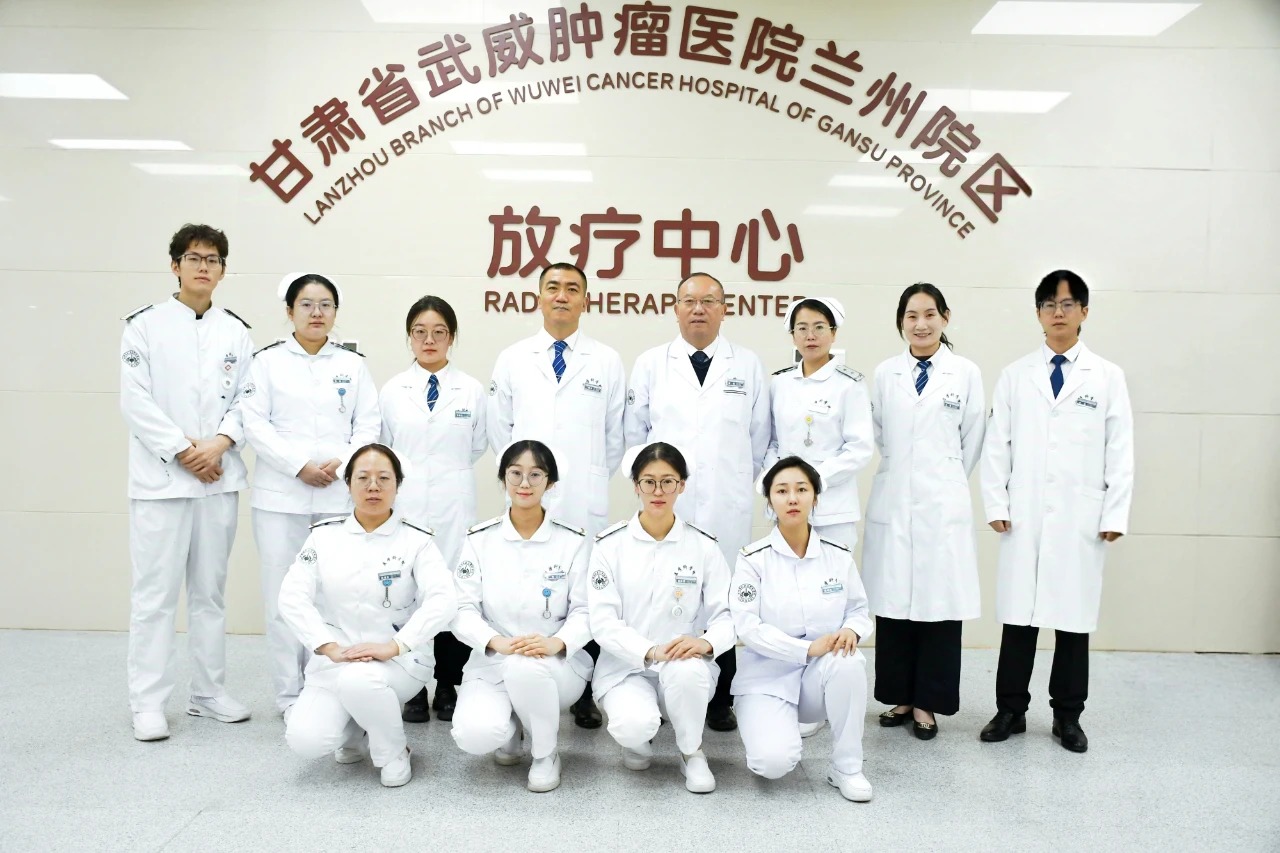
Professional team
The department boasts an elite team of professional medical staff. In the medical team, specially appointed experts Professor Bai Hai and Professor Pan Ming are both Chief Physicians of the highest rank, renowned in the field for their profound academic expertise and extensive clinical experience. They provide solid assurance for the department's diagnostic and treatment capabilities. Additionally, the department maintains a well-structured and complete talent echelon, continuously improving and enhancing its talent cultivation mechanism to ensure high-quality, multi-level medical services for patients. The nursing team delivers comprehensive and meticulous care with a strong sense of responsibility and professional skills, ensuring patient comfort and safety throughout the treatment process.
Scope of Diagnosis and Treatment
The department specializes in the precise diagnosis and treatment of various benign and malignant diseases of the blood system and solid tumors. It holds a distinct advantage in managing refractory and relapsed hematologic diseases and solid tumor conditions. Key areas of focus include hematologic disorders such as leukemia, lymphoma, multiple myeloma, and various types of anemia, as well as the medical treatment of common solid tumors like lung cancer, gastric cancer, colorectal cancer, and breast cancer. Whether addressing common illnesses or complex conditions, the department leverages its professional medical expertise and extensive clinical experience to provide patients with accurate diagnoses and effective treatment plans.
Medical treatment techniques
The department employs diverse and advanced treatment approaches, integrating internationally recognized concepts and methods. Its therapeutic arsenal includes chemotherapy, targeted therapy, immunotherapy, endocrine therapy, supportive care, cell-based therapies, and integrated traditional Chinese and Western medicine. Personalized comprehensive treatment plans are tailored to each patient’s condition and physical status to achieve optimal therapeutic outcomes. Supported by the advanced MICM (morphology, immunology, cytogenetics, molecular biology) diagnostic technologies in the hematology laboratory—such as bone marrow morphology, bone marrow pathology, flow cytometry, and genetic testing—the department ensures precise diagnosis and classification of hematologic diseases, providing a scientific foundation for individualized treatment planning. These cutting-edge technologies enable a more accurate understanding of each patient’s condition, thereby facilitating targeted therapies and enhancing treatment efficacy. Equipped with laminar airflow wards, the department offers a safe and comfortable treatment environment for patients undergoing high-dose chemotherapy, hematopoietic stem cell transplantation, and other procedures with stringent infection control requirements. These wards utilize advanced air purification technology to effectively reduce infection risks, providing robust support throughout the treatment process.
Address: 11th Floor, Inpatient Department, Lanzhou Campus of Wuwei Cancer Hospital, Gansu Province
Contact Numbers:
Doctor's Office: 0931-2169583
Nursing Station: 0931-2169535
Lanzhou Campus of Gansu Wuwei Cancer Hospital Consultation Hotline:
Director Li: 166 0931 3666
MS. Yan: 176 9325 0603
Writer: Pan Ming
First Review: Liu Qiong
Second Review: Guo Yishan
Third Review: Cai Qinghua