Why Hold Your Urine Before Radiotherapy? — The Science of Bladder Management
Why Hold Your Urine Before Radiotherapy? — The Science of Bladder Management
Opening: A Question That Puzzles Many Patients
If you've undergone pelvic radiotherapy, you've probably had this experience:
"Doctor, why do I have to drink water and hold my urine before every session? It's so uncomfortable—can't I drink a little less?"
This seemingly simple matter of "holding your urine" is, in the context of radiotherapy for urological tumors, actually a critical practice that directly affects the precision and safety of treatment.
Today, let's explore: just how important is bladder status management? And what kind of "black technology" is the bladder volume measurement device?

1. The Bladder: Not Just a "Urine Bag," But a "Positioning Marker" and "Protective Shield" for Radiotherapy
Why does radiotherapy care whether the bladder is "full" or "empty"?
In radiation therapy for pelvic tumors such as bladder cancer and prostate cancer, the doctor's goals are clear:
- Deliver high-energy radiation to precisely "eliminate" cancer cells
- Maximize protection of surrounding normal organs (rectum, small intestine, healthy bladder tissue, etc.)
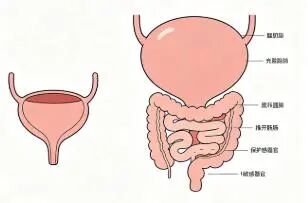
But here's the catch — the bladder is a highly elastic organ, and its size and position are directly determined by the amount of urine it contains.
The two core functions of bladder filling are:
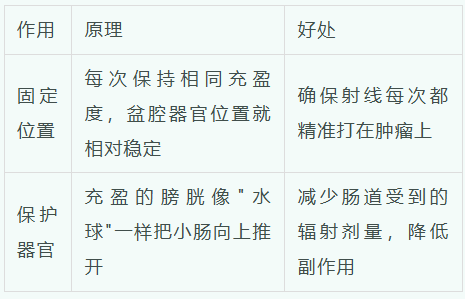
Simple analogy: Think of it like target shooting — the target has to be in the exact same position every time for you to hit the bullseye consistently. The bladder is the "bracket" that holds the target steady.
2. "Holding It In" Is Not About Enduring as Much as Possible — There's a Science to It
× Misconception: The fuller, the better?
Many patients assume that "the more full the bladder, the better the outcome" — but that's not the case.
Risks of over-distending the bladder:
- Patients struggle to tolerate it and may accidentally release urine mid-treatment
- Excessive filling can actually increase the radiation dose delivered to the bladder wall
- Large variations in bladder fullness from day to day compromise treatment reproducibility
√ The right approach: "Moderate fullness" is the gold standard
Optimal bladder volume: 200–400 mL (roughly the amount in a standard bottle of water)
How it should feel: A clear urge to urinate, but still tolerable — no pain, pressure, or severe discomfort.
3. Bladder Volume Measurement Device: Your "Bladder Capacity Ruler"
How do you know how much you're holding? Just by feel?
In the early days, it really did rely mainly on patients going by "how it feels" — but everyone's perception varies greatly.
Nowadays, the bladder volume measurement device (ultrasound bladder scanner) has become standard equipment in radiotherapy departments.
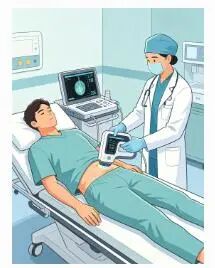
What is a bladder volume measurement device?
Simply put, it's a portable "bladder ultrasound":
- Uses ultrasound technology
- Probe placed on the lower abdomen
- Automatically calculates the urine volume in the bladder within seconds
- Non-invasive, painless, and fast
The measurement process is super simple:
- The patient lies flat, exposing the lower abdomen
- A small amount of ultrasound coupling gel (cool gel) is applied
- The doctor places the probe just above the pubic symphysis (between the navel and the pubic hair line)
- Press the scan button — results appear in 3–4 seconds
- Repeat the measurement 2–3 times and take the average
4. Radiotherapy Bladder Training: Four Steps to Master It with Ease
Many hospitals will have patients undergo 2–4 days of bladder-holding training before formal radiotherapy begins. The goal is to help the body "remember" that optimal state of fullness.
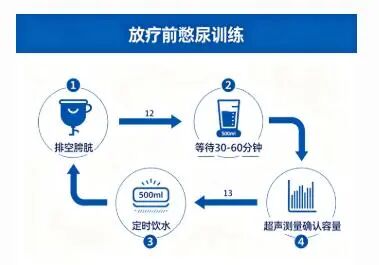
Standard Four-Step Training Method:
Step 1: Empty the bladder
Before starting the training, go to the restroom and empty your bladder completely.
Step 2: Drink a set amount at a set time
General recommendation: 1–2 hours in advance, drink 500–700 mL of warm water
You can drink it in portions — for example, 200 mL within 20 minutes
Note: Use warm water, not strong tea, coffee, or carbonated beverages
Step 3: Wait patiently
Wait 30–60 minutes after drinking
You can go about your normal activities during this time, but avoid strenuous exercise
When you feel a noticeable urge to urinate, it's about time
Step 4: Confirm with ultrasound measurement
Use the bladder measurement device to check the actual volume
- If it's not enough, drink a little more water and wait a while
- If it's too much, release a small amount
Tip: Keep a record of "how much you drink" and "how long you wait" to reach your ideal volume — create your own "personal formula" — and you'll be a pro in no time.
5. Frequently Asked Questions from Patients
Q1: Do I have to hold my urine before every radiotherapy session?
Yes. A similar bladder fullness level must be maintained each time to ensure treatment precision.
Q2: What if I just can't hold it anymore?
Don't tough it out at all costs! If you absolutely can't hold it, be sure to tell your doctor or radiation therapist promptly. You can go release a portion of it first, then have the volume re-measured and adjusted. Forcing yourself to hold it may actually backfire — if you end up releasing urine mid-treatment, the positional change can compromise the therapy.
Q3: Is there any method that doesn't require holding urine?
For certain special patients (such as elderly individuals, those with severe benign prostatic hyperplasia, or those who have difficulty holding urine), some hospitals use a "catheter-assisted fixed-volume infusion" approach — a set amount of saline is instilled into the bladder via a catheter to ensure identical conditions every time. However, this is an invasive procedure and is generally only used when necessary.
Q4: Can holding urine damage the bladder?
Moderate filling does not. We're talking about "moderate fullness," not "holding it until it bursts." Moreover, each radiotherapy session lasts only about 10–15 minutes, and you can empty your bladder right after treatment — it won't cause any harm to the bladder.
6. Heartfelt Advice for Patients
Pre-Radiotherapy Preparation Checklist:
✅ Bring a water cup to easily control your fluid intake
✅ Wear loose-fitting pants that are easy to take on and off
✅ Know your personal "drinking-to-bladder-fullness" rhythm in advance
✅ Inform your medical team promptly if you experience any discomfort
Be sure to mention these conditions ahead of time:
Urinary tract infection, frequent urination, or urgent urination
Severe benign prostatic hyperplasia with difficulty urinating
Previous bladder surgery
Diabetes or other conditions that affect urination
Summary:
Bladder status management may seem like a "minor detail" before radiotherapy, but it is in fact a crucial safeguard for precise radiation therapy.
From "guessing by feel" to "measuring accurately with instruments," advances in medicine have made treatment increasingly precise and safe. And the bladder volume measurement device serves as the little guardian of this "critical water line."
Remember: Holding urine is not the goal — precision is what truly matters. Cooperate with your healthcare team and practice scientific bladder filling to maximize the effectiveness of radiotherapy while minimizing side effects.
This article is for general health information purposes only. Please follow your doctor's instructions for your specific treatment plan.
If you find this helpful, feel free to share it with friends who might need it~
Gansu Wuwei Cancer Hospital Lanzhou Campus – Consultation Hotline:
Director Li: 166 0931 3666
Teacher Yan: 176 9325 0603
Writer: Ma Wenjun
First Reviewer: Liu Qiong
Second Reviewer: Guo Yishan
Third Reviewer: Cai Qinghua