Minimally Invasive, Scar‑Free, Gland‑Preserving – A Complete Guide to Thyroid Nodule Ablation
Minimally Invasive, Scar‑Free, Gland‑Preserving
– A Complete Guide to Thyroid Nodule Ablation
1. What Is Thyroid Nodule Ablation?
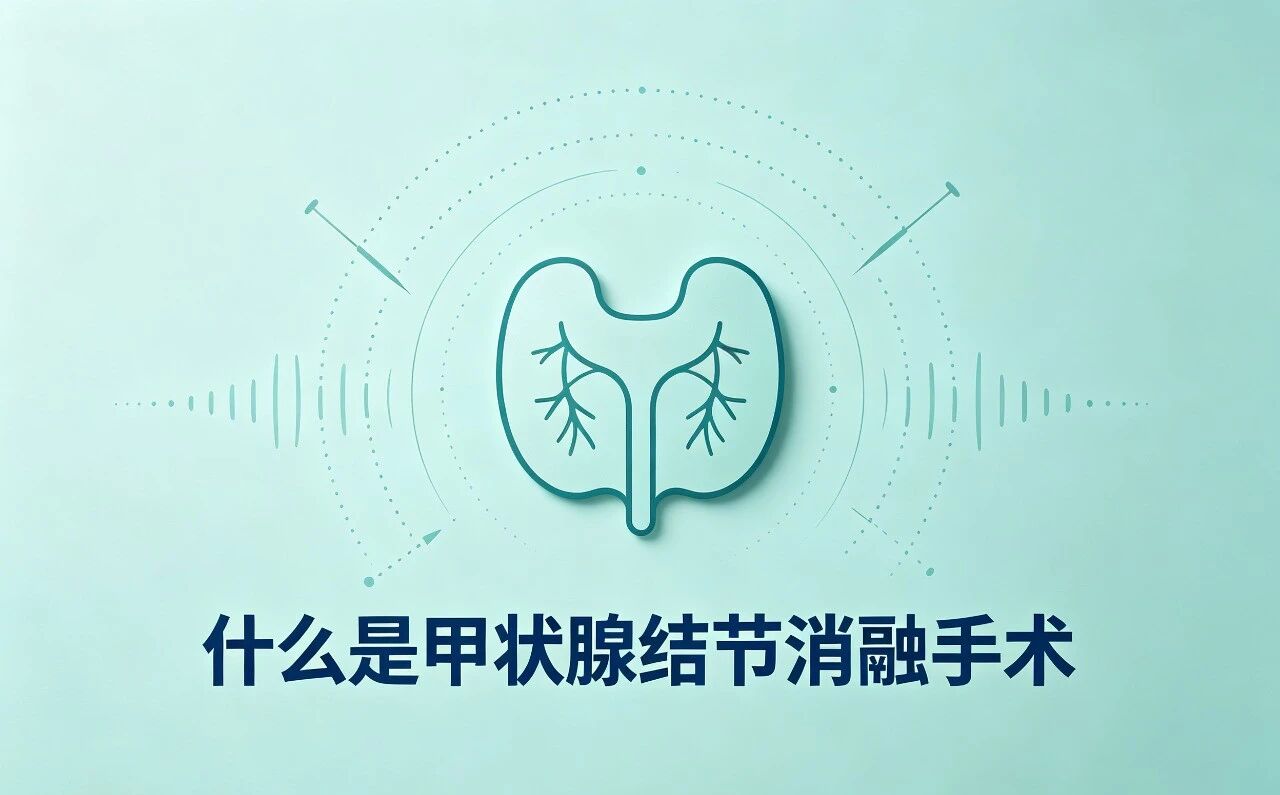
Thyroid nodule ablation is a minimally invasive interventional technique. Under real‑time ultrasound guidance, a thin needle (ablation probe) is precisely inserted into the nodule. Through radiofrequency, microwave, or laser energy, localized high temperatures (approximately 80°C) are generated, causing coagulative necrosis of the nodular tissue. Over time, the necrotic tissue is gradually absorbed and resorbed by the body's immune system, resulting in lesion reduction or elimination.
2. Indications (Suitable Cases for Ablation Therapy)
The procedure is suitable for three categories of cases — benign nodules, microcarcinomas, and metastatic lymph nodes — with the following specific indications:
1. Thyroid nodules classified as benign on ultrasound and confirmed by biopsy;
2. Nodules with an optimal diameter range of 2–4 cm;
3. Nodules causing neck discomfort or local compressive symptoms;
4. Patients who are concerned about neck appearance and do not wish to undergo open surgery that would leave a scar;
5. Papillary microcarcinomas without metastasis, with a diameter ≤ 1 cm;
6. Postoperative recurrent nodules or metastatic lymph nodes requiring treatment.
3. Contraindications (Cases Unsuitable for Ablation Therapy)
Key contraindications include: coagulation disorders, pregnancy, and severe infection. The following are specific circumstances:
1. Severe coagulation abnormalities;
2. Pregnancy or lactation;
3. Extensive metastasis or invasion of surrounding tissues by the nodule;
4. Abnormal function of the contralateral vocal cord;
5. Poor baseline cardiac or pulmonary function, making the patient unable to tolerate the procedure;
6. Nodules closely adjacent to the trachea or recurrent laryngeal nerve (a relative contraindication requiring risk–benefit assessment).
4. Procedure Workflow (Total Duration Approximately 30 Minutes)

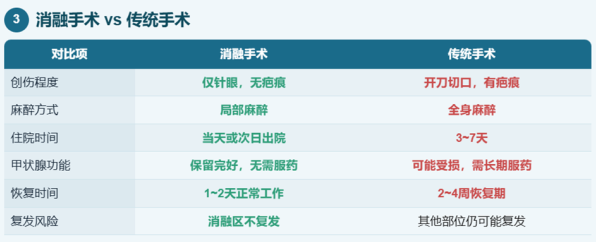
5. Comparison Between Ablation Therapy and Conventional Open Surgery

6. Postoperative Follow‑Up Schedule
7. Frequently Asked Questions
Q1: Is the ablation procedure painful?
There is generally no pain after local anesthesia. Some patients may experience mild soreness, but the vast majority tolerate the procedure very well.
Q2: How long does it take for the nodule to shrink or disappear?
The necrotic tissue is gradually absorbed by the body's immune system over time. Typically, nodule volume decreases by 50%–80% within six months. By one year after the procedure, the lesion stabilizes, and some nodules may be completely resorbed.
Q3: Can the nodule recur after ablation?
The ablated area itself will not recur. However, new nodules may still develop in the remaining healthy thyroid tissue, so routine follow‑up examinations are recommended.
Q4: Will I need lifelong medication after the procedure?
Generally, no. The procedure preserves healthy thyroid tissue, and thyroid hormone secretion is usually unaffected. If thyroid function remains normal, long‑term medication is not required.
Q5: How large is the incision?
Only a tiny needle puncture is made. For nodules under 3 cm in diameter, a single needle is typically sufficient. For nodules larger than 3 cm, two needles may be used. The puncture site heals with virtually no visible scar.
Post‑procedure daily precautions:
- Remain under observation for 1–2 hours after the procedure; you can go home if no complications occur.
- Keep the puncture site dry and avoid water for 3 days.
- For 1–2 days after the procedure, eat warm, soft, and easily digestible foods.
- Drink plenty of water, aiming for a daily urine output of over 2000 ml.
- If you experience progressive neck swelling, breathing difficulty, or hoarseness, seek immediate medical attention.
- Be sure to attend follow‑up appointments on time and maintain a complete postoperative record.
Consultation Hotlines of Lanzhou Campus, Gansu Wuwei Cancer Hospital
Director Li: +86-166 0931 3666
Teacher Yan: +86-176 9325 0603
Writer: Yu Jianjun
First Review: Liu Qiong
Second Review: Guo Yishan
Third Review: Cai Qinghua