A Complete Guide to the Heavy Ion CT Simulation Positioning Process – Read This and Feel at Ease
Radiotherapy Must-Read | A Complete Guide to the Heavy Ion CT Simulation Positioning Process – Read This and Feel at Ease
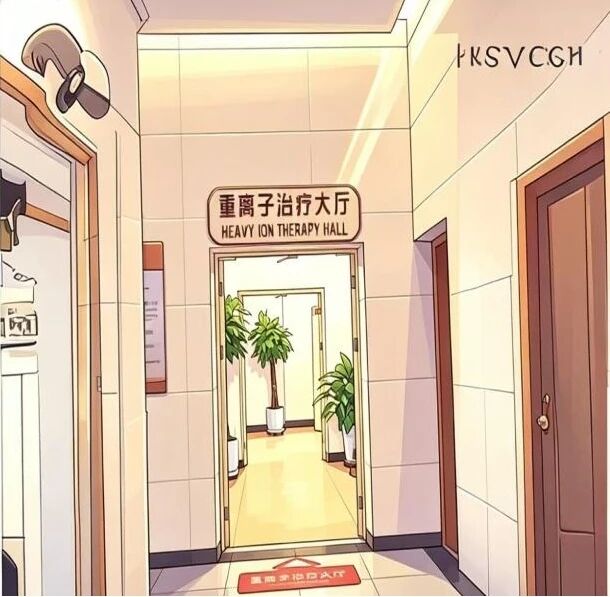
Many patients preparing for radiotherapy feel anxious as soon as they hear "CT simulation positioning"—they don't know what to expect or what precautions to take. Today, we'll break down the entire process step by step. Once you understand it before your appointment, you can eliminate the fear of the unknown and begin your precise radiotherapy with peace of mind.
In simple terms, CT simulation positioning is like drawing a precise "3D navigation map" for your tumor: through customized immobilization plus CT scanning, we pinpoint the exact coordinates of the tumor and surrounding normal organs. This ensures that subsequent radiation beams are delivered precisely to the target area while maximizing protection of healthy tissues.
When you receive the notification from your primary physician, you can proceed to the simulation room to complete the procedure. The full process is outlined below:
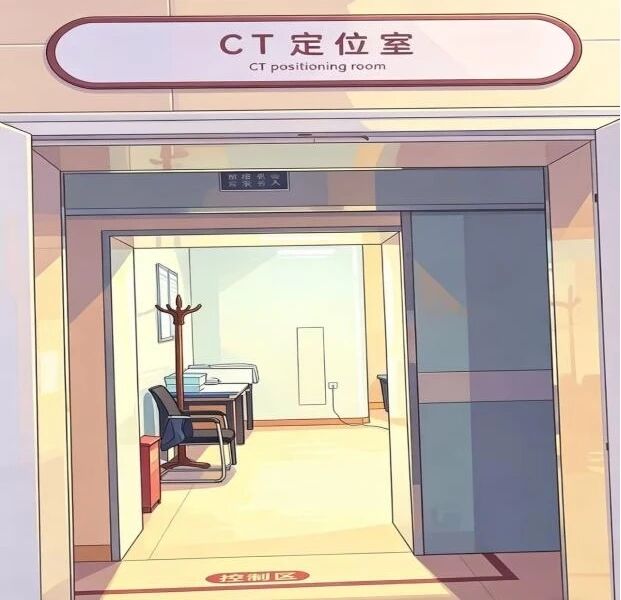
1. Patient preparation before positioning
1. Dress Code
During positioning, you will generally need to remove your upper garments and change into a hospital gown. Alternatively, you may wear loose-fitting, front-opening clothing made of pure cotton. Tight-fitting or pullover styles should be avoided.
2. Removal of Metal Items
Please remove all jewelry, glasses, removable dentures, metal belts, and underwire bras prior to the procedure. Metallic objects can cause CT artifacts that may interfere with accurate imaging of the lesion.
3. Site-Specific Preparations
- Head and neck radiotherapy: It is recommended to trim long hair in advance to ensure optimal fit and fixation of the thermoplastic mask.
- Pelvic radiotherapy: Follow your physician's instructions regarding bladder filling—either hold urine or receive an intravenous saline infusion to keep the bladder adequately distended.
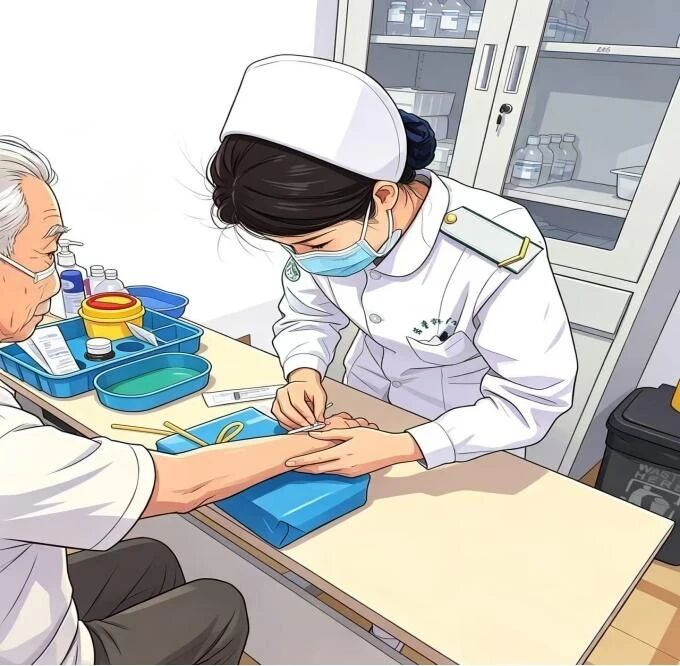
4. Intravenous Cannulation
A nurse will place an intravenous (IV) catheter beforehand for contrast administration during scanning or for medication delivery during treatment. This eliminates the need for repeated needle insertions throughout the process.
2. Customized exclusive body position fixation mold
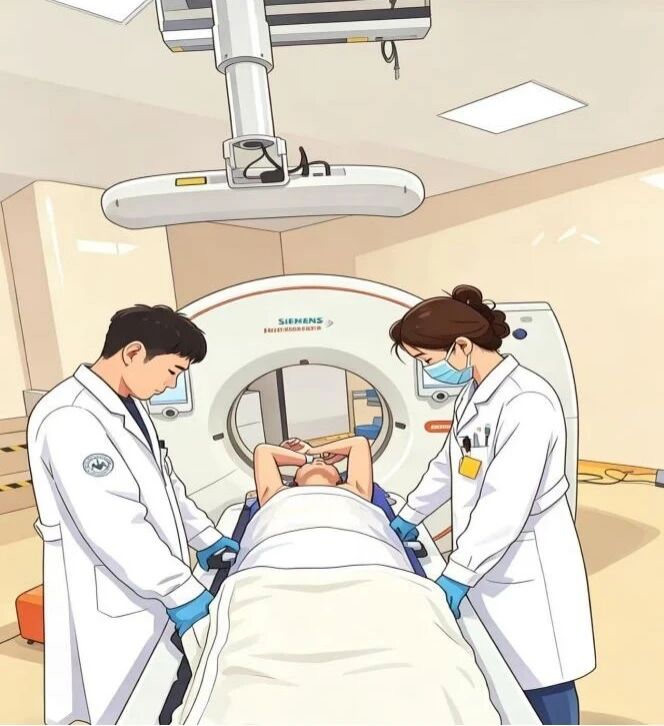
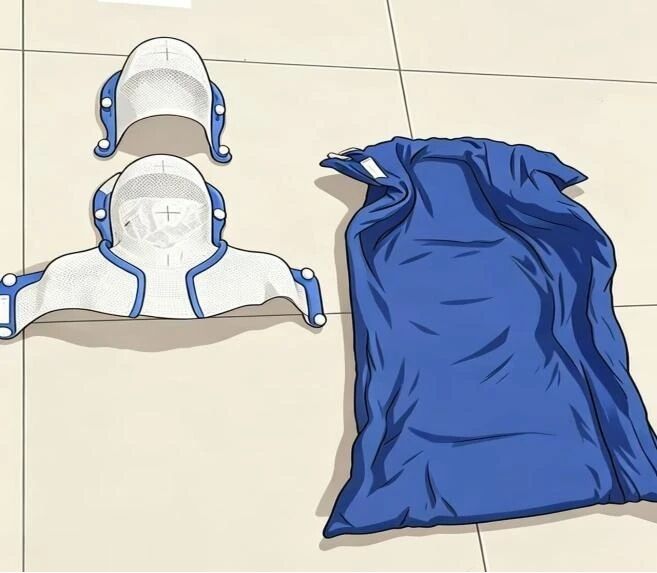
Upon entering the scanning room, the radiologic technologist will select and apply the appropriate immobilization devices based on the location of your tumor—such as thermoplastic film, vacuum cushion, head-and-neck mask, or knee support—to ensure consistent and reproducible positioning for each treatment session.
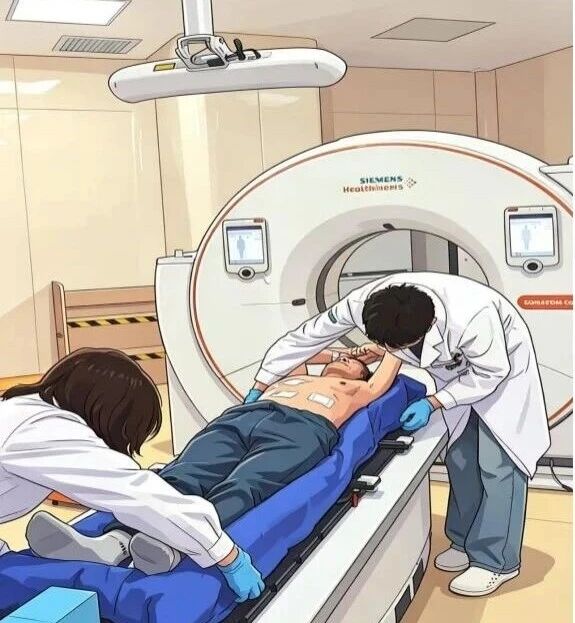
1. Positioning
Follow the technologist's instructions to lie supine or prone on the positioning couch, adjust your limb positions as directed, and keep your whole body naturally relaxed.
2. Mold Shaping
The technologist will heat the thermoplastic film and vacuum-form it to closely conform to your body contour, effectively minimizing any movement from the very start.
3. Cooling and Solidification
The mold is then left to cool and set for approximately 10 minutes until fully hardened, ensuring that your treatment position remains precisely reproducible for every radiotherapy session.
3. Body surface marking and line drawing (the most important thing)
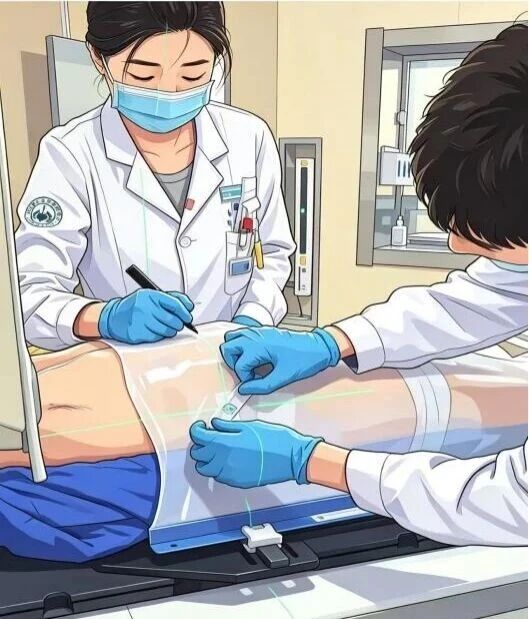
Once the mold has fully cooled, the technologist will use a specialized marker to draw positioning reference lines on both your skin and the immobilization device.
⚠️ Important Reminder
The surface reference lines serve as the sole guide for repositioning prior to each radiotherapy session. Do not get them wet, rub them, or alter them in any way. If the lines become faint or start to fade, contact the department immediately to have them redrawn by the staff—never attempt to redraw or touch them up on your own.
4. CT simulated tomography
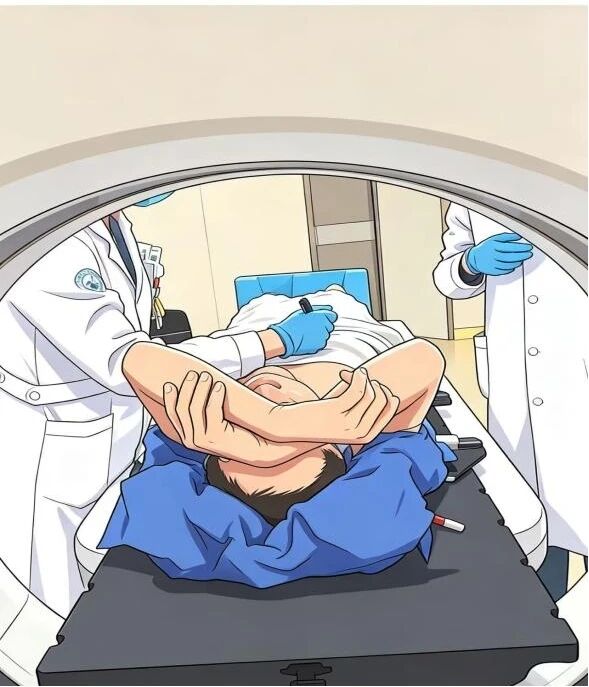
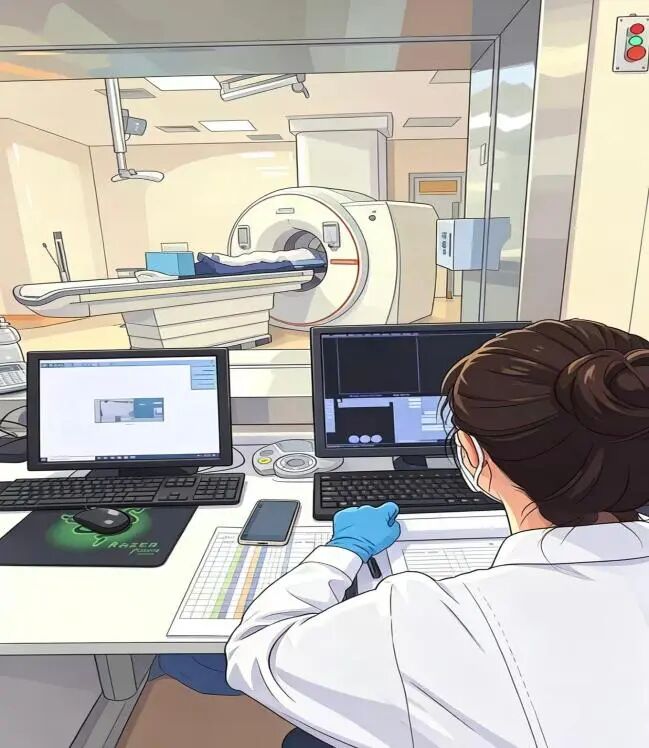
Maintain the exact same position as when the mold was set, and proceed with CT simulation scanning:
- Standard ProtocolThin-slice CT scanning is performed to clearly delineate the boundaries between the tumor, blood vessels, and surrounding organs, providing high-resolution images for precise targeting;
- Complex Sites (Lungs, Liver, etc.)Advanced techniques such as 4D-CT or DIBH (deep inspiration breath-hold) are employed to compensate for tumor displacement caused by respiratory motion, ensuring greater accuracy in target localization.
5. Key points for scanning cooperation
The entire scanning session lasts approximately 10–30 minutes. During the scan, please maintain steady, slow, and natural breathing, and refrain from moving your body, head, or limbs throughout the procedure. Even slight movement can cause coordinate deviations that may compromise the precision of subsequent radiotherapy.
6. Observation after completion
After the scan is completed, do not have the IV catheter removed immediately—it must remain in place for a minimum observation period of 30 minutes. Medical staff will monitor you for any signs of drug allergy, as well as local reactions such as redness, swelling, or bleeding at the puncture site. Once it is confirmed that you are experiencing no adverse effects, the catheter will be removed, marking the complete conclusion of the simulation positioning procedure.
Heart-warming tips for patients
- Painless and Non-InvasiveThe entire positioning procedure is painless and non-invasive. You may feel a slight sense of restraint when the mold is applied, but there is no need to be overly anxious;
- Companion RecommendedIt is strongly recommended to have a family member or friend accompany you on the day of positioning to facilitate communication and assist with waiting, which can also help ease your mind;
- Protect the Reference LinesTake good care of the reference lines at all times. When bathing, avoid the marked areas and do not scrub the skin vigorously to prevent the lines from fading;
- Disclose Medical HistoryIf you have a history of hypertension, asthma, or drug allergies, please proactively inform the technologist and nurse in advance, so that the medical team can make appropriate preparations.
Writer:Kang Kaili
First Review:Liu Qiong
Second Review:Guo Yishan
Final Review:Cai Qinghua
Gansu Wuwei Cancer Hospital Lanzhou Campus
consultation hotline: 166 0931 3666 Director Li/ 176 9325 0603 Teacher Yan