Everything You Need to Know About Gastric Cancer
Everything You Need to Know About Gastric Cancer
As living standards have significantly improved, we have bid farewell to the struggle for basic necessities and now enjoy a rich and diverse array of foods. However, an alarming trend has emerged in recent years: the incidence of gastric cancer has been quietly rising.
Recent discussions have suggested that improper dietary habits may be a key contributor to gastric cancer, sparking widespread concern. Many people are now worried: could it really be that "disease enters through the mouth," and that poor eating habits directly lead to gastric cancer? If so, how can we effectively prevent this disease in our daily lives?
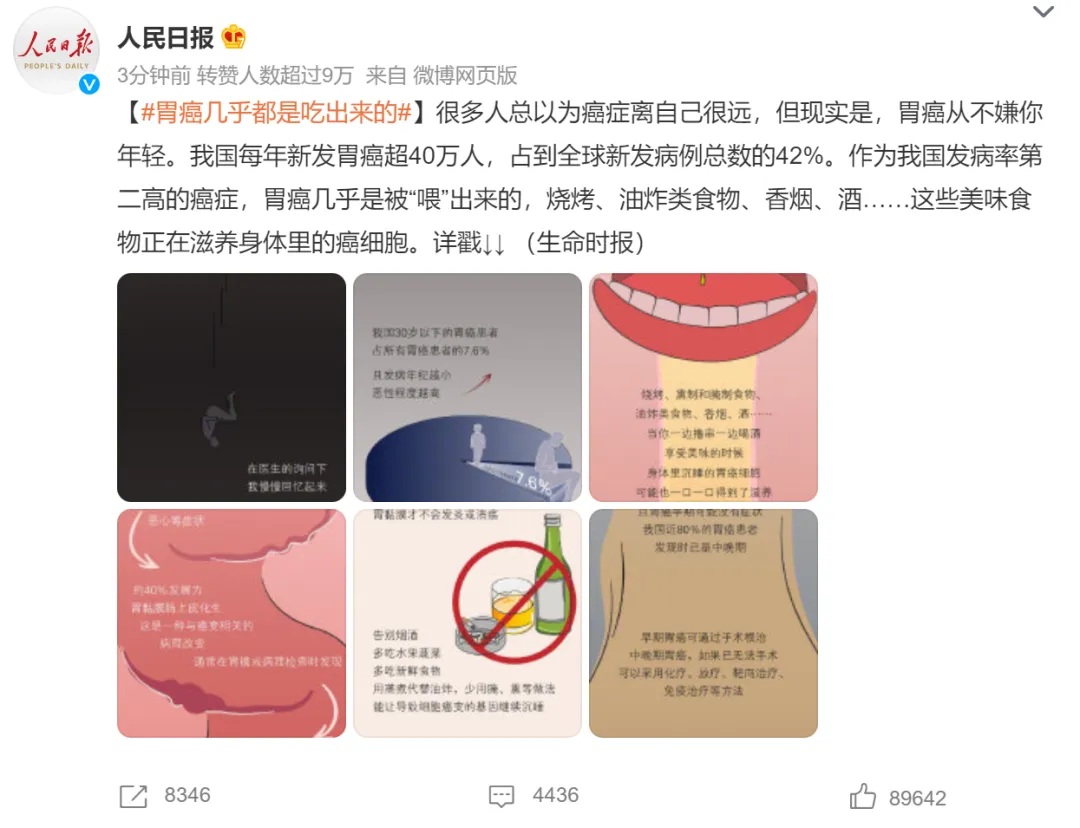
Half of the world's gastric cancer cases are in China
Gastric cancer, one of the most prevalent malignancies worldwide, exhibits an particularly high incidence in China, posing a formidable public health challenge.
The Epidemiological Status of Gastric Cancer in China report reveals that in 2012, there were 951,000 new gastric cancer cases globally, with 723,000 deaths. China accounted for nearly half of these figures, both in terms of incidence and mortality.
This dire situation translates to approximately 12,000 Chinese citizens being diagnosed with gastric cancer every day. Among these patients, only 35.9% survive beyond five years, while the majority succumb to the disease. More alarmingly, every five minutes, three lives are lost to gastric cancer in China. These staggering statistics not only underscore the brutal reality of the disease but also highlight its immense burden on families, the nation, and society as a whole.
Expert Q&A
- Director Lu, is gastric cancer really caused entirely by diet? What factors contribute to its development?
Actually, the assertion that "all gastric cancer is caused by diet" is overly simplistic and absolute. The development of gastric cancer is an intricate, multifactorial process involving various elements across multiple steps and stages. Its causes are extensive and diverse, encompassing not only genetic predisposition as an intrinsic foundation but also being profoundly influenced by environmental changes and individual lifestyle factors. While diet, as a crucial component of lifestyle, plays a significant role, it is by no means the sole determining factor. Therefore, only by comprehensively examining and integrating all potential causes of gastric cancer can we develop more precise prevention strategies.

The five most common causes of gastric cancer are:
1. Helicobacter pylori infection
Helicobacter pylori infection is an unequivocally established and unique high-risk factor specifically associated with gastric cancer.
Helicobacter pylori, this "invisible killer" among Gram-negative bacteria, primarily lurks in the shadowy corners of the gastric mucosa. Once it infects adults, the human body rarely manages to eradicate it naturally. In China, an astonishing 768 million people silently endure this bacterial invasion, meaning nearly one in every two Chinese citizens is an asymptomatic carrier.
The situation is even more dire when considering H. pylori's role as a mastermind behind numerous gastric diseases. Among infected individuals, 15%-20% develop peptic ulcers, while 5%-10% suffer from H. pylori-associated dyspepsia. Most alarmingly, though affecting a smaller proportion, about 1% of patients eventually progress to malignant gastric tumors—a chilling cascade of consequences that sounds a stark public health alarm.
The Chinese Expert Consensus on Helicobacter pylori Eradication and Gastric Cancer Prevention explicitly identifies H. pylori infection as the primary etiological factor for gastric cancer in China.
2. Genetic Factors
Approximately 10% of gastric cancer cases are hereditary. Individuals with a family history of gastric cancer carry a higher genetic predisposition to developing the disease.
3. Age
Gastric cancer risk increases significantly with age, making middle-aged and elderly individuals particularly high-risk populations.
4. Emotional Factors
Chronic stress and anxiety can damage the gastric mucosa and induce ulcer formation, potentially creating a microenvironment conducive to gastric carcinogenesis.
5. Lifestyle Factors
Specifically, unhealthy dietary habits and tobacco/alcohol use significantly increase gastric cancer risk.
The following six factors significantly increase the risk of gastric cancer
The International Agency for Research on Cancer (IARC) latest report indicates that the following six factors may potentially increase cancer risk:
1. Overweight and Obesity
Excess body weight and obesity have been linked to an increased risk of gastric cancer. Maintaining energy balance through a healthy diet is crucial for weight management and cancer prevention.
2. Excessive High-Salt Food Intake
Chronically preferring strongly flavored foods and overconsumption of salt and high-salt products is akin to waging a silent corrosive war against the gastric mucosal barrier. Over time, this natural protective shield of the stomach may suffer chronic damage. Such damage not only weakens the stomach's self-defense capabilities but also subtly increases the body's sensitivity to carcinogens, quietly laying the groundwork for gastric cancer development.
Therefore, while salt-preserved delicacies like pickled vegetables and salted fish are tempting, moderation is essential to avoid sacrificing long-term health for momentary gustatory pleasure.
Adhering to scientific dietary guidelines, we should strictly limit daily salt intake to 5 grams - visually equivalent to the amount that fits in a standard beer bottle cap. This seemingly minor adjustment represents a significant step in safeguarding gastric health and preventing gastric cancer. Let us start from daily habits, embrace a light diet, and collectively build a robust health defense.

3. Excessive Alcohol Consumption
Regularly drinking alcohol—particularly exceeding 3 standard drinks per day (equivalent to about 250ml of 12% alcohol wine)—significantly increases gastric cancer risk. Authoritative meta-analyses have conclusively demonstrated a strong positive correlation between alcohol consumption and gastric cancer incidence: the more one drinks, the higher the risk.
For those who choose to drink, strict moderation is advised: Men should limit daily intake to no more than 25g of pure alcohol, women should be even more cautious, keeping consumption below 15g. However, it's crucial to understand that there is no truly "safe" level of alcohol consumption. Even minimal long-term intake may pose potential health risks. From a public health perspective, complete abstinence remains the wisest choice to eliminate this unnecessary cancer risk factor.
4. Excessive Consumption of Grilled Meats
While grilling—whether through high-heat direct cooking or low-and-slow methods—imparts distinctive flavors to meats and fish, it simultaneously elevates gastric cancer risk. This is because high-temperature cooking generates carcinogenic compounds like benzo[a]pyrene and polycyclic aromatic hydrocarbons (PAHs), which are scientifically recognized as major cancer-causing agents. Chronic exposure to these substances significantly increases gastric cancer incidence.
Similarly, smoked foods face comparable risks, as their preparation process also produces these hazardous chemicals, posing potential threats to gastric health. To safeguard your stomach, it's advisable to exercise prudent restraint with grilled and smoked foods—reducing both frequency and portion size—thereby aligning your diet with healthier dietary patterns.
5. Excessive Processed Meat Consumption
Frequent intake of processed meat products has emerged as a significant yet often overlooked risk factor for gastric cancer. The World Health Organization (WHO) has classified processed meats as Group 1 carcinogens - a designation supported by conclusive scientific evidence demonstrating their definitive carcinogenicity to humans. This classification stems from the synergistic effects of multiple harmful compounds generated during processing, including nitrosamines, heterocyclic amines (HCAs), and polycyclic aromatic hydrocarbons (PAHs), all of which pose potential threats to gastric health.
However, it's important to maintain perspective: occasional consumption poses relatively limited carcinogenic risks for individuals. The substantial risk escalation occurs only with chronic and excessive intake. As a prudent health recommendation, we advise minimizing processed meats in your regular diet - avoiding frequent and large-quantity consumption to ensure healthier, safer dietary patterns.
6. Insufficient Fruit Consumption
Inadequate fruit intake in daily diet may subtly elevate the risk of gastric cancer. As nature's nutritional powerhouses, fruits are rich in vitamins, minerals, and dietary fiber - all critical for maintaining health and preventing chronic diseases.
Chronic deficiency in fruit consumption doesn't just potentially increase the risk of gastric cancer and other malignancies; it may also accelerate the development of various chronic conditions. To safeguard your health, it's advisable to proactively adjust your dietary patterns by making fruits a daily necessity - embracing both their delicious taste and health benefits.
How to Prevent Gastric Cancer
Expert Recommendations from Dr. Linzhi Lu
Head of the First Department of Gastroenterology
1. Helicobacter pylori Eradication Therapy
As previously highlighted, H. pylori infection is unequivocally the most well-established and unique high-risk factor for gastric cancer, serving as the primary contributor to cases in China. In-depth research demonstrates that effective eradication strategies can significantly prevent gastric cancer, reducing overall incidence by up to 39%. This protective effect remains substantial even in individuals with advanced precancerous lesions and elderly populations.
Consequently, we strongly recommend incorporating H. pylori testing into annual health examinations as a mandatory screening item. Upon positive detection, prompt adherence to professional medical advice for eradication therapy is crucial - this proactive approach serves as a critical preventive measure against gastric cancer, fortifying your health defenses.
2. Adopting Healthy Lifestyle and Dietary Habits
Chronic exposure to unhealthy dietary and lifestyle patterns significantly elevates gastric cancer risk. It is advisable to follow the "Four More, Three Less" principle:
Four More Principles
■Consume a varied diet with balanced nutrition to ensure comprehensive nutrient intake.
■ Eat more fresh lean meats, especially poultry and fish (such as chicken, duck, fish, and shrimp), and reduce consumption of processed meat products.
■Achieve and sustain a healthy weight by engaging in regular exercise.
■Eat ample fresh vegetables and fruits daily.
Three Less Principles
■Reduce consumption of salt-preserved and pickled vegetables.
■Avoid frequent intake of charred, barbecued, or smoked foods.
■Achieve complete cessation of smoking and excessive alcohol consumption.

3. Regular Health Checkups and Prompt Treatment for Discomfort
The difficulty in treating cancer often stems from neglected routine examinations, as symptoms typically emerge only after the optimal treatment window has passed. Gastric cancer progression follows a prolonged trajectory—from chronic gastritis to intestinal metaplasia, then dysplasia, ultimately culminating in malignancy. Thus, establishing a habit of regular physical examinations is paramount, enabling early detection at the disease's nascent stage.
Should any early signs of gastric disorders appear during checkups, immediate attention and comprehensive diagnostic evaluation are imperative to seize the therapeutic window. For patients already diagnosed with chronic gastric ulcers, gastric polyps, or atrophic gastritis—especially those experiencing symptoms like abdominal pain or gastrointestinal bleeding—strict adherence to medical advice is critical. Standardized treatment protocols and scheduled follow-ups must be meticulously followed to prevent minor conditions from escalating into irreversible complications.
Gansu Wuwei Cancer Hospital
Department of Gastroenterology
The Department of Gastroenterology is a key discipline in Gansu Province, a demonstration base for the National Key Public Health Service Program's Rural Cancer Early Detection and Treatment Project focusing on upper gastrointestinal cancers, a training center for digestive endoscopy professionals accredited by the National Health Commission, Gansu Provincial Key Laboratory of Gastrointestinal Diseases, Wuwei Sub-center of China Helicobacter pylori Molecular Medicine Center, and Wuwei Sub-library of Xijing Biobank, among other prestigious designations.
The department boasts a professional team led by senior experts including Chief Physician Zhang Zhiyi, Director of Gastroscopy Center and leading talent in Gansu Province's healthcare system as well as Wuwei City's leading talent, founder of the Department of Gastroenterology at Wuwei Academy of Medical and Science Cancer Hospital; Deputy Director and Chief Physician Nie Peng (Master of Medicine); Chief Physicians Lin Lizhen, Zhang Wenhong (Master of Medicine), and Zhao Guangyuan (Master of Medicine); Associate Chief Physicians Zhao Shuguang, Li Shihua, Liu Jindian (Master of Medicine), and Xie Chunfang, forming a robust roster of highly qualified specialists.
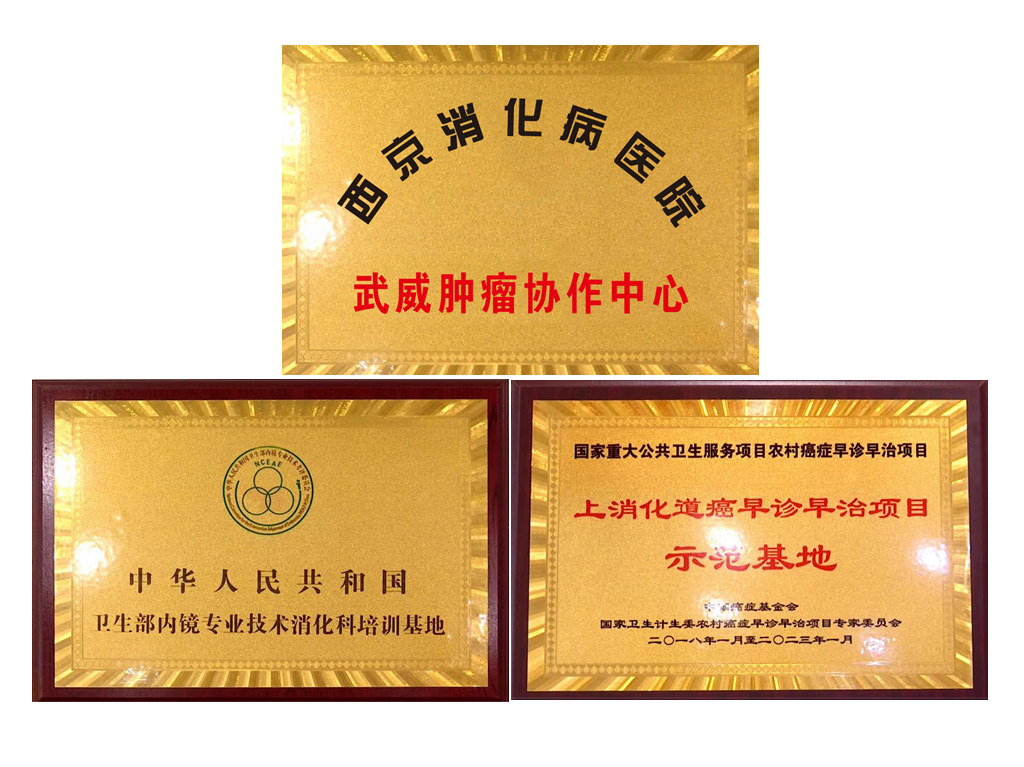
The Department of Gastroenterology is equipped with over 300 advanced medical devices, including China's first domestically produced four-arm surgical robot, Gansu Province's fourth PET-CT scanner and the first such device installed in a prefecture-level hospital, a Dynamic 500-slice Gemstone Spectral CT, an Optima670 64-slice 128-layer spiral CT, as well as more than 10 types of advanced endoscopic surgical systems such as STORZ·HD full-HD laparoscopes, high-definition 3D thoracoscopes, and high-definition 3D fluorescence laparoscopes. The department also houses a comprehensive suite of over 30 endoscopic instruments, including Olympus NBI magnifying endoscopes and ultrasound endoscopes.