Collaborative Heavy Ion Lab: Pioneering Cancer Treatment Innovations
Jointly Building a Heavy Ion Collaborative Laboratory: Co-Charting a New Blueprint for Cancer Treatment
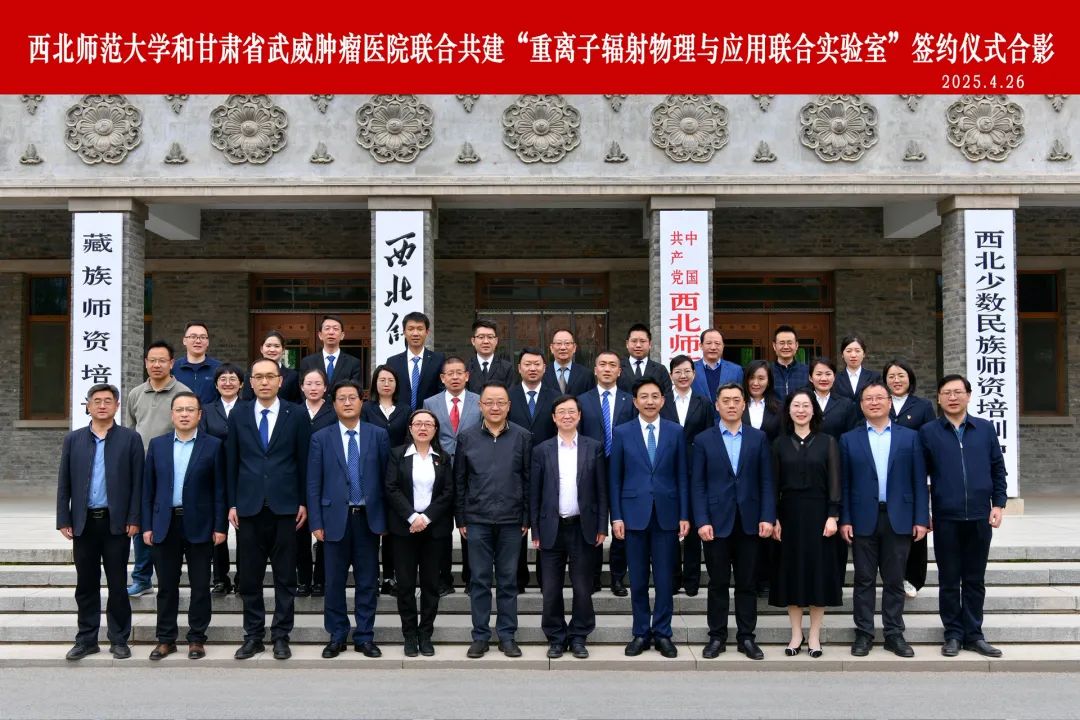
Official Launch of the Signing Ceremony for the "Joint Laboratory for Heavy Ion Radiation Physics and Applications"
——Co-established by Northwest Normal University and Gansu Wuwei Cancer Hospital
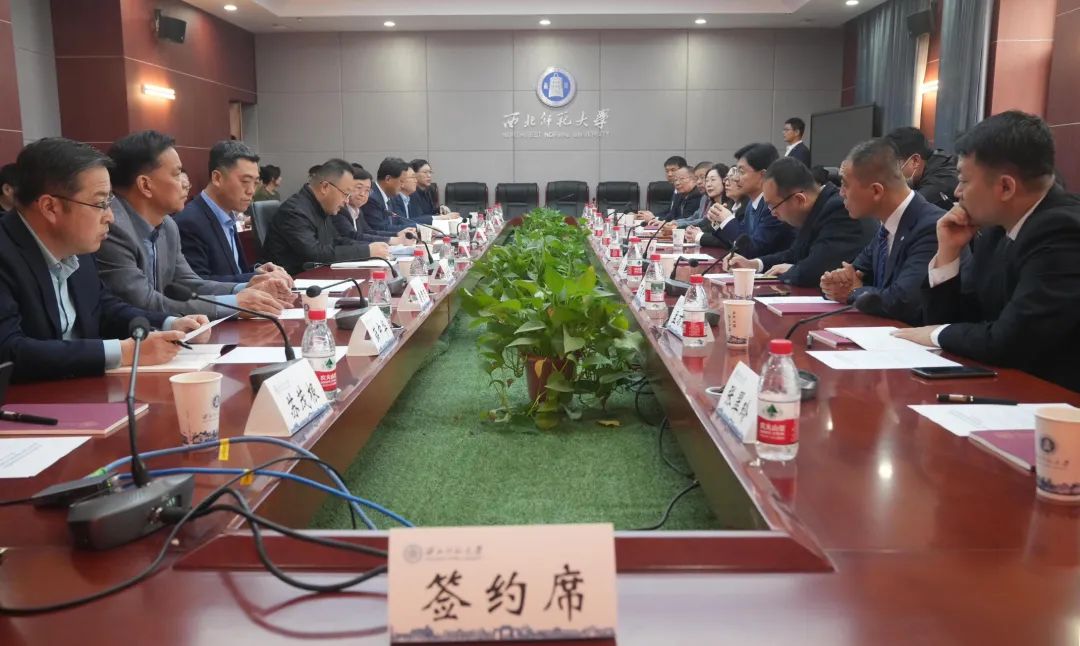
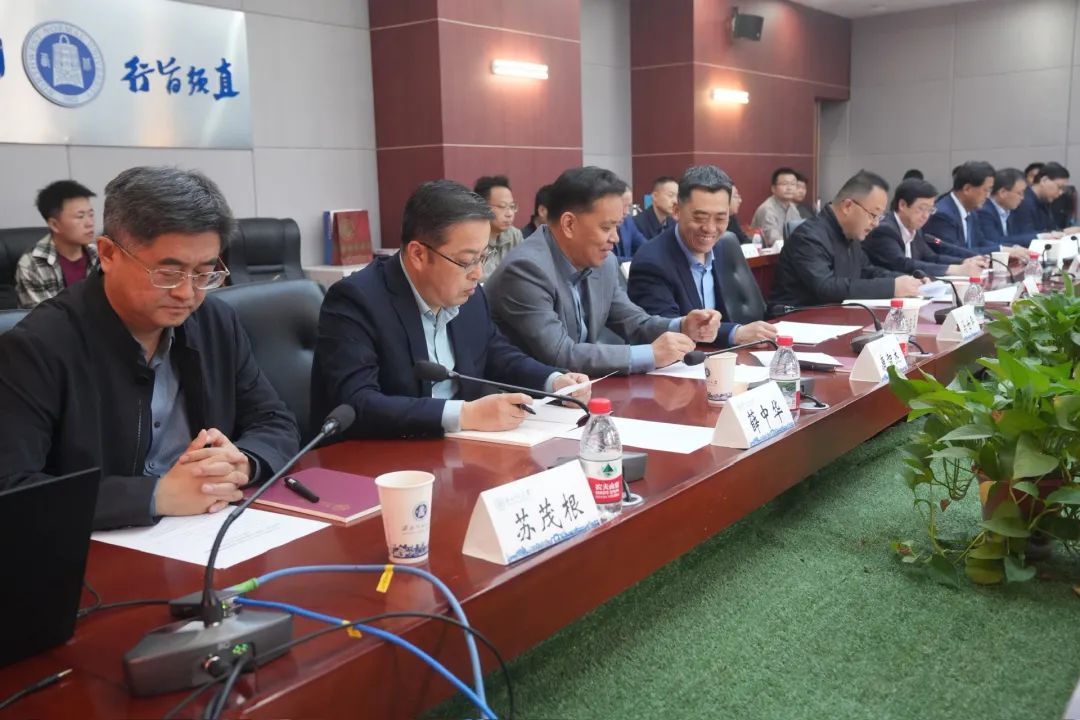
On April 26, 2025, the signing ceremony for the "Joint Laboratory for Heavy Ion Radiation Physics and Applications"—co-established by Northwest Normal University (NWNU) and Gansu Wuwei Cancer Hospital—along with an academic symposium, was held at Yunqu Building, NWNU. In attendance were: Jia Ning, Secretary of the NWNU Party Committee; Zhang Weihong, Secretary of the Party Committee of Gausu Wuwei Cancer Hospital; Ye Yancheng, President of Wuwei Cancer Hospital; as well as relevant department heads from both institutions.
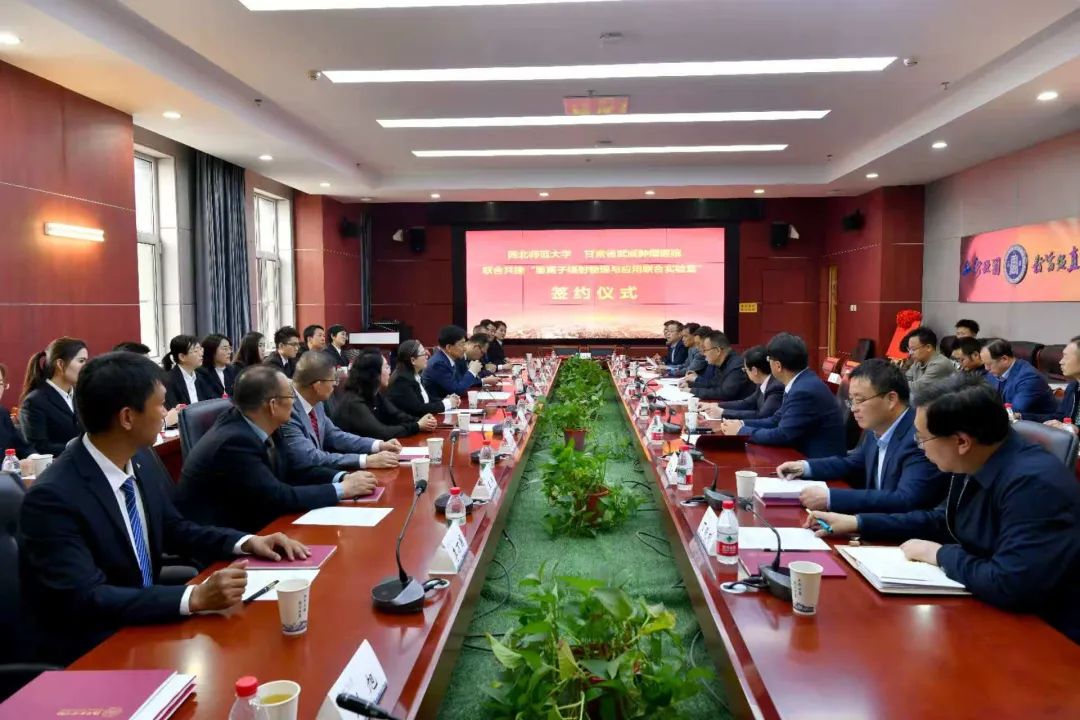
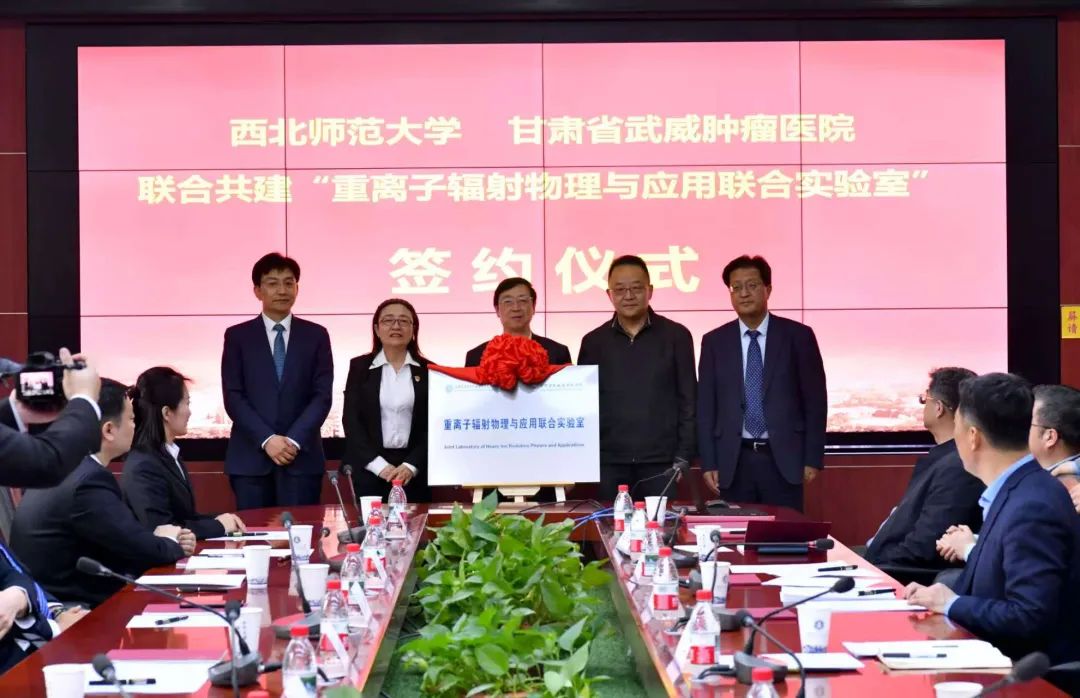
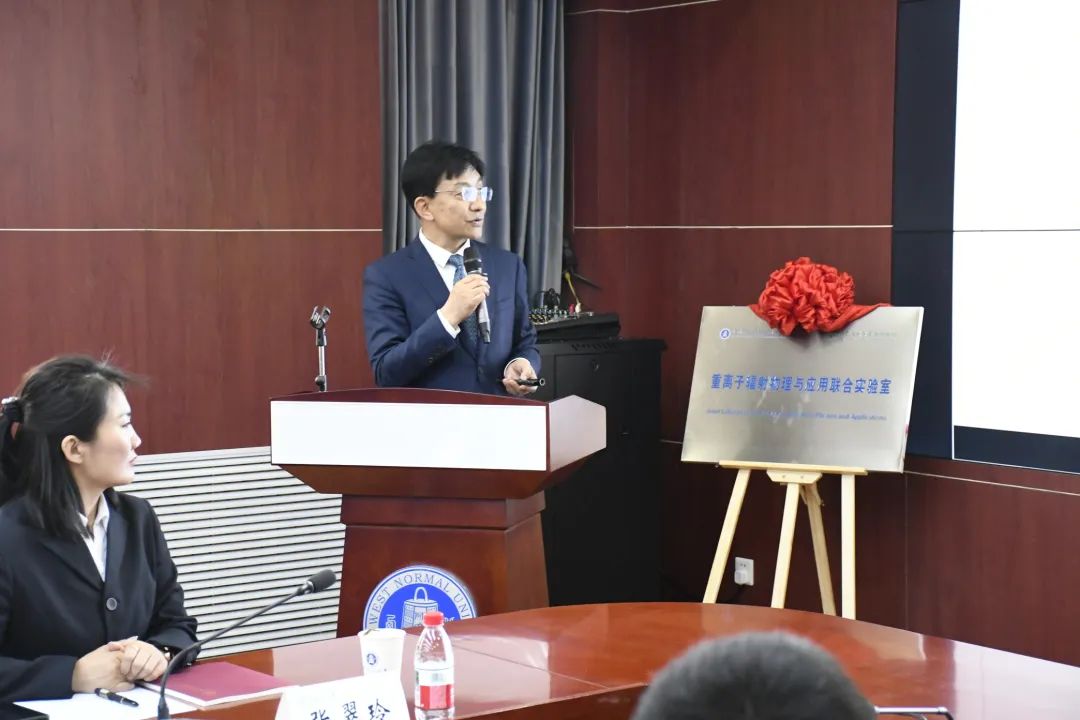
The signing ceremony was presided over by Ma Shinian, member of the Standing Committee of the Party Committee and Vice President of NWNU. Secretary Jia Ning and Secretary Zhang Weihong unveiled the plaque for the joint laboratory. Secretary Jia Ning and Dean Ye Yancheng delivered speeches respectively. Dong Chenzhong, Director of the Key Laboratory of Atomic and Molecular Physics and Functional Materials of Gansu Province, introduced the preparatory work for the joint laboratory and co-signed the joint construction agreement with Dean Ye Yancheng.
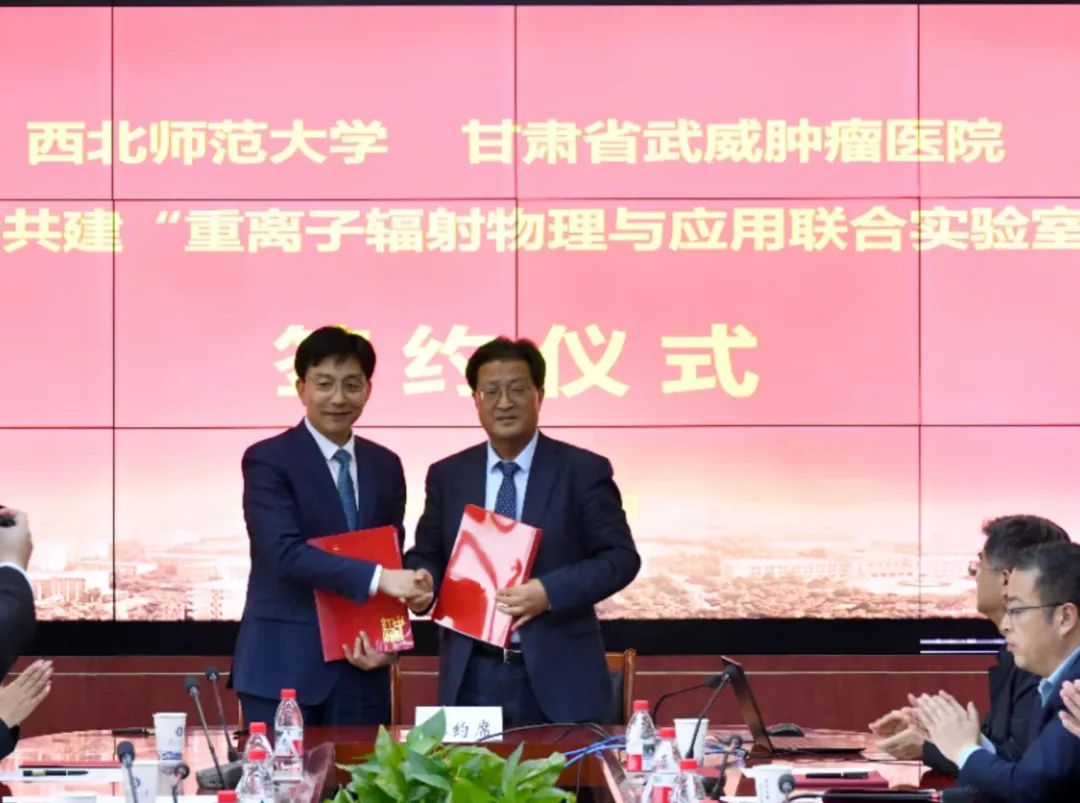
Professor Dong Chenzhong and President Ye Yancheng signed the joint laboratory agreement
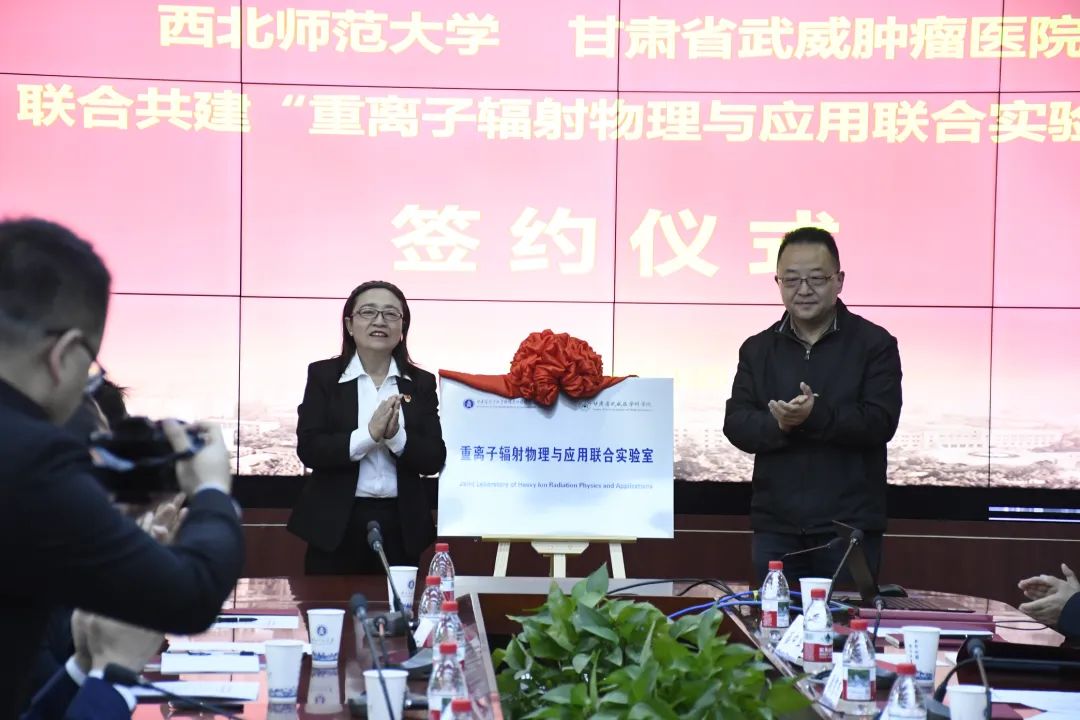
Secretary Jia Ning of the Party Committee of NWNU and Secretary Zhang Weihong of the Gansu Wuwei Cancer Hospital jointly unveiled the plaque for the joint laboratory
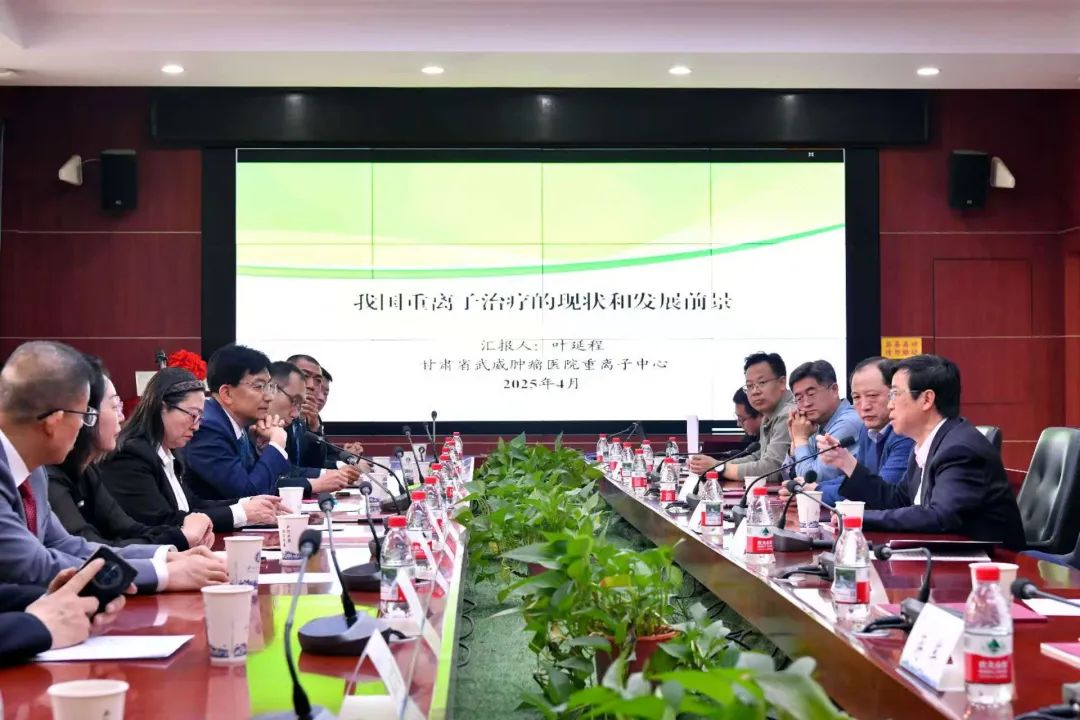
Following the ceremony, an academic symposium was chaired by Researcher Xiao Guoqing, Director of the Academic Committee of the Provincial Key Laboratory and a scientist from the Institute of Modern Physics, Chinese Academy of Sciences. President Ye Yancheng delivered a keynote lecture titled "Current Status and Future Prospects of Heavy Ion Therapy in China", offering an in-depth analysis of the field’s clinical achievements and future directions. His cutting-edge insights sparked lively discussions and profound reflections among the attendees.
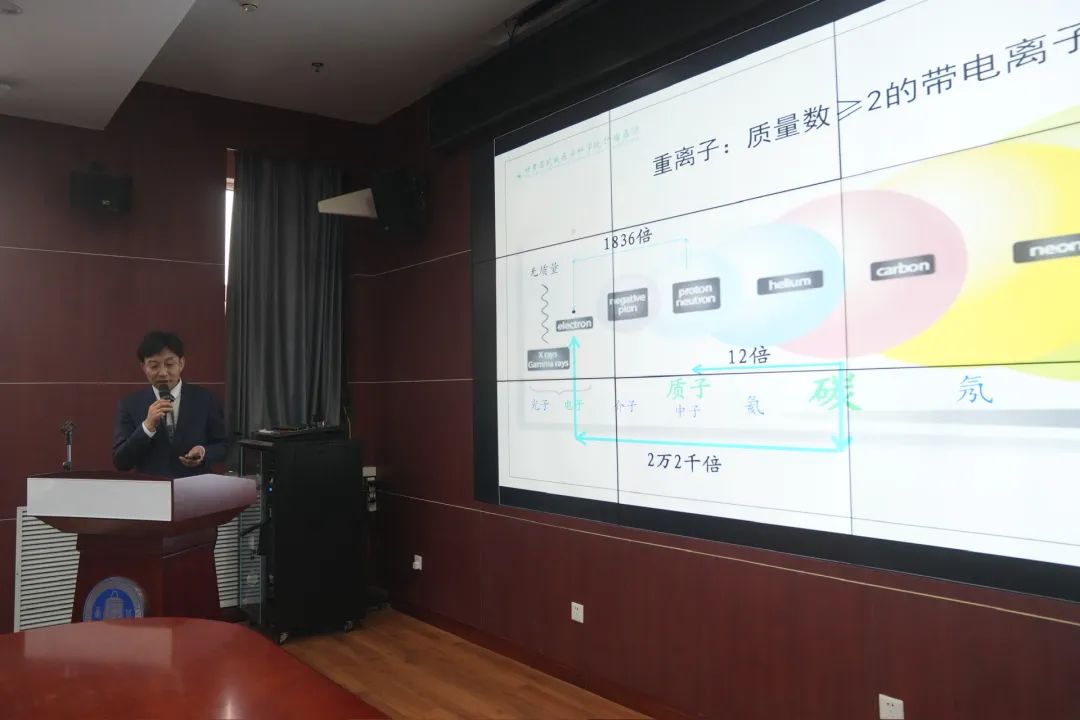
The Joint Laboratory will establish twore research modules: the Heavy Ion Radiation Physics Laboratory and the Heavy Ion Radiation Clinical Application Laboratory. Leveraging Northwest Normal University's academic strengths in fundamental physics research, radiation dosimetry modeling, and online monitoring technologies, as well as Gansu Wuwei Cancer Hospital's practical expertise in heavy ion clinical therapy, biological effect evaluation, and personalized treatment optimization, the laboratory will jointly conduct innovative research in heavy ion radiation physics, radiation biology, dose distribution, and real-time monitoring. The collaboration aims to explore fundamental physical principles, technological breakthroughs, and novel clinical applications in the field of heavy ion therapy, thereby enhancing treatment precision and efficacy while improving patient outcomes and overall therapeutic experience.
The establishment of this joint laboratory holds profound significance. As a key provincial-ministerial co-constructed university, NWNU has achieved remarkable accomplishments in disciplinary development, talent cultivation, and scientific research, earning an excellent reputation both within and beyond Gansu Province. The Gansu Provincial Key Laboratory of Atomic and Molecular Physics & Functional Materials, established by the university, serves as a "flagship" for fundamental scientific research in Northwest China. With long-term focus on national strategic needs and regional high-quality economic-social development, the laboratory has accumulated substantial expertise in research fields including atomic and molecular physics, precision spectroscopy technology and applications.
Gansu Wuwei Cancer Hospital serves as the clinical application site for China's first and second domestically developed heavy ion therapy systems with independent intellectual property rights. To date, the hospital has treated nearly 2,000 patients from all provinces and municipalities across China including Beijing, Shanghai, Hong Kong, Macao, and Taiwan as well as international patients from countries such as Australia, Belgium, and South Korea. The treatment outcomes have demonstrated remarkable clinical efficacy, with the hospital accumulating substantial clinical experience and a comprehensive treatment database.
The establishment of this joint laboratory represents a perfect synergy between fundamental science and clinical medicine, as well as a deep integration of provincial-ministerial co-construction resources with local healthcare industry needs. It aims to accelerate breakthroughs in key technological challenges in heavy ion radiation physics and propel China's heavy ion technology from "keeping pace" to "leading the way." Looking ahead, we will leverage this joint laboratory platform to drive innovation in heavy ion radiation mechanisms, targeted therapy technologies, and intelligent monitoring systems, building it into a highland for heavy ion technological innovation and a hub for talent cultivation. By constructing a complete innovation chain encompassing "basic research—technology development—clinical application," the joint laboratory will evolve into a national-level R&D and technology transfer base for heavy ion technology. Rooted in Northwest China, serving the nation, and reaching out to the world, it will contribute a "Chinese solution" to global cancer treatment.