A Precise, Minimally Invasive Solution to Biliary Obstruction
A Precise, Minimally Invasive Solution to Biliary Obstruction
Gansu Wuwei Cancer Hospital Successfully Performs EUS-Guided Choledochoduodenostomy with HOT AXIOS Stent Implantation
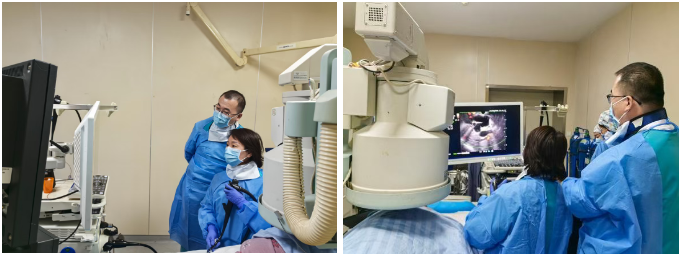
Recently, the team at our hospital's Digestive Center, led by Directors Lu Linzhi and Liu Jindian, successfully completed an endoscopic ultrasound-guided choledochoduodenostomy (EUS-CDS) combined with placement of a HOT AXIOS dual-flange (dumbbell-shaped) metal stent, drawing on highly refined minimally invasive endoscopic technique. The successful adoption of this procedure establishes a safe and efficient internal biliary drainage route for patients with malignant biliary obstruction in whom ERCP has failed, and marks our hospital's entry into a new stage of endoscopic interventional care that is precise, efficient and minimally invasive.
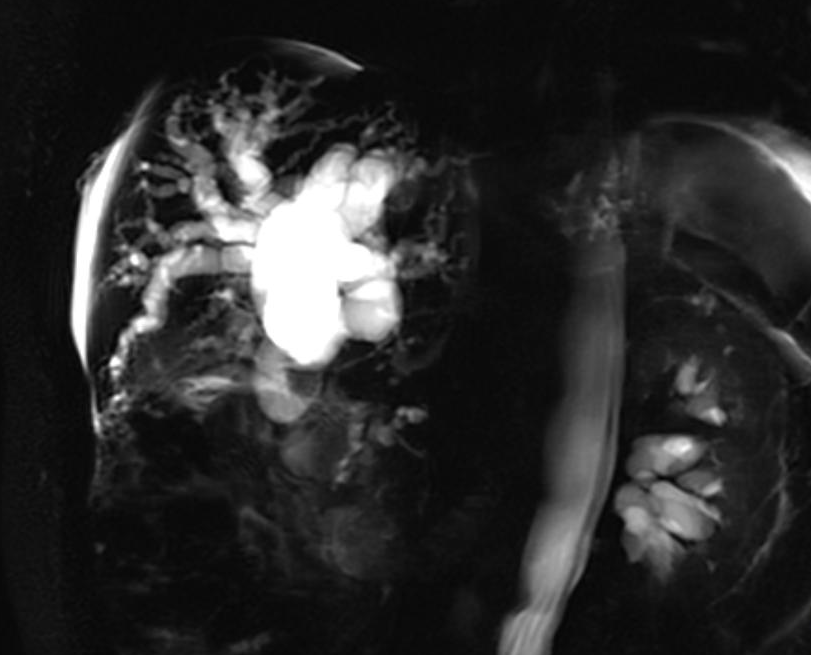
Biliary obstruction is a common and critical condition in gastroenterology, most often caused by pancreatic cancer, cholangiocarcinoma, duodenal tumours and benign biliary strictures. Patients typically present with yellowing of the skin and sclera, pruritus, abdominal pain and rapidly deteriorating liver function. Without timely decompression and drainage, accumulating bile quickly leads to severe complications such as hepatic failure and septic shock, which can prove fatal. Conventional ERCP biliary stenting sees its success rate fall sharply in the face of duodenal stenosis, anatomical variation of the biliary tree or tumour invasion of the intestinal lumen, while traditional external drainage requires the patient to carry a drainage bag indefinitely, seriously compromising quality of life.
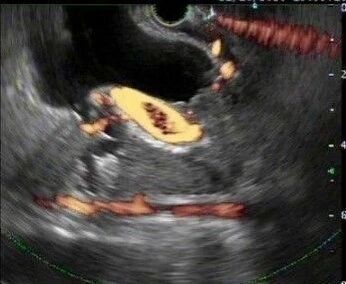
The EUS-CDS with HOT AXIOS stent technique performed here represents the international forefront of minimally invasive biliary drainage. Its core advantages lie in single-step electrocautery-enabled delivery, precise intraluminal anastomosis and fully internal drainage. Compared with double-pigtail plastic stents, HOT AXIOS is an electrocautery-enhanced lumen-apposing metal stent with a distinctive covered nitinol dumbbell configuration; its flared ends appose firmly against the bile duct and duodenal walls, combining strong radial support with reliable sealing and tissue compatibility, and effectively averting the common complications of stent migration, bile leakage and post-procedure restenosis.
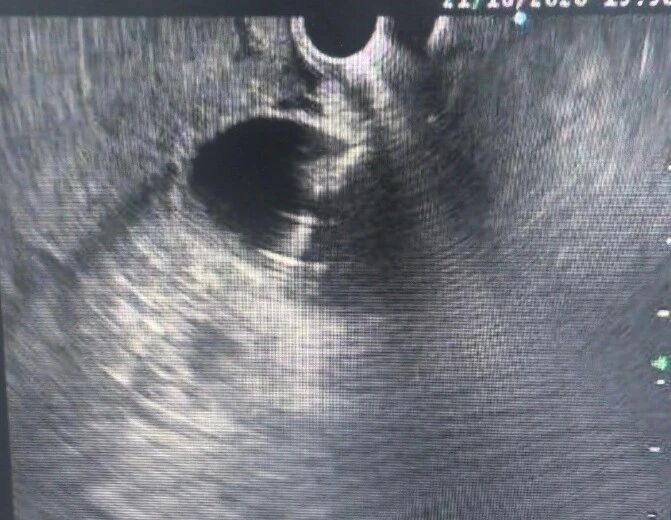
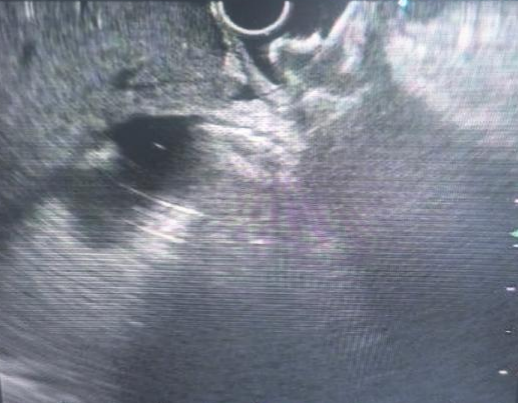
During the procedure, the endoscopy team, drawing on extensive experience in endoscopic ultrasound, precisely localized the dilated common bile duct. Under real-time ultrasound visualization, they avoided major abdominal vessels and organs and accurately punctured the target duct. The electrocautery system rapidly created an artificial anastomotic channel between the duodenum and the common bile duct, and the HOT AXIOS stent was deployed with precision. On release, the stent apposed immediately to the luminal walls and a patent internal drainage channel formed at once: stagnant bile flowed directly into the intestine to take part in digestion, eliminating the need for an external drainage bag entirely and achieving truly physiological internal drainage. The procedure as a whole is minimally invasive and painless, with trauma on the scale of a needle puncture; the core operative step can take as little as 15 minutes, helping to reduce procedural injury and lower anaesthesia-related risk.
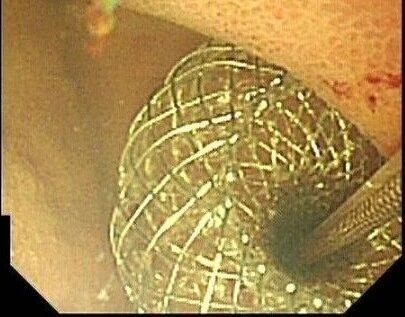
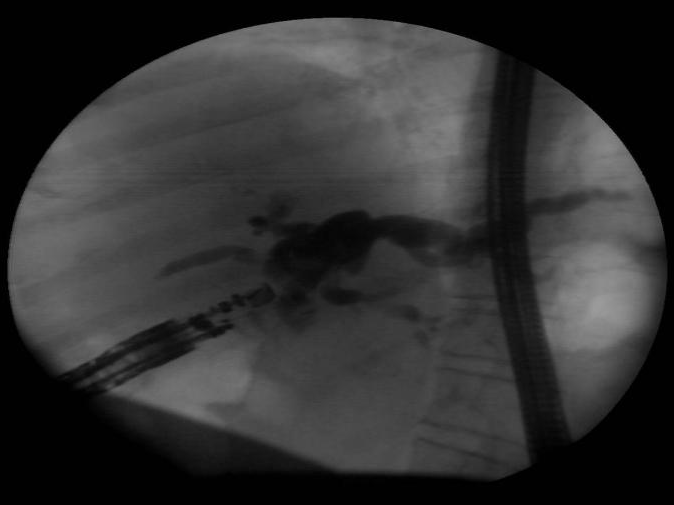
The successful introduction of EUS-CDS with HOT AXIOS stent implantation represents a significant breakthrough for our gastroenterology department in its focus on minimally invasive diagnosis and treatment and its drive to master complex digestive diseases. Going forward, our endoscopy center will continue to develop frontier minimally invasive endoscopic techniques and push the boundaries of interventional EUS, delivering more precise, efficient and less invasive solutions for patients with refractory biliary and pancreatic conditions, and safeguarding the digestive health of the community.
Written by: Bian Yulong
First review: Zhang Jie
Second review: Guo Yishan
Final review: Cai Qinghua