Why Do I Still Have Stomach Pain and Bloating After Eating If My Endoscopy Was Normal?
Why Do I Still Have Stomach Pain and Bloating After Eating If My Endoscopy Was Normal?
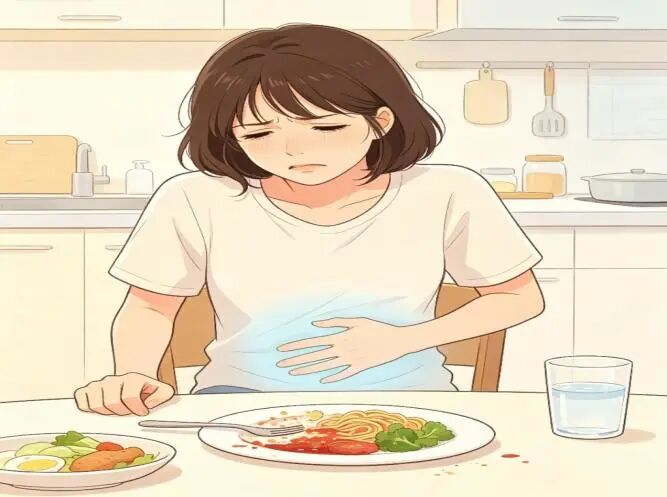
Ms. Liu, age 35, said: "I had a gastroscopy, and the report showed non‑atrophic gastritis. The doctor said it wasn't a big deal, but I still have bloating, stomach pain, and no appetite. What's going on?" This is what we call functional dyspepsia.
I. Overview
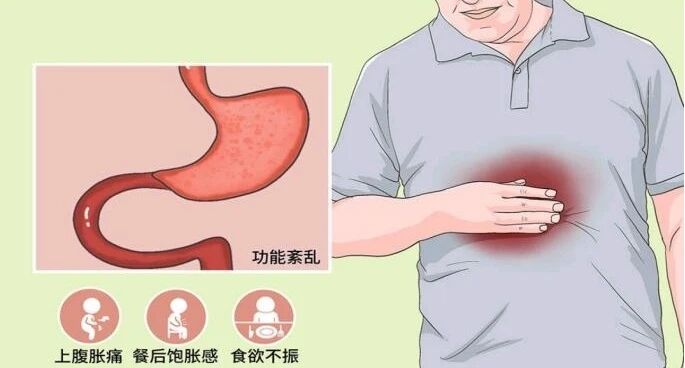
Functional dyspepsia (FD) is a common disorder of the digestive system. It is defined as one or more symptoms — primarily postprandial fullness, early satiety, epigastric pain, and epigastric burning — that cannot be explained by any organic, systemic, or metabolic disease. Other symptoms may include abdominal bloating, belching, nausea, and vomiting. The global prevalence of FD exceeds 10% of the population.
II. Risk Factors of Functional Dyspepsia
① Genetics
② Dietary and lifestyle factors: carbonated beverages, spicy foods, irregular eating patterns, smoking, sedentary behavior, etc.
③ Gastric acid‑related factors
④ Helicobacter pylori infection
⑤ Psychosocial factors: anxiety, depression, etc.
III. Etiology of Functional Dyspepsia
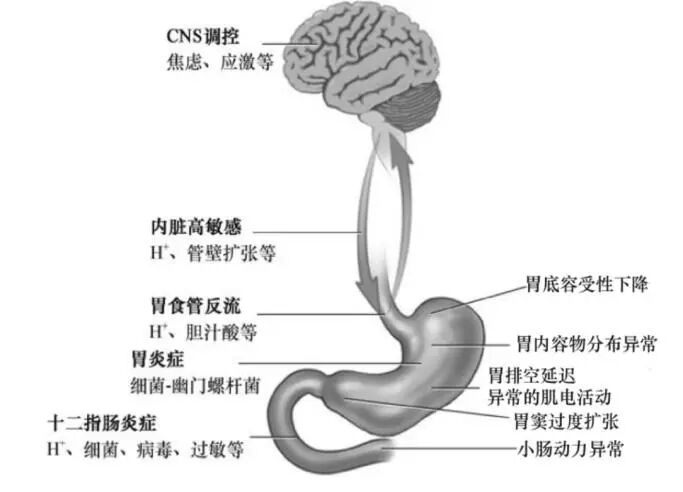
The latest expert consensus highlights that the primary mechanism underlying FD is abnormal interaction within the "gut‑brain axis" — a neuro‑digestive "signal miscommunication" that results in symptoms resembling peptic ulcers or gastritis, even when endoscopy shows no abnormality. Other contributing factors include delayed gastric emptying and visceral hypersensitivity.
IV. Diagnostic Criteria for Functional Dyspepsia
1. Diagnostic Criteria (Rome IV)
Symptoms must have first appeared at least 6 months prior to diagnosis and meet the following criteria within the last 3 months:
Main criteria: Must include one or more of the following:
- Postprandial fullness
- Early satiety
- Epigastric pain
- Epigastric burning
Routine investigations (including endoscopy) should reveal no evidence of organic or metabolic disease that could explain the symptoms.
2. Exclusion Criteria (Alarm Symptoms)
If any of the following are present, immediate medical evaluation is required, and endoscopy/imaging should be performed to rule out malignancy:
- Onset of symptoms after age 40
- Unexplained weight loss > 3 kg
- Anemia, hematemesis, or melena
- Jaundice
- Fever
- Dysphagia
- Abdominal mass
- Progressive symptom worsening
- Poor response to medical therapy
- Family history of gastrointestinal malignancy
V. Treatment of Functional Dyspepsia
1. Restoring Gastrointestinal Biological Rhythms:
- Avoid high‑fat foods, cakes, milk tea, and other items that delay gastric emptying and stimulate excessive bile secretion.
- Refrain from eating 3 hours before bedtime to allow the digestive tract sufficient time for repair.
2. Pharmacological Treatment:
- Prokinetic agents: Suitable for postprandial fullness and meal‑related discomfort.
- Acid suppressants: For epigastric pain or burning symptoms not clearly related to meals.
- Digestive enzyme supplements: Help improve symptoms such as postprandial bloating and poor appetite.
- Neuromodulators (e.g., TCAs): Considered when standard medical therapy is suboptimal and significant anxiety/depression symptoms are present.
3. Traditional Chinese Medicine (TCM):
Based on syndrome differentiation, acupuncture at acupoints such as Zusanli (ST36) and Zhongwan (CV12) has been shown to have significant therapeutic effects in functional dyspepsia.

Gastroenterology / Oncology Rehabilitation

Our Department of Gastroenterology / Oncology Rehabilitation is a flagship specialty of the center, combining clinical services, teaching, and research. It features two outpatient clinics (Gastroenterology and Oncology Rehabilitation) and one inpatient unit. Our team consists of 13 healthcare professionals: 1 senior specialist, 2 mid-level practitioners, and 10 junior staff. Academically, we have 1 Ph.D. and 5 Master's degree holders, along with 4 provincial-level distinguished TCM physicians who hold regular consultations. Our multidisciplinary staff includes clinical doctors, TCM physicians, rehabilitation therapists, psychological counselors, psychotherapists, health coaches, and dietitians — all trained in specialized rehabilitation techniques, TCM meridian hypnosis, Mindfulness-Based Stress Reduction (MBSR), Cognitive Behavioral Therapy (CBT), and psychological drawing analysis. We are dedicated to providing comprehensive care for digestive disorders and cancer rehabilitation, integrating Chinese and Western medicine, physical therapy, exercise therapy, psychological support, and nutritional guidance. Following an MDT (multidisciplinary team) approach, we craft individualized diagnostic, treatment, and rehabilitation plans for every patient.
I. Scope of Diagnosis and Treatment
1. Digestive System: We treat a full range of digestive conditions — from esophageal, gastrointestinal, hepatobiliary, and pancreatic disorders to psychosomatic digestive issues — and also provide palliative care and TCM-based therapies for gastrointestinal cancers.
2. Integrated Rehabilitation: Our rehabilitation services cover musculoskeletal and neurological conditions such as lumbar disc herniation, cervical spondylosis, degenerative joint disease, muscle atrophy, and peripheral nerve injuries. We also specialize in managing cancer-related complications and side effects from non-surgical oncology treatments — including nausea, vomiting, diarrhea, abdominal pain, fatigue, skin reactions, bone marrow suppression, hair loss, and lymphedema.
II. Diagnostic and Treatment Technologies
1. Routine Services: We provide painless gastroscopy and colonoscopy, along with a full range of endoscopic interventions — polypectomy, hemostasis, stricture dilation, stent placement, endoscopic mucosal resection (EMR), and endoscopic submucosal dissection (ESD) — all performed with minimally invasive techniques.
2. Specialized Services: Our advanced endoscopic offerings include POEM, EUS, ultrasound-guided radioactive seed implantation, ERCP, combined endoscopic-laparoscopic full-thickness resection, and sclerotherapy/ligation for esophageal and gastric varices. Beyond procedures, we specialize in integrated Chinese-Western medicine management of chemotherapy/radiotherapy GI side effects, especially radiation proctitis; physical therapy combined with CBT and MBSR for anxiety, depression, and sleep disorders; integrated TCM and psychological support for cancer-related fatigue and treatment side effects; prevention and management of radiation-induced lymphedema; TCM therapies for chemotherapy-induced hand-foot syndrome; and comprehensive rehabilitation for cancer pain and other chronic pain conditions.
III. Facilities and Equipment
1. State-of-the-Art Endoscopy Equipment: We are equipped with Olympus high-definition electronic gastroscopes, duodenoscopes, colonoscopes, endoscopic ultrasound (EUS), magnifying endoscopes, and small-bowel enteroscopes — covering all diagnostic and interventional needs.
2. Advanced Rehabilitation Equipment: Our rehabilitation unit features a full range of modern devices, including an automatic constant-temperature wax therapy unit, water-filtered infrared-A (wIRA) therapy, interferential current therapy, deep muscle stimulator, shockwave therapy, ultrasound therapy, lymphatic drainage device, air-wave pressure therapy, medium- and low-frequency electrotherapy units, transcranial magnetic stimulation (TMS), psychological CT, mental stress analyzer, computerized mindfulness training system, sandplay therapy kit, and polysomnography (PSG) for sleep monitoring.
Our Service Philosophy:
Precision medicine to ease your pain; compassionate care to enrich your life.
Clinic Location:
Room 418, 4/F, Inpatient Building, Lanzhou Campus, Gansu Wuwei Cancer Hospital
Ward Location:
10/F, Inpatient Building, Lanzhou Campus, Gansu Wuwei Cancer Hospital
Writer: Wan Shunmei
First Review: Liu Qiong
Second Review: Guo Yishan
Third Review: Cai Qinghua
Lanzhou Campus, Gansu Wuwei Cancer Hospital Consultation Hotline
Director Li: 166 0931 3666
MS. Yan: 176 9325 0603