Radiotherapy Precision — The Medical Physicist Behind the Scenes
Radiotherapy Precision — The Medical Physicist Behind the Scenes
When your doctor recommends radiation therapy, it's natural to have concerns:
- What if the beam doesn't hit the tumor exactly where it should?
- Too much radiation could hurt healthy tissue, too little might not do the job — who decides the right dose?
- What if the machine breaks down?
Here's the good news: you don't have to carry that worry alone. Long before you step into the treatment room and lie down on the bed, a group of behind-the-scenes experts — medical physicists — have already gone through every detail with extraordinary precision. They're the ones who set up safeguard after safeguard to protect your safety and ensure the treatment works as intended.
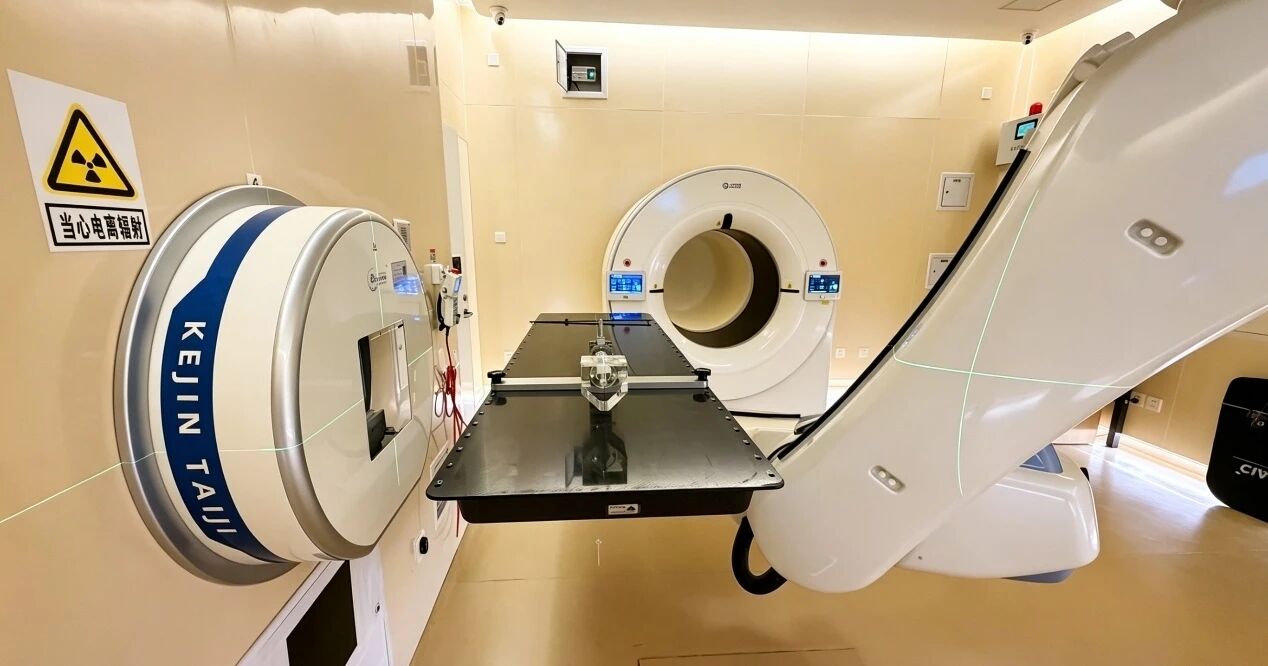
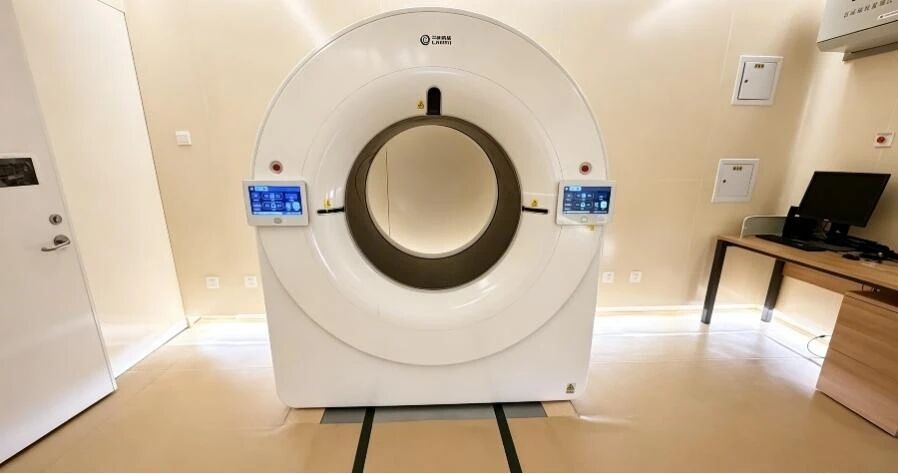
Interior view of the Treatment Room
So, what exactly do medical physicists do on a daily basis to make sure radiotherapy hits its mark with pinpoint accuracy and safety — just like a smart bomb? Let's break it down.
I. Daily Morning Routine: Checking the Radiotherapy Machine Just Like a Pilot's Pre-Flight Inspection
Large radiotherapy machines — like linear accelerators and heavy-ion systems — are incredibly precise instruments. Even a tiny misalignment can throw off the treatment. That's why the very first thing a medical physicist does each morning is a full "physical" for the equipment.
- Are the lasers perfectly aligned? The three laser crosshairs on the treatment bed must meet at exactly the same point — with an accuracy of less than 1 millimeter. To put that in perspective, that's thinner than a human hair.
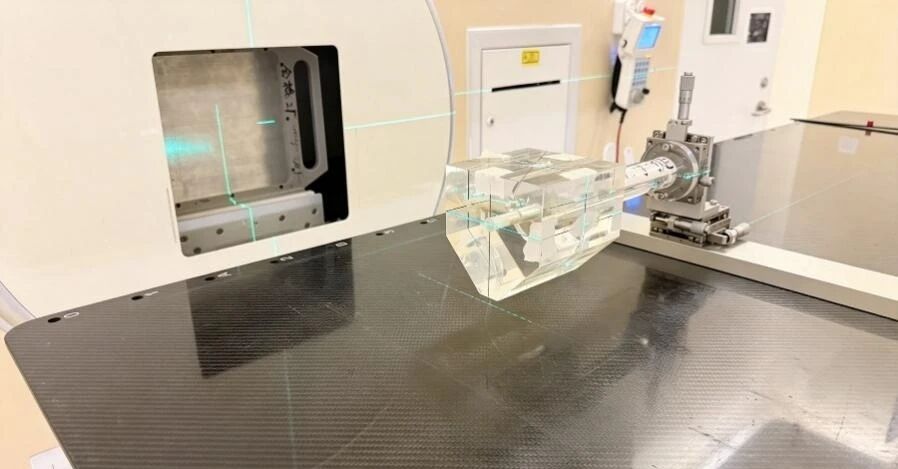
Morning Inspection Quality Control Chart
- Does the treatment couch move smoothly and accurately?
It has to glide without a hitch in every direction — forward, backward, left, right — and its positioning marks must be exact.
- Is the beam output consistent?
Physicists run a quick test using a "phantom" — think of it as a stand-in for a patient — to make sure today's radiation output matches yesterday's, ensuring day-to-day stability.
What this means for you: If the machine doesn't pass its morning check, treatments are put on hold immediately. No exceptions. The physicist won't let it run until it's fixed and fully re-tested. You will never be treated on a machine that's not 100% cleared for duty.
II. Double Check of Dosage: Never allow the dosage to be excessive or insufficient.
Think of radiation as the "ammunition" in radiotherapy — and the dose is what makes it hit or miss. Your radiation oncologist prescribes the exact dose based on your tumor's size and position. The medical physicist's job is to double-check — using at least two independent methods — that the dose you actually receive is exactly what was prescribed, down to the last detail.
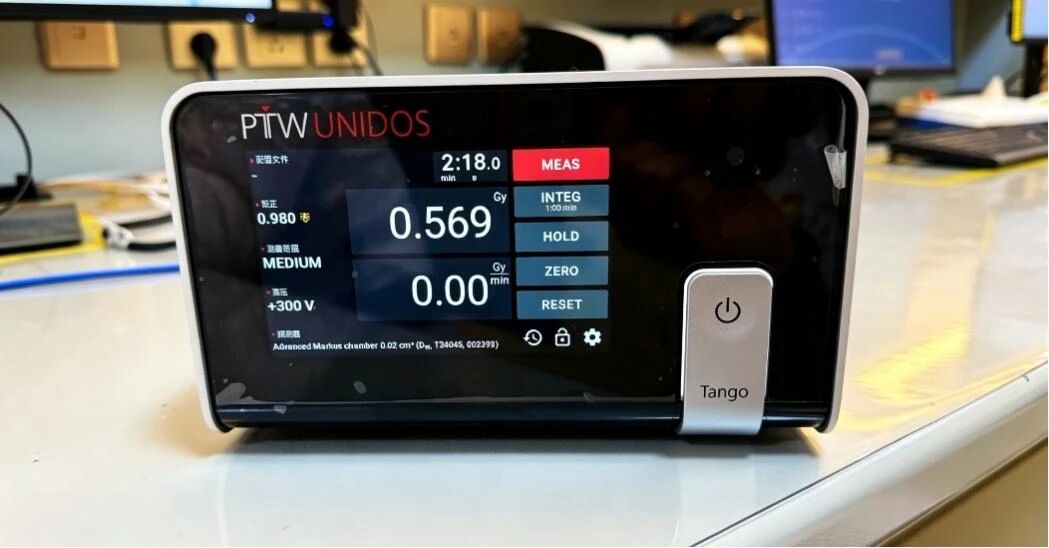
Dose Measurement Chart
· Regular dose calibration using "national reference standards"
Every month or quarter, physicists use reference-grade instruments — calibrated by the National Institute of Metrology — to fine-tune the accelerator's absolute output, much like using certified weights to calibrate a precision scale. The results are also submitted to health authorities for official records.
What this means for you: The difference between the dose you actually receive and the dose your doctor prescribed is kept to an absolute minimum — even tighter than international standards. That means you get enough radiation to fight the tumor effectively, but not so much that it harms your healthy tissues unnecessarily.
III. Image Guidance: Make the "eyes" as precise as the "hands"
Today's precision radiotherapy doesn't just aim blindly. Before every session, the machine uses its onboard imaging system (CBCT/DR) to scan your body and locate the tumor — accounting for any movement caused by breathing or slight shifts in your position. Physicists regularly test and calibrate this "imaging eye" to keep it razor-sharp.
Here's how they do it: they place a phantom embedded with tiny steel balls on the treatment bed. The position of those balls as seen on the imaging screen must match their actual physical coordinates down to the millimeter — with an error of less than 1 millimeter.
What this means for you: Before each treatment, the machine "sees" exactly where your tumor is — and that's precisely where the radiation will go. You don't have to worry about the beam missing its mark just because you're lying a little differently today or because your tumor shifted slightly with your breath.
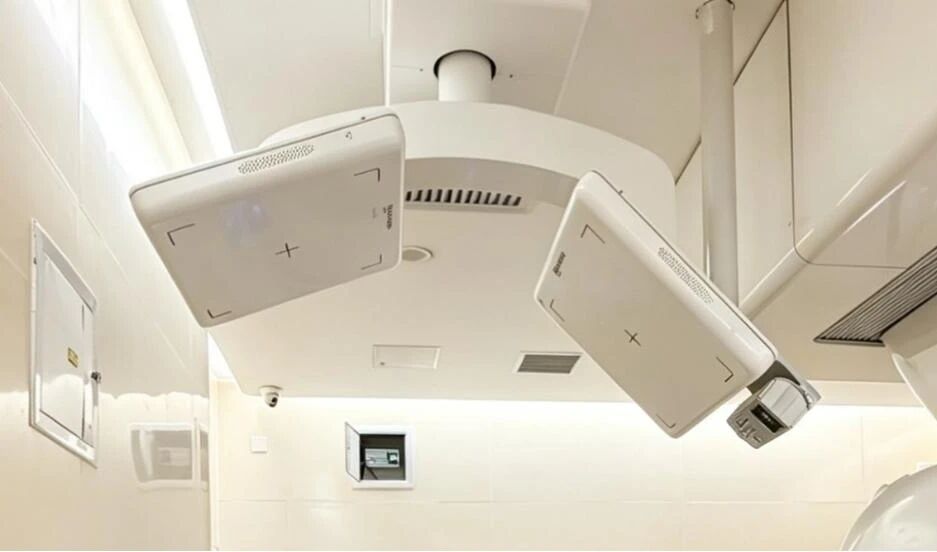
DR imaging equipment
CBCT imaging equipment
IV. Multiple "Safety Brakes"
Here's something most patients don't know: radiotherapy machines are fitted with multiple real-time monitoring sensors. While the beam is on — checking itself every 0.1 seconds — the system constantly compares "what dose we planned" against "what dose is actually being delivered." The moment anything doesn't match, the beam shuts off automatically in 0.5 milliseconds, and an alarm sounds.
What's more, there are multiple safety layers: the treatment room door, emergency stop buttons, and independent dose-monitoring channels. If any single one fails, the machine simply refuses to fire. Physicists test all these safety interlocks every single day.
What this means for you: Even in the incredibly rare case of a machine drift, the equipment will put on its own "emergency brake" — well before you could ever feel or notice anything wrong.
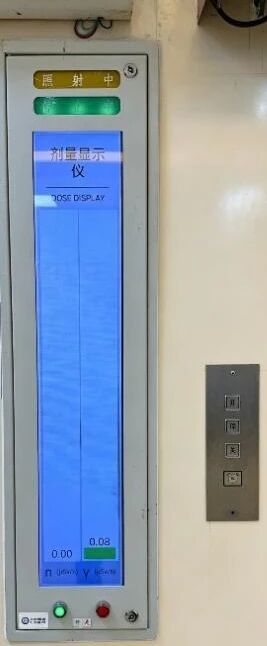
Treatment room door interlock
All the worries you might have — your physicists have already thought of them and addressed them, day after day, through their meticulous quality checks.
In any reputable radiotherapy center, every aspect of quality control is conducted in strict compliance with national regulations and international standards. Each test is recorded, signed, and traceable — right down to the date and the person who did it. So you can feel confident knowing that:
- Machine accuracy — checked daily, weekly, and monthly, with deviations kept to sub-millimeter levels.
- Dose precision — verified by at least two independent software systems plus physical measurements using a phantom.
- Safety systems — designed with multiple backups that automatically kick in if anything goes wrong.
So rest assured: when you're on that treatment bed, you're not in it alone. Your doctor plans the treatment, your therapists run the machine, and your physicists — think of them as the strictest quality supervisors — are there, quietly ensuring that every beam is both spot-on and safe.
Lanzhou Campus of Gansu Wuwei Cancer Hospital
Director Li: 166 0931 3666
Ms. Yan: 176 9325 0603
Writer: Hu Guang
First Review: Liu Qiong
Second Review: Guo Yishan
Third Review: Cai Qinghua