Crossing mountains and seas, just to find the way home
Crossing mountains and seas, just to find the way home
A life-defending effort united by the entire hospital
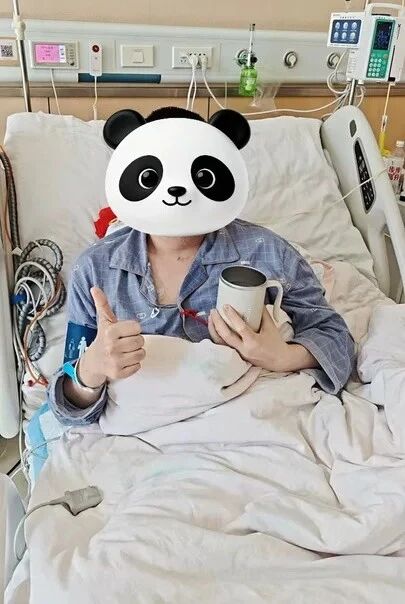
On the morning of April 3rd, sunlight streamed through the glass dome of the Wuwei Heavy Ion Center, casting golden patches of light along the corridor. Chen Mo (pseudonym), a 37-year-old New Zealand Chinese, sat quietly on his hospital bed. His wife sat beside him, her eyes filled with a tenderness that words could hardly capture, as she softly said, "Last night, he was talking to me about our new house in New Zealand—saying that at last, he could go home."
In that moment, the fullness of life felt so real. Yet this sense of completeness began on a heart-stopping winter night.
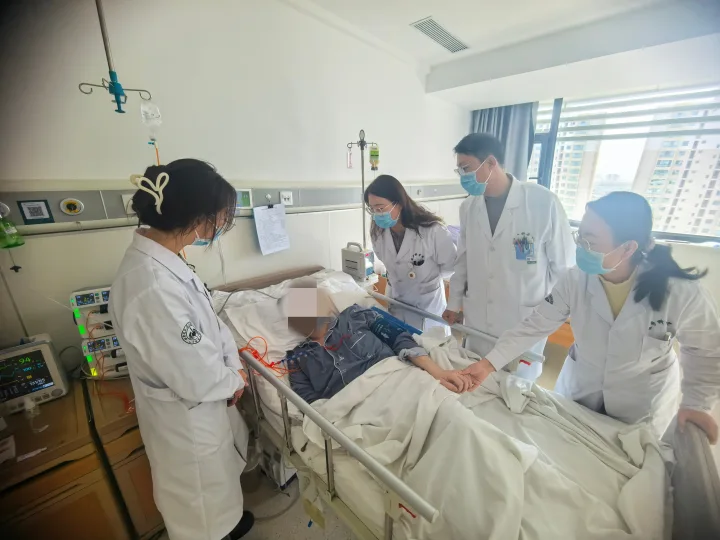
On January 13th, a cold wind carrying the chill of the northwest blew through the doors of Wuwei Cancer Hospital. Chen Mo (pseudonym) stood out among the crowd. At 37 years old, an age that should have been the prime of his life, he had been battling left maxillary sinus osteosarcoma for an entire year. The thick medical record, its edges curled from frequent use, bore witness to his arduous struggle on every page: from New Zealand to a well-known cancer hospital in Guangzhou—four cycles of chemotherapy, surgical resection, followed by another four cycles of chemotherapy. Despite the relentless journey and his fierce fight against the disease, the stubborn cancer cells returned, invading from the mandible all the way into the temporal lobe—a comprehensive recurrence after multimodal treatment.
Traveling 2,500 kilometers, from the warmth of the south to the harsh cold of the Gobi Desert, Chen Mo and his family came with their last hope—for heavy ion therapy. This was their final line of defense against cancer, the sole light that had sustained him through his long and difficult treatment journey.
On his first day after admission, a race against time quietly began. To quickly clarify the disease status and formulate a treatment plan, the medical team urgently arranged a head MRI and a whole-body PET-CT. The moment the imaging results came out, everyone's heart sank: significant edema around the left temporal lobe metastasis, with a midline shift already visible. The tumor was no longer growing slowly—it was aggressively compressing and encroaching upon the space of life itself.
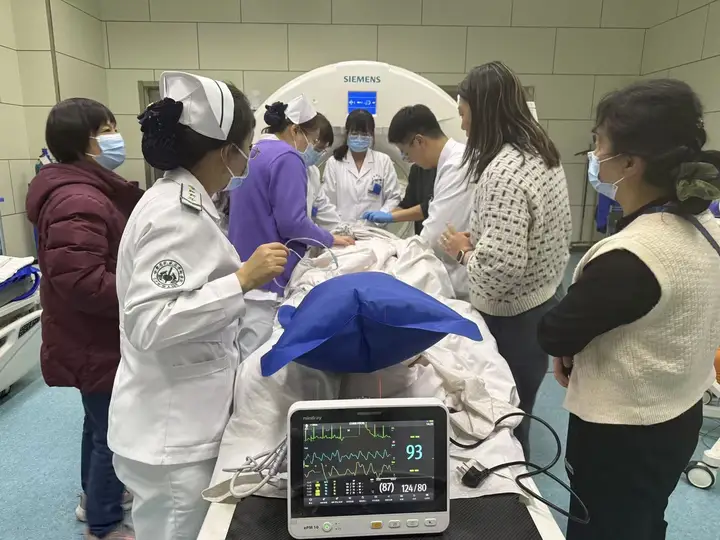
The crisis arrived silently in the dead of night. At 9 p.m. on January 14th, the quiet ward was broken by an urgent intercom call: "The patient in bed 3 has worsening headache!"
The attending physician was already at the bedside, brow furrowed. Given the patient's history of tumor invasion into the temporal lobe and his ongoing treatment with anlotinib targeted therapy, a dreadful possibility emerged in everyone's mind—cerebral hemorrhage. An emergency physical examination revealed sluggish pupillary light response in the left eye. In that instant, this danger sign made the air freeze.
"Mannitol 250 ml rapid IV drip, dexamethasone sodium phosphate with hypertonic glucose—immediately!" The orders were crisp and decisive. The nurses worked swiftly and precisely, preparing medications and placing the IV line without a trace of panic. This was the professionalism etched into the very core of the oncology team—forever racing against death, always ready.
Dr. Yin Zhaosheng, Associate Chief Physician of the Second Radiotherapy Center, received the news and rushed to the ward immediately. Leaning down to repeatedly check the patient's pupils, his expression grew gravely serious—anisocoria. This was a fatal precursor of cerebral herniation; the slightest delay could mean life or death.
"Open the green channel—emergency head CT, now!" At the command, the radiology department immediately prioritized the scan. But when the CT results came back, everyone in the room fell into a long silence: intratumoral hemorrhage, with cerebral herniation already formed. The tumor had eroded the intracranial blood vessels, and blood was spreading unchecked within the cranial cavity, like an invisible hand pushing Chen Mo (pseudonym) to the edge of the abyss.
Chen Mo (pseudonym) was urgently transferred to the ICU, and a life-or-death multidisciplinary consultation was convened that same night. Led by Hospital Director Ye Yancheng, and with Dr. Wang Daohe, Director of the Neurosurgery Center, heading the team, they raced against time to discuss treatment options.
A decompressive hemicraniectomy might offer a slim chance of survival, but the postoperative prognosis would be extremely poor. Anti-angiogenic drugs could cause rebleeding, and Chen Mo might never wake up again. Conservative treatment, on the other hand, would rely on measures such as dehydration to reduce intracranial pressure to sustain life—yet constantly facing the risk of disease deterioration.
The attending physicians disclosed all the facts to Chen Mo's family without reservation. In the consultation room, the oppressive atmosphere was almost suffocating. His wife sobbed, covering her face. His elderly parents sat ashen-faced—his father gripping his knees tightly, his knuckles white; his mother opening her mouth but unable to utter a sound. After a long silence, the father raised his head and spoke, his voice hoarse but resolute: "We will not opt for surgery. We choose conservative treatment. But our son has been holding onto hope for carbon ion therapy. If there is any chance at all, please help control the disease and let him go home."
This decision embodied the family's deepest love and respect for Chen Mo. And the medical team responded to that trust with action. "We respect your choice, and we will not give up on him. We will do everything we can with all available conservative treatments," Dr. Yin declared with firm conviction, bringing a glimmer of light to this family on the brink of collapse.
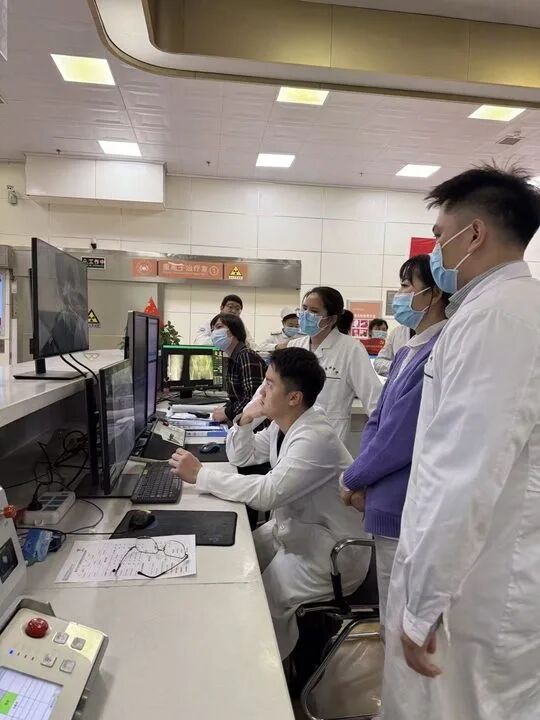
From that day on, the focus of treatment shifted from "cure" to "guardianship." In the ICU, medical staff provided 24/7 uninterrupted monitoring, precisely adjusting the dosage of dehydrating agents. The Neurosurgery Center conducted daily rounds, meticulously assessing Chen Mo's pupillary response and level of consciousness—every subtle change did not escape their eyes. Through the close collaboration of the hospital's multidisciplinary team, Chen Mo's intracranial hemorrhage gradually stabilized, his condition slowly improved, and he was successfully transferred from the ICU to a regular ward.
But the disease did not relent—the facial tumor continued to grow slowly. Time had become the most precious resource. On the 23rd day of the lunar year, when families were preparing for the New Year and the festive atmosphere was building, Dr. Yin Chaosheng and Dr. Wang Daohe's team gave up their time off. After an urgent assessment of his condition, they decided to seize the window of the subacute stable phase of the cerebral hemorrhage and initiate emergency heavy ion therapy for Chen Mo.
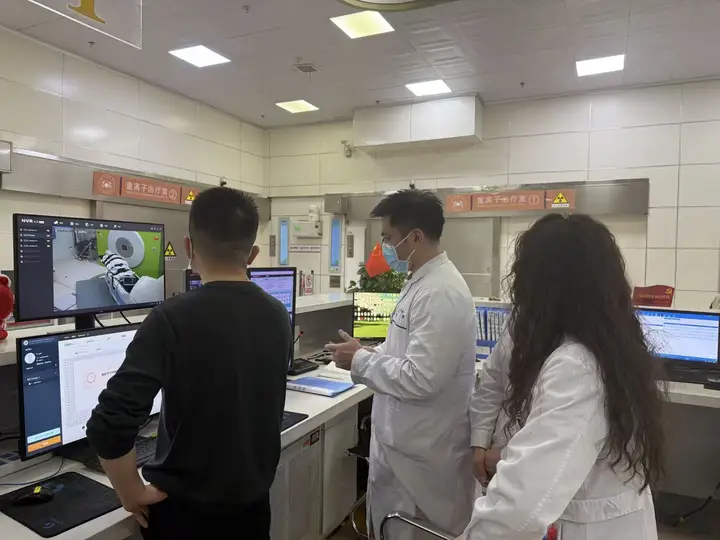
To carry out this guardianship, Dr. Yin quietly canceled his already-booked flight home, giving up the chance to reunite with his family during the Year of the Horse Spring Festival. During the New Year holidays—a time meant for family gatherings—the lights in the heavy ion treatment room remained bright. Accompanied by his parents and wife, Chen Mo walked into the treatment room. His mother softly hummed a familiar song, staying by his side through the long treatment sessions. The medical team remained on standby throughout, closely monitoring every parameter and carefully carrying out each treatment.
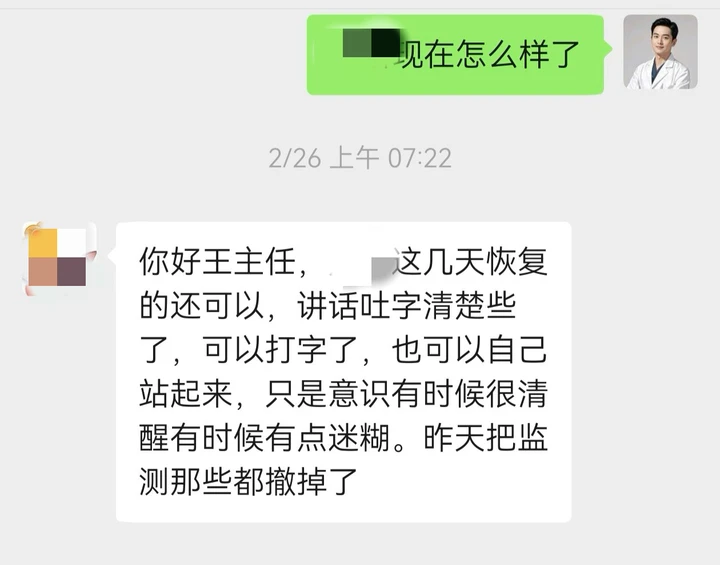
From that day on, the focus of treatment shifted from "cure" to "guardianship." In the ICU, medical staff provided 24/7 uninterrupted monitoring, precisely adjusting the dosage of dehydrating agents. The Neurosurgery Center conducted daily rounds, meticulously assessing Chen Mo's pupillary response and level of consciousness—every subtle change did not escape their eyes. Through the close collaboration of the hospital's multidisciplinary team, Chen Mo's intracranial hemorrhage gradually stabilized, his condition slowly improved, and he was successfully transferred from the ICU to a regular ward.
But the disease did not relent—the facial tumor continued to grow slowly. Time had become the most precious resource. On the 23rd day of the lunar year, when families were preparing for the New Year and the festive atmosphere was building, Dr. Yin Chaosheng and Dr. Wang Daohe's team gave up their time off. After an urgent assessment of his condition, they decided to seize the window of the subacute stable phase of the cerebral hemorrhage and initiate emergency heavy ion therapy for Chen Mo.
To carry out this guardianship, Dr. Yin quietly canceled his already-booked flight home, giving up the chance to reunite with his family during the Year of the Horse Spring Festival. During the New Year holidays—a time meant for family gatherings—the lights in the heavy ion treatment room remained bright. Accompanied by his parents and wife, Chen Mo walked into the treatment room. His mother softly hummed a familiar song, staying by his side through the long treatment sessions. The medical team remained on standby throughout, closely monitoring every parameter and carefully carrying out each treatment.