A Complete Guide to Microwave Ablation for Thyroid Nodules — No Major Surgery Required
A Complete Guide to Microwave Ablation for Thyroid Nodules — No Major Surgery Required
The thyroid—a butterfly-shaped gland in the neck weighing only 20–30 grams—plays a crucial role in regulating the body's metabolism. In recent years, the detection rate of thyroid nodules has reached an astonishing 20% to 76%, meaning that nearly one in two people may have a thyroid nodule.
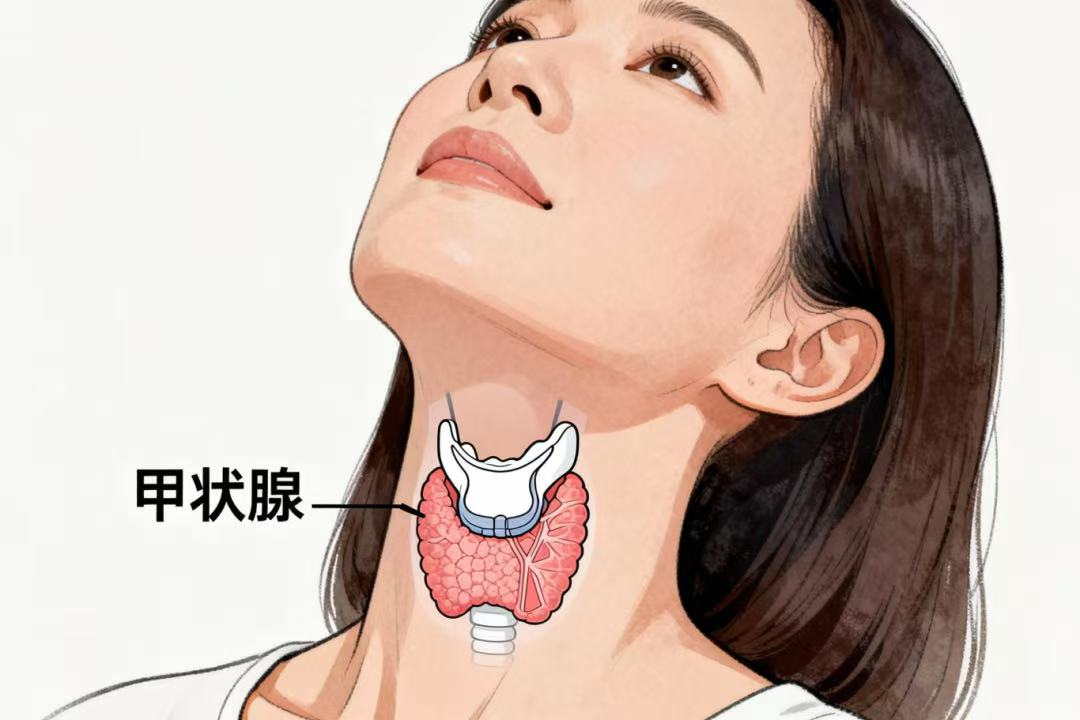
While traditional surgery—partial or total thyroidectomy—can resolve the issue, it often leaves patients facing three major challenges: a visible neck scar, potential hoarseness, and lifelong medication dependence. The 3-to-5 centimeter incision on the neck, in particular, can become a lasting psychological burden, especially for women concerned about their appearance.
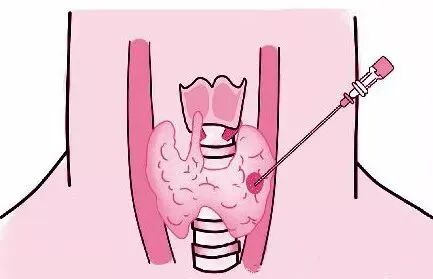
The emergence of microwave ablation is like a ray of light breaking through the barriers of conventional medicine. This technology, originally developed from aerospace engineering, converts microwave energy into precise heat. Delivered through a needle just 1.6 millimeters thin, it reaches the target lesion directly and performs millimeter-precise "targeted removal" under the guidance of ultrasound.
Which nodules are suitable for microwave ablation?
Microwave ablation is not a one-size-fits-all solution; it has its own set of optimal indications:
- Confirmed benign by biopsy and meeting at least one of the following criteria:
• Causing compressive symptoms (e.g., sensation of a foreign body when swallowing, difficulty breathing)
• Affecting appearance, with the patient seeking cosmetic improvement
• Nodule showing continuous growth (annual increase > 3 mm)
• Patient's quality of life significantly impacted by anxiety
• Solitary papillary thyroid microcarcinoma, less than 1 cm in size
• No evidence of lymph node or distant metastasis
• No thyroid capsule invasion
• Unable to tolerate or refusing traditional surgery due to physical condition
• Young women with high cosmetic expectations
• Elderly patients with multiple underlying diseases
• Recurrent nodules after previous thyroid surgery
• Professionals who rely heavily on their voice (e.g., teachers, singers, hosts)
Unsuitable candidates:
- Patients with coagulation disorders
- Pregnant women
- Individuals whose nodules are adjacent to critical structures and cannot be safely isolated
- Patients with large nodules (those with a maximum diameter > 4 cm require careful evaluation)
Treatment Process
Step 1: Precise Localization
Preoperative ultrasound marking determines the optimal needle insertion path, avoiding major blood vessels, nerves, and the trachea in the neck. This is the first line of defense for safety.
Step 2: Dynamic Ablation
The microwave needle moves methodically within the nodule, emitting high-frequency electromagnetic waves that cause water molecules to vibrate 2.45 billion times per second, instantly generating temperatures of 60–100°C. Under this heat, tissue cells undergo protein coagulation necrosis, while surrounding healthy tissue remains largely unaffected.
Step 3: Safety Margin
Under real-time ultrasound guidance, the physician ensures that the ablation zone extends 2–5 mm beyond the nodule's edge—a crucial step in preventing recurrence—while protecting vital structures just millimeters away.
Step 4: Immediate Verification
Before the procedure concludes, contrast-enhanced ultrasound is used to instantly verify the ablation effect, ensuring no active residual tissue remains.
The entire process resembles the art of micro-sculpture—completely removing the lesion while maximizing preservation of organ function.
Advantages of Thyroid Microwave Ablation
1. Minimally Invasive
Compared to traditional surgery, microwave ablation involves minimal trauma, leaving only a needle-point-sized opening on the skin.
2. Faster Recovery
Patients are typically able to be discharged on the same day as the procedure. The recovery period is short, allowing most individuals to return to normal activities within just a few days.
3. Fewer Complications
The complication rate for microwave ablation is relatively low, especially when performed by an experienced physician. Risks such as recurrent laryngeal nerve injury and hypoparathyroidism are significantly reduced.
Complete Treatment Process
1. Preoperative Preparation Stage:
Comprehensive evaluation: High-resolution ultrasound, thyroid function tests, and the "gold standard" biopsy for definitive diagnosis.
Necessary examinations: Neck CT to assess three-dimensional relationships, and laryngoscopy to evaluate vocal cord function.
Pre-procedure consultation: Detailed discussion of the treatment process, expected outcomes, and potential risks.
Medication adjustment: Anticoagulant medications should be discontinued for at least one week.
2. Day of Treatment:
Wear a low-neckline top. Fasting is not required, but avoid overeating.
Local anesthesia is administered; the patient remains awake and pain-free throughout.
Treatment duration depends on nodule size, typically ranging from 20 to 60 minutes.
Apply pressure to the puncture site for 15–30 minutes after the procedure.
3. Postoperative Recovery Period:
Within 24 hours: Mild neck swelling and a sensation of a foreign body are normal reactions.
Within one week: Avoid strenuous neck movements and keep the puncture site dry.
After one month: Neck discomfort generally subsides.
At three months: First follow-up, where nodule volume is usually reduced by more than 50%.
4. Long-term Follow-up:
Follow-up ultrasounds are scheduled at 1, 3, 6, and 12 months post-procedure, and annually thereafter. Thyroid function should also be monitored during these visits.
Academic Leader
Yu Jianjun
Professional Title & Affiliations:
Chief Physician (Level II), Professor of Surgery, Master's Supervisor. Chief Expert in Thyroid and Breast Surgery at the People's Hospital of Ningxia Hui Autonomous Region. Member of the Expert Panel on Thyroid Tumor Ablation Therapy, Chinese Medical Doctor Association. Recipient of the Ningxia Hui Autonomous Region Government Special Allowance. Recognized as a Cross-Century Talent of Ningxia Hui Autonomous Region. Inaugural Discipline Leader of Oncological Surgery, Ningxia Medical University.
Clinical Expertise:
- Thermal Ablation Surgery for Thyroid and Parathyroid Tumors (Pioneer in the Region)
- Totally Endoscopic Axillary Approach Thyroid Surgery
- Totally Endoscopic Axillo-Oral Approach Thyroid Surgery
- Endoscope-Assisted Thyroid and Parathyroid Surgery (Pioneer in the Region)
- Endoscope-Assisted Total Thyroidectomy + Central Lymph Node Dissection for Early Differentiated Thyroid Carcinoma (Pioneer in the Region)
- Combined Radical Resection + Myocutaneous Flap Reconstruction for Advanced Differentiated Thyroid Carcinoma (Pioneer in the Region)
- Endoscope-Assisted Axillary Lymph Node Dissection + Total Mastectomy ± Breast Reconstruction (Pioneer in the Region)
- Radical Mastectomy + Breast Reconstruction (Autologous, Implant-Based, or Combined) (Pioneer in the Region)
- Breast-Conserving Surgery & Sentinel Lymph Node Biopsy for Breast Cancer (Pioneer in the Region)
- Ultrasound-Guided Minimally Invasive Vacuum-Assisted Biopsy for Benign Breast Lesions
- Non-Vascular Interventional Ablation for Advanced Malignancies
- Ultrasound-Guided Thermal Ablation & Radioactive Seed Implantation for Solid Malignant Tumors (Pioneer in the Region for Thyroid Cancer)