Successful 3D-Printed Reconstruction Achieved Through Coordinated Multidisciplinary Effort
Introduction
Ms. Zhao, 38 years old, was in the prime of her life when she was diagnosed with cervical cancer eight years ago. A total hysterectomy led to her recovery, but this remission was tragically short-lived. Eight years later, the disease mercilessly returned, manifesting as a massive tumor in her left ilium. She sought treatment at major hospitals across the country, but the enormous size and perilous location of the tumor rendered it inoperable, and no viable treatment options were found.
Her search for a cure eventually led her to Wuwei, placing her hopes in the heavy-ion therapy offered by our hospital. However, after a multidisciplinary consultation, it was determined that her condition was unsuitable for this specific treatment. Yet, a glimmer of hope emerged: surgery was deemed a potential possibility. Subsequently, our hospital's multidisciplinary team collaborated seamlessly, devising and successfully performing a complex procedure combining pelvic resection with a 3D-printed bone reconstruction. This innovative surgery successfully alleviated the patient's suffering. Her post-operative recovery was excellent; she was able to walk again and was discharged from the hospital, fully recovered, on April 13.
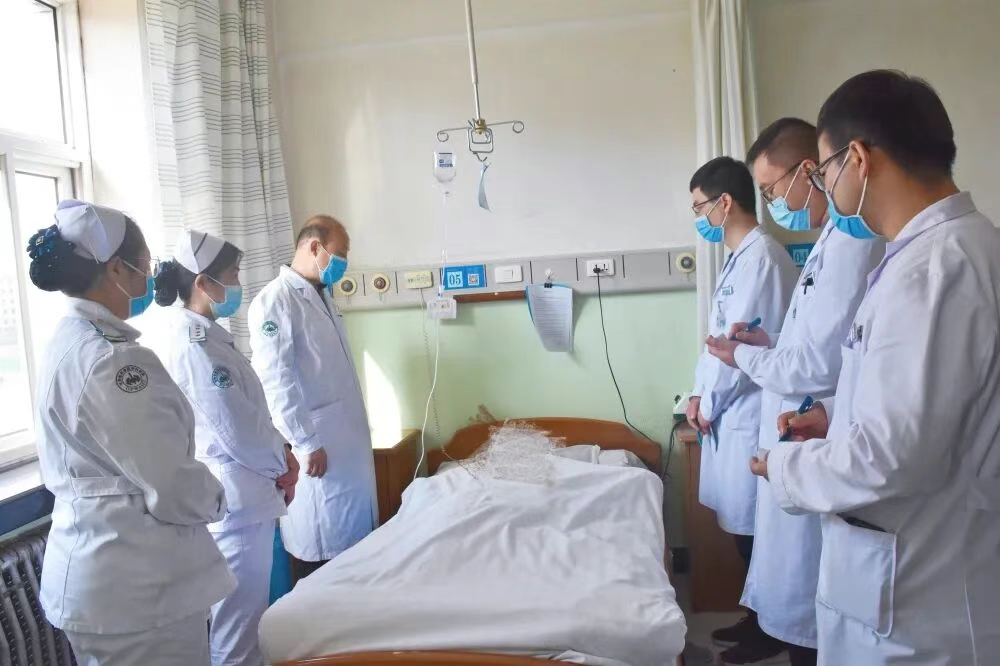

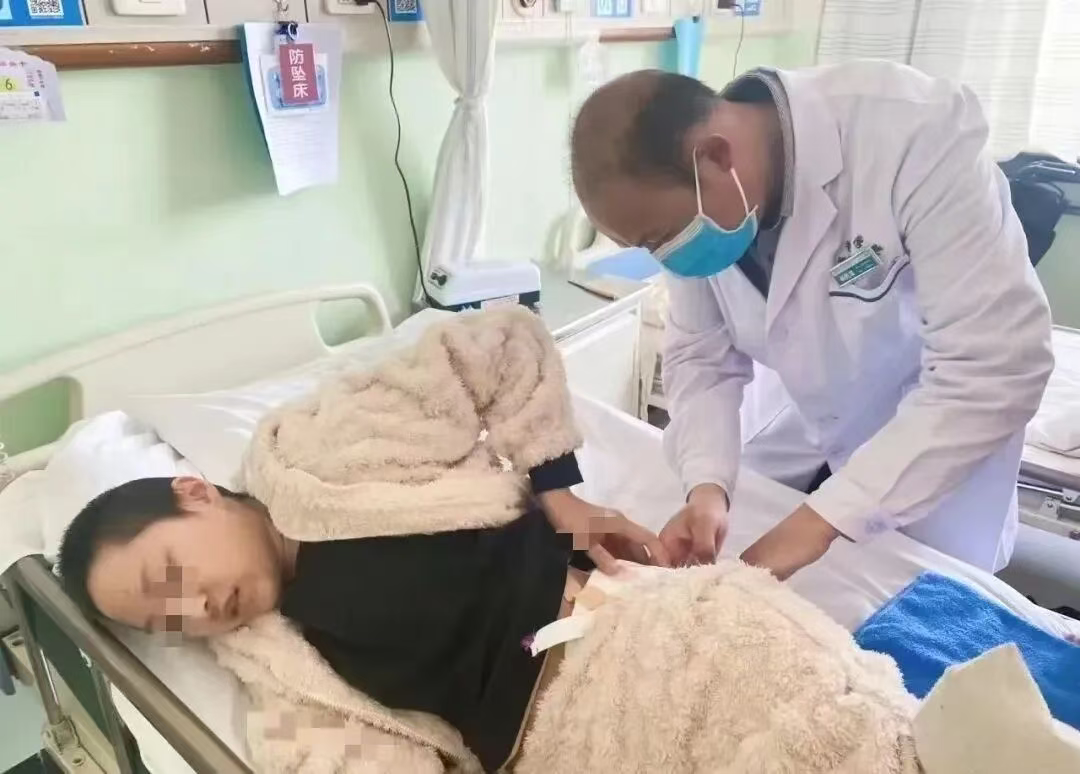

The patient was recovering well and was able to walk during post-operative checks.
"I felt I had been given a death sentence, but you gave me a second chance at life. Thank you! Thank you!" an emotional Ms. Zhao said to Mr. Yang Qianzi, Deputy Director of Orthopedics and Rehabilitation, upon her discharge yesterday. Her successful discharge, which followed the multidisciplinary procedure and marked a full recovery, allowed her to walk again.
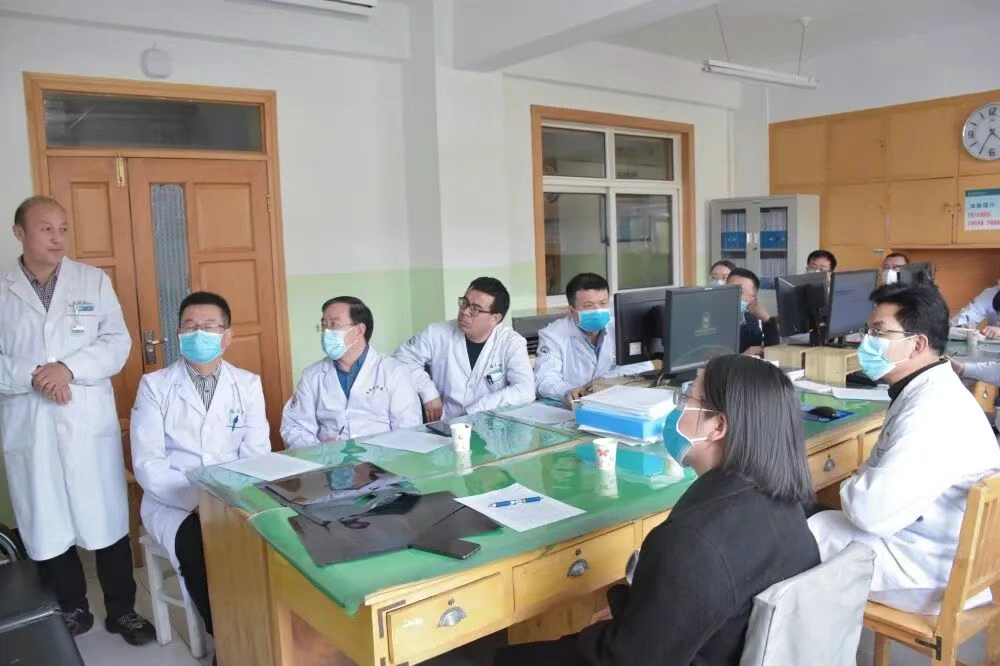
During a Multidisciplinary Consultation
On the afternoon of March 21, the multidisciplinary team of experts at Wuwei Cancer Hospital had just concluded a consultation for Ms. Zhao and preliminarily decided on a treatment plan of pelvic resection combined with 3D-printed bone reconstruction. While such consultations are a routine occurrence at the hospital, for Ms. Zhao, who had endured a tortuous journey of illness and was nearing despair, it represented the promise of a new life.

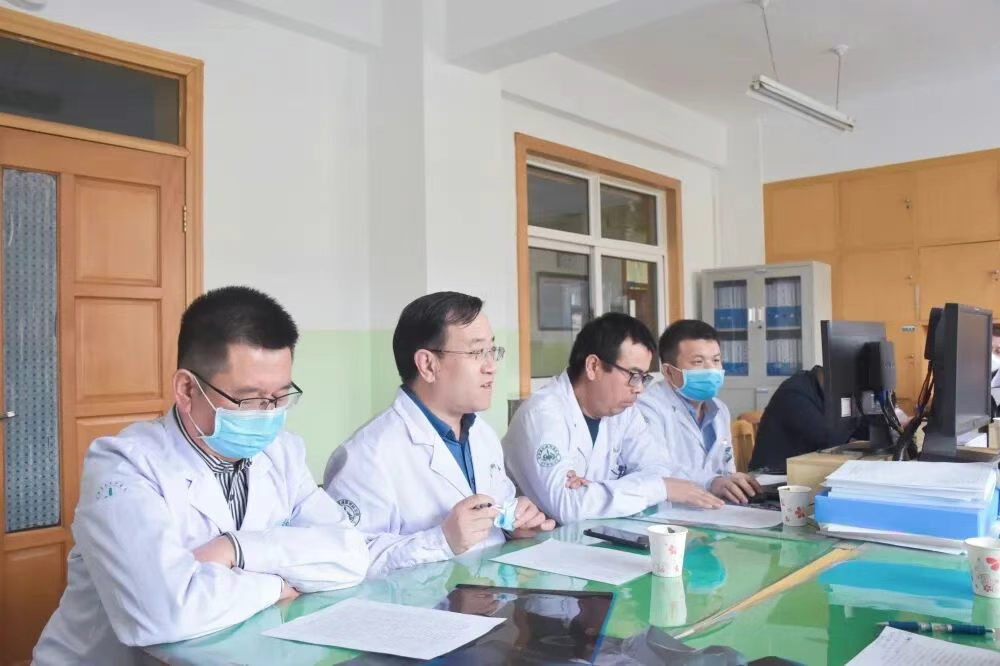
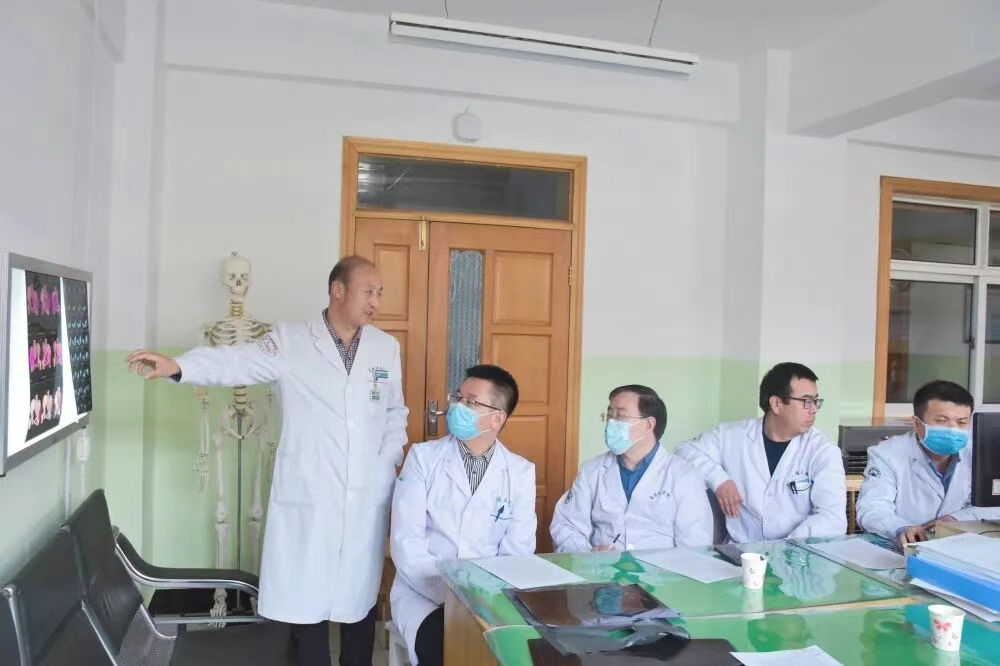
During a Multidisciplinary Consultation
In 2013, after noticing physical discomfort, she went to the hospital for a check-up. The results revealed that she had cervical cancer. Like most cervical cancer patients, she underwent a total hysterectomy at a local hospital, followed by chemotherapy and radiotherapy, and was discharged after recovery.
However, this period of good health was short-lived. In September 2021, Ms. Zhao suddenly discovered a mass on her left buttock. Examinations confirmed a malignant pelvic tumor—osteosarcoma of the left ilium. However, because the tumor was too large and located in a highly risky area, surgery was not an option. After seeking help from numerous hospitals across the country and exhausting various treatment options without success, the patient came to Wuwei, turning to heavy-ion therapy as a last resort.
After a detailed examination by heavy-ion therapy specialists and a multidisciplinary consultation, it was concluded that: the patient's tumor volume was too large; it was adjacent to the intestines and bladder, making sufficient radiation dosage impossible; and it did not meet the requirements for heavy-ion therapy. However, surgical intervention remained a potential option.
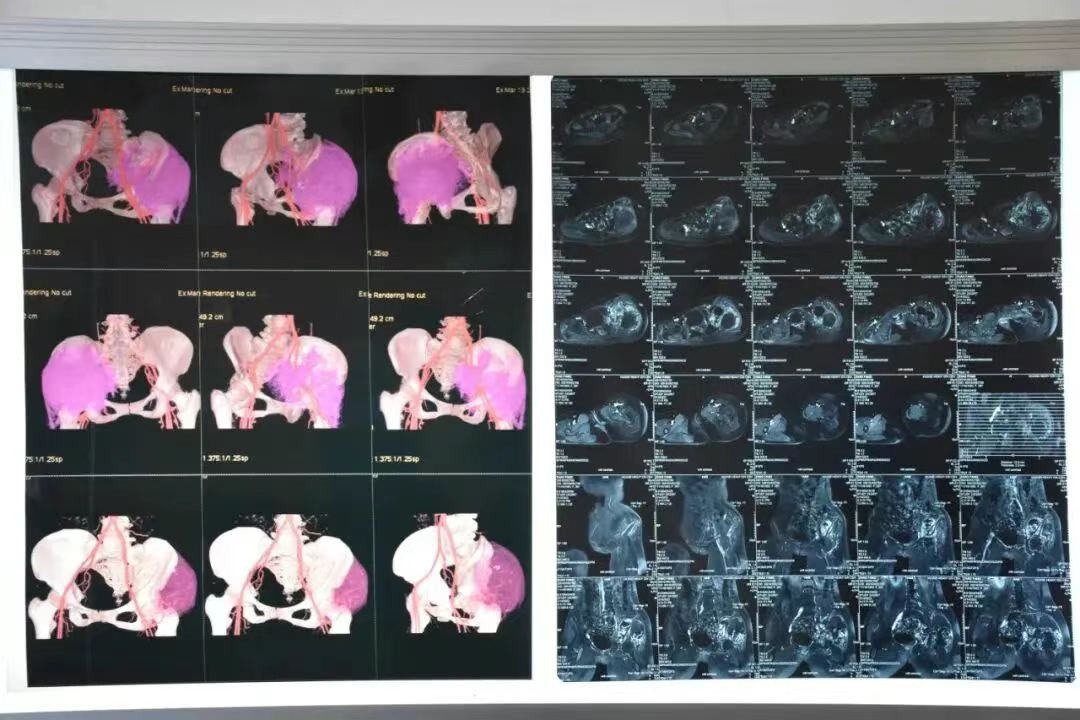
Patient Preoperative Workup
Comrade Ye Yancheng, President of our hospital, once again convened a hospital-wide multidisciplinary consultation. It was decided that the patient would undergo pelvic resection combined with 3D-printed bone reconstruction. Every detail and step of the pre-operative and intra-operative procedures was thoroughly discussed with the team. With a rigorous attitude of "single-minded dedication to healing the wounded and saving the dying," the team ensured the smooth execution of the surgery through repeated, detailed discussions and meticulous planning.
The consultation concluded that the patient's massive tumor in the left ilium, medially adjacent to the bladder and intestines and laterally adherent to the iliac vessels and nerves, posed extreme surgical difficulty and risk. The following preparatory measures were deemed essential: placing an inferior vena cava filter preoperatively to prevent thrombus embolism in critical organs like the brain and lungs; administering specific pre-operative supportive therapy to improve hematopoiesis and coagulation due to the patient's poor coagulation function; protecting the external iliac artery and vein; performing preoperative interventional embolization of the tumor's blood supply to reduce bleeding; having a common iliac artery balloon on standby to control potential massive intraoperative hemorrhage; and formulating a contingency plan for potential injury to the ipsilateral ureter.
All these preparatory measures were methodically implemented in an orderly fashion before the surgery.
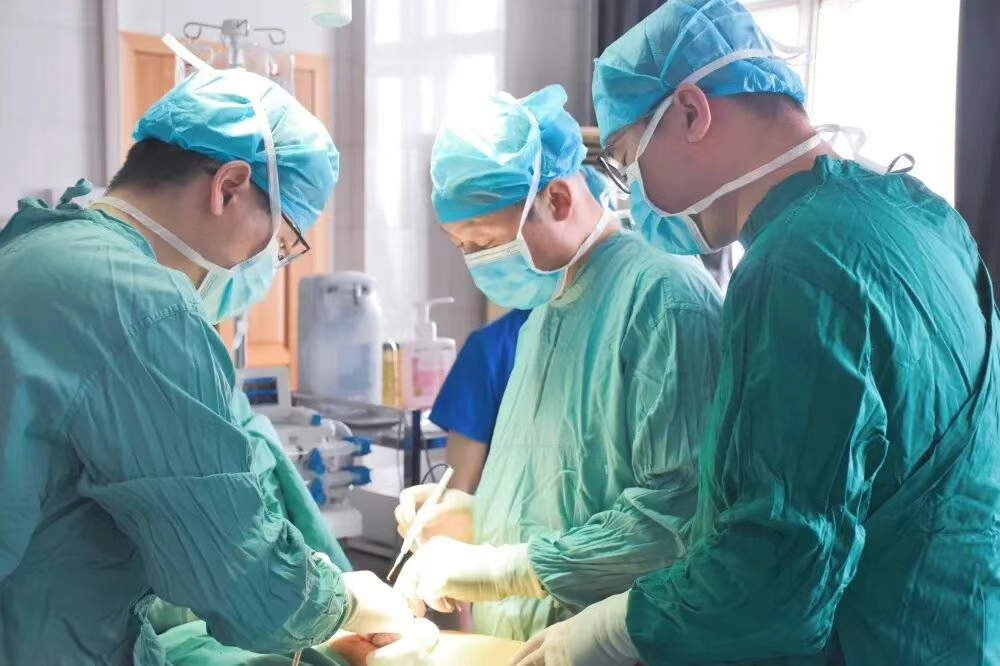

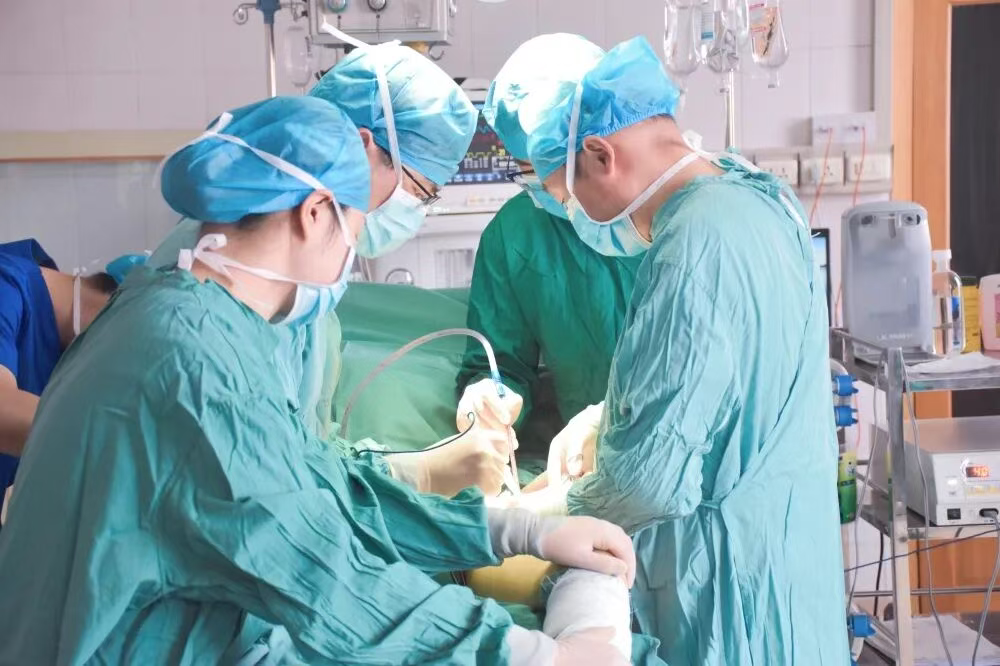
The Operating Theater
Thanks to the seamless collaboration of the multidisciplinary team and the comprehensive preoperative planning for potential complications, a significant portion of the work traditionally performed during surgery—such as adjusting the position, angle, and curvature of the prosthetic implant—was completed in advance during the preoperative phase. This meticulous preparation resulted in a substantial reduction of the total operation time from over 9 hours to just over 6 hours. Furthermore, the amount of blood loss was dramatically decreased from previous levels of up to 10,000 milliliters to approximately 2,000 milliliters. These improvements significantly contributed to the patient's rapid postoperative recovery.

Patient's Postoperative Condition
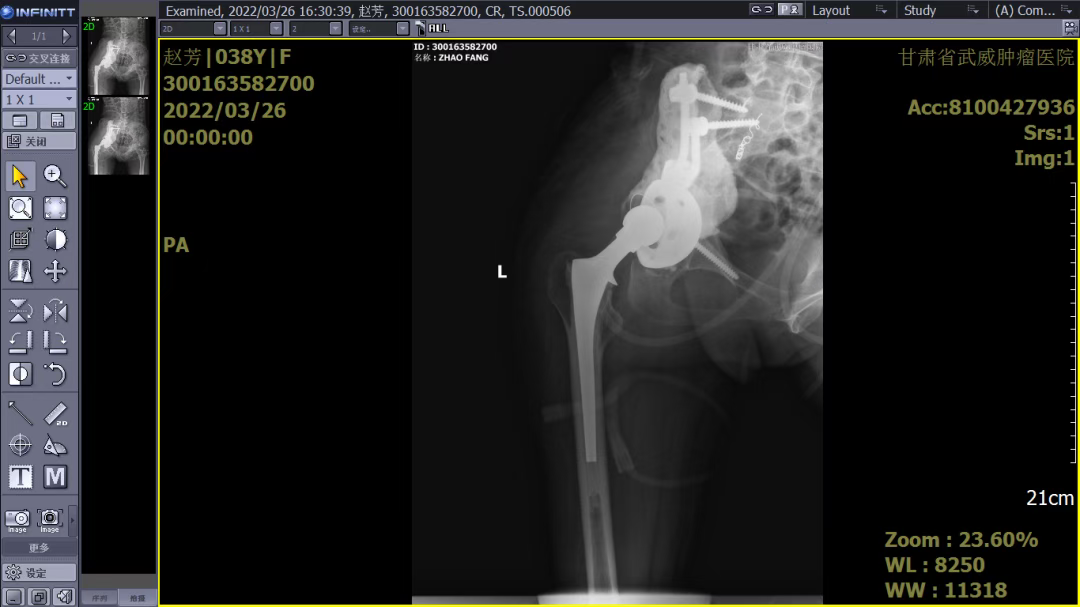
CT Scan After Surgery
Faced with these complex challenges, the multidisciplinary team demonstrated seamless collaboration and a coordinated approach. The surgical team, led by Deputy Chief Physicians Su Anping and Yang Qianzi, not only successfully performed this highly complex "pelvic resection combined with 3D-printed bone reconstruction" but exceeded all expectations, achieving a remarkable level of precision. The patient recovered well postoperatively, was able to walk, and was discharged on April 13.
Preliminary Review: Zhang Jie
Final Review: Ma Shuqian