Comprehensively Inheriting the Experience of Integrated Traditional Chinese and Western Medicine to
Comprehensively Inheriting the Experience of Integrated Traditional Chinese and Western Medicine to Help Create a New Model of Tumor Treatment
Western Medicine Treatment Reaches an Impasse, Traditional Chinese Medicine Prescriptions Show Remarkable Efficacy
——A Record of Professor Mi Denghai's Ward Round on Zhou Tian
Mr. Yan, 75 years old, was diagnosed with gastric cancer at our hospital in January 2022 due to upper abdominal discomfort. He underwent a total laparoscopic radical gastrectomy in our department and recovered well, being discharged on schedule seven days after the surgery. One month after discharge, the patient experienced nausea, vomiting, dizziness, and fatigue after orally taking "Analgin" for a "cold," leading him to return to our department for a follow-up consultation.
After admission, examinations including an upper gastrointestinal contrast study, gastroscopy, cranial CT scan, and hematological tests revealed no significant abnormalities. Western medical treatments such as antiemetics, gastrointestinal function regulators, and sedatives were administered, but the patient's symptoms showed no significant improvement. A jejunal feeding tube was then placed endoscopically for enteral and parenteral nutritional support. After nearly a week of treatment, there was still no notable improvement in his condition.
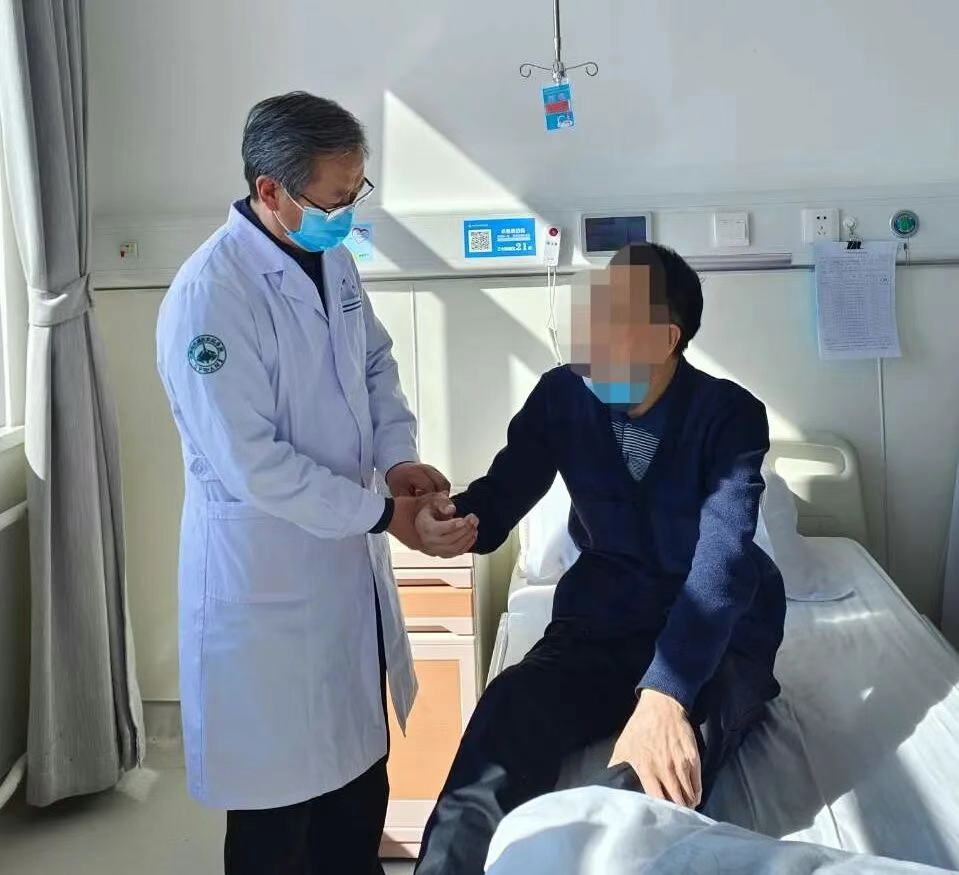
On February 19, 2022, Professor Mi Denghai, President of the Gansu Provincial Academy of Traditional Chinese Medicine, doctoral supervisor, and chief physician, was invited to our department for a ward round. After examining the patient, Professor Mi noted: The patient is an elderly male, post-gastrectomy, experiencing vomiting immediately after eating, fatigue, loss of appetite, desire to drink but unwilling to swallow, insomnia, a bluish-purple tongue with a slightly greasy white coating, and a slippery-choppy pulse. The pathogenesis of vomiting is attributed to the failure of stomach qi to descend, leading to rebellious ascent of stomach qi. Based on the four diagnostic methods, Professor Mi concluded that the syndrome was vomiting due to internal obstruction of phlegm-dampness and blood stasis. He prescribed Xuefu Zhuyu Decoction supplemented with Codonopsis pilosula, Pseudostellaria heterophylla, Cornus officinalis, Inula japonica, and Hematite to promote blood circulation, remove blood stasis, strengthen the spleen, resolve phlegm, and reverse the upward flow of qi to stop vomiting. After one week of treatment (seven doses), the vomiting significantly reduced, and fatigue improved. The patient was advised to consume thin porridge to nourish stomach qi. During the second consultation, as the prescription was effective, it was continued for another seven doses, leading to a full recovery. The movement of qi and blood helped disperse phlegm and stasis, allowing stomach qi to descend naturally, thereby curing the vomiting. After 10 days of Traditional Chinese Medicine treatment, the patient was discharged fully recovered.
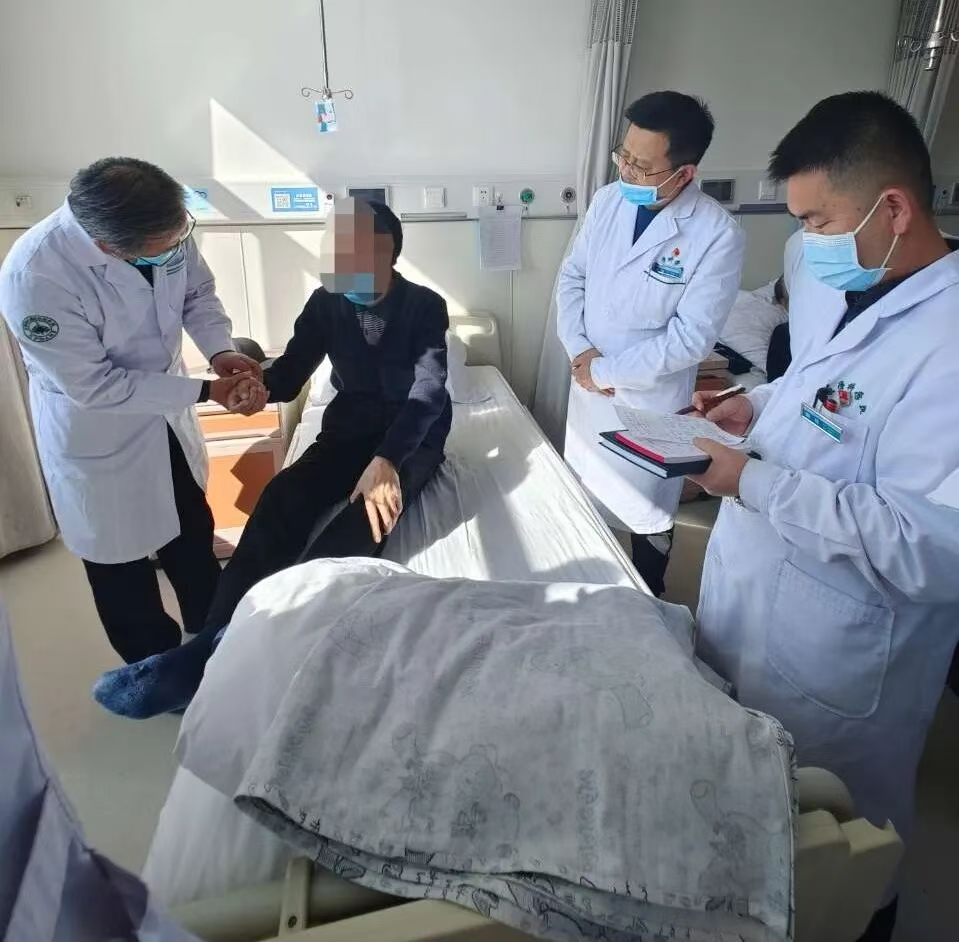
Traditional Chinese Medicine (TCM) is a valuable national cultural heritage of China, embodying the experience and theoretical knowledge of the ancient Chinese people in combating diseases. Our hospital is a tertiary Grade A specialized cancer hospital. To help create a "New Chinese Model" of tumor treatment integrating heavy-ion precision therapy and TCM's holistic syndrome differentiation and treatment, many senior TCM experts, including President Mi Denghai and Professor Zhao Mingfang, have been invited to our hospital for teaching, consultations, and ward rounds. This has significantly enhanced our hospital's comprehensive diagnosis and treatment capabilities while helping patients overcome more ailments.
Inheriting the essence of traditional medicine, strengthening the foundation of cancer diagnosis and treatment, and improving medical standards are the relentless pursuits of our hospital's physicians.