Confronting the 'Beauty Killer' Breast Cancer: Early Knowledge, Early Detection, Early Reassurance
Confronting the 'Beauty Killer' Breast Cancer: Early Knowledge, Early Detection, Early Reassurance
When it comes to breast cancer, many women feel a pang in their hearts. Known as the "Beauty Killer," it has long ranked first in the incidence of malignant tumors among women.
But today, we want to share the most important truth: breast cancer is not as frightening as it seems. It is preventable, treatable—and for early-stage cases, the cure rate exceeds 90%!
The key lies in three characters: "Early"—early awareness, early prevention, early detection.
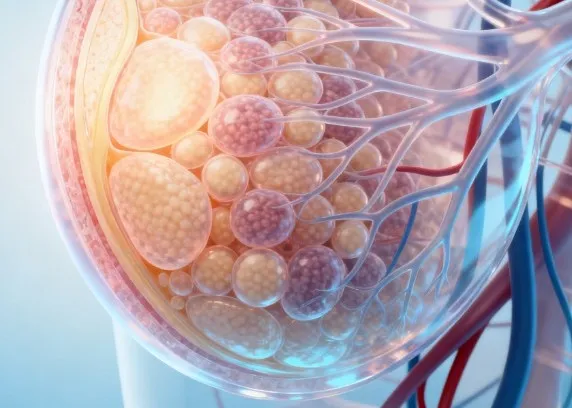
Ⅰ. Understanding It: The "True Face" of Breast Cancer
Put simply, breast cancer is a malignant tumor arising from the epithelial tissue of the mammary gland. It is not a single disease—rather, it has distinct subtypes, and treatment approaches vary individually. Understanding high-risk factors can help us stay vigilant:
Genetics and Family History
Women with a family history of breast cancer or ovarian cancer (especially in mothers, sisters, or daughters) face a significantly elevated risk. This is closely tied to mutations in the BRCA1/BRCA2 genes.
Hormonal Factors
Early menarche (<12 years old), late menopause (>55 years old), nulliparity (no pregnancy) or late childbearing (>35 years old), and lack of breastfeeding—all of which prolong the body’s exposure to estrogen—increase cancer risk.
Lifestyle Factors
A long-term high-fat diet, obesity, regular alcohol consumption, and physical inactivity.
Psychological Factors
Chronic exposure to negative emotions such as persistent stress, depression, or anxiety.
Previous Medical History
A prior history of breast cancer in one breast, or atypical hyperplasia(abnormal cell growth) confirmed by biopsy of a benign breast condition.
Note: The absence of high-risk factors does not guarantee absolute safety. All women should prioritize monitoring their breast health.

II. Discover It: The Body’s “Distress Signals”
Early-stage breast cancer is often painless, but the body sends out certain “signals” that require our careful attention:
- Painless lump: This is the most common initial symptom. Lumps are usually single, firm, irregular in edges, and poorly mobile. If you feel one during a shower or self-exam, pay close attention.
- Changes in breast skin: Look for “dimple sign” (localized skin indentation resembling a small dimple) or “orange peel-like changes” (coarse pores and edema of the skin).
- Abnormal nipple: Includes nipple retraction, deviation, or erosion. Particularly, unilateral nipple discharge that is bloody or serous.
- Changes in breast contour: Asymmetry between the two breasts, or local bulging/sinking.
- Enlarged axillary lymph nodes: Early stages may present as painless, firm lumps in the ipsilateral armpit.
- Remember: If any of the above symptoms occur, seek medical attention immediately—but never self-diagnose or panic excessively.
III. Screen It: Building a Solid “Defense System”
- Waiting for symptoms to appear before getting checked is often too late. Proactive screening is the most powerful weapon against breast cancer.
- Breast self-exam: A monthly “self-care ritual” Recommended timing: 7–14 days after the onset of menstruation each month (postmenopausal women may choose a fixed date monthly). Look: Stand in front of a mirror to check for symmetry in both breasts, and observe any abnormalities in skin or nipples. Feel: Use the pads (not fingertips) of your fingers to press and circle-check the entire breast, armpit, and clavicle area for lumps. Squeeze: Gently press the nipple to check for discharge. Self-exams help you familiarize yourself with your breasts’ normal state, enabling timely detection of “changes.” However, they cannot replace professional medical examinations.
- Clinical breast examination: A doctor’s “professional palpation” Recommended: Annual clinical breast exams for women over 20.
- Imaging tests: Three “magic mirrors” Breast ultrasound: Radiation-free, effective for dense breasts, and excellent at distinguishing cystic from solid lumps. The first choice for younger women. Mammography (X-ray): Internationally recognized as the gold standard for breast cancer screening, highly sensitive to early-stage breast cancer presenting as microcalcifications. Recommended annually for women over 40. Breast MRI: Highest sensitivity, primarily used for screening high-risk individuals and evaluating diagnosed patients.
- Screening recommendations: Average-risk women: Start annual breast ultrasound and/or mammography at age 40. High-risk women: Begin screening earlier (e.g., 25–30 years old) and follow medical advice for combined use of ultrasound, mammography, and MRI for more intensive screening.
IV. Defeat It: Modern Medicine’s “Combination Therapy”
- If diagnosed, stay hopeful. Modern breast cancer treatment has entered the era of “personalized comprehensive therapy,” with diverse approaches:
- Surgery: Evolved from traditional “total mastectomy” to more “breast-conserving surgery,” aiming to eradicate tumors while maximizing preservation of feminine body image.
- Radiation therapy: Like a “precision-guided missile,” eliminating residual post-surgical cancer cells.
- Chemotherapy, endocrine therapy, targeted therapy, immunotherapy: These systemic treatments act as “special forces,” delivering precise attacks based on the tumor’s molecular subtype. They are effective with more manageable side effects. Treatment plans are tailored by a multidisciplinary expert team (MDT).
V. Prevent It: Lifestyle’s “Protective Shield”
- Prevention is always better than cure:
- Healthy diet: Eat more vegetables, fruits, and whole grains; limit red and processed meats.
- Regular exercise: At least 150 minutes of moderate-intensity exercise weekly.
- Weight control: Avoid obesity, especially postmenopause.
- Limit alcohol: Ideally, avoid alcohol altogether.
- Positive mindset: Learn to manage stress and stay cheerful.
- Timely childbearing and breastfeeding.

Breast cancer is a dialogue between us and our own health and life. It reminds us to care more deeply for ourselves and to better understand our own bodies.
Preliminary Review: Zhang Jie
Final Review: Ma Shuqian