
Radiation Therapy Explained: Dispelling Misconceptions and Detailing Key Facts
Radiation Therapy Explained: Dispelling Misconceptions and Detailing Key Facts
In the medical fight against tumors, surgery, chemotherapy, and radiation therapy are recognized as the three core approaches, forming the cornerstone of cancer treatment. Among them, radiation therapy, though frequently mentioned, is often shrouded in mystery due to the term "radiation," leading to fear and hesitation among many patients. In reality, approximately 70% of cancer patients require radiation therapy at some stage of their treatment, making it an indispensable component of many cancer management strategies .
What exactly is radiation therapy? What does the treatment process entail? Today, we invite Zhou Gang, Director of our hospital’s Radiation Therapy Department, to break down the key aspects of radiation therapy and address common misconceptions!
1. What Is Radiation Therapy? An "Invisible" Weapon Against Cancer
Radiation therapy, often described as an "invisible scalpel," uses high-energy radiation to destroy tumor cells by damaging their DNA, thereby inhibiting proliferation and controlling the disease . Unlike surgery (which removes tissue) or chemotherapy (which affects the whole body), radiation therapy is a localized treatment that targets tumors without incisions, offering a unique advantage in precision and minimal invasiveness.

2. Three Classifications of Radiation Therapy: Tailored to Clinical Needs
Treatment plans are customized based on tumor type, stage, and patient health. Radiation therapy is broadly categorized as follows:
- Curative Radiation Therapy Aims to eradicate tumors completely. Delivered at full doses, it is often used for early-stage cancers highly sensitive to radiation, such as nasopharyngeal carcinoma, laryngeal cancer, and cervical cancer.
- Adjuvant Radiation Therapy Used alongside surgery or chemotherapy to enhance outcomes. It can be administered: Preoperatively to shrink tumors and facilitate surgery; Intraoperatively to target residual disease directly; Postoperatively to eliminate remaining cancer cells and reduce recurrence risk.
- Palliative Radiation Therapy For advanced cancer patients, the goal is to alleviate symptoms like pain, bleeding, or obstruction, improving quality of life and prolonging survival with dignity.

3. The Radiation Therapy Process: Multidisciplinary Collaboration for Precision
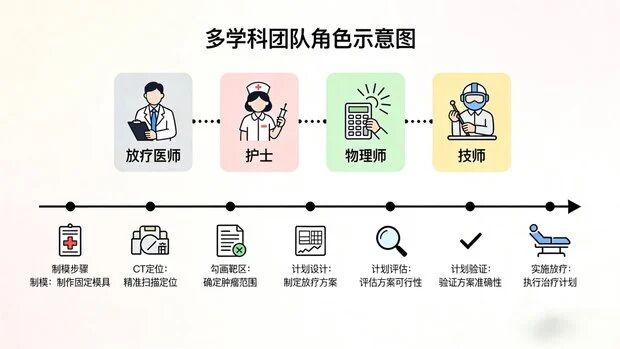
Radiation therapy involves a team of specialists—radiation oncologists, nurses, physicists, and technicians—working together to ensure safety and accuracy .
The process typically follows these steps:
- Immobilization & Simulation: Creating custom molds or masks to ensure consistent positioning.
- CT Localization: Precise imaging to map the tumor and surrounding organs.
- Target Delineation: Radiation oncologists outline the tumor and areas at risk.
- Treatment Planning: Physicists and dosimetrists design a plan to maximize tumor dose while sparing healthy tissue.
- Plan Evaluation & Verification: Ensuring accuracy before treatment begins.
- Treatment Delivery: Each session lasts minutes, typically administered daily (Monday–Friday) over several weeks .
- This meticulous process, often taking days to finalize, highlights the core distinction between radiation therapy and other treatments: its emphasis on precision and individualized planning.
4. Key Concerns: Is Radiation Therapy Safe? Does It Cause Radiation Exposure?
Many fear radiation due to misconceptions about "radiation exposure." However, natural background radiation exists in our environment, and modern radiation therapy is a controlled medical application that focuses radiation precisely on the tumor.
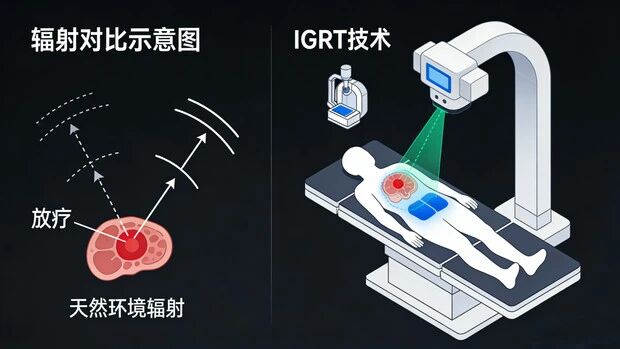
Advanced techniques like image-guided radiation therapy (IGRT) enable real-time tracking of tumors, achieving millimeter-level accuracy and minimizing damage to healthy tissues . Under standardized protocols, radiation therapy is both safe and effective.