
Bone Marrow Pain? Don't Believe the Myth! — The Real Story on Bone Marrow Tests
Bone Marrow Pain? Don't Believe the Myth! — The Real Story on Bone Marrow Tests
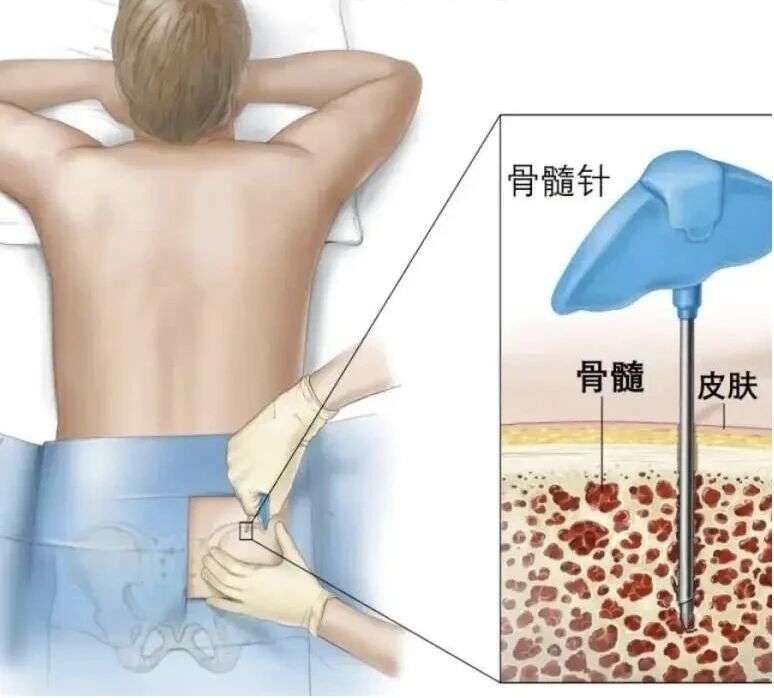

When it comes to bone marrow aspiration and biopsy, do these worries instantly come to mind: "They have to drill into the bone? It must be excruciating!" "Is bone marrow aspiration only done for terminal illnesses?" "Could taking marrow weaken my vitality?"
In the consultation rooms of hematology and oncology departments, we have seen far too many patients refuse examinations due to "imagined" frightening scenarios, and many others miss the best treatment opportunities because of delayed diagnosis. Today, with straightforward science communication, we will dispel these long-standing "myths" and help you truly understand this often-misunderstood "health scout."
Inside your body lies a "life factory": the bone marrow. Red blood cells transport oxygen, white blood cells fight pathogens, and platelets help stop bleeding—all these essential "key workers" are tirelessly produced by the bone marrow. But when the "factory" malfunctions—causing unexplained dizziness and fatigue (anemia), slow wound healing (low platelet count), recurring fevers with ineffective infection control, or abnormal blood test results—blood tests and imaging can only reveal "defective products" without uncovering the root problem inside the "factory." This is when bone marrow aspiration and biopsy come into play.
They act like a "scout team" sent by the doctor into the "factory," using a fine needle to extract a small amount of bone marrow fluid (aspiration) or a tiny piece of marrow tissue (biopsy). This allows the doctor to directly observe the morphology, quantity, quality, and even genetic changes of the hematopoietic cells. Only by understanding the true state of the "factory" can the cause be determined—whether it's "insufficient raw materials" (like iron-deficiency anemia), "machine malfunction" (like aplastic anemia), or "invasion by harmful elements" (like leukemia or metastatic bone marrow cancer)—ensuring precise treatment direction.
The most important myth to dispel is the "pain misconception": Bone marrow aspiration is absolutely not "excruciating drilling pain"! Before the procedure, the doctor administers multiple layers of local anesthesia at the puncture site (usually the ilium above the hip—either anterior or posterior, where there are fewer nerves and faster recovery). Once the anesthesia takes effect, the sensation of the needle entering feels more like "the soreness of an injection" rather than sharp pain. The entire procedure takes only 10–20 minutes. The discomfort of a biopsy is similar to that of an aspiration. After the procedure, pressure is applied for 10 minutes, and patients can walk and eat normally the same day, without affecting daily life or "weakening their vitality."
Moreover, bone marrow aspiration is never "exclusive to terminal illnesses"! It helps doctors differentiate types of anemia, avoiding blind iron supplementation; determine subtypes of leukemia to tailor precise chemotherapy plans; assess the effectiveness of targeted or immunotherapy, allowing timely adjustments; and monitor recovery after bone marrow transplants. For many patients, it is not a "death sentence" but a "navigation tool." A small examination can prevent countless detours in diagnosis and treatment.
The warmth of medicine lies in using expertise to dispel fear; the key to health lies in replacing misunderstanding with reason. Bone marrow aspiration and biopsy are mature, safe, and routine examinations. Every year, millions of patients receive clear diagnoses through them and move toward recovery. Hematology specialists perform the procedure skillfully, safely, and without risk! After the procedure, patients can get up and move immediately, with no functional limitations or restrictions on activity.
If your doctor recommends a bone marrow aspiration, don’t hesitate any longer: It is not a terrifying "punishment" but a necessary step to safeguard your health. Set aside your concerns and trust in professionalism. When you see its true purpose, you’ll understand: This small needle pierces through misunderstandings and brings hope. May everyone troubled by blood-related issues bravely take this step toward finding answers for their health!
Important reminder at the end
Bone marrow aspiration is the most crucial method and means for diagnosing hematological disorders, lymphatic system abnormalities, unexplained fever, unexplained bone pain, and blood parasitic infections. Clinical hematologists recommend performing the procedure before administering medication or blood transfusions whenever possible to ensure the accuracy of bone marrow hematopoietic cell morphological analysis. This is because hematinic agents such as folic acid and vitamin B12, glucocorticoids, chemotherapy drugs, and blood transfusions (packed red blood cells, platelets, white blood cells) can all affect the quantity and quality of hematopoietic cells in the bone marrow, interfering with the observation and analysis of cell counts and morphological development. In some cases, these factors may prevent the reflection of the bone marrow's original state at the onset of the disease. For example, in pediatric B-cell acute lymphoblastic leukemia (B-ALL), which is highly sensitive to hormones, the use of glucocorticoids can easily lead to misdiagnosis based on bone marrow cell morphology (Morphology, M). Additionally, the use of anticoagulants may affect the observation of platelet aggregation function. Clinicians are required to specify this information in detail on the application form.
Oncology/Hematology Department

Professional Team
The department has a professional team of elite medical staff. Within the medical team, specially appointed professors Bai Hai and Pan Ming are both Chief Physicians at the highest rank. They enjoy a strong reputation in the field, possess profound academic expertise and extensive clinical experience, providing a solid foundation for the department's diagnostic and treatment capabilities. At the same time, the department has established a well-structured talent hierarchy and continuously refines and enhances its talent development mechanisms to ensure high-quality, multi-layered medical services for patients. The nursing team, with a strong sense of responsibility and professional nursing skills, provides comprehensive and meticulous care to ensure patient comfort and safety throughout the treatment process.
Scope of diagnosis and treatment
The department specializes in the precise diagnosis and treatment of various benign and malignant hematological and solid tumor diseases. It holds a significant advantage, particularly in managing refractory or relapsed hematological disorders and solid tumors. Key areas of focus include hematological diseases such as leukemia, lymphoma, multiple myeloma, and various types of anemia, as well as medical treatment for common solid tumors such as lung cancer, gastric cancer, colorectal cancer, and breast cancer. Whether addressing common ailments or complex conditions, the department leverages its professional medical expertise and extensive clinical experience to provide patients with accurate diagnoses and effective treatment plans.
Diagnostic and Treatment Technologies
Diversified Treatment Approaches: The department employs internationally advanced treatment concepts and methods, covering a range of therapeutic modalities including chemotherapy, targeted therapy, immunotherapy, endocrine therapy, supportive care, cellular therapy, and integrated traditional Chinese and Western medicine. Tailored comprehensive treatment plans are developed based on each patient's specific condition and physical health to achieve optimal therapeutic outcomes.
Precision Diagnostic Technologies: Leveraging advanced MICM (Morphology, Immunology, Cytogenetics, and Molecular Biology) classification techniques from the Hematology Center Laboratory, including bone marrow morphology, bone marrow pathology, flow cytometry, and genetic testing, the department enables precise diagnosis and classification of hematological diseases. This provides a scientific foundation for formulating personalized treatment plans. Through these advanced technologies, patient conditions can be understood more accurately, facilitating precision treatment and improving therapeutic efficacy.
Laminar Flow Ward Facilities: The department is equipped with laminar flow wards, offering a safe and comfortable treatment environment for patients undergoing high-dose chemotherapy, hematopoietic stem cell transplantation, and other procedures requiring stringent infection control. The laminar flow wards utilize advanced air purification technology to effectively reduce the risk of infection, providing robust support for patient treatment.