The Precision Thermal Knife "Striking Across the Mountain": Unveiling Microwave Thermal Ablation The
The Precision Thermal Knife "Striking Across the Mountain": Unveiling Microwave Thermal Ablation Therapy for Bone Tumors
When a tumor appears in our bones, are we limited to traditional "open bone scraping" surgery? Modern medicine offers a new answer: no major incisions are needed, just a thin needle can "heat up" and inactivate the tumor from inside the bone. This is known as bone microwave thermal ablation technology, hailed as a "green physical therapy" .
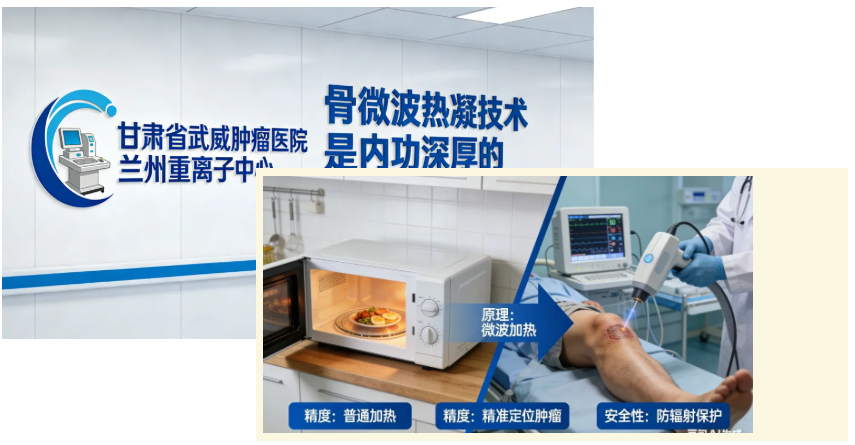
Hello, I am the Lanzhou Heavy Ion Center of Gansu Wuwei Cancer Hospital. After introducing various "missiles," "snipers," and "bomb disposal experts," today we present an esteemed "martial arts master" with profound internal skill—bone microwave thermal ablation technology. It relies not on drugs or radiation but on an energy we are all very familiar with in daily life: microwaves .
Mentioning microwaves, you might think of the kitchen microwave oven. Indeed, the basic principles are similar, but the precision and safety of medical applications have been elevated to an unprecedented level. This technology offers an excellent option with minimal trauma and faster recovery, especially for patients with specific types of bone tumors.
I. How Does Microwave Become a "Sharp Tool" Against Tumors?
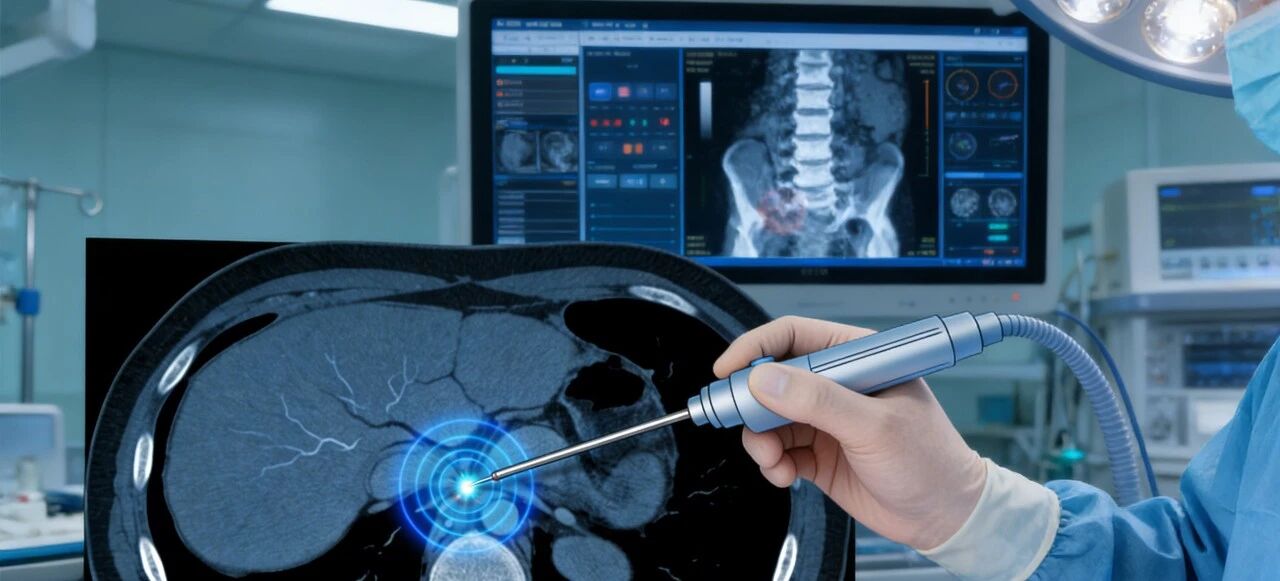
Simply put, bone microwave thermal ablation is a procedure where, under imaging guidance, a special microwave needle is precisely inserted through the skin into the bone tumor. Microwave energy is then released, causing the tumor tissue to rapidly generate high temperatures, leading to irreversible coagulative necrosis, thereby achieving the goal of "burning" the tumor away.
We can understand this with a vivid analogy:
- Bone Tumor: Like a "frozen soil" containing "bad seeds" (tumor cells).
- Microwave Thermal Ablation Technology: Precision Positioning: Using "GPS navigation" like CT or ultrasound, doctors precisely insert the microwave needle, this "antenna," into the core of the "frozen soil." Energy Release: Activating the equipment, the microwave electric field causes water molecules, protein molecules, etc., within the tumor tissue to oscillate rapidly at high speed, generating heat instantly from within. Efficient Inactivation: Within minutes, the local temperature can rapidly rise to 60 - 100°C. At this temperature, the proteins in the tumor cells denature and coagulate completely, as if "cooked," losing all activity.
- Two Unique Features of Microwave Technology:
- "Inside-Out" Heating Method: Compared to traditional laser or radiofrequency ablation, microwave heating is more uniform, less affected by tissue carbonization, has high energy propagation efficiency, and can form stable and effective ablation zones over a larger area, ensuring the tumor is thoroughly inactivated.
- "Striking Across the Mountain" Boundary Control: Bone itself has poor thermal conductivity, which becomes a natural advantage. The heat generated by the microwave can be well confined within the intended tumor area, like a "thermal barrier," causing minimal damage to the surrounding normal bone tissue. This is especially suitable for tumors near joint surfaces or growth plates.
II. Why is Microwave Ablation a Preferred Choice for Certain Bone Tumors?
This technology, with its characteristics of being minimally invasive, precise, efficient, and function-preserving, holds an important place in orthopedic oncology .
It is particularly suitable for the following situations:
- Benign Bone Tumors: Such as osteoid osteoma (typically causes night pain, relieved by aspirin). Microwave ablation has become the gold standard therapy repiaced the gold standard therapy of traditional open surgery, providing immediate pain relief with instant results.
- Palliative Treatment for Bone Metastases: For single or few metastatic bone lesions in advanced cancer, especially those causing severe pain, microwave ablation can effectively destroy the tumor, rapidly relieve pain, and improve the patient's quality of life.
- Tumors in Surgically Challenging Locations: For tumors located in complex structures like the spine or pelvis, where open surgery carries high risks, the minimally invasive advantage of microwave needle puncture is even more significant.
- III. Experiencing Microwave Ablation Treatment Firsthand
- The entire process is filled with the precision and efficiency of modern medicine:
Precise Positioning: The patient lies on a CT scanning bed. The doctor uses real-time scanning to plan the safest puncture path.
Local Anesthesia and Puncture: After local anesthesia, a small incision about 2 - 3 mm is made on the skin. The microwave needle is gradually advanced to the center of the tumor.
Heating and Inactivation: Once the position is confirmed to be perfect, the microwave generator is activated for a preset heating time. Patients usually feel no special sensation during the process.
Completion and Bandaging: After treatment, the microwave needle is withdrawn, and a small band-aid is applied. The entire procedure is usually completed within 1 hour.
IV. Outlook for the Future
- Bone microwave thermal ablation technology is a model example of the perfect integration of minimally invasive interventional medicine and tumor therapy. It has changed the traditional "large-scale" mode of bone tumor surgery, ushering treatment into a new era of "pinhole-level trauma" .
- With the continuous advancement of imaging navigation technology and microwave equipment, its application will become more precise and widespread. It is expected to allow more bone tumor patients to achieve the best therapeutic outcomes while enduring minimal pain, truly realizing "small trauma, curing major disease".

Lanzhou Heavy Ion Center of Gansu Wuwei Cancer Hospital
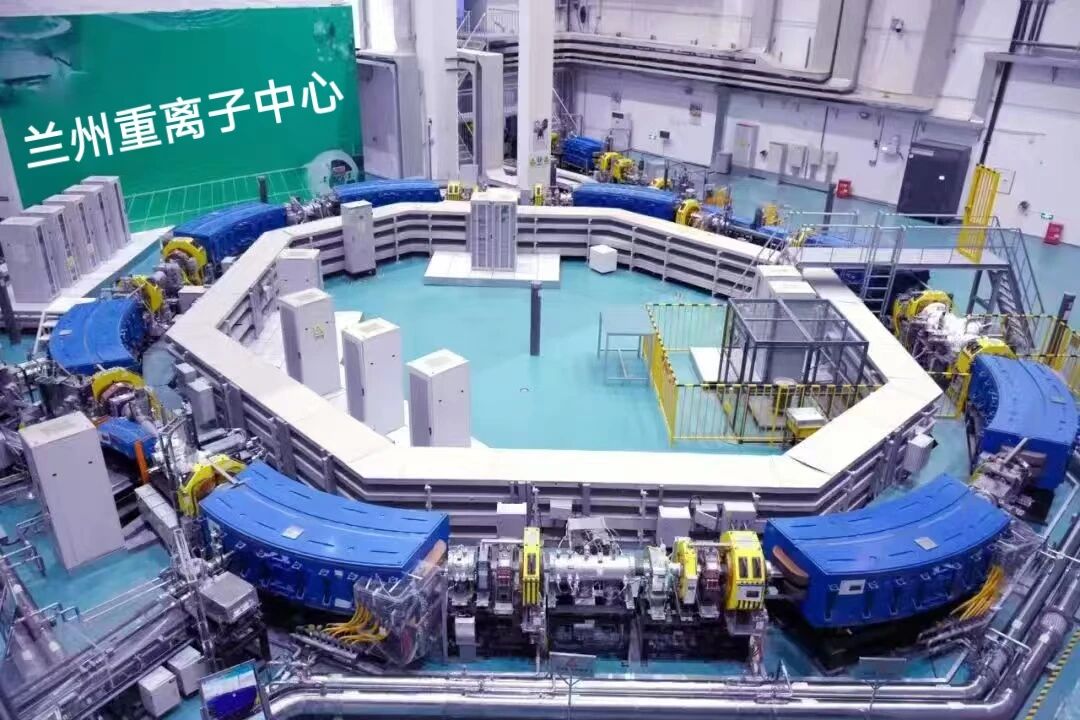
Lanzhou Heavy Ion Center of Gansu Wuwei Cancer Hospital is the second heavy ion clinical application center in China operating with independent intellectual property rights, managed by Gansu Wuwei Cancer Hospital. Working in tandem with the first Chinese heavy ion therapy system, the second Chinese heavy ion tumor therapy system commenced clinical operations at the Lanzhou Heavy Ion Center on November 15, 2024. As of now, the center has completed heavy ion and photon therapy for over 400 patients, covering diseases such as lung cancer, pancreatic cancer, liver cancer, and glioblastoma.
The center has established an elite talent system, setting up expert workstations led by 50 top authorities in the field, including Shen Wenjiang, Lifetime Honorary Professor of the Department of Radiation Oncology at Peking University Health Science Center, and Professor Xu Bo, Standing Committee Member of the Tumor Radiotherapy Branch of the Chinese Medical Association. Professor Wang Junjie, Chairman of the Radiotherapy Branch of the Chinese Medical Association, serves as the center's director, providing robust technical support for heavy ion therapy.
Furthermore, the center is equipped with a series of cutting-edge radiotherapy equipment, including the Varian VitalBeam medical linear accelerator, Elekta Infinity 4D image-guided linear accelerator, 3.0T simulation positioning MRI, GE 256-slice high-end CT, and Varian Iridium-192 imported afterloader. These hardware facilities lay a solid foundation for heavy ion therapy, ensuring efficient and precise treatment processes.
Aiming to create a comprehensive, full-lifecycle cancer treatment system, the center has established clinical departments including Radiation Oncology, Medical Oncology/Hematology, Surgical Oncology, Integrated Traditional Chinese and Western Medicine Oncology Rehabilitation, Minimally Invasive Intervention Center, Intensive Care Unit, and Digestive Endoscopy Center. It offers treatments such as heavy ion radiotherapy, photon radiotherapy, chemotherapy, minimally invasive interventional therapy, and comprehensive internal/surgical treatments.
The hospital features advanced medical diagnostic technology and equipment. It has set up technical departments such as Imaging, Laboratory Medicine, Ultrasound Medicine, Blood Bank, and Hematology Center Laboratory, providing services including CT/MRI imaging diagnosis, medical laboratory testing, ultrasound diagnosis and interventional therapy, and bone marrow cell morphology examinations to meet patients' diagnostic needs.
The Minimally Invasive Intervention Center is equipped with devices like the radioactive I125 seed tumor brachytherapy system and body implantation navigation positioning system, GE digital subtraction angiography machine, microwave thermal ablation apparatus, and argon-helium cryoablation system, enabling precise treatments for tumor patients through embolization, ablation, and brachytherapy.