
Hyperbaric Oxygen Therapy: A Promising Treatment for Insomnia
Hyperbaric Oxygen Therapy: A Promising Treatment for Insomnia
Are you aware that every seemingly tranquil night, over 300 million Chinese people struggle with insomnia? Their eyes are shut tight, yet their minds rage like turbulent waves, keeping them awake. Chronic insomnia severely impacts our daily lives, studies, and work, and can even lead to pathological manifestations such as anxiety, depression, panic, dizziness, and headaches. These symptoms further exacerbate insomnia, creating a vicious cycle.
1. Treatment Methods for Insomnia
1. Pharmacological Treatment: The current primary approach for insomnia involves medication, but long-term use of sleep-inducing drugs can lead to dependence and iatrogenic diseases.
2. Psychological Therapy: The essence of psychological therapy is to alter the patient's belief system, enabling them to harness their self-efficacy, thereby improving insomnia symptoms. Achieving this goal often requires the involvement of professional physicians, yet the effectiveness remains suboptimal.
3. Hyperbaric Oxygen Therapy: Recent clinical studies indicate that hyperbaric oxygen therapy can serve as an adjunctive treatment for insomnia patients. It is a physical therapy with extremely high safety. Unlike medication, hyperbaric oxygen therapy does not cause drug dependence or significant harm to the body. Additionally, it enables the treatment of different diseases with the same approach.
2. What is Hyperbaric Oxygen Therapy?
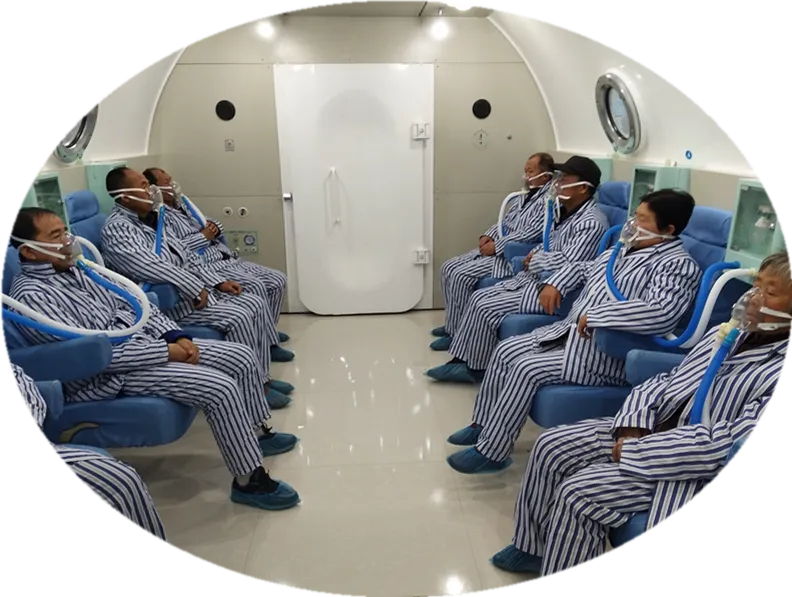
Hyperbaric oxygen therapy: a procedure in which oxygen or air is pressurized in a hyperbaric chamber to exceed one atmospheric pressure, allowing patients to inhale pure or high-concentration oxygen for disease treatment. This approach is a non-invasive, drug-free "green therapy."
3. Mechanism of Hyperbaric Oxygen Therapy in Treating Insomnia
◆ Hyperbaric oxygen increases blood oxygen capacity, enhances blood flow in the posterior cerebral circulation, and improves insufficient blood supply to the brainstem reticular ascending activation system.
◆ Under hyperbaric oxygen conditions, the patient's blood oxygen content rises, allowing brain tissue to receive adequate oxygen supply, enhancing metabolism, increasing energy production, and thereby improving pituitary and cerebral cortex functions, restoring normal physiological activities in the cerebral cortex.
◆ Hyperbaric oxygen also improves myocardial ischemia and cardiac function, increases cardiac output, restores function in ischemic brain cells, and enhances sleep quality.
◆ Hyperbaric oxygen regulates the production of nitric oxide in cells, enhances the activity of antioxidant enzymes, effectively clears free radicals, thereby improving brain cell metabolism and restoring function in certain brain tissues.
◆ Hyperbaric oxygen reduces blood viscosity, inhibits the blood coagulation system, and improves microcirculation regulation.
◆ Hyperbaric oxygen enhances brain plasticity and repairs brain damage.
4. Safety of Hyperbaric Oxygen Therapy for Insomnia
Hyperbaric oxygen therapy can be considered a safe medical treatment. According to reports from the U.S. Outpatient Wound Care Center, the incidence of adverse events associated with hyperbaric oxygen therapy is 0.68%, and so far, no reports of serious adverse reactions have been documented.
If you suffer from insomnia, anxiety, depression, headaches, dizziness, lightheadedness, tinnitus, hearing loss, or other related symptoms, you may consider trying hyperbaric oxygen therapy.
Hospital Hyperbaric Oxygen Therapy Schedule
Monday to Saturday and public holidays:
Normal treatment available; emergency services open 24 hours.
Contact unit: Hyperbaric Oxygen Therapy Department, Gansu Wuwei Cancer Hospital
Phone: 0935-6988582
Address: Hyperbaric Oxygen Therapy Department, Basement of Inpatient Building, Central Campus of Gansu Wuwei Cancer Hospital
(Covered by medical insurance reimbursement)
Preliminary Review: Liu Wenyu
Final Review: Ma Shuqian