
Spinal Cord Electrical Stimulation: The Perfect Fusion of Technology and Health
Spinal Cord Electrical Stimulation: The Perfect Fusion of Technology and Health
Pain is a health issue that everyone is reluctant to face. However, for many chronic pain patients, it has become a constant in their lives. While traditional drug therapies and surgical treatments can alleviate pain to some extent, they often come with significant side effects and unstable outcomes. Spinal cord stimulation therapy, however, offers new hope for chronic pain sufferers.
Success Stories
Case 1: Patient Wang, male, 70 years old, sought medical attention due to persistent herpes zoster with pain in the right anterior chest wall and right posterior lumbar region for 20 days. The patient reported that walking or lying flat caused pulling and tightness in the scabbed herpes area on the right chest wall, exacerbating the pain, with an NRS score of 8. After admission, he was given oral oxycodone/acetaminophen tablets, 1 tablet QID, and the pain was tolerable. Following condition assessment, it was decided to perform a C-arm-guided spinal cord neurostimulator implantation. Based on the patient's pain characteristics—persistent pain in the right anterior chest wall and right posterior lumbar region—the spinal cord stimulation therapy plan was set: during surgery, the electrode position was adjusted to the T7 segment to completely cover the target pain area, and intraoperative testing showed all electrode contacts were normal. Postoperatively, the patient's pain significantly reduced, pain medication was discontinued, the NRS score was 2, quality of life markedly improved, and the outcome was satisfactory.
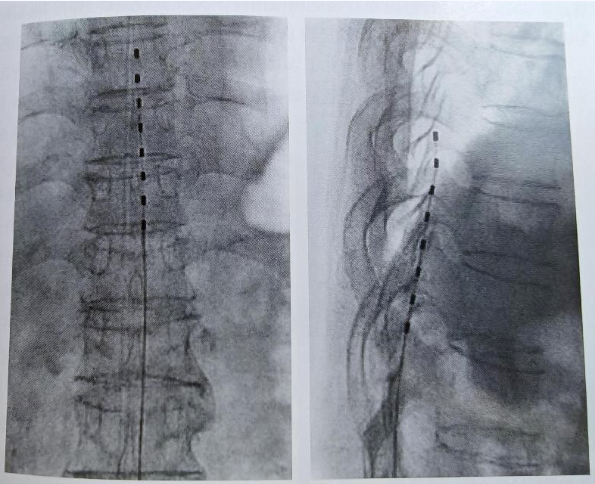
Case 2: Patient Zhai, female, 61 years old, sought medical attention due to skin erythema and blisters on the left side of the face and neck for one month. The patient reported pain characterized by irregular stabbing sensations in the left neck and face, which were unbearable during episodes, with an NRS score of 7. Despite taking oral tramadol hydrochloride tablets 100 mg three times daily, the效果欠佳 (effect was suboptimal), and her daily life was severely affected. Based on the patient's pain characteristics, a spinal cord stimulation therapy plan was established: during surgery, the electrode position was adjusted to the C2 segment. Postoperatively, the patient's pain was relieved, with an NRS score of 3. At the one-month follow-up, the irregular stabbing sensations in the left neck and face had disappeared, and the NRS score was 2.
Case 3: Patient Hou, male, 73 years old, sought medical attention due to persistent herpes zoster with pain in the right anterior chest wall and right posterior back for over two months. The patient reported pulling-like pain in the herpes scar on the right anterior chest wall during inhalation, which progressed and worsened, with an NRS score of 7. After admission, he was given oral oxycodone hydrochloride extended-release tablets 10 mg Q12h, and pain control was acceptable. Following C-arm-guided spinal cord neurostimulator implantation therapy, the pain was significantly relieved, with an NRS score of 2, and the patient was satisfied.
What is spinal cord stimulation therapy?
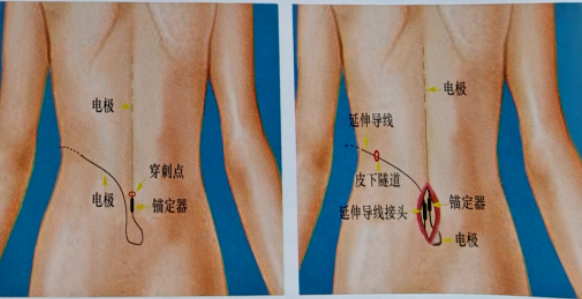
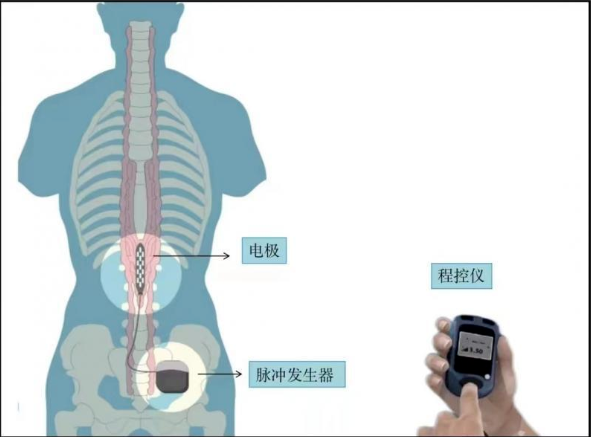
Spinal cord stimulation involves the minimally invasive implantation of electrodes into the patient's spinal region. It utilizes electrical currents to stimulate nerve fibers, thereby inhibiting the transmission of incoming pain signals and reducing pain perception. Additionally, the electrical stimulation promotes nerve repair and improves motor function.
What are the clinical indications for spinal cord stimulation?
• Chronic refractory lumbocrural pain, such as post-operative pain from lumbar disc herniation surgery or post-neurofibroma resection pain;
• Post-neurotrauma pain, such as pain following brachial plexus injury or residual limb pain after amputation;
• Complex Regional Pain Syndrome (CRPS);
• Peripheral ischemic pain, such as diabetic limb pain or Raynaud's disease;
• Postherpetic neuralgia;
• Movement disorders like Parkinson's disease;
• Wake-promotion therapy for long-term comatose patients.
Spinal Cord Stimulation: Safety and Risk Assessment
Spinal cord neurostimulation is a minimally invasive procedure that does not damage nerve structures but instead blocks pain signal transmission through weak pulsed radiofrequency. However, as with any surgery, there are certain risks, including infection and electrode displacement. Therefore, preoperative evaluation, postoperative care, and regular follow-up examinations are crucial.
Consultation and Appointment
Contact Numbers:
Dr. Zhang: 15101397118
Dr. Wang: 17393599302
Dr. Zou: 13309358689
Clinic Address 1: Room 513, Outpatient Department, Central Campus of Wuwei Academy of Medical Science
Clinic Address 2: 1st Floor, Building 9, Heavy Ion Campus of Wuwei Academy of Medical Science
About us
The Pain Medicine Department of our hospital has established a pain outpatient clinic, cancer pain MDT clinic, pain outpatient treatment room, and pain inpatient ward, dedicated to the treatment of various acute and chronic pain, cancer-related pain, and intractable pain. The department currently performs interventional therapies for cancer pain, such as intrathecal pain pump implantation, neurostimulation implantation, celiac plexus neurolysis, nerve radiofrequency modulation, and vertebroplasty for metastatic spinal lesions. Upholding the hospital's long-standing tradition of "patient-centered" care and rich multidisciplinary diagnostic and treatment experience, our department is committed to alleviating your pain and offering a sincere promise for your pain-free life.
Preliminary Review: Liu Wenyu
Final Review: Ma Shuqian