
Allergic Purpura: Mysterious Purple Spots? It Could Be Your Body's Alarm!
Allergic Purpura: Mysterious Purple Spots? It Could Be Your Body's Alarm!
Hello everyone! Today, I’d like to talk about a disease that sounds a bit like "allergy" and looks a bit "scary" in terms of symptoms—Allergic Purpura. It’s not just a simple skin allergy but rather your blood vessels "throwing a tantrum" due to inflammation!
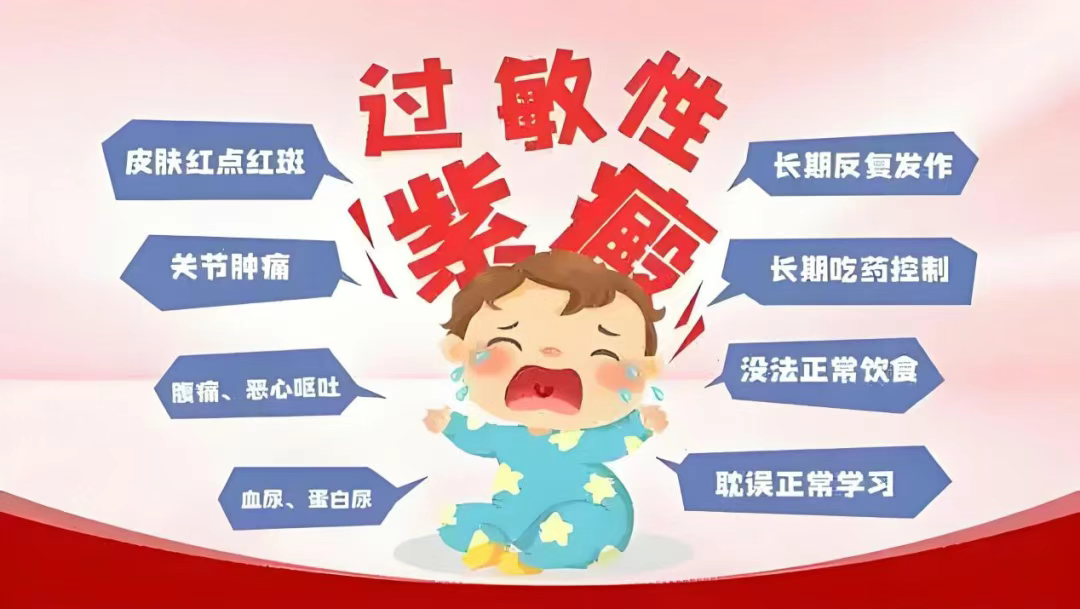
I. What Is Allergic Purpura?
Imagine the capillaries throughout your body suddenly "protesting" with collective inflammation—this is the essence of allergic purpura. It has an imposing alternative name: Schönlein-Henoch Syndrome.
Who Is Most "Targeted"?
- Children and adolescents are the primary targets (especially preschoolers and school-age children).
- Boys are more "favored" than girls (approximately 2.5:1 ratio).
- Spring and autumn are the high-incidence seasons.
Although it has a tendency to self-heal, don’t let your guard down! About 5% of patients may face serious threats such as renal failure. Whether the kidneys are involved is key to the prognosis. Approximately 1% of patients develop central (brain) lesions, with headaches and convulsions, indicating a more critical condition.
II. Who Is "Fanning the Flames" Behind the Scenes? (Revealing the Triggers)
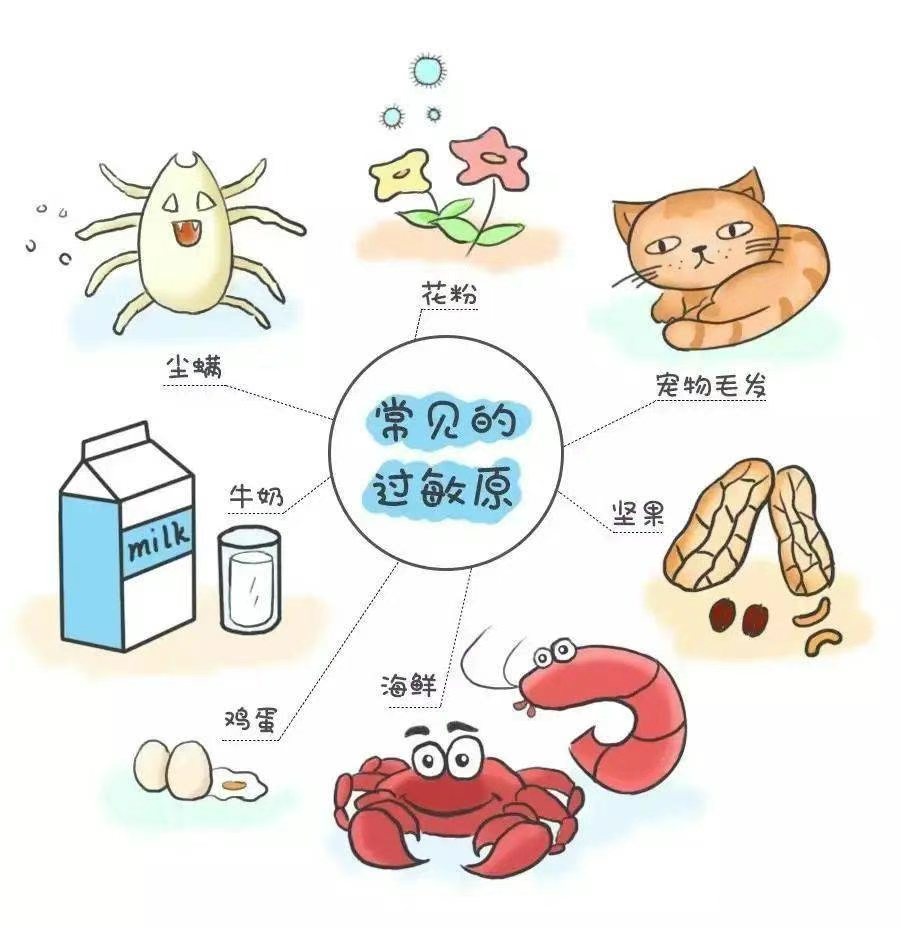
Blood vessels don’t "act up" for no reason; they usually encounter unwanted "irritants":
- Infection "Assassins": Streptococci, influenza viruses, etc., are often the masterminds
- Food "Troublemakers": High-protein foods like fish, shrimp, crab, milk, and eggs are prone to "cause trouble."
- Drug "Triggers": Certain antibiotics, painkillers, and even Chinese herbal medicines may "ignite" inflammation.
- Other "Provocateurs": Pollen, dust mites, insect bites, and even cold or mental stress.
III. The "Protest Signals" from the Body (Symptom Identification)
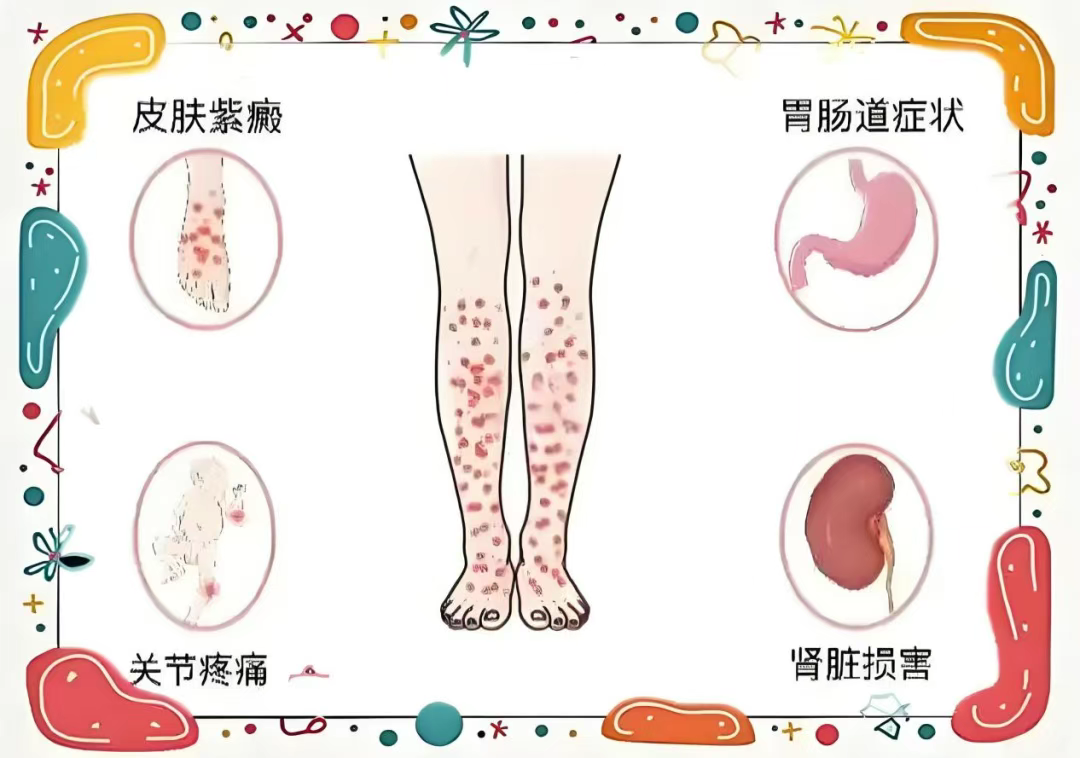
When blood vessels become inflamed, the symptoms are more than just skin purpura:
- Skin "Lights Up Purple": Non-blanching reddish-purple rashes appear on the limbs and buttocks (like sprinkled chili powder), appearing in batches and possibly accompanied by itching and pain.
- Joints "Do the Robot Dance": Swelling, pain, and stiffness in large joints like knees and ankles. Walking like a penguin? Beware—it might be this condition at play!
- Belly "Throws a Party": Severe cramping pain, nausea, vomiting, and even bloody stools. Often misdiagnosed as an "acute abdomen."
- Kidneys "Get Hurt" (Most Critical to Watch!): Hematuria, proteinuria, edema, hypertension, and in severe cases, impaired kidney function.
- Rare "Surprise Attacks": Headaches and convulsions (affecting the brain); coughing up blood and chest pain (affecting the lungs).
IV. Why Do Blood Vessels "Target" the Kidneys?
The key lies in the troublesome "immune complexes" (combinations of antibodies and antigens)! They love to "camp out" in the glomeruli:
- The glomeruli act like a "filter," easily trapping medium-sized complexes.
- The kidneys have abundant and blood flow, making it easy for complexes to deposit and cause damage.
- After deposition, they activate inflammatory "bombs," damaging blood vessels—this is how Allergic Purpura Nephritis arises.
V. Treatment: Calming the "Irritable" Blood Vessels
As hematologists, our goal is to quickly the blood vessels’ "anger":
- Identify the "Culprit": Make every effort to find and avoid allergens (sites of infection, suspicious foods, medications, etc.).
- Basic "Firefighting":Antiallergic drugs (e.g., chlorphenamine), vitamin C, and rutin to enhance vascular "resilience."Severe abdominal pain? Doctors may use antispasmodics (e.g., atropine).Rest is essential during the acute phase. Severe gastrointestinal symptoms may require temporary fasting.
- Hormones for "Strong Rescue": Effective for joint swelling, pain, and abdominal pain, quickly reducing vascular edema (must be used under strict medical guidance!).
- Immunosuppressants as the "Ultimate Measure": Considered when kidney damage is severe and hormones are ineffective (e.g., cyclophosphamide).
- Traditional Chinese Medicine (TCM) Regulation: Treatment based on syndrome differentiation, commonly using formulas like Jingfang Siwu Decoction, Danggui Yinzi, Xiaofeng Powder, Xijiao Dihuang Decoction, and Guipi Decoction to dispel wind, clear heat, detoxify, cool blood, and strengthen the spleen and qi.
VI. Life "Avoiding Pitfalls" Guide (A Must-Read for Patients)
Want to keep your blood vessels "emotionally stable"? Daily protection is key:
- Be an "Allergy Detective" (Allergen Monitoring): Strive to identify and avoid your allergens (foods, pollen, pet dander, etc.).
- Don’t Overwork Your Body: Rest more during the acute phase; during recovery, exercise gradually.
- Guard the "Respiratory Defense Line": Prevent colds and promptly clear infection sites (e.g., tonsillitis).
- Watch Your Diet:Avoid: Spicy foods, seafood, mutton, alcohol, raw onions and garlic, and instant foods.Keep it light: Choose staples like rice, noodles, and corn; eat plenty of fresh fruits and vegetables.Suspect a certain food? Absolutely avoid it!
- Keep Both Body and Mind "Warm and Cozy": Stay warm, maintain a cheerful mood, and avoid emotional ups and downs.
Doctor’s Emphasis:
Sudden appearance of purple spots on the skin, especially with joint pain or stomach pain? Don’t mistake it for a common allergy! Seek timely consultation in the hematology or pediatrics department. Early diagnosis, standardized treatment, and careful nursing will allow the vast majority of patients to successfully "clear the level" (be cured). Remember, your kidney health is worth our joint protection!
Professional Team of Oncology/Hematology Department
The department boasts an elite team of professional medical staff. Among the medical team, specially appointed experts Professor Bai Hai and Professor Pan Ming are both first-class chief physicians, enjoying high reputations in the industry with profound academic achievements and extensive clinical experience, providing solid assurance for the department’s diagnostic and treatment standards. Simultaneously, the department is equipped with a reasonable and complete talent team and continuously improves and enhances its talent training mechanism to ensure high-quality, multi-level medical services for patients. The nursing team, with a high sense of responsibility and professional nursing skills, provides comprehensive and meticulous nursing services, ensuring patient comfort and safety during treatment.
Scope of Diagnosis and Treatment
The department focuses on the precise diagnosis and treatment of various benign and malignant diseases of the hematopoietic system and solid tumors. It has significant advantages in handling refractory and relapsed hematological diseases and solid tumor diseases. Key areas include hematopoietic system diseases such as leukemia, lymphoma, multiple myeloma, and various types of anemia, as well as common solid tumor diseases such as lung cancer, gastric cancer, colorectal cancer, and breast cancer, treated with internal medicine approaches. Whether common , the department leverages professional medical technology and rich clinical experience to provide accurate diagnoses and effective treatment plans for patients.
Diagnostic and Treatment Technologies
- Diversified Treatment Methods: The department adopts internationally advanced treatment concepts and methods, including chemotherapy, targeted therapy, immunotherapy, endocrine therapy, supportive therapy, cell therapy, and integrated Chinese and Western medicine treatments. Personalized comprehensive treatment plans are developed based on each patient’s condition and physical state to achieve optimal results.
- Precision Diagnostic Technology: Relying on the advanced MICM typing technologies of the Hematology Center Laboratory—including bone marrow morphology, bone marrow pathology, flow cytometry, and genetic testing—the department can precisely diagnose and classify hematopoietic system diseases, providing a scientific basis for personalized treatment plans. These advanced technologies allow for a more accurate understanding of the patient’s condition, enabling precision treatment and improving outcomes.
- Laminar Flow Ward Assurance: The department’s laminar flow wards provide a safe and comfortable treatment environment for patients requiring high-dose chemotherapy, hematopoietic stem cell transplantation, and other treatments with high infection control demands. The laminar flow wards use advanced air purification technology to effectively reduce infection risks, offering strong support for patient treatment.
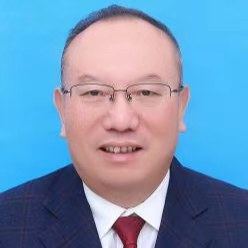
Introduction to Department Experts
Chief Physician Pan Ming
Director of the Oncology/Hematology Department at Lanzhou Heavy Ion Center of Gansu Wuwei Cancer Hospital, Director of the Hematology Center Laboratory. First-class chief physician in integrated Chinese and Western internal medicine, chief expert in hematology. Renowned TCM physician of Gansu Province, leading talent of the Gansu Provincial Health Department, leader of the provincial key medical discipline (hematology), academic and technical leader among young and middle-aged healthcare professionals in Gansu, outstanding scientific and technological worker of Gansu, outstanding Communist Party member in the Gansu health system, recipient of the Gansu "May 1st" Labor Medal, and "Good Person of Gansu" award. Enjoying special government for high-level talents. With 42 years of experience in clinical and experimental research in integrated Chinese and Western internal medicine and hematology. Specializes in the diagnosis and treatment of various types of anemia, aplastic anemia, hemolytic disease, leukemia, lymphoma, multiple myeloma, MDS, myeloproliferative tumors, bone marrow metastatic cancer, thrombocytopenia, thrombosis and bleeding, TTP, allergic purpura, DIC, and other blood and lymphatic system diseases using integrated Chinese and Western medicine. Expertise in bone marrow hematocyte morphology research, hematopoietic stem cell transplantation, and treatin in internal medicine with integrated Chinese and Western approaches.
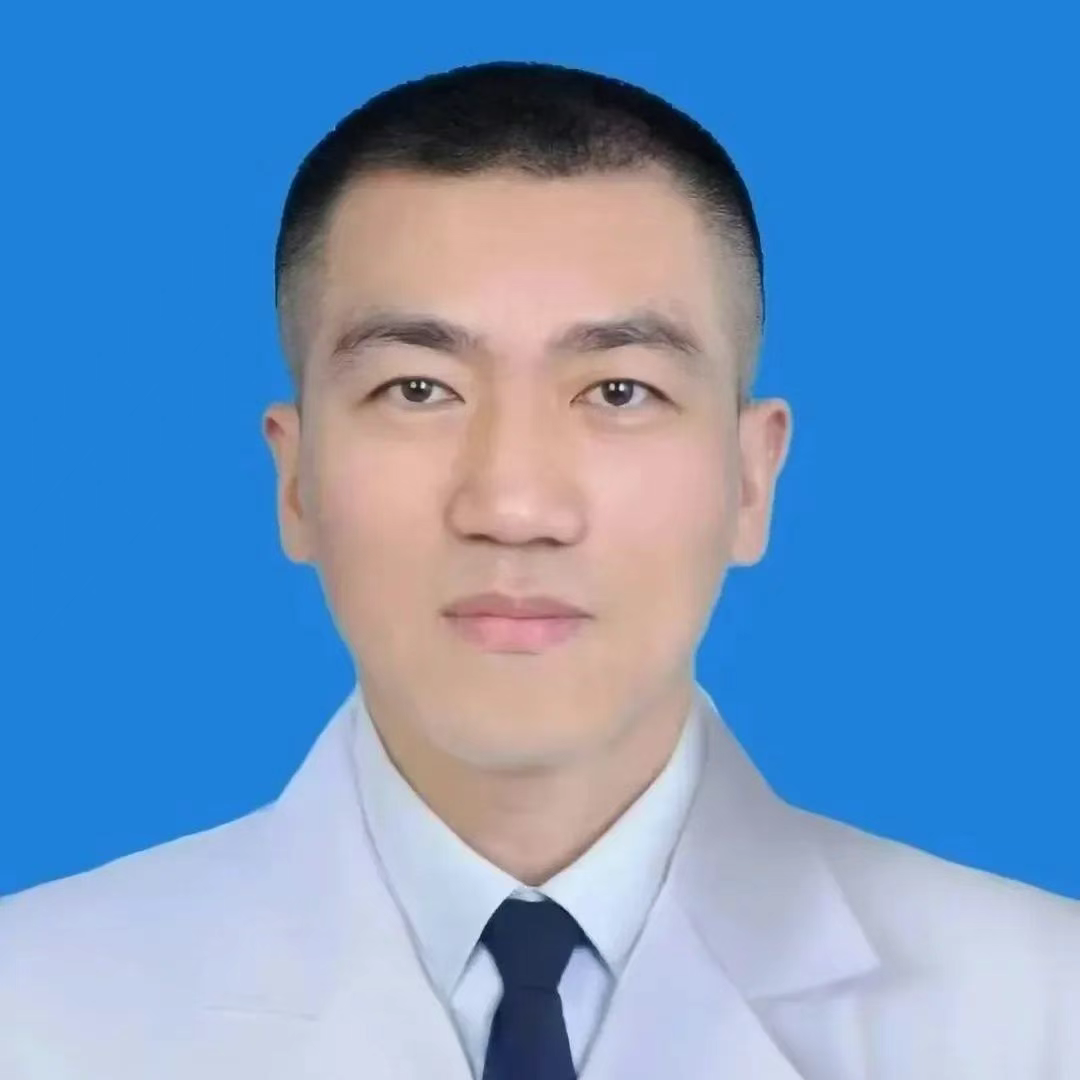
Deputy Chief Physician Ding Jianhua
Deputy Director of the Oncology/Hematology Department at Lanzhou Heavy Ion Center of Gansu Wuwei Tumor Hospital, deputy chief physician. Skilled in using MICM typing technology for precise diagnosis of malignant hematopoietic system diseases. Provides personalized and adaptive internal medicine treatments for patients with hematopoietic system diseases (e.g., leukemia, lymphoma, multiple myeloma, various anemias) and common solid tumor diseases (e.g., lung cancer, gastric cancer, colorectal cancer, breast cancer) through comprehensive MDT team approaches including chemoradiotherapy, targeted therapy, immunotherapy, cell therapy, and cutting-edge medical knowledge. Also has extensive clinical experience in managing complications related to hematological and solid tumors. Published over 10 research papers.
Lanzhou Heavy Ion Consultation Phone Numbers:
166 0931 3666 Director Li
176 9325 0603 Teacher Yan

