National Day Holiday Travel — Keep This Health Guide Handy
National Day Holiday Travel — Keep This Health Guide Handy
★National Day Holiday Travel Health Tips★
In the golden autumn season, we welcome the National Day holiday! Many friends are planning trips, outings, and family visits. During the holiday, increased population movement and gatherings, combined with fluctuating day‑night temperatures, make colds, gastrointestinal discomfort, and other issues more likely. To safeguard everyone's health and ensure a safe, peaceful National Day, we have compiled this travel health protection guide — covering preparation, sightseeing, dining, and return journeys. Feel free to save it for reference!
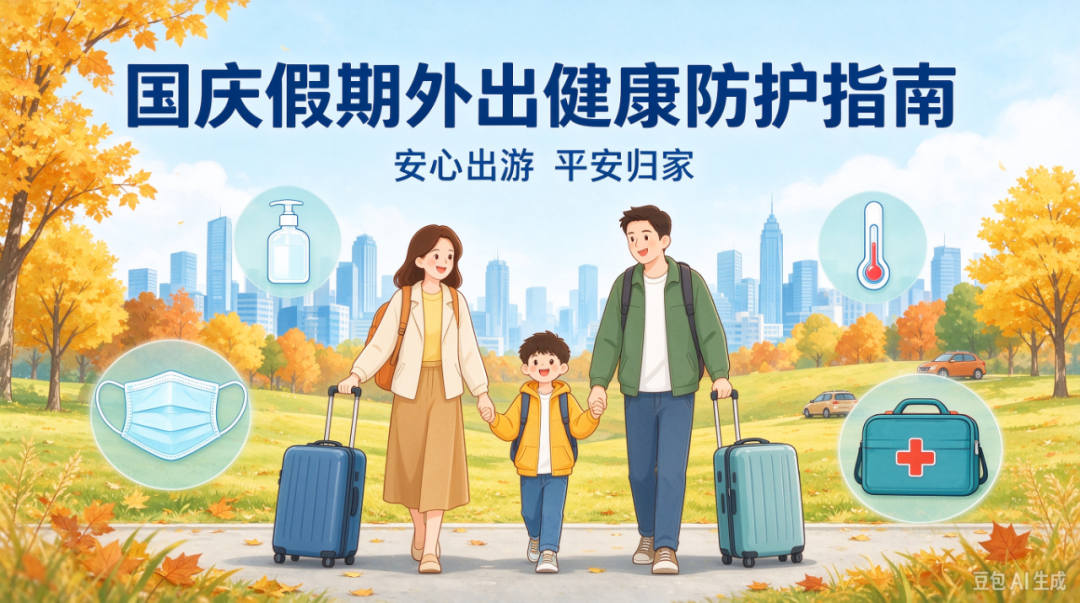
★1. Before Departure: Prepare Well, Prevent Problems Before They Arise★
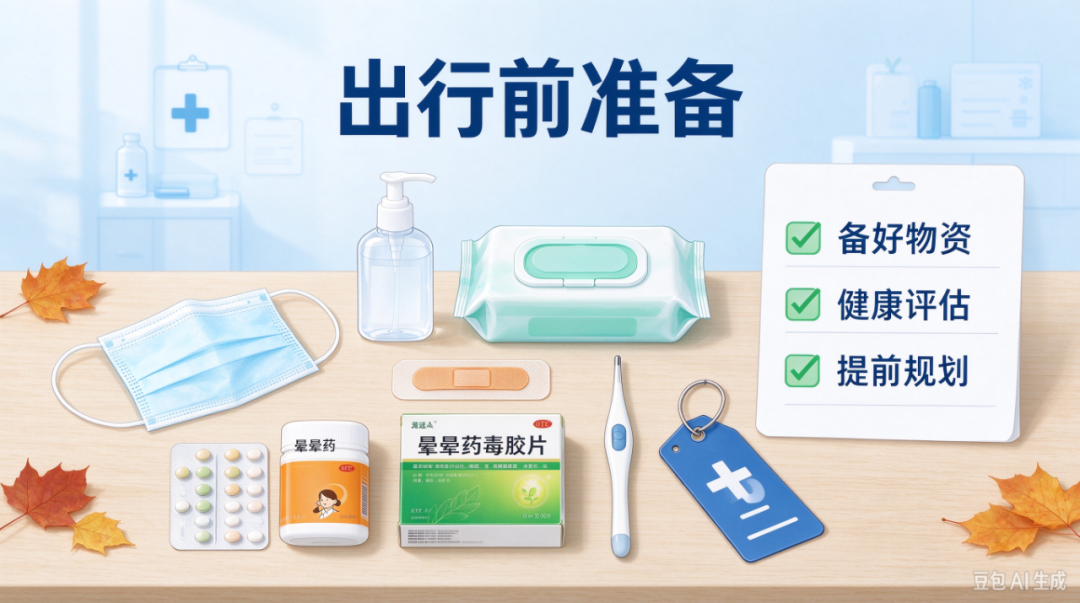
Prepare health supplies in advance: Masks, waterless hand sanitizer, disinfectant wipes, adhesive bandages, motion sickness medication, and personal medications for chronic conditions. Those with underlying health conditions or who are pregnant must bring an adequate supply of medication.
Conduct a personal health assessment: If you have symptoms such as fever or cough, it is advisable to postpone long‑distance travel. Patients with chronic conditions such as hypertension or diabetes should monitor relevant health indicators before departure.
Plan your itinerary scientifically: Arrange your travel pace reasonably and avoid excessive fatigue. Check the destination's weather in advance, pack appropriate clothing to cope with day‑night temperature differences, and prevent colds.
★2. During Travel: Scientific Protection, Attention to Hygiene ★
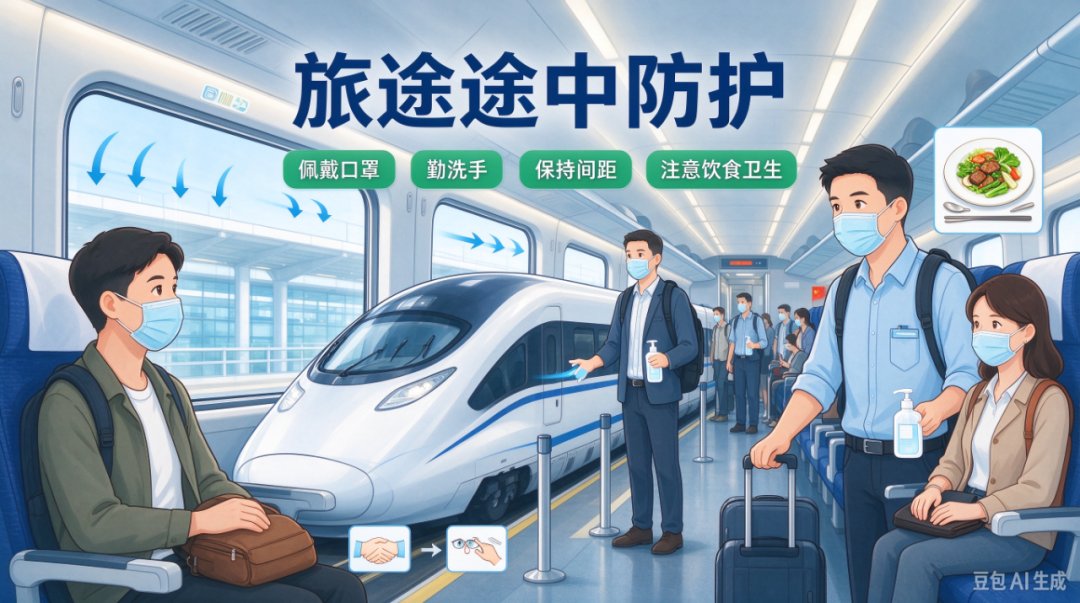
- When taking enclosed public transportation such as high‑speed trains, buses, or airplanes, it is recommended to wear a mask, frequently clean your hands, and avoid touching your eyes, mouth, or nose with unwashed hands.
- Maintain a safe distance while queuing; avoid crowding and chatting in enclosed carriages; open windows when appropriate to maintain air circulation.
- Pay attention to food safety — choose licensed dining establishments. Eat fewer raw or undercooked seafood and foods, and do not drink unboiled water.
★ 3. Outdoor Activities: Act Within Your Limits, Stay Alert to Risks ★
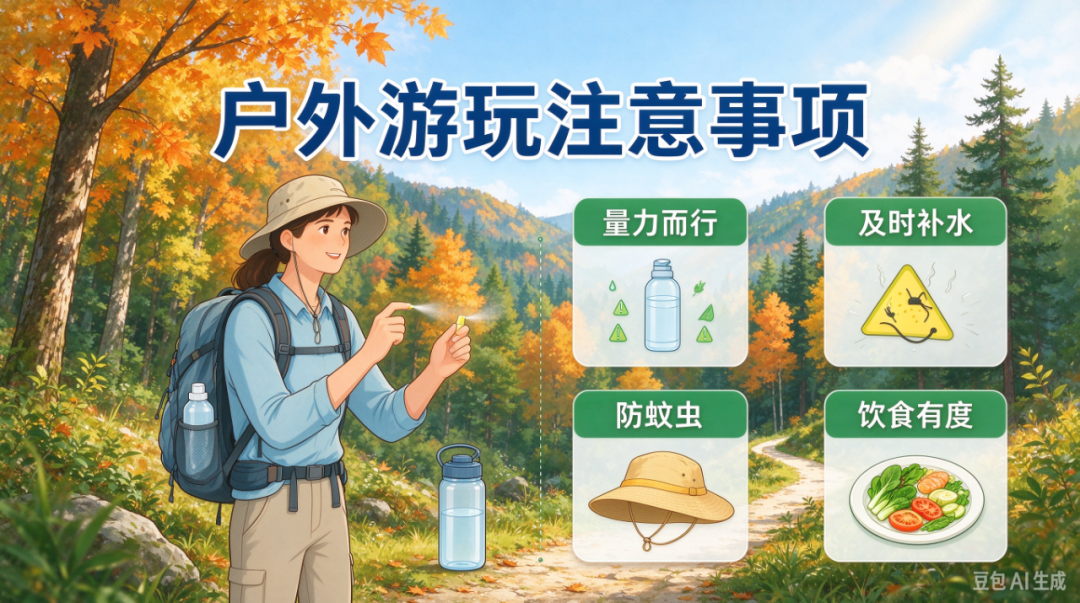
- Engage in outdoor activities within your physical limits and avoid high‑intensity exertion. When visiting mountainous areas, take appropriate measures for warmth or heat protection based on temperature, and replenish fluids promptly to prevent physical exhaustion.
- Suburban and forested areas have more mosquitoes and insects — wear long sleeves and long pants, use insect repellent properly, and reduce insect bites.
- Eat moderately and avoid overeating. Keep meals relatively light and limit alcohol. Never pick or eat wild mushrooms or unknown wild fruits and vegetables to prevent food poisoning.
★ 4. Gatherings with Family and Friends: Regular Routine, Protect Your Stomach ★
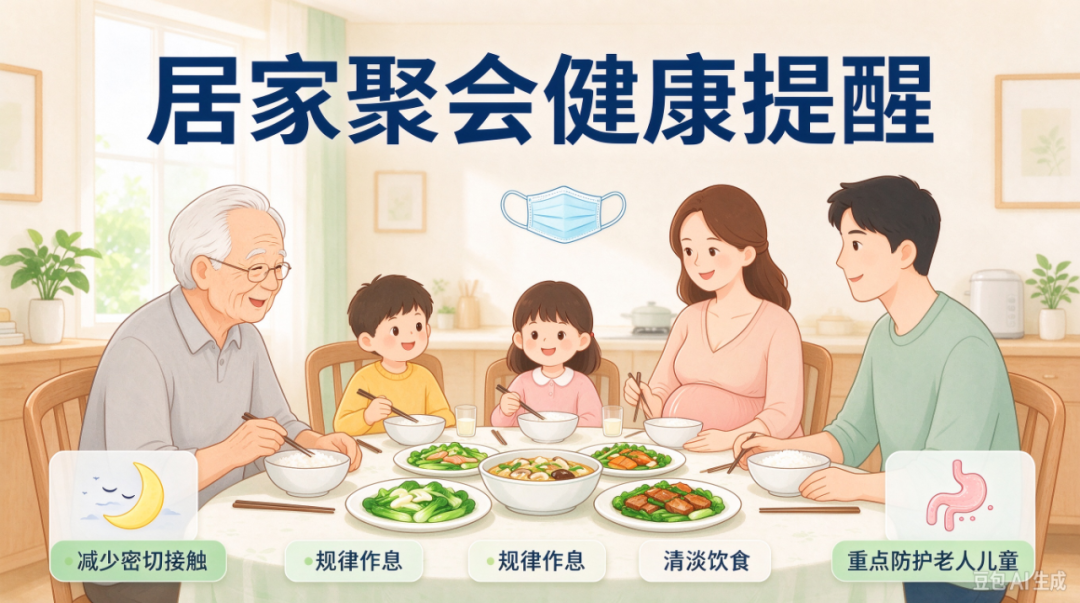
- During family gatherings, if someone has respiratory symptoms such as cough or cold, minimize close contact and take basic protective measures.
- Maintain a good routine, avoid all‑night entertainment, ensure adequate sleep, and maintain your immunity.
- Balance your diet, eat fewer greasy and salty foods, and avoid alternating between hot and cold foods. The elderly, children, pregnant women, and those with weaker constitutions should be especially careful to prevent gastrointestinal diseases.
★5. Sudden Discomfort: Handle Promptly, Seek Nearby Medical Care ★
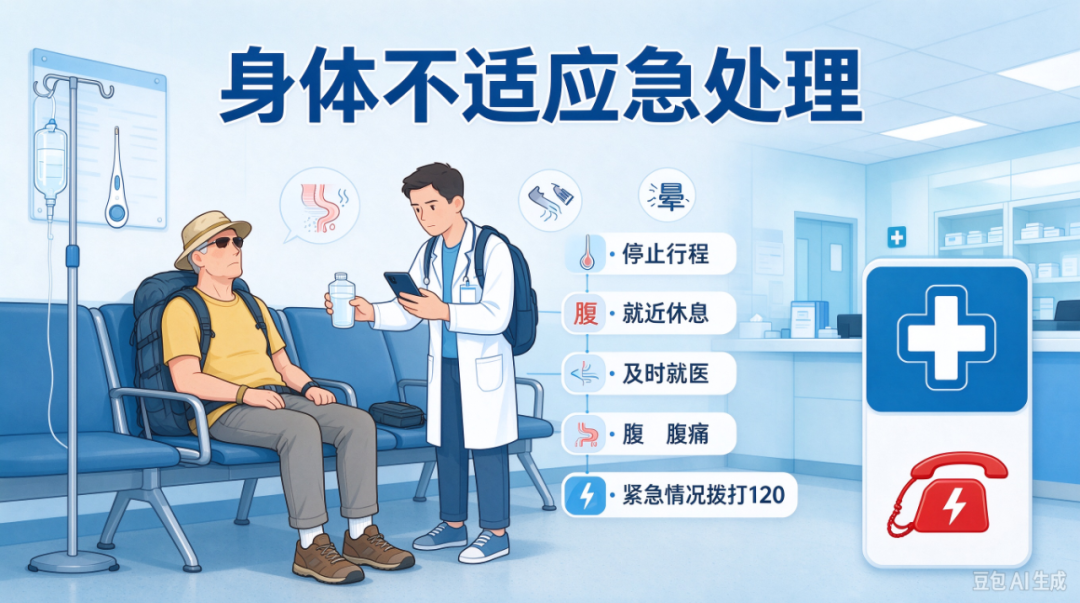
- If you develop fever, diarrhea, persistent cough, abdominal pain and vomiting, dizziness, or fatigue during travel, stop your itinerary immediately, rest, and observe your condition nearby.
- If symptoms do not improve or continue to worsen, seek medical attention at a nearby licensed hospital as soon as possible. In emergencies, call 120.
- Patients with chronic conditions should carry medications and medical records, and seek timely treatment if sudden discomfort occurs.
★6. Return Journey: Disinfect and Adjust ★
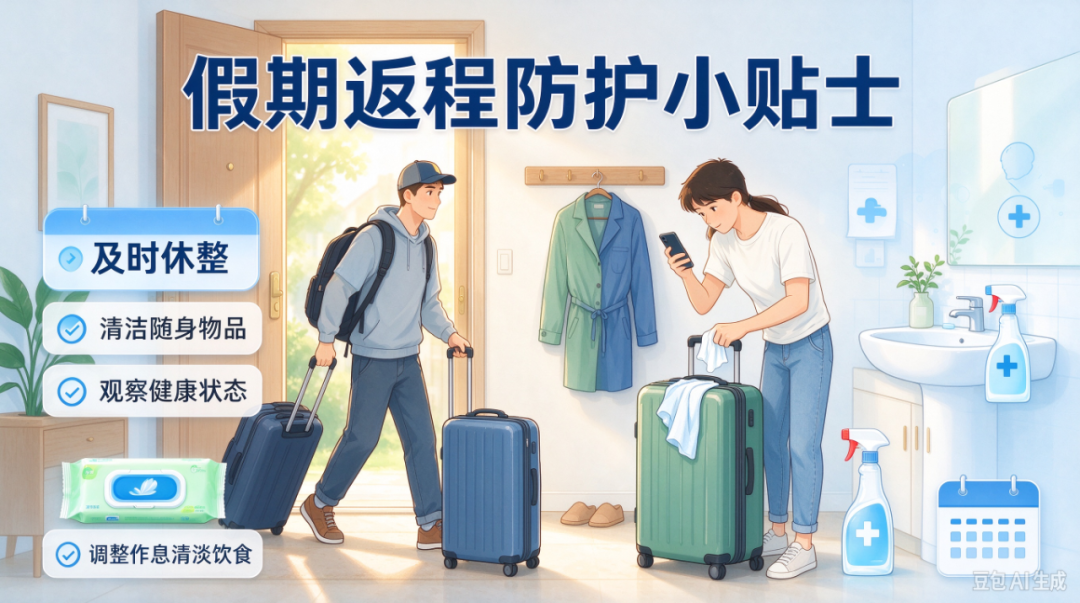
During the return journey, crowds and traffic are concentrated — health protection must not be relaxed. After arriving home, rest adequately and do not immediately dive into heavy work. Change and wash your travel clothes promptly, and wipe down and disinfect luggage, backpacks, mobile phones, and other personal items. Monitor your health at home for 1–2 days, adjust your routine, eat light meals, and return to work and life in good condition.
Safety is the most beautiful scenery on a journey; health is the best foundation for happiness. May everyone keep these health protection tips in mind, balance work and rest, protect yourselves scientifically, travel comfortably, return home safely, and enjoy a healthy and wonderful National Day holiday!
Writer: Duan Shengyu
First Review: Yang Yang
Second Review: Guo Yishan
Third Review: Cai Qinghua