Traditional Chinese Medicine Culture Hidden in the Mid‑Autumn Festival
Traditional Chinese Medicine Culture Hidden in the Mid‑Autumn Festival
A full moon celebrates Mid‑Autumn, and families gather to share reunion. Mid‑Autumn is not just about moon gazing and eating mooncakes — behind those well‑known legends and seasonal delicacies lie many fascinating insights from traditional Chinese medicine (TCM).
TCM in Mythology
Chang'e Flying to the Moon
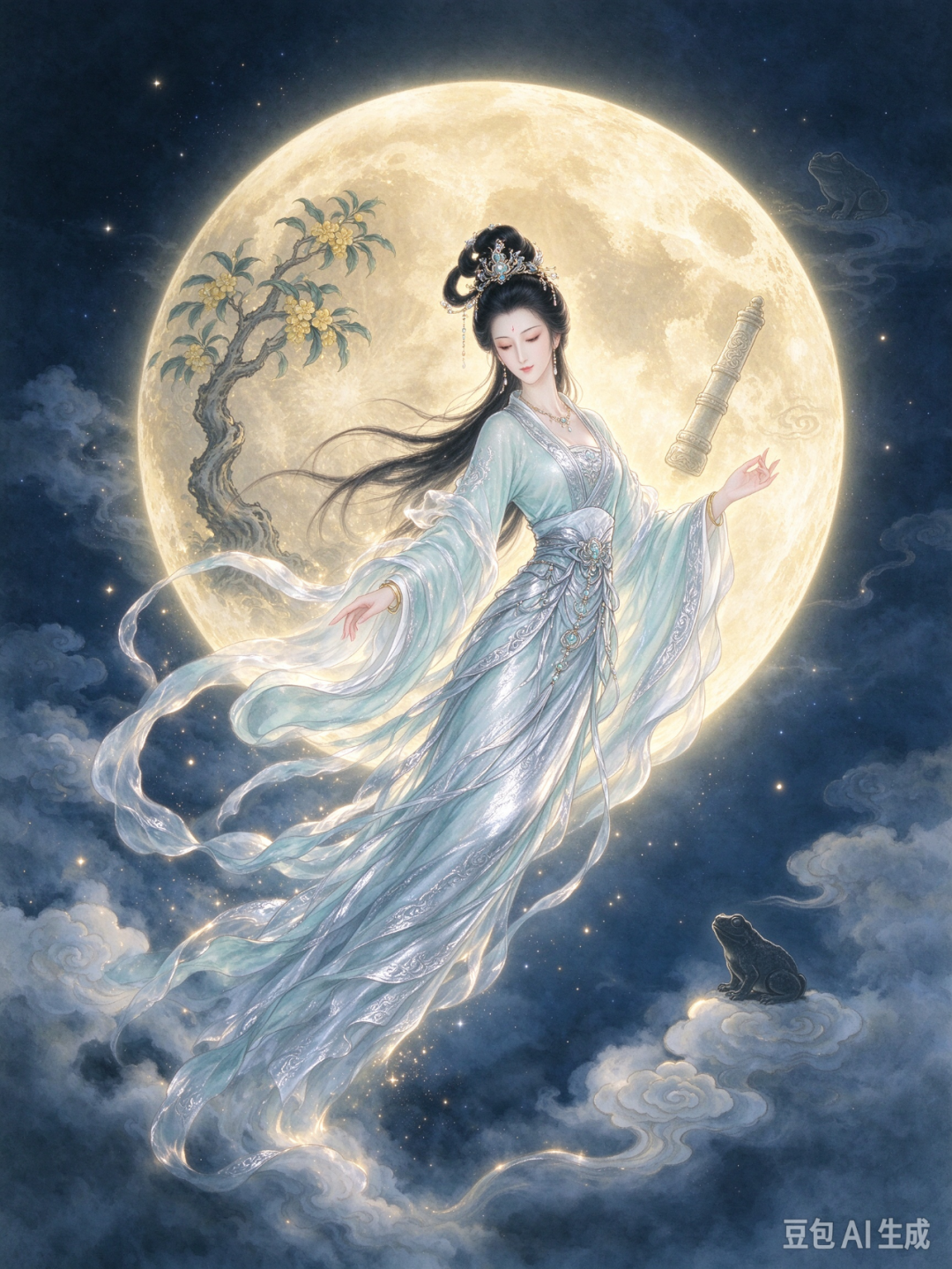
The earliest detailed account of Chang'e flying to the moon appears in the Huainanzi of the Western Han Dynasty. According to the Huainanzi · Lanming Xun: "Yi requested the elixir of immortality from the Queen Mother of the West. Heng'e stole it and fled to the moon, grieving with no way to obtain more. Why? Because she did not know the source of the elixir of immortality." Legend has it that Hou Yi obtained the elixir of immortality from the Queen Mother of the West. His wife Heng'e secretly consumed it and ascended to the moon palace, transforming into a toad and living alone in the cold lunar palace — which is why the moon palace is also called the "Toad Palace."
The toad itself is a valuable Chinese medicinal material. According to the Compendium of Materia Medica, toad enters the Yangming meridian and can clear deficiency heat, resolve dampness, and kill parasites. It is a key medicinal for treating malnutrition in children, carbuncles, and various sores and ulcers. The TCM preparation Chansu (toad venom) is derived from the dried secretions of the Chinese toad or black‑eyed toad. It has the effects of detoxification, pain relief, and restoring consciousness. It is used for carbuncles, boils, sore throat, heatstroke with unconsciousness, and abdominal pain with vomiting and diarrhea.
The Jade Rabbit Pounding Medicine
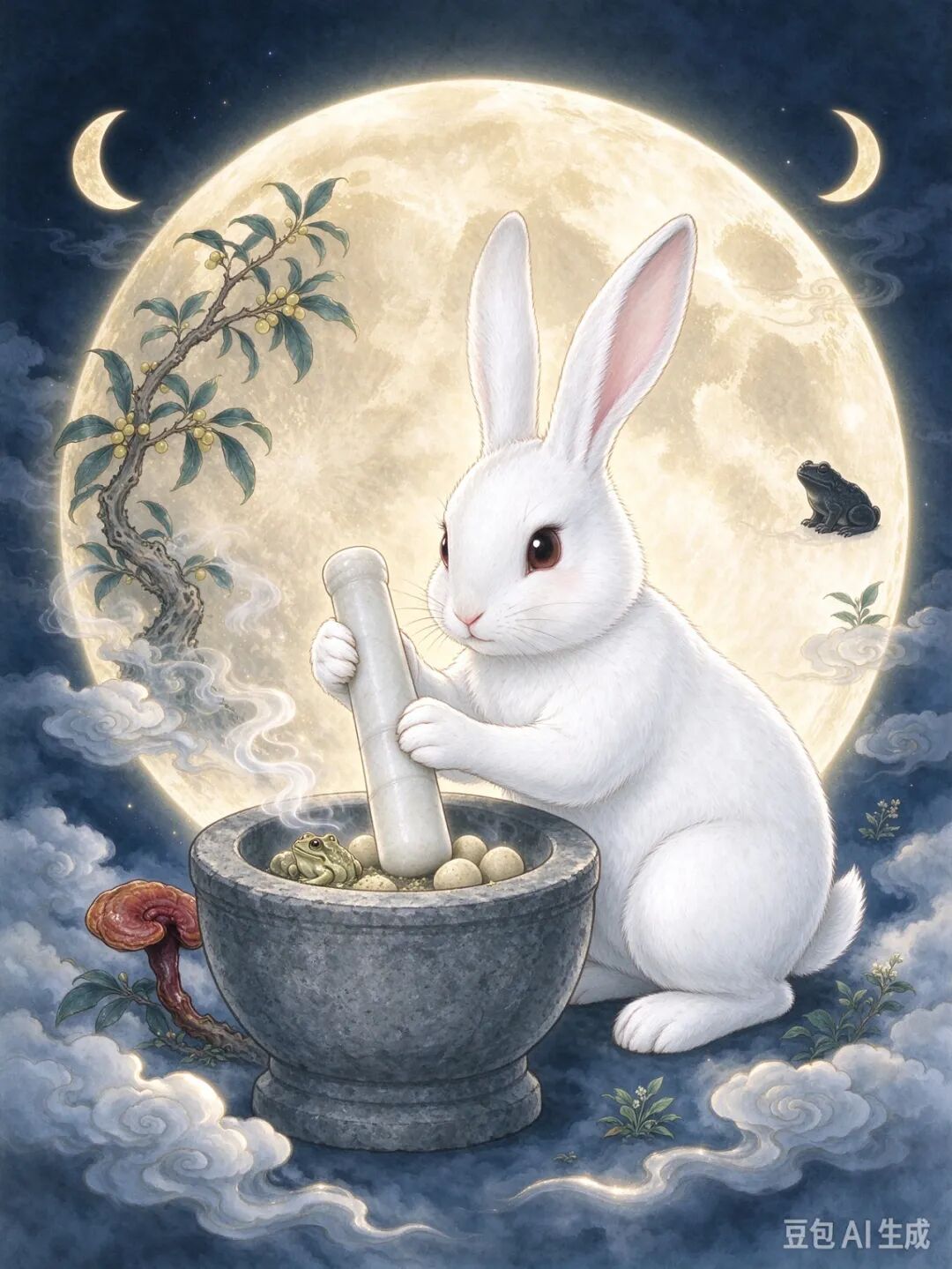
The story of the Jade Rabbit pounding medicine first appears in the Han Dynasty Yuefu poem Dongtao Xing. Legend has it that the Jade Rabbit holds a jade pestle and kneels in the moon palace pounding toad pills. The mythological "pounding of medicine" is actually quite similar to the crushing techniques used in modern TCM processing — both aim to make the active ingredients of medicinal materials more readily released.
Interestingly, the dried feces of rabbits used as medicine is called Wangyue Sha (Moon‑Gazing Sand). It has the effects of improving vision, removing corneal opacities, detoxifying, and killing parasites. It can be used to treat corneal opacities, night blindness, malnutrition in children, and hemorrhoids and fistulas.
Wu Gang Chopping the Osmanthus Tree
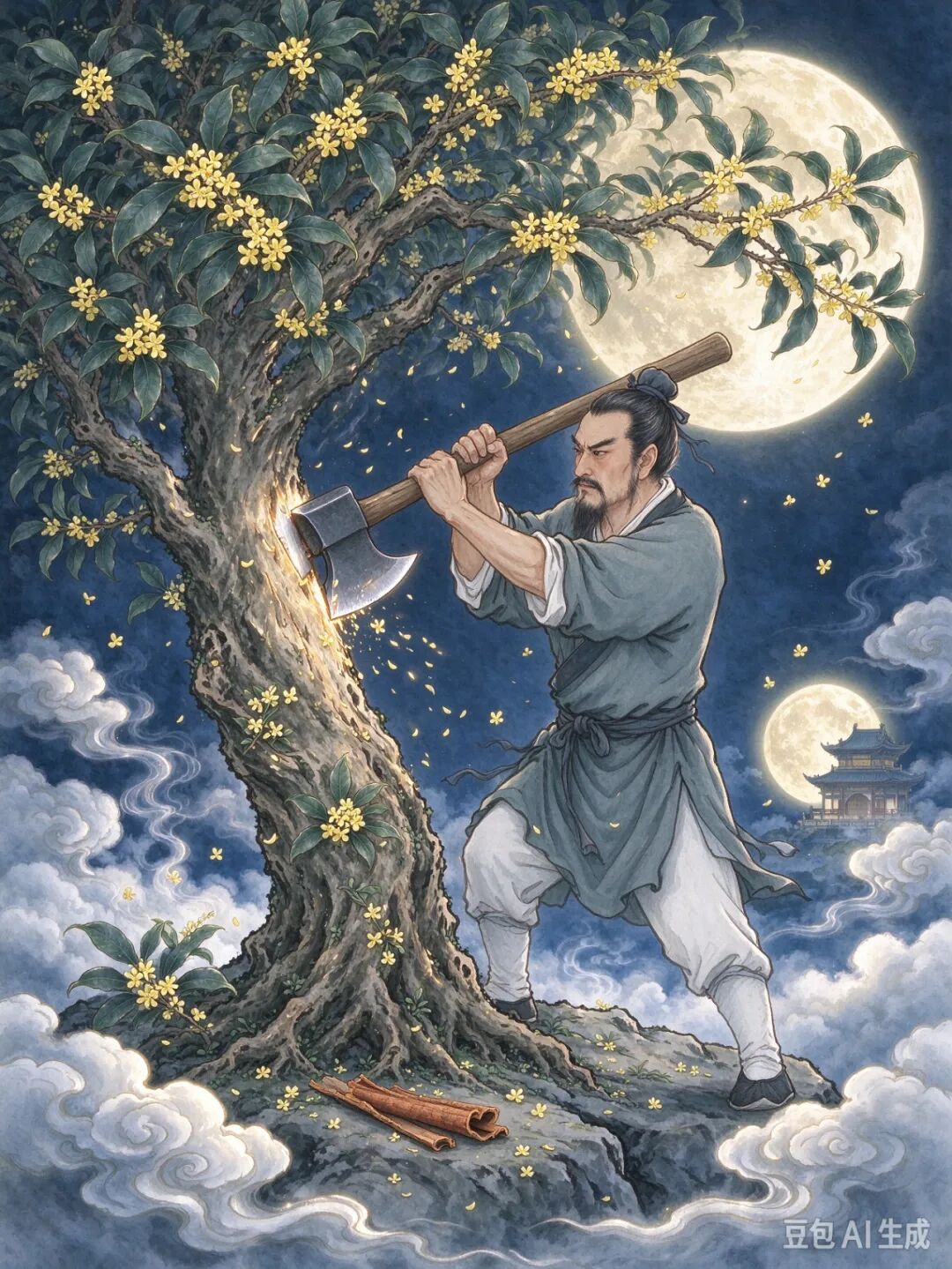
According to the Classic of Mountains and Seas, Wu Gang angered the Yan Emperor and was banished to the moon palace, punished by being made to chop down the immortal tree — the osmanthus. The medicinal value of the osmanthus tree has been recognized since ancient times. The Shuowen Jiezi calls osmanthus "the chief of a hundred medicines." Different parts of the osmanthus tree can be used medicinally, each with distinct effects:
① Guizhi (Cinnamon Twig): The dried young twigs of Cinnamomum cassia from the Lauraceae family. It induces sweating and releases the exterior, warms and unblocks the meridians, assists yang and transforms qi, and calms counterflow qi. It is used for wind‑cold colds, cold pain in the epigastrium and abdomen, blood‑cold amenorrhea, joint pain, phlegm retention, edema, palpitations, and running piglet syndrome.
② Rougui (Cinnamon Bark): The dried bark of Cinnamomum cassia. It supplements fire and assists yang, guides fire back to its source, disperses cold and relieves pain, and warms and unblocks the meridians. It is used for impotence and uterine cold, cold pain in the lower back and knees, kidney deficiency with asthma, floating deficient yang, dizziness and red eyes, cold pain in the heart and abdomen, deficiency‑cold vomiting and diarrhea, cold hernia with abdominal pain, and dysmenorrhea and amenorrhea.
③ Guihua (Osmanthus Flower): The flowers of Osmanthus fragrans from the Oleaceae family. It warms the lungs and transforms fluids, disperses cold, and relieves pain. It is commonly used for phlegm‑fluid cough and asthma, cold pain in the epigastrium and abdomen, intestinal wind and bloody dysentery, amenorrhea and dysmenorrhea, cold hernia with abdominal pain, toothache, and bad breath.
' fill='%23FFFFFF'%3E%3Crect x='249' y='126' width='1' height='1'%3E%3C/rect%3E%3C/g%3E%3C/g%3E%3C/svg%3E)
Medicine and Food Homology in Mid‑Autumn Delicacies
Mooncakes
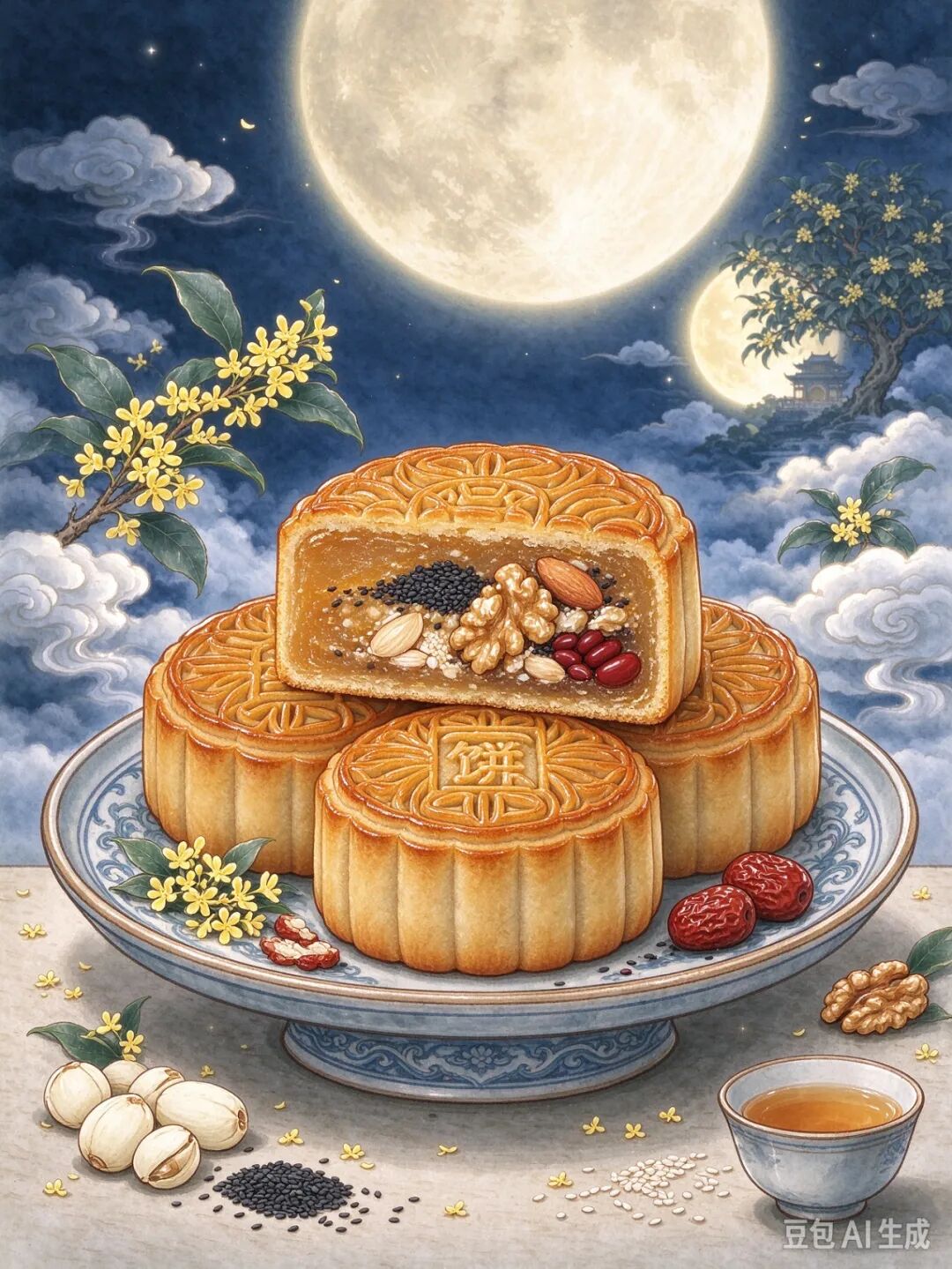
Mooncakes are a signature Mid‑Autumn delicacy symbolizing reunion. Enjoying mooncakes while admiring the moon is a folk tradition passed down through generations. Over time, mooncake varieties have become increasingly diverse, with fillings often including walnut kernels, almonds, black sesame, melon seeds, peanuts, lotus seed paste, red bean paste, hawthorn, osmanthus, rose, and jujube — all items of medicine‑food homology. These ingredients are generally mild in medicinal nature, sweet in taste, nutritious, and possess certain dietary therapeutic effects: walnut kernels tonify the kidneys, warm the lungs, and moisten the intestines; lotus seeds strengthen the spleen, stop diarrhea, stop leukorrhea, tonify the kidneys and secure essence, and nourish the heart and calm the spirit; black sesame tonifies the liver and kidneys, benefits essence and blood, and moistens intestinal dryness; red beans promote diuresis and reduce swelling, detoxify and discharge pus, and moisten the intestines to promote bowel movements.
Friendly reminder: Mooncakes are sweet and delicious but high in sugar and fat. Individuals with diabetes, obesity, or hyperlipidemia should not consume them excessively. The elderly, children, and those with weak spleen and stomach should also limit their intake to prevent indigestion. After eating mooncakes, drinking tangerine peel tea, hawthorn and malt water, or oolong tea can help regulate qi, resolve food stagnation, cut through greasiness, and reduce the burden on the spleen and stomach.
Pomegranate
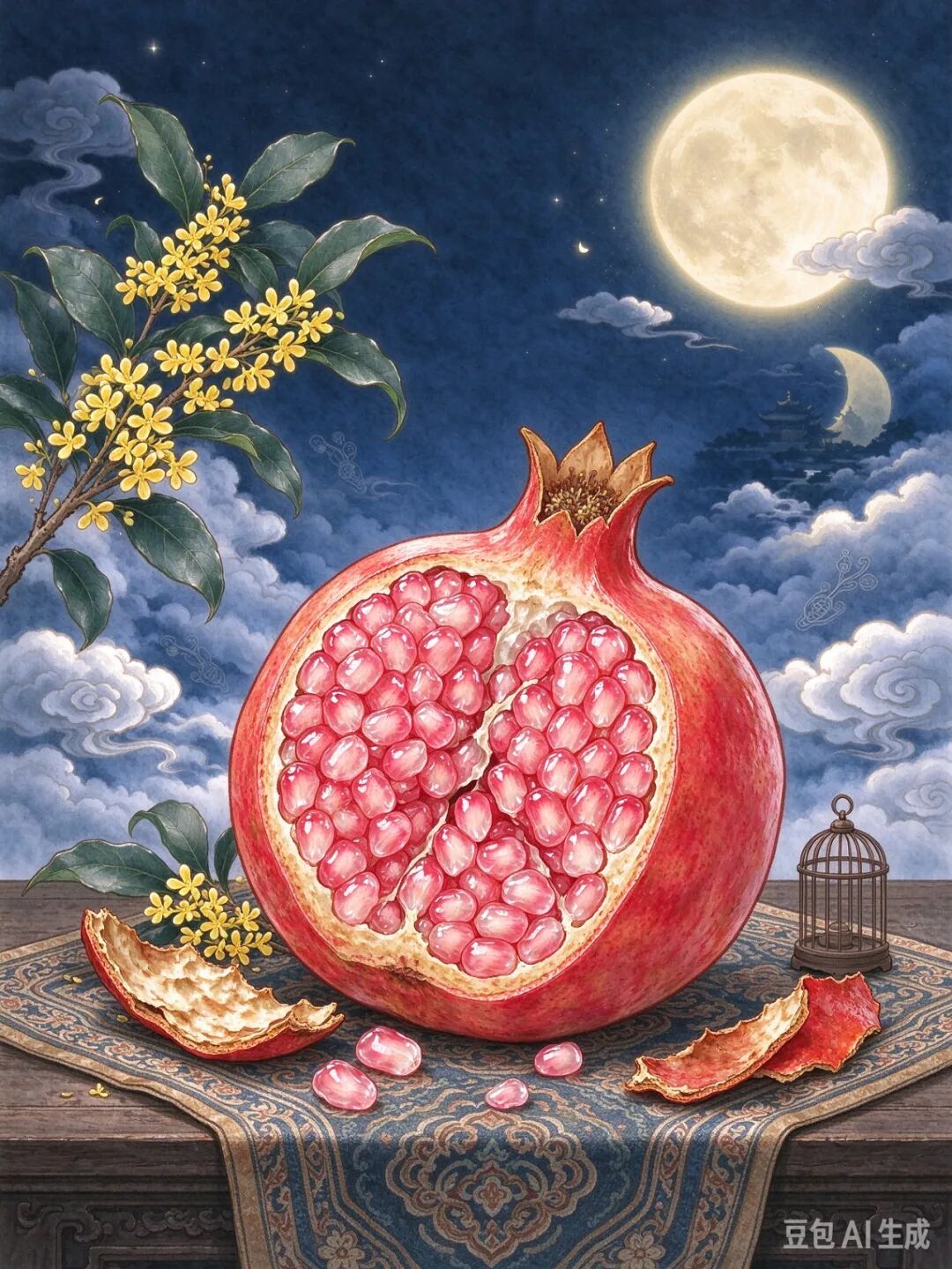
Pomegranates are vibrant in color with plump, crystal‑like seeds, and have been considered an auspicious fruit since ancient times — symbolizing many offspring, family prosperity, and endless vitality. They are a common fine fruit on the Mid‑Autumn banquet table. The medicinal part is the dried rind of the pomegranate, harvested after the fruit ripens in autumn and dried in the sun. It has the effects of astringing the intestines to stop diarrhea, stopping bleeding, and killing parasites. It is used for chronic diarrhea and dysentery, bloody stool and rectal prolapse, uterine bleeding and leukorrhea, and parasitic abdominal pain. The pomegranate arils consumed in daily life can promote fluid production, moisten dryness, stimulate appetite, and aid digestion.
Happy Mid‑Autumn
Reading through the ancient legends of Mid‑Autumn and tasting its seasonal delicacies, one cannot help but notice that TCM culture has long been integrated into traditional folk customs. From the toad, jade rabbit, and osmanthus tree in lunar legends, to mooncakes and pomegranates on the dining table — all things of medicine‑food homology — every plant and tree possesses medicinal properties, and every object holds wisdom. TCM is not merely formulas and medicines in classical texts; it is a philosophy of life embedded in the everyday warmth of human existence.
On this full‑moon festival, we wish you a full moon and reunited family, may all things go smoothly, may your household be safe and sound, and may joy always accompany you. Happy Mid‑Autumn!
Writer: Duan Shengyu
First Review: Duan Shengyu
Second Review: Guo Yishan
Third Review: Cai Qinghua