Integrated Chinese‑Western Medicine and V‑Wave Light Therapy for Nasal Relief
Say Goodbye to Seasonal Allergic Rhinitis — Integrated Chinese‑Western Medicine and V‑Wave Light Therapy for Nasal Relief
1. What Is Allergic Rhinitis?
Allergic rhinitis, also known as atopic rhinitis, is a common chronic non‑infectious inflammatory condition of the nasal mucosa. It is a frequently occurring respiratory problem, particularly during autumn, winter, and seasonal transitions. It is commonly referred to as "hay fever" or "seasonal rhinitis."
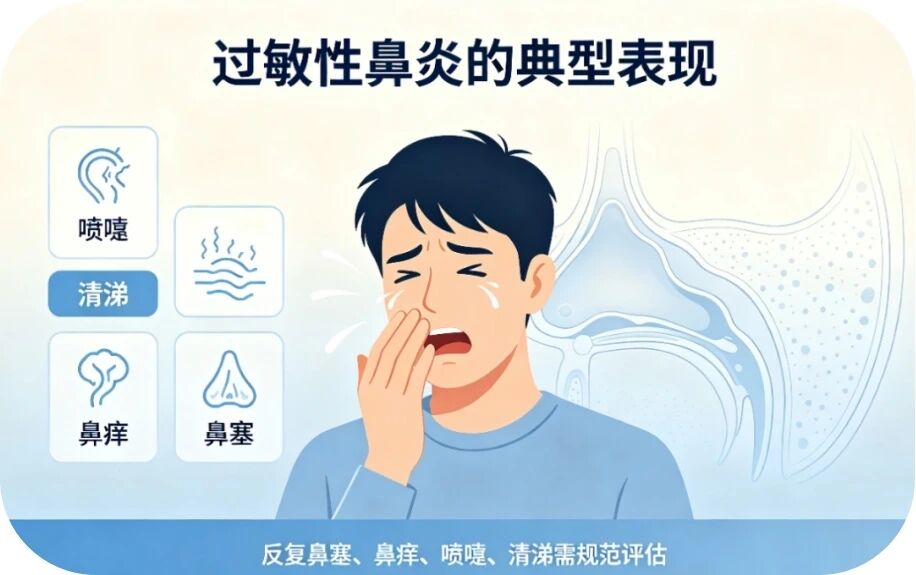
Four typical core symptoms:
- Paroxysmal, consecutive sneezing
- Watery nasal discharge
- Nasal itching
- Persistent or alternating nasal congestion
Some patients may also experience itchy eyes, itchy throat, dry cough, dizziness, snoring during sleep, and reduced sense of smell.
The condition is highly prone to recurrent episodes, triggered by cold exposure, cold air, dust, dust mites, pollen, cooking fumes, and pet dander. If left untreated over the long term, it can lead to chronic sinusitis, adenoid hypertrophy, otitis media, and chronic cough. In severe cases, it may trigger allergic asthma, significantly affecting sleep quality, daily life, and work performance.
2. Conventional Western Medical Treatment
- Allergen avoidance: Maintain a clean environment, frequently remove dust mites, ensure ventilation, reduce outdoor activities during pollen season, wear masks, and avoid irritating odors and pet dander.
- Symptomatic pharmacotherapy: Commonly used nasal corticosteroid sprays, oral antihistamines, and leukotriene receptor antagonists, combined with saline nasal irrigation, to rapidly control inflammation and relieve symptoms.
- Allergen immunotherapy: For patients with identified allergens, causal treatment to improve allergic tolerance from the root, though the course is lengthy.
Advantages: Rapid control of acute symptoms.
Limitations: Most medications only treat symptoms, not the root cause; recurrence is common after discontinuation. Long‑term repeated use of medication leads to resistance in many patients, and improvement of stubborn nasal congestion and mucosal edema is limited.
3. Traditional Chinese Medicine (TCM) Treatment
The core principles of TCM treatment for allergic rhinitis are: strengthening the body's vital energy, tonifying the spleen and lungs, supplementing qi and consolidating the exterior, and unblocking the nasal orifices — focusing on regulating constitution, reducing recurrence, and addressing both symptoms and root causes.
- Oral TCM herbal formulas based on syndrome differentiation: Treatment is tailored to the patient's constitution. For lung qi deficiency with cold, warm the lungs and consolidate the exterior; for spleen qi weakness, strengthen the spleen and supplement qi; for kidney yang insufficiency, warm the kidneys and consolidate the root; for lung heat stagnation, clear and disperse lung heat. Classic formulas such as Yupingfeng San are commonly used with modifications to fundamentally improve the constitution prone to deficiency and susceptibility.
- External TCM therapies: Acupuncture, acupoint moxibustion, auricular acupressure, herbal nasal fumigation, and Sanfu/Sanjiu acupoint patch therapy. By stimulating acupoints such as Yingxiang (LI20), Feishu (BL13), Dazhui (GV14), and Pishu (BL20), these therapies unblock the nasal meridians, harmonize organ qi and blood, and enhance the body's defensive capacity.
Greatest advantage of TCM: It does not merely relieve current symptoms but focuses on improving the allergic constitution characterized by cold deficiency, weakness, and susceptibility to colds — significantly reducing the frequency and severity of rhinitis episodes.
4. V‑Wave Light Physical Rehabilitation
V‑Wave light therapy is a distinctive non‑invasive physical rehabilitation modality in our department, suitable as an adjunctive treatment for allergic rhinitis. It is safe, painless, and suitable for all ages, serving as an important complement to integrated Chinese‑Western medicine treatment.
Treatment principle:
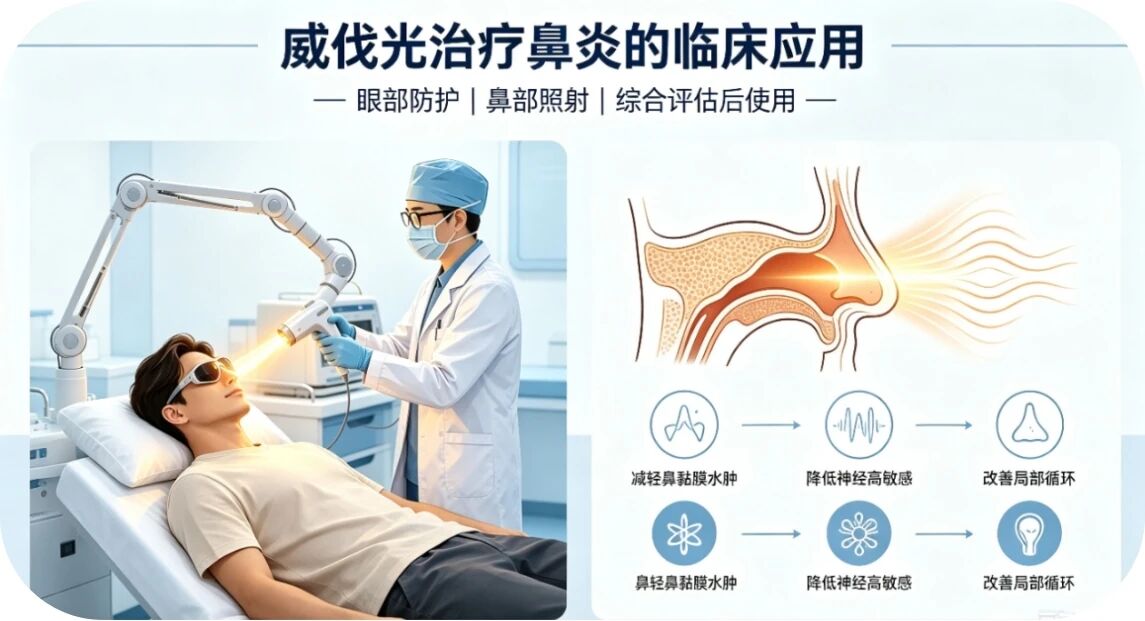
V‑Wave light uses specific deep‑targeting light waves that penetrate deep subcutaneous tissues and act precisely on the nasal cavity and paranasal sinus areas without damaging the surface skin, ensuring high safety.
Core therapeutic effects:
- Rapidly reduces nasal mucosal congestion and edema, effectively improving stubborn nasal congestion.
- Reduces hypersensitivity of nasal nerve endings, significantly relieving nasal itching, repeated sneezing, and clear nasal discharge.
- Improves local blood circulation in the nasal cavity and nasopharynx, eliminates chronic aseptic inflammation, and repairs damaged nasal mucosa.
- Non‑invasive, green therapy with no drug side effects — suitable for children, the elderly, and patients intolerant to medication.
Indications and contraindications:
Suitable for perennial and seasonal allergic rhinitis, and for consolidative treatment during the recovery phase.
Contraindicated in: Patients with photosensitive diseases, acute eye lesions, malignant tumors, or local acute bleeding.
5. Departmental Feature: Integrated Chinese‑Western Medicine + V‑Wave Light Comprehensive Treatment Protocol
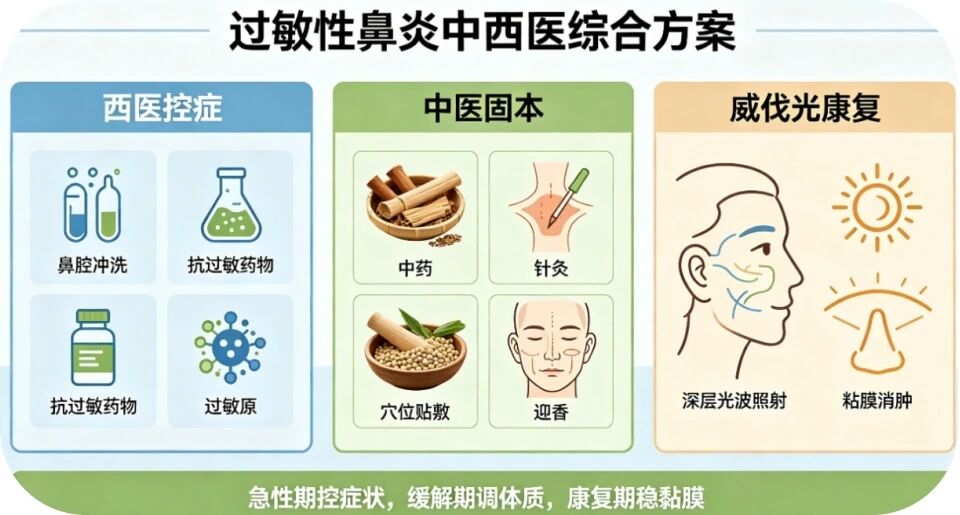
Our department adopts a three‑in‑one comprehensive approach — Western medicine for symptom control, TCM for constitutional strengthening, and physical rehabilitation for repair — addressing the pain point of recurrent, difficult‑to‑cure rhinitis.
1. Acute phase (severe sneezing, clear discharge, nasal congestion):
- Western medicine: Saline nasal irrigation + symptomatic medication to rapidly suppress acute allergic inflammation.
- Rehabilitation: Local V‑Wave light irradiation to rapidly reduce swelling, unblock the nose, and relieve discomfort.
- TCM: Acupuncture, acupoint therapy, or syndrome‑based herbal formulas to rapidly unblock the orifices, relieve itching, and shorten the disease course.
2. Remission and consolidation phase (for patients with reduced symptoms but frequent recurrence):
- TCM‑focused: Herbal conditioning and external acupoint therapies to tonify the lungs and spleen, stabilize vital qi, and improve allergic constitution.
- Rehabilitation maintenance: Regular V‑Wave light therapy to continuously improve nasal microcirculation and stabilize the nasal mucosa.
- Daily management: Avoid allergens, gradually reduce medication dependence, and prevent recurrent episodes.
6. TCM Home Care Guide
- Avoid wind‑cold: Keep the mouth, nose, and neck warm; avoid direct exposure to cold wind and air conditioning; adjust clothing promptly during seasonal transitions.
- Dietary regulation: Those with lung‑spleen qi deficiency should avoid cold, raw foods, iced drinks, and cold fruits to prevent spleen‑stomach damage; reduce intake of photosensitive foods during pollen season.
- Daily health maintenance: Persist in massaging the Yingxiang acupoint, perform daily saline nasal irrigation, engage in moderate aerobic exercise, and enhance defensive qi.
- Strictly avoid abuse of nasal decongestant sprays to prevent drug‑induced rhinitis and worsening of the condition.
Gastroenterology / Oncology Rehabilitation

Our Department of Gastroenterology / Oncology Rehabilitation is a flagship specialty of the center, combining clinical services, teaching, and research. It features two outpatient clinics (Gastroenterology and Oncology Rehabilitation) and one inpatient unit. Our team consists of 13 healthcare professionals: 1 senior specialist, 2 mid-level practitioners, and 10 junior staff. Academically, we have 1 Ph.D. and 5 Master's degree holders, along with 4 provincial-level distinguished TCM physicians who hold regular consultations. Our multidisciplinary staff includes clinical doctors, TCM physicians, rehabilitation therapists, psychological counselors, psychotherapists, health coaches, and dietitians — all trained in specialized rehabilitation techniques, TCM meridian hypnosis, Mindfulness-Based Stress Reduction (MBSR), Cognitive Behavioral Therapy (CBT), and psychological drawing analysis. We are dedicated to providing comprehensive care for digestive disorders and cancer rehabilitation, integrating Chinese and Western medicine, physical therapy, exercise therapy, psychological support, and nutritional guidance. Following an MDT (multidisciplinary team) approach, we craft individualized diagnostic, treatment, and rehabilitation plans for every patient.
I. Scope of Diagnosis and Treatment
1. Digestive System: We treat a full range of digestive conditions — from esophageal, gastrointestinal, hepatobiliary, and pancreatic disorders to psychosomatic digestive issues — and also provide palliative care and TCM-based therapies for gastrointestinal cancers.
2. Integrated Rehabilitation: Our rehabilitation services cover musculoskeletal and neurological conditions such as lumbar disc herniation, cervical spondylosis, degenerative joint disease, muscle atrophy, and peripheral nerve injuries. We also specialize in managing cancer-related complications and side effects from non-surgical oncology treatments — including nausea, vomiting, diarrhea, abdominal pain, fatigue, skin reactions, bone marrow suppression, hair loss, and lymphedema.
II. Diagnostic and Treatment Technologies
1. Routine Services: We provide painless gastroscopy and colonoscopy, along with a full range of endoscopic interventions — polypectomy, hemostasis, stricture dilation, stent placement, endoscopic mucosal resection (EMR), and endoscopic submucosal dissection (ESD) — all performed with minimally invasive techniques.
2. Specialized Services: Our advanced endoscopic offerings include POEM, EUS, ultrasound-guided radioactive seed implantation, ERCP, combined endoscopic-laparoscopic full-thickness resection, and sclerotherapy/ligation for esophageal and gastric varices. Beyond procedures, we specialize in integrated Chinese-Western medicine management of chemotherapy/radiotherapy GI side effects, especially radiation proctitis; physical therapy combined with CBT and MBSR for anxiety, depression, and sleep disorders; integrated TCM and psychological support for cancer-related fatigue and treatment side effects; prevention and management of radiation-induced lymphedema; TCM therapies for chemotherapy-induced hand-foot syndrome; and comprehensive rehabilitation for cancer pain and other chronic pain conditions.
III. Facilities and Equipment
1. State-of-the-Art Endoscopy Equipment: We are equipped with Olympus high-definition electronic gastroscopes, duodenoscopes, colonoscopes, endoscopic ultrasound (EUS), magnifying endoscopes, and small-bowel enteroscopes — covering all diagnostic and interventional needs.
2. Advanced Rehabilitation Equipment: Our rehabilitation unit features a full range of modern devices, including an automatic constant-temperature wax therapy unit, water-filtered infrared-A (wIRA) therapy, interferential current therapy, deep muscle stimulator, shockwave therapy, ultrasound therapy, lymphatic drainage device, air-wave pressure therapy, medium- and low-frequency electrotherapy units, transcranial magnetic stimulation (TMS), psychological CT, mental stress analyzer, computerized mindfulness training system, sandplay therapy kit, and polysomnography (PSG) for sleep monitoring.
Our Service Philosophy:
Precision medicine to ease your pain; compassionate care to enrich your life.
Clinic Location:
Room 418, 4/F, Inpatient Building, Lanzhou Campus, Gansu Wuwei Cancer Hospital
Ward Location:
10/F, Inpatient Building, Lanzhou Campus, Gansu Wuwei Cancer Hospital
Writer: Ma Yongsheng
First Review: Liu Qiong
Second Review: Guo Yishan
Third Review: Cai Qinghua