Why Is Chemotherapy Still Needed After Radiotherapy or Surgery?
Why Is Chemotherapy Still Needed After Radiotherapy or Surgery?
Cancer metastasis is, in essence, a few "agent cells" completing an extremely brutal "prison break and colonization." They need to break free from the primary tumor, infiltrate blood or lymphatic vessels, survive in the bloodstream, and take root and grow in distant, unfamiliar organs.
Precisely because metastasis is the key step by which cancer cells escalate from a local problem to a systemic threat, relying solely on surgery or radiotherapy to remove visible lesions is often insufficient. The core purpose of systemic pharmacotherapy is to eliminate these microscopic metastatic foci that have already escaped throughout the body and are invisible to the naked eye.
01 Why Can Cancer Cells "Get Away"?
The reason cancer cells metastasize so readily lies in the fact that they have acquired a series of "escape capabilities" that normal cells do not possess.
First, cancer cells have very low adhesion between one another. Normal cells are tightly packed together like bricks, whereas cancer cells have abnormal expression of adhesion molecules on their surface, resulting in loose connections that make it easy for them to detach from the primary mass. At the same time, they secrete proteases that dissolve and destroy surrounding tissue barriers, carving out escape routes for themselves.
Second, cancer cells know how to use the body's "highways." Tumors stimulate the formation of new blood vessels around them to support growth. These vessels are often structurally imperfect and leaky, making it easy for cancer cells to enter. Once in the bloodstream or lymphatic system, they hitch a ride and are transported throughout the body.
More critically, entering the bloodstream is a life‑and‑death ordeal for normal cells, but surviving cancer cells possess two "special skills": first, resistance to anoikis (normal cells die after detaching from their original matrix, but cancer cells survive); second, evasion of immune attack — even using platelets to cloak themselves and slip past immune system patrols. Finally, when they reach the capillary beds of distant organs, they penetrate the vessel wall, and if the local microenvironment happens to be "suitable," they begin to proliferate and grow into new metastatic tumors.
02 Why Must Systemic Pharmacotherapy Be Used?
Understanding the mechanisms of metastasis makes clear why systemic pharmacotherapy (chemotherapy, targeted therapy, immunotherapy, etc.) is irreplaceable.
First, metastasis may already have occurred in the early stages. For many patients, by the time the primary tumor is diagnosed, cancer cells may have already quietly disseminated. Research shows that at diagnosis, tumor cells have often already spread from the primary site and can even be detected in the bone marrow. Surgery can only remove the local "main base" but cannot capture the "stragglers" already on the move or lurking in distant locations. Systemic drugs circulate throughout the body via the bloodstream precisely to eliminate these invisible microscopic lesions.
Second, cancer cells in metastatic foci may be more "difficult to handle." Metastatic tumor cells may differ from the primary tumor at the molecular level; they have undergone selection and may be less sensitive to certain drugs. This means that treatment effective against local lesions may not necessarily control systemic spread. Systemic therapy can select combinations of multiple drugs based on cancer type, use targeted drugs to precisely attack specific mutations, or mobilize the entire immune system through immunotherapy to recognize and attack cancer cells dispersed throughout the body.
Third, controlling systemic disease is central to prolonging survival. The vast majority of cancer patients die from widespread metastasis rather than the primary lesion itself. The goal of systemic therapy is not only to cure (as in certain lymphomas and testicular cancers) but also to control disease, shrink tumors, reduce recurrence risk, or transform cancer into a manageable chronic disease like hypertension. Even after surgery, adjuvant systemic therapy can significantly reduce the probability of future recurrence and metastasis.
In short, the metastatic capacity of cancer cells determines that cancer is a systemic disease. Local treatment addresses the "point," while systemic pharmacotherapy covers the "surface." Only through their combination is it possible to strangle cancer cells in transit or in their nascent state before they complete colonization.
03 Introduction to the Third Department of Radiotherapy
Department Overview
The Third Department of Radiotherapy is a specialized department for heavy ion therapy of pancreatic cancer and abdominopelvic tumors. It focuses on heavy ion therapy for pancreatic cancer, as well as heavy ion and photon radiotherapy for abdominopelvic tumors including liver cancer, colorectal cancer, and prostate cancer. Since its establishment, pancreatic cancer patients from across China have sought treatment here. The department enables precise destruction of pancreatic cancer cells without pain, surgery, or trauma. To date, it has treated over a hundred pancreatic cancer patients from various regions across the country, with a 1‑year local control rate exceeding 90% and median survival extended from the traditional 11 months to 19 months. The treatment efficacy is well‑established, patient experience is positive, and outcomes have been fully recognized by renowned experts both domestically and internationally as well as by a wide range of patients.
Professional Team
Team members graduated from prestigious medical schools in China and possess solid theoretical knowledge and extensive clinical experience. The department has specially invited international experts — including Professor Hauf from Germany, Professor Hirohiko Tsujii from Japan, and Professor Yee‑Min Jen and Professor Wu Jiaming from Taiwan — to provide guidance, participate in complex case discussions, deliver academic lectures, and conduct ward rounds. Department staff have completed advanced training at several well‑known heavy ion and photon therapy centers in China, giving them extensive experience in heavy ion therapy and enabling them to develop scientifically sound, individualized treatment plans for patients.
Scope of Treatment
The department specializes in heavy ion therapy for pancreatic cancer, while also providing heavy ion and photon radiotherapy for abdominopelvic tumors including liver cancer, colorectal cancer, and prostate cancer. It offers patients professional radiotherapy services and personalized comprehensive cancer care.
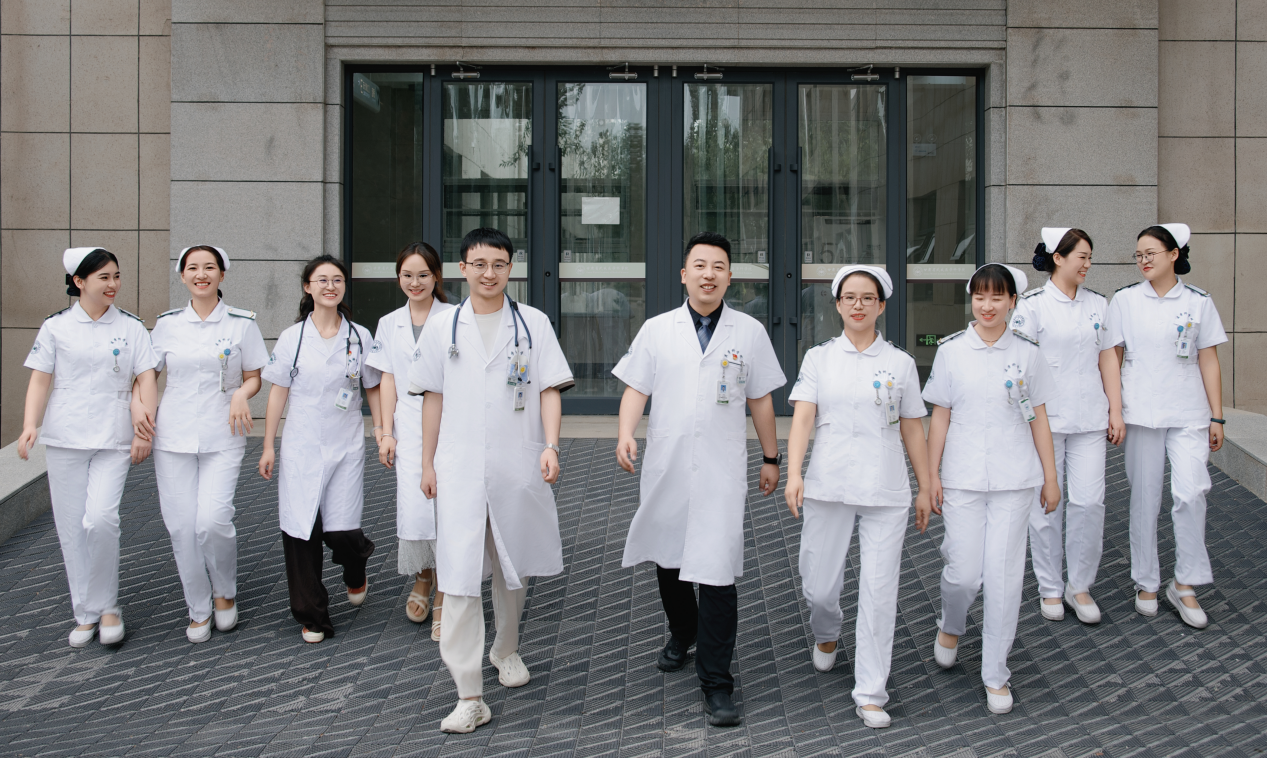
Department Expert Introduction

Chen Weizuo
Director of the Third Department of Radiotherapy, Heavy Ion Center, Gansu Wuwei Cancer Hospital
Associate Chief Physician
- Longyuan Young Talent of Gansu Province
- Board Member, Brachytherapy and Smart Radiotherapy Branch, Chinese Nuclear Society
- Member, Youth Branch of the Western Radiation Therapy Association
- Member, Ion Radiotherapy Branch, China Association of Medical Equipment
- Member, Youth Committee of Radioimmunology, CRTOG
- Member, Youth Committee of Gastric Cancer/Colorectal Cancer Professional Committee, Gansu Anti‑Cancer Association
- Member, Radiotherapy Professional Committee, Wuwei Medical Association
Research Projects:
- Principal Investigator of one CAS "Western Light" Talent Training Program project
- Principal Investigator of two "Longyuan Youth Innovation and Entrepreneurship" Talent Program projects funded by the Organization Department of the Gansu Provincial Party Committee
Publications and Patents:
- Published 11 SCI papers and 5 papers in Chinese core journals
- Holds 2 national invention patents and 3 utility model patents
- One invention patent received a Gold Award at the National Invention Exhibition
Writer: Xiong Xiangzhi
First Review: Yang Yang
Second Review: Guo Yishan
Third Review: Cai Qinghua