
The Crucial Role of Nutrition Therapy in Head and Neck Cancer Treatment
The Crucial Role of Nutrition Therapy in Head and Neck Cancer Treatment
Current medical research indicates that up to 80% of head and neck cancer patients experience reduced food intake and weight loss due to radiotherapy-induced complications such as mucositis. Patients with moderate to severe malnutrition show significantly lower cure rates and higher risks of complications. Malnutrition not only diminishes quality of life but also undermines treatment efficacy, increases complications, and shortens survival.
Clinical guidelines from the Chinese Society of Parenteral and Enteral Nutrition (CSPEN) and the European Society for Clinical Nutrition and Metabolism (ESPEN), along with expert consensus, emphasize that nutrition therapy must be prioritized and integrated with comprehensive anticancer treatments. As the ancient adage goes: "An army marches on its stomach!"
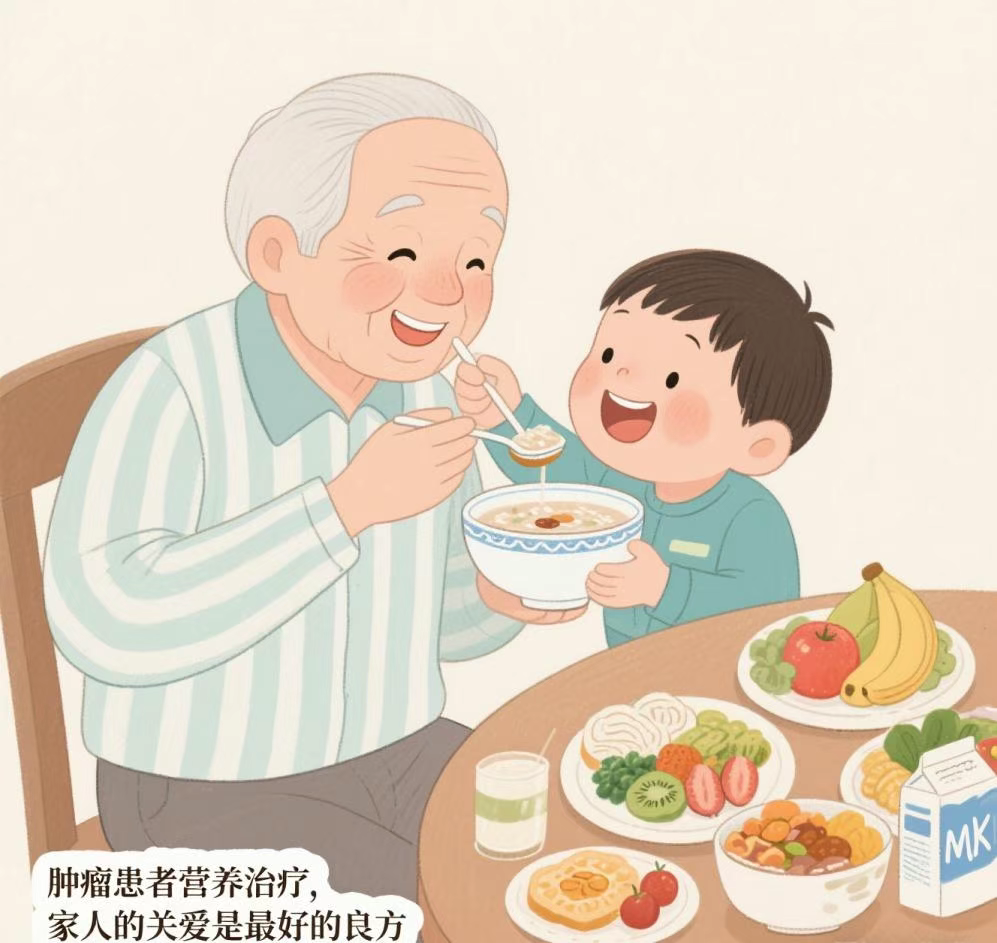
Below is a concise overview of key principles for nutrition therapy in cancer:
1.Personalized Plans: Tailor strategies to the patient’s baseline health, tumor type, treatment phase, and nutritional status (e.g., weight changes, blood markers). Consultation with a dietitian before treatment is recommended for early intervention.
2.Adequate Energy and Protein: Energy: Requirements often exceed those of healthy individuals (25–30 kcal/kg/day) to prevent excessive weight loss. Protein: Critical for tissue repair and immunity (1.2–2.0 g/kg/day). Prioritize high-quality sources like fish, eggs, dairy, lean meat, and legumes.
3.Balanced Diet: Ensure intake of carbohydrates, fats, vitamins, and minerals. Emphasize whole grains, fresh fruits, and vegetables.
4.Addressing Specific Challenges: Poor Appetite: Opt for smaller, frequent meals; choose calorie-dense foods (e.g., nutritional powders, protein supplements); adjust flavors (e.g., sour/sweet tastes to stimulate appetite). Digestive Issues: Avoid greasy or raw foods if diarrhea occurs; for swallowing difficulties, puree solids or use liquid/semi-liquid diets.
5.Nutrition Therapy Methods: Oral Nutritional Supplements (ONS): Use medical nutrition formulas (e.g., enteral nutrition powders/liquids) when food intake is insufficient. Enteral/Parenteral Nutrition: For severe cases (e.g., radiation-induced mucositis impairing oral intake), administer via feeding tubes (enteral) or intravenous lines (parenteral) under medical supervision.
Key Points from Search Results:
1.Avoid blind "dietary restrictions": Refrain from excessively limiting so-called "stimulating foods" (e.g., chicken, seafood) unless the patient has allergies to specific foods.
2.Adjust based on treatment phases: For example, during radiotherapy or chemotherapy, a bland diet may be temporarily needed to reduce gastrointestinal irritation; gradually increase nutritional density during recovery.
3.Monitor and adjust: Regularly assess weight and dietary intake, modify the plan according to physical responses, and consult a nutritionist if necessary.
Hu Tingchao, Associate Chief Physician of Radiation Oncology V
● Director of Radiotherapy Department V (Head and Neck Tumor Radiotherapy) at Gansu Wuwei Cancer Hospital
● Member of the Chinese Anti-Cancer Association
● Committee Member of Gansu Provincial Radiotherapy Association
● Council Member of the Western Radiotherapy Association (Third Session)
● Committee Member of the Particle Therapy Branch, China Association of Medical Equipment
Education and Training:
Graduated from the Clinical Medicine Department of Lanzhou University in 2005. With 18 years of experience in tumor radiotherapy, he has pursued advanced training at Sichuan Cancer Hospital, Fukuoka Tokushukai Medical Group (Japan), Shanghai Proton and Heavy Ion Center, and Sun Yat-sen University Cancer Center (Guangzhou).
Specializations:
1.Expertise in comprehensive treatment (radiotherapy, chemotherapy, targeted therapy) for head and neck tumors, gliomas, lymphomas, chordomas, and other common malignancies.
2.Precision radiotherapy techniques: Three-dimensional conformal radiotherapy (3D-CRT), intensity-modulated radiotherapy (IMRT), volumetric modulated arc therapy (VMAT), stereotactic body radiotherapy (SBRT), image-guided radiotherapy (IGRT), and carbon ion radiotherapy (CIRT). Extensive experience in radiotherapy planning, organ protection, and managing side effects.
Research Achievements:
Published over 10 professional papers, authored one monograph, holds one utility model patent, led two municipal-level research projects in Wuwei, contributed to drafting carbon ion radiotherapy standard protocols, and repeatedly awarded "Outstanding Worker" by the hospital.
Department of Head and Neck Tumor Radiotherapy (Department V):
A clinical, research, and teaching unit specializing in: meningiomas, pituitary tumors, acoustic neuromas, gliomas, intracranial tumors, nasopharyngeal carcinoma, oral cancer, ocular tumors, laryngeal cancer, hard palate cancer, hypopharyngeal cancer, chordomas, and systemic lymphomas.
Heavy-Ion Therapy Advantages:
Head and neck malignant melanoma, head and neck sarcoma, adenoid cystic carcinoma, recurrent head and neck cancer, skull base chordoma, chondrosarcoma, and glioma.

