
Breast Cancer Hypofractionated Radiotherapy: A Boon for Patients
Breast Cancer Hypofractionated Radiotherapy: A Boon for Patients
In recent years, the global incidence of breast cancer has continued to rise. Post-breast-conserving surgery radiotherapy significantly reduces the risk of local recurrence and improves survival outcomes. Traditional conventional radiotherapy typically involves a 6–7-week course (2.0 Gy per fraction, 5 sessions weekly, totaling 50 Gy), with sequential boosts of 10–16 Gy delivered in 5–8 fractions. This prolonged regimen not only imposes psychological distress on patients but also increases financial burdens.
To shorten treatment duration and conserve medical resources, hypofractionated radiotherapy has gained increasing adoption globally in recent years.
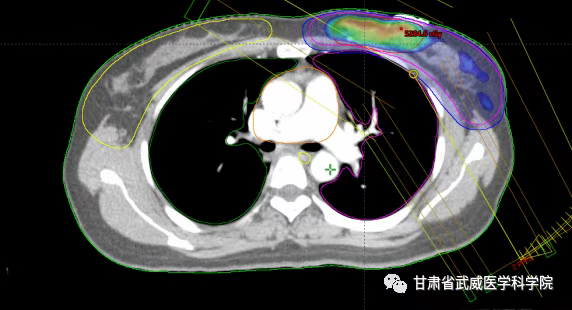
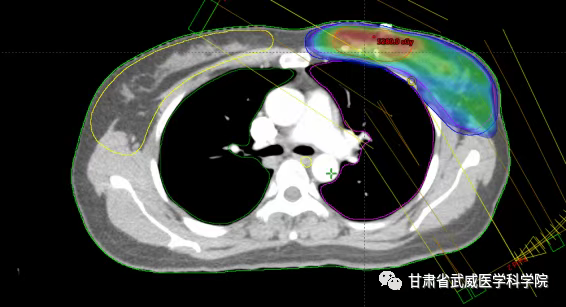
SIB-VMAT Radiotherapy Plan
Compared to conventional radiotherapy, hypofractionated radiotherapy delivers higher single-fraction doses (2.6–3.2 Gy) over fewer sessions (13–15 fractions within 3 weeks), achieving a total dose of 39.0–43.5 Gy. This approach halves treatment duration and reduces costs by nearly one-third .
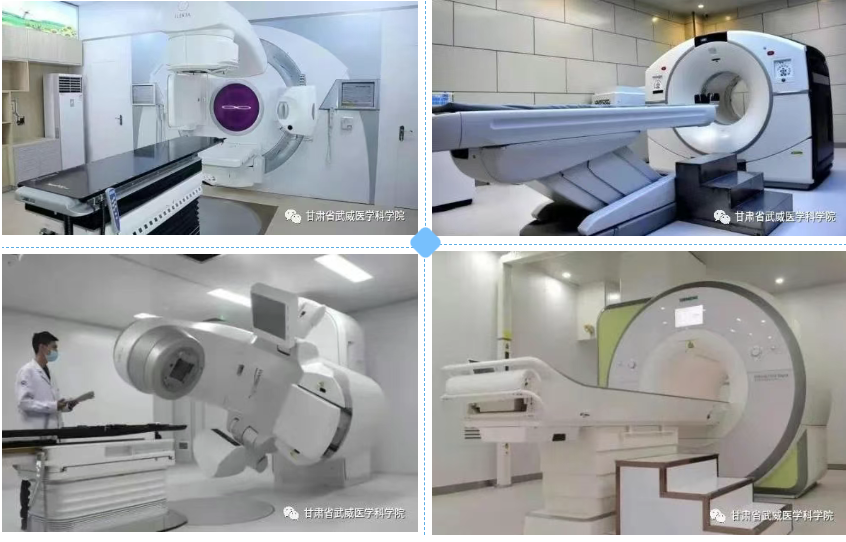
Clinical Implementation at Our Hospital
Dr. Hu Tingchao of the Fifth Department of Radiotherapy at our hospital has pioneered SIB-VMAT for post-lumpectomy breast cancer patients. Over 20 cases have been treated with a regimen of 39.5 Gy to the tumor bed and 43.5 Gy to the whole breast using VMAT with simultaneous integrated boost (SIB). This method reduced treatment from 30 sessions (6–7 weeks) to 15 sessions (3 weeks), significantly shortening hospitalization time and improving patient compliance. Notably, severe complications were nearly eliminated, and treatment costs were reduced by approximately 30%, earning widespread praise from patients .
Key Advantages
1.Accelerated Recovery: Higher doses per fraction (e.g., 2.6–3.2 Gy) reduce overall treatment time, minimizing disruption to patients' lives
2.Cost-Effectiveness: Reduced sessions lower indirect expenses (e.g., travel, accommodation) while maintaining efficacy .
3.Enhanced Precision: VMAT technology ensures minimal radiation exposure to surrounding healthy tissues, aligning with the principles of hypofractionation
Clinical Impact
This technique has proven particularly beneficial for patients requiring rapid recovery. Studies confirm comparable local control and survival rates to conventional regimens, with reduced risks of late complications like fibrosis . As hypofractionation gains broader acceptance, it is expected to revolutionize breast cancer care, making radiotherapy more accessible and tolerable .
Contact Information
Consultation Hotline:
Deputy Chief Physician Li Xiaojun: +8613150160200
Deputy Chief Physician Hu Tingchao: +8615339404716
Medical Address: Heavy Ion Hospital Campus, Gansu Wuwei Tumor HospitalNo. 31, Tianyi Road, Liangzhou District, Wuwei City, Gansu Province, China

