
Millimeter-level "Battlefield": The Hemostatic Artistry of Interventional Radiologists
Millimeter-level "Battlefield": The Hemostatic Artistry of Interventional Radiologists
I. When Tumor Bleeding Becomes a Life-Threatening Emergency
One of the most critical emergencies for cancer patients is sudden tumor rupture and hemorrhage. Whether it’s massive abdominal bleeding from liver cancer rupture, hemoptysis caused by lung cancer invading blood vessels, or vaginal hemorrhage due to gynecological tumors, these scenarios can rapidly lead to life-threatening hemorrhagic shock. While traditional surgery can achieve hemostasis, it poses high risks for patients with poor physical condition, coagulopathy, or tumors in challenging locations. Interventional therapy, like a precise "key to life," offers hope.
II. Interventional Therapy: Millimeter-Precision "Plugging" of Hemorrhage
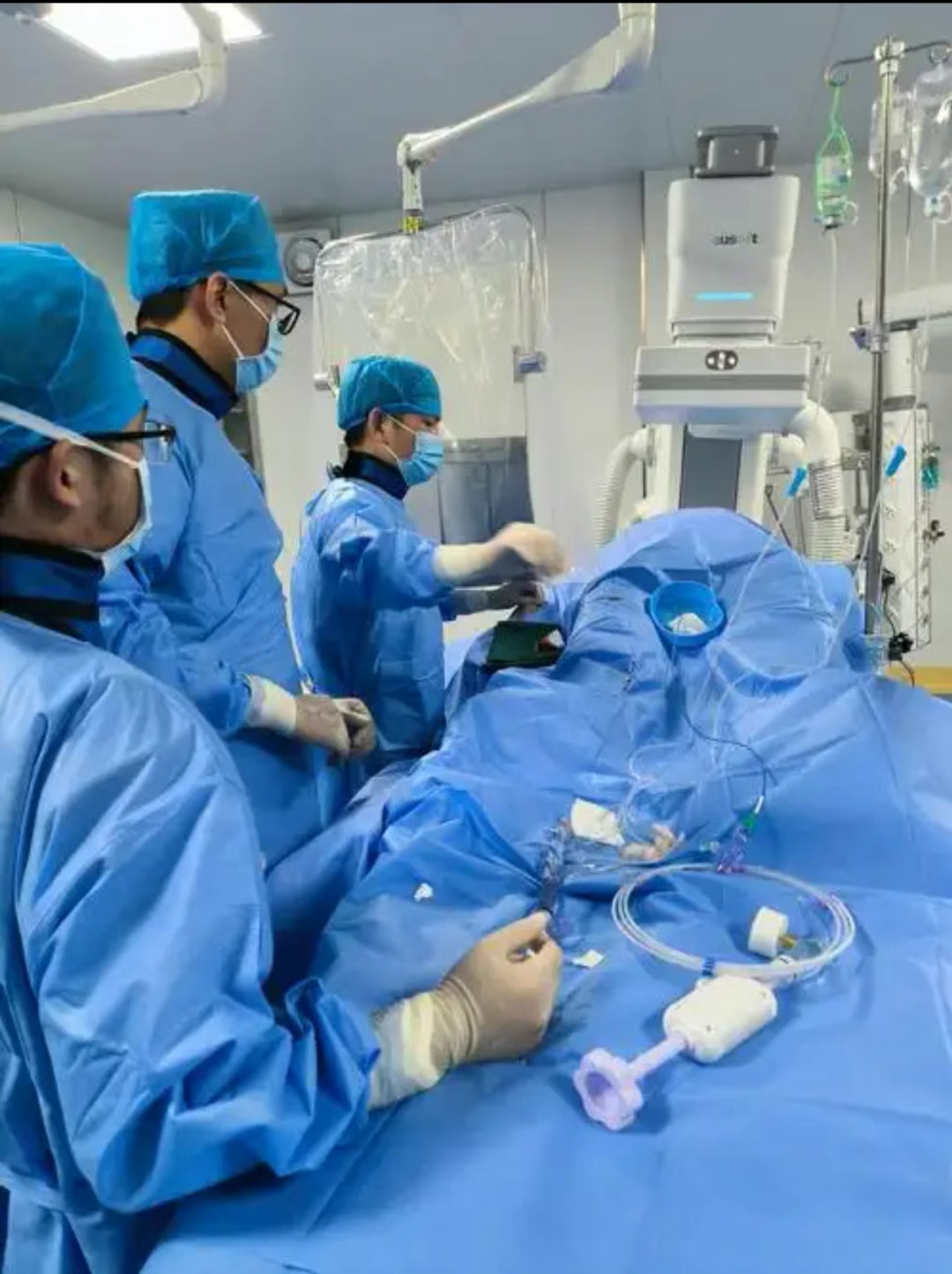
Its technical advantages lie in four dimensions:
- Minimally Invasive: Requires only 1–2 mm skin puncture points, avoiding major trauma like laparotomy or thoracotomy.
- Precise Targeting: Under real-time imaging guidance, physicians visualize the "leak point" of bleeding vessels and directly inject embolic agents (e.g., gelatin sponge, microspheres, coils) for "pinpoint accuracy."
- Rapid Hemostasis: From puncture to embolization, active bleeding can be controlled within 30 minutes, buying time for further treatment.
- Broad Applicability: Safe even for patients unable to tolerate surgery due to advanced cancer or cardiopulmonary dysfunction.
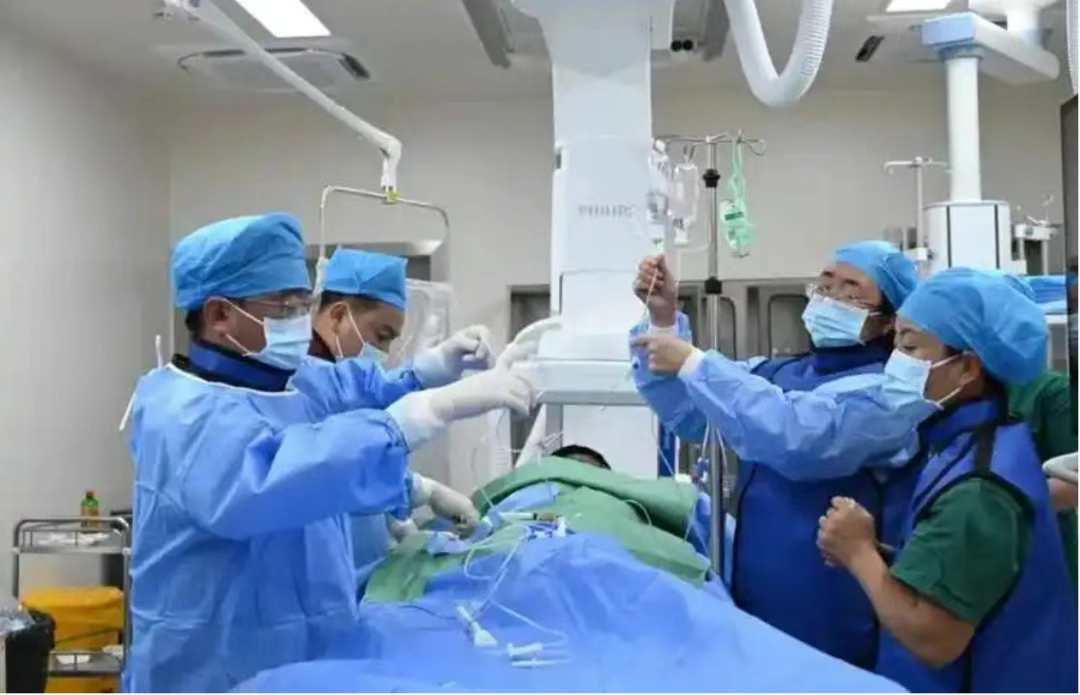
III. Case Study
Patient: Female, 54 years old.
Admission: Metastatic abdominal cancer (2 years), persistent hematuria (2 weeks).
History: Gross hematuria with blood clots and fatigue for 2 weeks; failed hemostatic treatment with worsening bleeding.
Procedure: Emergency left internal iliac artery angiography revealed three tortuous branches supplying the bladder. A microcatheter was used to selectively embolize each branch with PVA-0600 microspheres under fluoroscopy. Post-embolization angiography showed slowed flow and contrast retention.
Outcome: Bladder irrigation fluid turned from bright red to light red overnight and became colorless by the next morning.
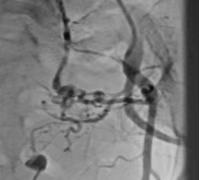
Pre-embolization Angiography Post-embolization Angiography
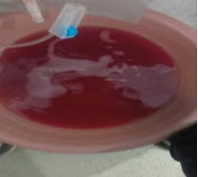
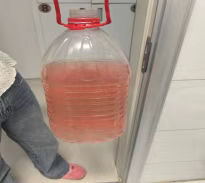
Pre-embolization Bladder Irrigation 6h Post-embolization Irrigation
IV. Case Study
Patient: Female, 50 years old.
Admission: Postoperative retroperitoneal malignancy with increasing drain tube bleeding.
Procedure: Angiography revealed contrast extravasation and retention in the mid-right external iliac artery, indicating rupture. Hemostasis was achieved with a 4×40 mm balloon compressed at 6 atm. A covered stent was then implanted.
Outcome: Bleeding resolved, enabling subsequent treatment.
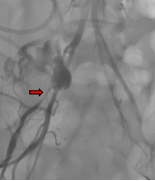
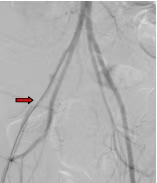
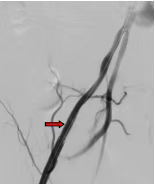
Pre-op Angiography Post-balloon Compression Angiography Post-stent Angiography
V. Conclusion: Multidisciplinary Intervention Rewrites Outcomes in Tumor Bleeding
Managing tumor hemorrhage is a race against time and a convergence of multidisciplinary expertise. Interventional therapy, with its speed, precision, and minimal invasiveness, is indispensable in modern oncology emergency systems. It serves not only as a "first responder" for hemostasis but also as a "bridge" integrating surgery, chemotherapy, radiotherapy, and targeted therapy—offering survival opportunities and expanding possibilities for comprehensive cancer care.

Professor Ye Kui
Education: Ph.D., Tianjin Medical University.
Experience: 15 years in vascular surgery. Trained at Tianjin Nankai Hospital.
Expertise:
- Minimally invasive treatments for varicose veins (sclerotherapy).
- Interventional surgery for lower limb arteriosclerosis obliterans (stents, drug-coated balloons, shockwave balloons).
- Deep vein thrombosis (anticoagulation, IVC filter placement/removal).
- Dialysis access establishment/maintenance, diabetic foot management, amputation.
- Visceral artery diseases (renal/subclavian/mesenteric artery stenosis/thrombosis), aortic interventions.
- Organ hemostasis, arterial repair/embolectomy.
- Biliary/intestinal stenting, jejunal feeding/obstruction tubes.Research: Completed Tianjin Municipal Health Commission scientific project.

Director Yang Wangsheng
Key Minimally Invasive Procedures (Cardiology & Interventional Dept.):
(I) Heart & Great Vessels:
- Congenital heart disease (ASD/VSD/PDA) catheter closure; PCI for CAD; pacemaker implantation; RFCA for arrhythmias.
- Aortic dissection/aneurysm endovascular repair (TEVAR/EVAR); stent placement for ulcers/intramural hematoma.(II) Peripheral Vascular:
- PAD interventions (angioplasty/stenting); renal/subclavian artery stenting.
- DVT thrombolysis/thrombectomy; IVC filter placement/removal.
- Varicose veins (RFA/foam sclerotherapy); acute arterial embolectomy/thrombolysis; PE thrombectomy/thrombolysis.(III) Oncology & Other:
- Embolization for massive hemoptysis/GI/gynecologic bleeding.
- Interventional oncology (TACE for HCC, uterine fibroids, cervical cancer, soft tissue tumors).
- IV port placement/removal.Address: 1st Floor, Building 1, Gansu Wuwei Cancer Hospital Heavy Ion Campus.

