Tumor Minimally Invasive Treatment Center Successfully Completes First Minimally Invasive Treatment
Tumor Minimally Invasive Treatment Center Successfully Completes First Minimally Invasive Treatment for Mediastinal Lymph Node Metastasis Using "3D-Printed Coplanar Template Seed Implantation Technology"
Tumor Minimally Invasive Treatment Reaches New Heights: Precision "Particle Knife" Targets Complex Mediastinal Metastasis
Recently, our hospital's Tumor Minimally Invasive Treatment Center successfully applied the internationally advanced "3D-printed coplanar template-guided I125 radioactive seed implantation technology" to perform high-precision, minimally invasive radioactive seed implantation therapy for Mr. Dong (pseudonym), a patient with multiple metastases (including complex mediastinal lymph node metastasis) after gastric cancer surgery. The successful implementation of this procedure marks a significant breakthrough for our hospital in the precise minimally invasive treatment of advanced tumors in complex anatomical locations, offering new hope for patients with refractory tumors.
Complex Patient Condition, Limited Conventional Treatment Options
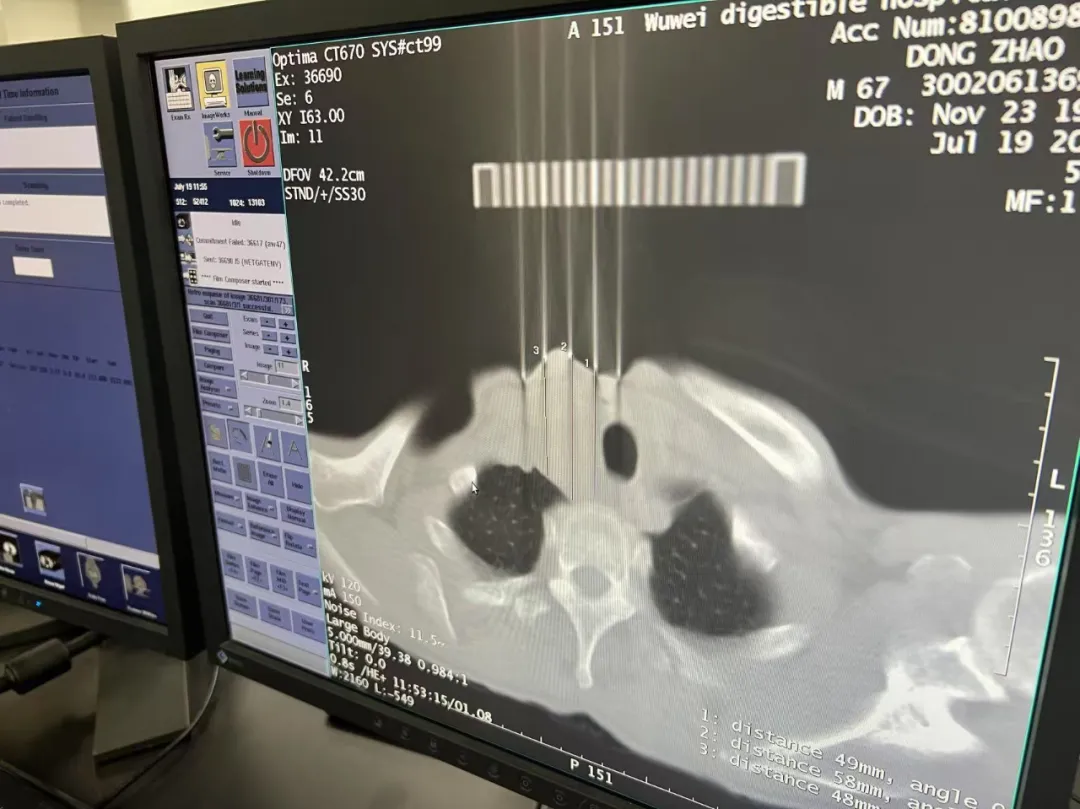
Patient Mr. Dong, 67 years old, sought treatment due to hoarseness persisting for 4 months, occurring 5 months after radical gastrectomy for gastric cancer. Comprehensive examinations confirmed the diagnosis: 1. Malignant tumor of the stomach (moderately differentiated adenocarcinoma, rpT1bN1M1, Stage IV); 2. Secondary malignant tumors in both lungs; 3. Secondary malignant tumor in mediastinal lymph nodes. The location of the mediastinal metastatic lymph nodes was particularly special and perilous – adjacent to both the esophagus and the major airway (trachea). This location rendered conventional external beam radiation therapy (radiotherapy) contraindicated, as high-dose radiation carries an extremely high risk of causing irreversible damage to these vital adjacent organs. Although the patient was in an advanced stage of cancer, his general condition was still good (KPS score 90), urgently necessitating a precise treatment modality capable of effectively controlling the mediastinal lesions while maximally protecting the surrounding normal tissues.
Innovative Technology Breaks the Deadlock, Minimally Invasive Precision Treatment
Faced with this clinical challenge, our hospital's Tumor Minimally Invasive Treatment Center team tackled the challenge head-on. Following meticulous MDT (Multidisciplinary Team) discussions, the decision was made to employ the advanced "3D-printed coplanar template-guided I125 radioactive seed implantation technology" to solve this difficult problem.
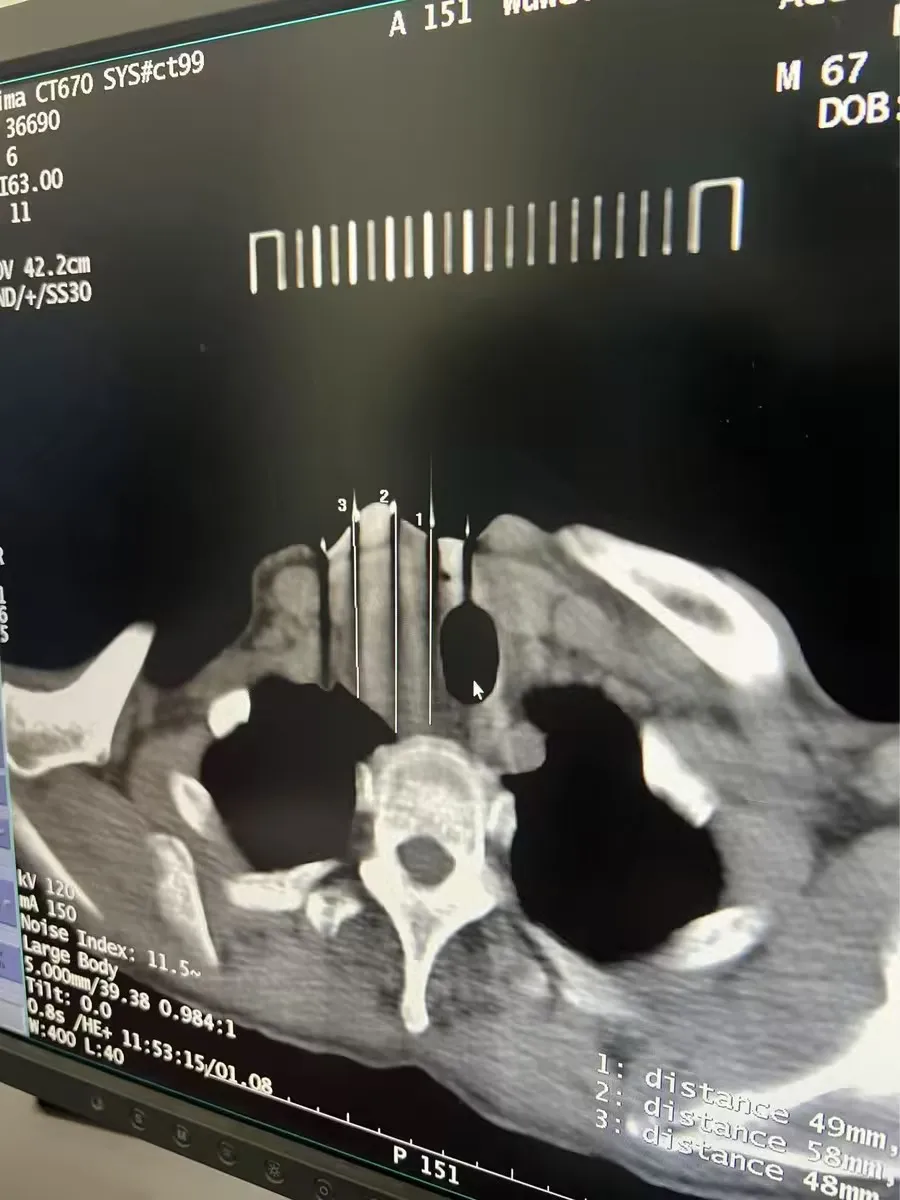
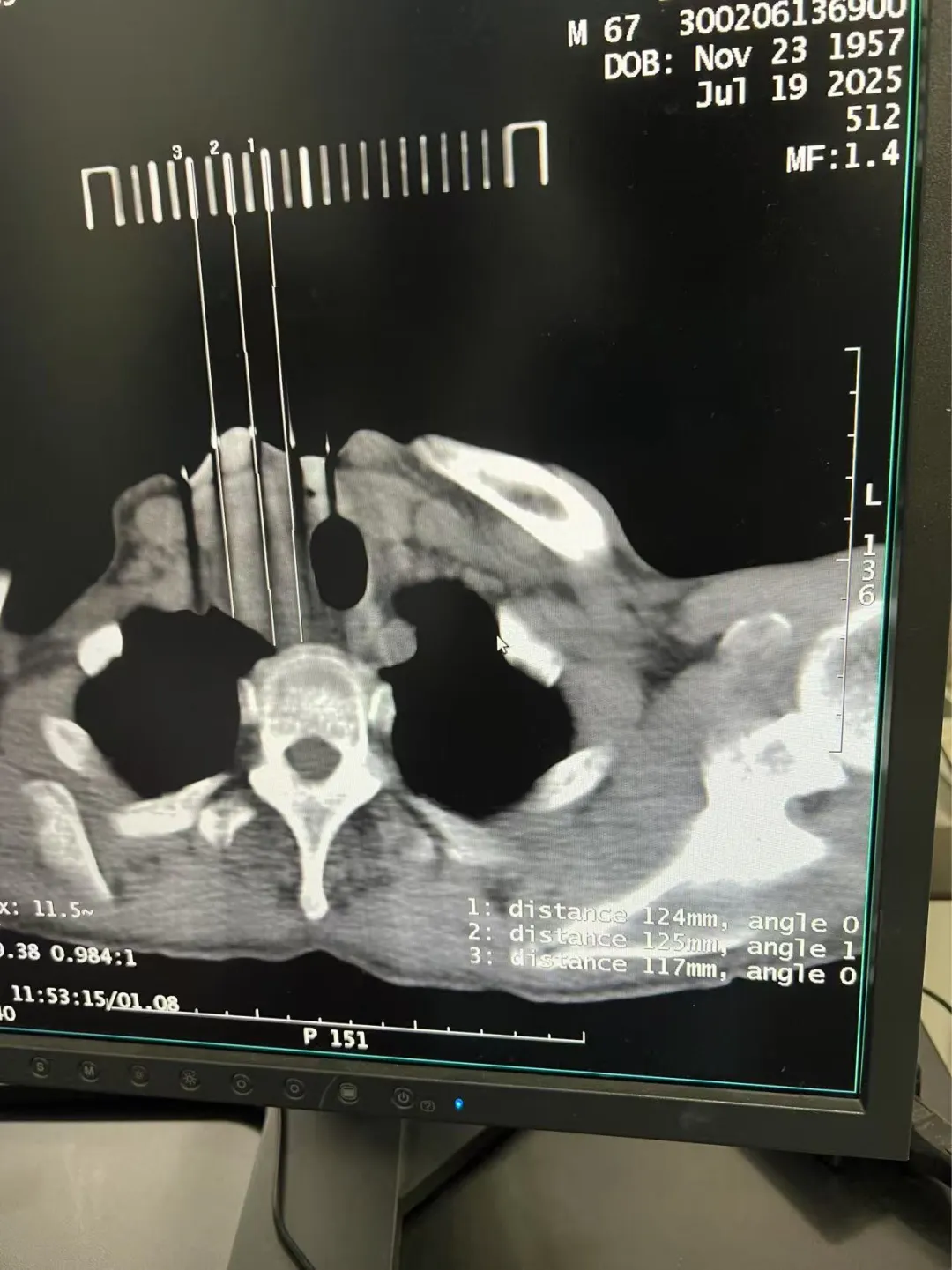
Precise Planning: Preoperatively, the team utilized the patient's high-resolution CT imaging data for three-dimensional reconstruction, precisely delineating the target area of the mediastinal metastatic lymph nodes, and meticulously planned puncture pathways avoiding critical organs such as the esophagus, trachea, and major blood vessels.
3D-Printed Personalized Template: Based on the preoperative plan, a "coplanar template" customized to perfectly fit the patient's body surface anatomy was fabricated using 3D printing technology. This template features precisely arranged pre-set guide holes, akin to laying down "precision tracks" for the seed implantation procedure.
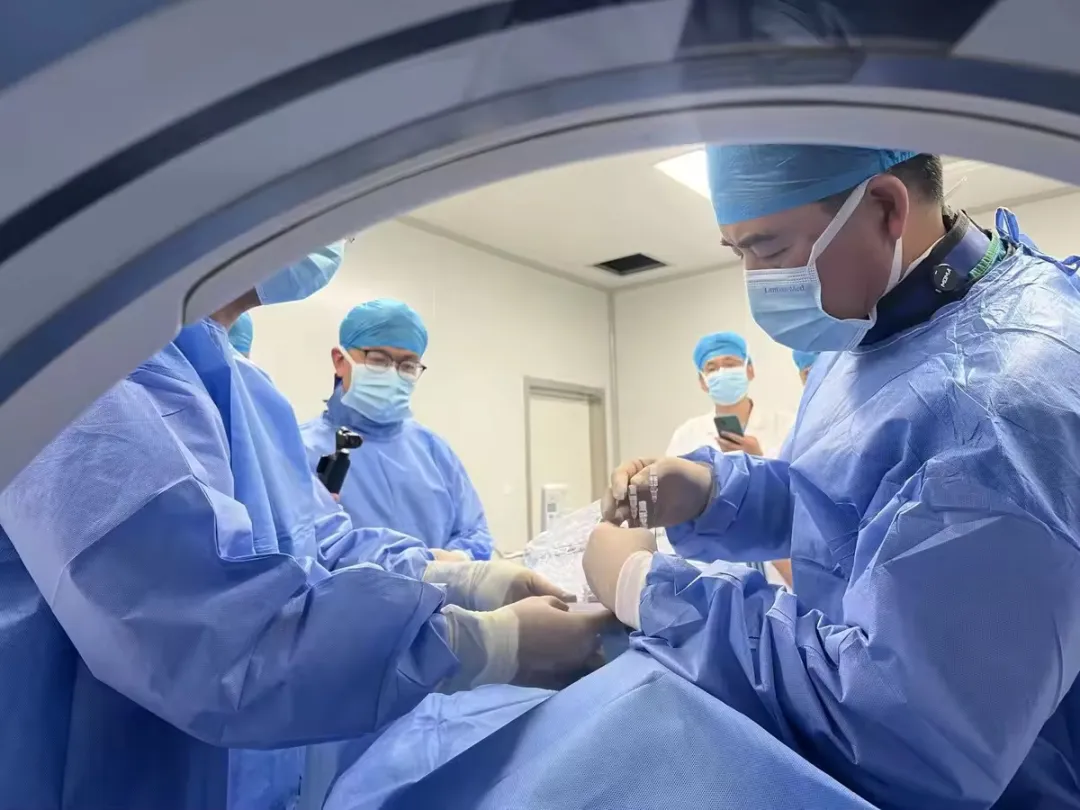
CT-Guided Minimally Invasive Implantation: The surgery was performed under intravenous compound anesthesia. Under real-time CT image guidance, the doctors fixed the 3D-printed template onto the corresponding area of the patient's body surface. Through the pre-set guide holes on the template, puncture needles were able to accurately and safely bypass vital organs, reaching deep inside the mediastinal lymph node target area. Subsequently, the calculated dose of radioactive iodine-125 (I125) seeds were precisely and uniformly implanted into the tumor via the puncture needle channels.
Invited Expert Assistance Ensures Complete Surgical Success
To guarantee the procedure's success and promote the advanced technology, the center specially invited a renowned domestic expert in seed implantation – Professor Zhang Kaixian from Tengzhou Central People's Hospital – to provide on-site guidance and perform the surgery. Under Professor Zhang's proficient operation and the close collaboration of our Tumor Minimally Invasive Treatment Center team, the surgical procedure proceeded smoothly and successfully. The seeds were precisely positioned within the tumor according to plan, achieving the ideal dose distribution while effectively protecting the adjacent esophagus and trachea. Postoperatively, the patient returned safely to the ward and recovered well.
Technology Advantages Shine, Benefiting More Patients
The successfully applied "3D-printed coplanar template-guided I125 radioactive seed implantation technology" offers significant advantages:
- Ultra-high Precision: The 3D-printed template perfectly translates the preoperative virtual plan into actual operation, greatly improving the accuracy of needle puncture and seed placement, with errors controlled at the millimeter level.
- Extreme Minimally Invasive: Treatment is completed solely through tiny puncture needle holes, causing minimal trauma and enabling rapid patient recovery.
- Safe and Reliable: Effectively avoids the "blind spot" risks associated with traditional freehand puncture, making it particularly suitable for tumors adjacent to vital organs or with complex structures (such as mediastinal, skull base, retroperitoneal, etc.).
- Dose Optimization: Achieves highly conformal and uniform dose distribution within the tumor target area, significantly improving local control rates while minimizing the radiation dose and risk of damage to surrounding normal tissues.
- Overcomes Radiotherapy Contraindications: Provides an effective local treatment option for patients who cannot undergo external radiotherapy due to the tumor's special location.
Opening a New Chapter in Precision Minimally Invasive Treatment
The success of this challenging I125 seed implantation procedure for mediastinal lymph node metastasis represents a solid step forward for our Tumor Minimally Invasive Treatment Center on the path towards precision, individualization, and minimally invasive therapy. It not only successfully solved a clinical dilemma for a patient with advanced cancer but also fully demonstrated our hospital's capability and commitment in introducing and applying cutting-edge international technologies, and integrating high-quality medical resources (such as the collaboration with invited Professor Zhang Kaixian).
The successful application of this technology opens new therapeutic avenues and brings new hope for survival to numerous patients with advanced tumors in complex locations previously considered difficult to treat effectively with local therapies (such as central lung cancer, pancreatic cancer, recurrent head and neck tumors, metastasis in special lymph node locations, etc.). The Tumor Minimally Invasive Treatment Center will continue to deepen its expertise in the field of precision minimally invasive treatment, constantly introducing and developing new technologies, and striving tirelessly to enhance the level of oncology diagnosis and treatment in our region and benefit a wide range of patients.