Essential Test for Endometrial Cancer: POLE Gene Mutation Analysis
Essential Test for Endometrial Cancer: POLE Gene Mutation Analysis
Summary
The POLE gene belongs to the DNA polymerase B family and serves as a catalytic subunit of DNA polymerase ε, possessing 5’→3’ DNA polymerase activity and 3’→5’ exonuclease activity, playing a crucial role in DNA replication and proofreading. The exonuclease domain of this gene includes exons 9 to 14, and mutations in this region can lead to the failure of correcting newly generated mutations during DNA synthesis, potentially contributing to tumorigenesis. Whole-exome and whole-genome sequencing studies have confirmed that approximately 600 types of human tumors are associated with POLE gene mutations, with endometrial cancer exhibiting the highest mutation rate at 10%, followed by colorectal cancer.
Guidelines such as the Chinese Guidelines for the Diagnosis and Treatment of Endometrial Cancer (2021 Edition), the NCCN Clinical Practice Guidelines in Oncology: Uterine Neoplasms (2022 V1), and the Chinese Expert Consensus on Molecular Testing for Endometrial Cancer (2021 Edition) recommend POLE gene testing for patients with endometrioid adenocarcinoma. It is advised to classify endometrial cancer molecular subtypes based on MMR/MSI status and p53 status: POLE ultramutation (POLEmut), mismatch repair-deficient (MMRd), no specific molecular profile (NSMP), and p53-abnormal (p53abn).

Figure 1. The recommended molecular subtyping workflow for endometrial cancer as proposed in the Consensus.
Molecular subtyping of endometrial cancer provides significant guidance for its diagnosis and treatment. Firstly, it aids in prognosis prediction: the molecular subtyping of endometrial cancer allows for the prediction of patient outcomes. Patients with the POLE ultramutation subtype exhibit the most favorable prognosis, with rare recurrence or mortality. However, POLEmut cases are predominantly observed in high-grade endometrioid endometrial carcinomas (EEC). Among all endometrial cancer cases, POLEmut accounts for 6%-8%, while this proportion increases to 15% in high-grade EEC. Patients with p53 mutations demonstrate the worst prognosis, whereas those with MMR deficiency or non-specific molecular profiles show intermediate outcomes. Secondly, it informs adjuvant therapy decisions. Although prospective clinical studies on the application of molecular subtyping to guide adjuvant therapy in endometrial cancer remain limited, the European Society of Gynaecological Oncology (ESGO), the European Society for Radiotherapy and Oncology (ESTRO), and the European Society of Pathology (ESP) have jointly developed guidelines for endometrial cancer management. These guidelines recommend integrating molecular subtyping results with clinical and pathological features to stratify patients' recurrence risks, thereby guiding adjuvant treatment strategies.
Furthermore, POLE-mutant endometrial cancers exhibit a high tumor mutation burden (>100 mutations/Mb), making them potential candidates for benefiting from PD-1/PD-L1 immunotherapy. To avoid overtreatment and improve patients' quality of life, POLE mutation testing should be performed when exploring the possibility of immunosuppressive therapy.
Currently, our laboratory employs qPCR combined with Sanger sequencing for POLE gene detection. We have designed specific primers and probes targeting exons 9 to 14 of the human POLE gene. The qPCR-amplified products are subjected to sequencing analysis. The sequencing results are imported into the nucleic acid sequence analysis software Sequencing Analysis 5.2, where the detection outcomes at each locus of the samples are compared against the reference sequence (wild type) for comparative analysis to determine the POLE gene status.

Figure 2 Detection Result Example
Target population
Patients with endometrial cancer and patients with colorectal cancer.
Test indicators
Exons 9 to 14 of the POLE gene.
Sample Submission Requirements
(1) Both outpatient and inpatient cases are eligible for this test. Clinical order name: POLE Gene Detection.
(2) Sample requirements: Paraffin-embedded tissue samples (tumor cell content >70%, storage duration ≤5 years).
(3) Reporting timeline: Results are available within 1-7 working days. Testing is performed every Monday, with reports issued by 8:00 PM on the same day.
Center for Biochip Technology
The biochip center offers genetic testing services including hereditary disease screening (such as deafness genes and newborn early screening), pathogen detection (covering respiratory pathogens, respiratory viruses, and SARS-CoV-2 nucleic acid testing), oncogene testing (including ALK, ROS1, NRAS, HRAS, PIK3CA, MET, RET, HER-2 and other biomarkers), as well as pharmacogenomic testing (providing medication guidance for clopidogrel, warfarin, statins, proton pump inhibitors, and hypertension-related genetic testing).

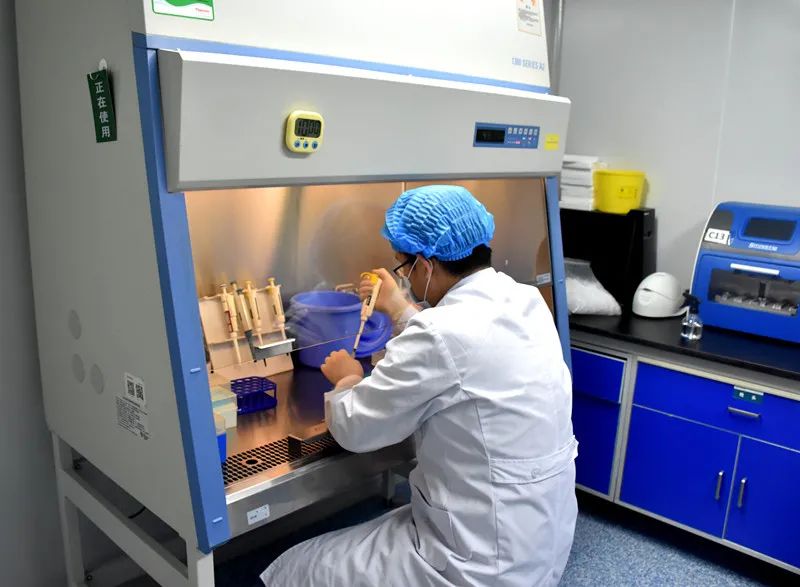

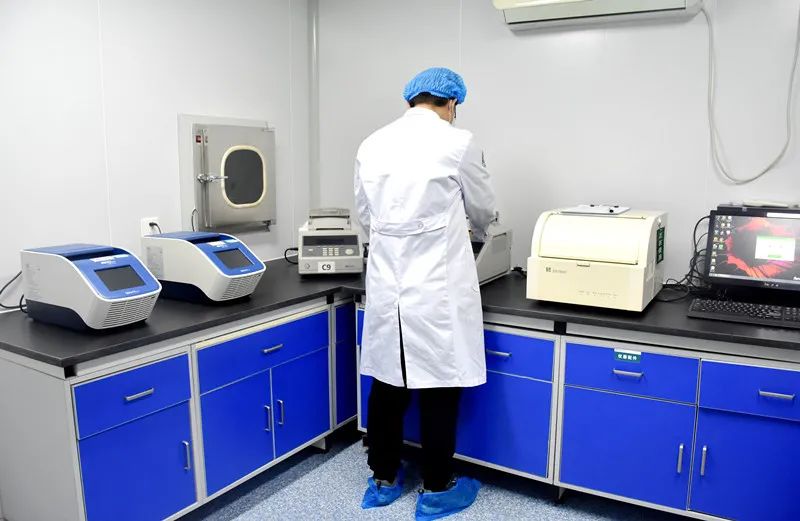
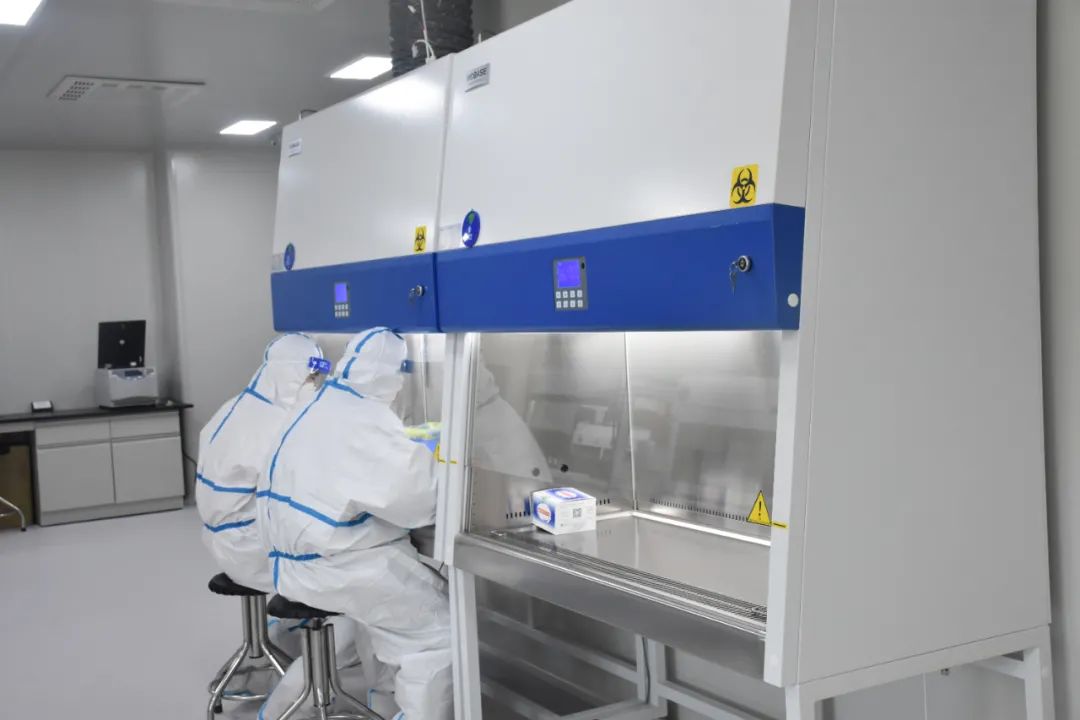
Glimpses of the Gene Biochip Laboratory and Biological Immune Cell Therapy Laboratory
The Biological Immune Therapy Laboratory is pioneering cutting-edge high-tech tumor cell immunotherapy techniques. Currently, it conducts clinical research on cell-based immunotherapies including CIK cells, NK cells, DC-CIK, and umbilical cord mesenchymal stem cells. Upcoming projects will involve clinical trials of CAR-T cell therapy.