Non-Disfiguring Treatment Options for Buccal Mucosa Cancer
Non-Disfiguring Treatment Options for Buccal Mucosa Cancer
Let me first introduce buccal mucosa cancer. This is a malignant tumor occurring in the oral mucosa. Although less well-known than cancers like lung or liver cancer, it significantly impacts patients' quality of life and physical and mental health. Traditional treatments such as surgery, chemotherapy, and radiation therapy often come with tremendous pain and side effects, sometimes even causing disfigurement.
Since buccal mucosa cancer typically shows no obvious symptoms in its early stages, most patients are diagnosed only after the cancer has invaded surrounding tissues such as the tongue, oropharynx, cheeks, masseter muscle, mandible, and cervical lymph nodes. During tumor resection, to ensure clear margins, adjacent healthy tissues are often removed as well. This can impair essential physiological functions like swallowing, chewing, and speech, while also affecting facial appearance, severely diminishing patients' quality of life and mental well-being. Postoperative flap reconstruction and functional restoration further increase the financial burden on patients. The risk of recurrence after surgery adds another layer of anxiety.
However, the emergence of heavy ion therapy offers new hope for buccal mucosa cancer patients. This advanced form of radiation therapy precisely targets tumor sites with high-energy heavy ion beams to destroy cancer cells. Compared to conventional radiotherapy, heavy ion therapy delivers greater precision with less damage to surrounding healthy tissues, resulting in milder side effects and a significantly improved quality of life for patients.

Another significant advantage of heavy ion therapy is its ability to preserve patients' facial appearance. Thanks to its precise radiation targeting, heavy ion therapy can effectively destroy cancer cells while minimizing damage to surrounding healthy tissues, including the skin and mucous membranes. This means buccal mucosa cancer patients undergoing heavy ion therapy have a much higher chance of avoiding disfigurement, allowing them to maintain their natural facial features.
Of course, heavy ion therapy is not a panacea - it cannot guarantee a 100% success rate. However, for patients with buccal mucosa cancer, this treatment represents a valuable new option that brings genuine hope. It empowers patients with renewed courage and strength on their cancer-fighting journey, offering a brighter prospect compared to conventional treatments.
Here’s a case study from our department featuring a patient who underwent heavy ion radiotherapy:
Case 1: Patient Tan **, male, 67 years old. On February 20, 2023, he noticed a painless millet-sized lump on the left buccal mucosa. The lump rapidly enlarged to 7×6 cm, accompanied by ulceration and purulent discharge on the left cheek, as well as limited mouth opening. Biopsy revealed high-grade intraepithelial neoplasia of the left buccal mucosa. Upon admission, imaging showed further enlargement of the left buccal mass with local ulceration and minimal exudation, persistent pain, and mouth opening restricted to approximately half a finger's width. MRI confirmed a 63×37.1×44.8 mm mass in the left buccal mucosa with perforation, maxillary alveolar invasion, and bilateral cervical lymph node metastasis. The patient sought treatment at our hospital on November 26, 2023, and began heavy ion radiotherapy on December 6, 2023, with a prescribed dose of 69 Gy (RBE)/23 fractions. He also received four cycles of TP chemotherapy. Currently, the tumor has nearly resolved, the buccal mucosa perforation has healed, pain is significantly relieved, and mouth opening has improved to approximately two and a half fingers' width.
The disease progresses from the initial discovery to gradual worsening
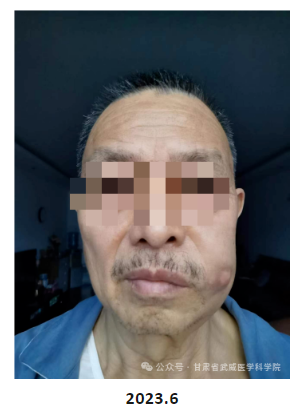
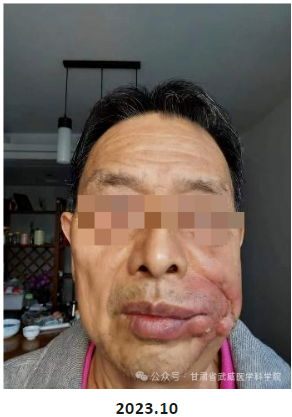
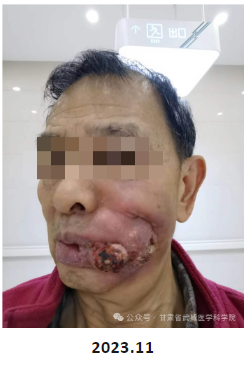
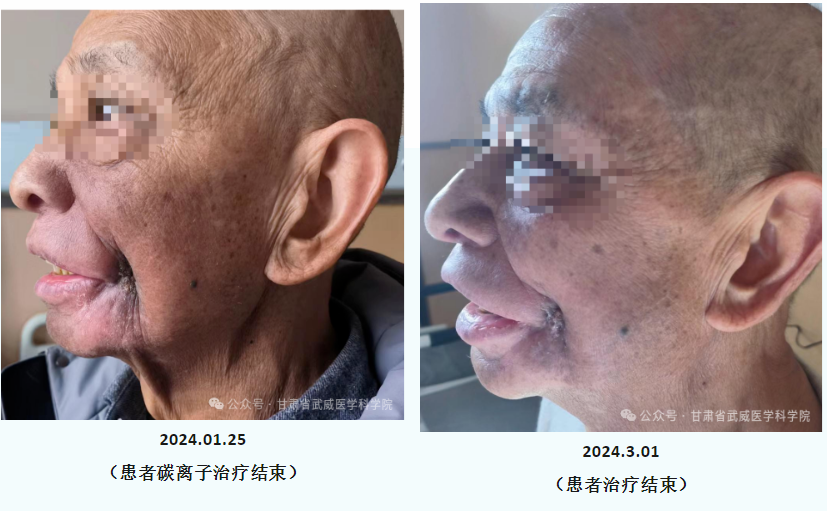
The patient's condition gradually improved following heavy ion radiotherapy
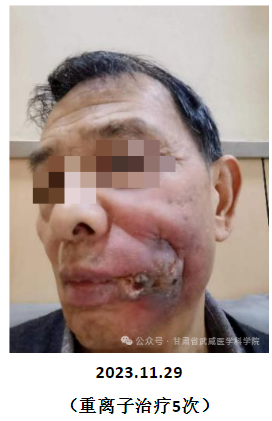
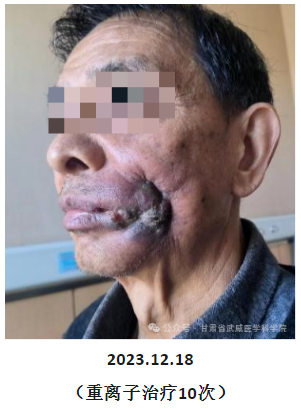
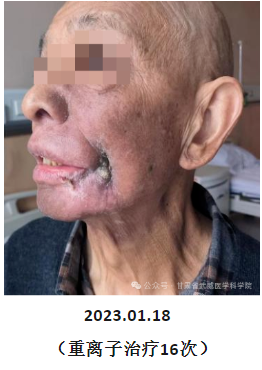
Note: The images show the patient's condition after 5, 10, and 16 sessions of heavy ion radiotherapy, respectively
Pre- and post-treatment MRI comparison:
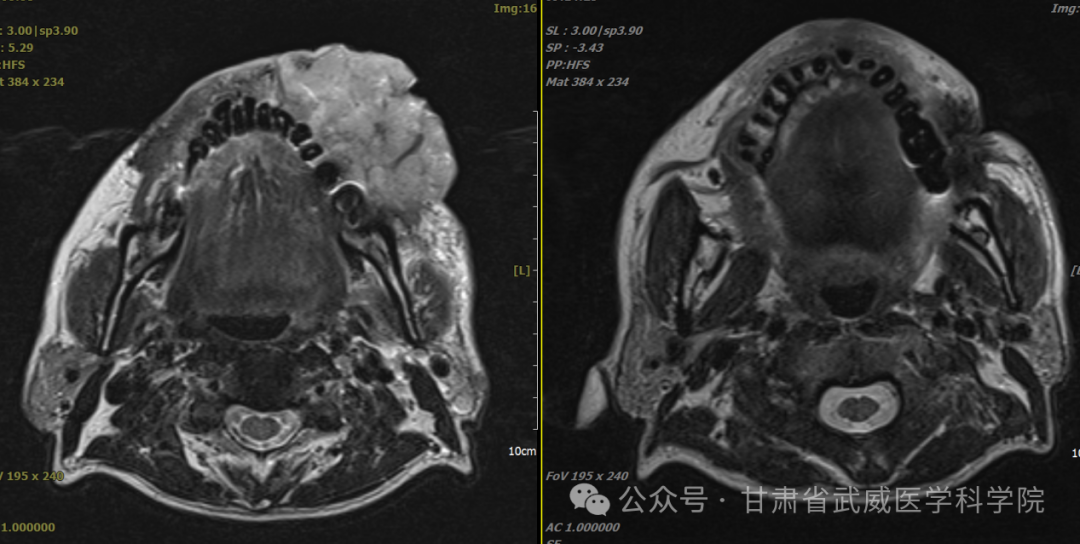
2023.11.29 2024.1.15
The patient has now completed the fourth cycle of chemotherapy in our department, with complete resolution of the buccal mass. At three months post-heavy ion therapy, the treatment response is evaluated as a complete response (CR).
The patient shared that during their hospitalization at West China School of Stomatology, Sichuan University (a WHO Collaborating Center), witnessing other patients recovering from surgery had shattered their hope for the future. Even when scheduled for a second surgery after rejoining the waiting list, they decisively chose Gansu Wuwei Heavy Ion Hospital upon learning about this alternative curative approach. The outcome has proven their choice to be absolutely right.
In the realm of medicine, cancer remains one of the most terrifying adversaries. Yet with technological advancements, we now possess more powerful weapons to combat this formidable enemy. Dubbed the "new anti-tumor marvel," heavy ion therapy has brought renewed hope to patients with buccal mucosa cancer.
Discipline leader
Hu Tingzhao, Associate Chief Physician in Radiation Oncology
●Director of Department of Radiation Oncology VII (Head and Neck Tumor Radiotherapy), Wuwei Cancer Hospital, Gansu Province
● Member of Chinese Anti-Cancer Association
●Committee Member of Gansu Provincial Radiotherapy Committee
● Council Member of the 3rd Board of Directors, Western Radiotherapy Association
●Committee Member of Particle Therapy Branch, China Medical Equipment Association
Education & Training: Graduated from the Department of Clinical Medicine, Lanzhou University in 2005. With 18 years of experience in radiation oncology, completed advanced training in tumor radiotherapy at: Sichuan Cancer Hospital (China), Fukuoka Tokushukai Hospital, Japan Shanghai Proton and Heavy Ion Center (China), Sun Yat-sen University Cancer Center, Guangzhou (China).
Specialties: 1. Expert in comprehensive treatment of various common malignancies including head and neck tumors, glioblastoma, lymphoma, and chordoma, utilizing chemotherapy, radiotherapy, and targeted therapy. 2. Proficient in precision cancer therapies: 3D conformal radiotherapy (3D-CRT), intensity-modulated radiotherapy (IMRT), volumetric modulated arc therapy (VMAT), stereotactic body radiotherapy (SBRT), image-guided radiotherapy (IGRT), and carbon ion radiotherapy (CIRT). Extensive experience in radiotherapy planning, normal tissue sparing, and management of radiation-related side effects.
Research & Publications: Published over 10 professional papers, authored 1 monograph, and holds 1 utility model patent. Led 2 municipal-level scientific research projects in Wuwei, contributed to the development of standardized protocols for carbon ion radiotherapy, and received multiple "Advanced Worker" awards at the hospital level.
Introduction of Wuwei Heavy Ion Center
Wuwei Academy of Medical and Science Cancer Hospital's Heavy Ion Center is China's first clinical application center for heavy ion therapy systems. Since its official launch in March 2020, the center has successfully operated for four years. To date, we have treated 1,188 patients with complex lesions in the skull, pancreas, lungs and other body parts, achieving excellent therapeutic outcomes. Patients have come from all over China. Building on three successful years of operation, the center has established China's first tumor rehabilitation town, creating a comprehensive, full-life-cycle health management system featuring: integrated tumor therapy, dietary management, psychosomatic health management, traditional Chinese medicine syndrome differentiation treatment, rehabilitation physiotherapy, bio-immune cell therapy, pastoral therapy, and cultural therapy.
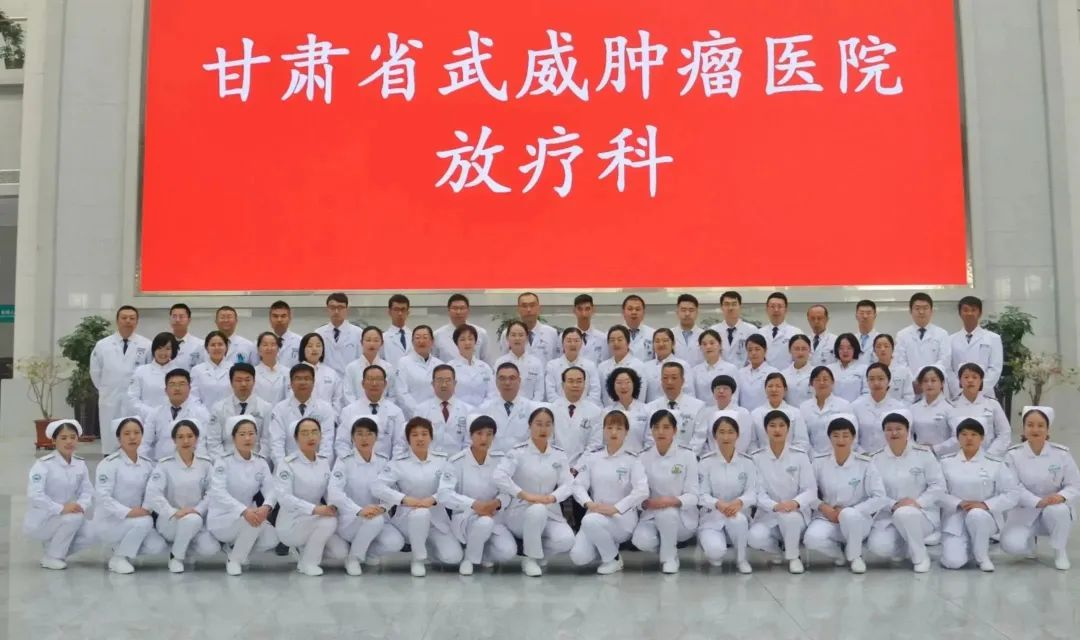
Department Introduction
The Department of Radiation Oncology for Head and Neck Tumors (Department VII) is a specialized ward integrating clinical care, research, and teaching.
Primary Treatment Areas: Meningioma, pituitary tumor, acoustic neuroma, glioma, intracranial tumors, nasopharyngeal carcinoma, oral cancer, ocular tumors, laryngeal cancer, hard palate cancer, hypopharyngeal cancer, chordoma, and lymphoma in various body regions.
Heavy Ion Therapy Advantageous for: Malignant melanoma of the head and neck, sarcoma of the head and neck, adenoid cystic carcinoma, recurrent head and neck cancers, skull base chordoma, chondrosarcoma, and glioma.
Contact information
Hu Tingchao: 13893540404
Wang Yan: 13299802885