Innovation & Integration: Shaping the Future of Gastric Care
Innovation & Integration: Shaping the Future of Gastric Care
--Our gastric surgery team has successfully performed independent laparoscopic proximal gastrectomy with HEFT reconstruction (gap method) for the first time
In recent years, the incidence of upper gastric cancer and adenocarcinoma of the esophagogastric junction has shown a yearly increasing trend. How to improve the postoperative quality of life (QOL) for these patients has garnered increasing attention. Selecting an appropriate surgical approach to preserve partial gastric function in these patients remains a focal point of academic research and discussion. Current guidelines and expert consensus recommend proximal gastrectomy (PG) combined with regional lymph node dissection as the treatment strategy for eligible early-stage cancers. For certain locally advanced cancers, multiple studies have demonstrated that PG is non-inferior to total gastrectomy (TG) in terms of oncological safety. Compared to TG, PG is relatively safer and can provide patients with significantly better QOL.
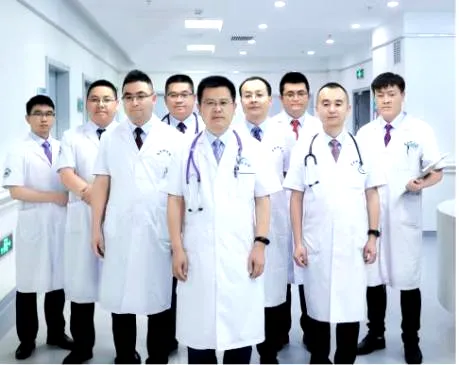
Roux-en-Y anastomosis (RY) has been widely adopted for digestive tract reconstruction after total gastrectomy, whereas there is currently no universally recognized, preferred, or standardized reconstruction method for proximal gastrectomy (PG). In recent years, the surgical team led by Director Nie Peng from the Gastrointestinal Surgery Department of Wuwei Cancer Hospital in Gansu Province has long been committed to exploring optimal digestive tract reconstruction approaches following PG. Their research has spanned from esophagogastric anterior/posterior wall anastomosis ± pyloroplasty, to interposed jejunal anastomosis and double-tract reconstruction, and further to double-flap techniques (Kamikawa anastomosis) and GIRAFFE reconstruction, revealing that each method has its own advantages and disadvantages. Among these, the Kamikawa anastomosis has demonstrated proven safety and ideal anti-reflux effects in multiple studies. However, its technical demands on surgeons, prolonged operative time, and steep learning curve have posed significant barriers to widespread adoption.

Recently, Director Nie Peng's team from our hospital's Gastrointestinal Surgery Department has successfully performed a novel reconstruction method after totally laparoscopic proximal gastrectomy - the slit method esophagogastrostomy (HEFT). This technique was first proposed by Professor Hao Hankun's team at Huashan Hospital Affiliated to Fudan University, based on the "cardiac reconstruction" theory involving gastric fundus reconstruction and anastomotic valve formation. It integrates the double-flap technique (DFT) with side-overlap esophagogastrostomy, creating a functional esophagogastric anastomosis approach that demonstrates potential advantages including safety, simplified operative procedure, reliable anti-reflux effect, and reduced anastomotic stricture rate. This technique can be routinely performed under totally laparoscopic conditions, provided there is sufficient experience in intracorporeal digestive tract reconstruction. Currently, this method has only been implemented at the developing institution, with preliminary clinical outcomes showing favorable efficacy, while no related reports have been documented in other domestic institutions or within our province.

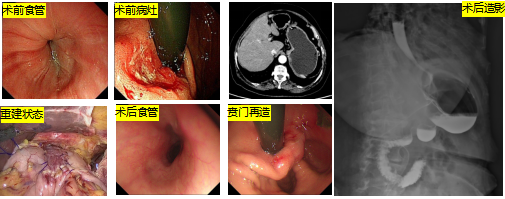
A 74-year-old female patient named Tang was admitted to our hospital with the chief complaint of "upper abdominal distension for 2 weeks." Outpatient gastroscopy at our institution revealed cardia cancer, and pathological examination confirmed moderately differentiated adenocarcinoma. CT imaging showed localized thickening of the gastric wall at the lesser curvature of the cardia and gastric body with abnormal enhancement, along with small lymph nodes in the hepatogastric space. After a series of examinations, the diagnosis of cardia cancer (cT2NxM0) was clearly established, with localized lesions and no evidence of lymph node or distant metastasis. No contraindications for surgery were identified on preoperative assessments, making surgical treatment the preferred option. Considering the patient's advanced age, while ensuring R0 resection of the tumor, we aimed to minimize perioperative complications and optimize postoperative quality of life. After thorough discussions with the family regarding the short- and long-term complications of various surgical options, proximal gastrectomy was ultimately chosen. However, given that current proximal gastrectomy reconstruction methods—including jejunal interposition, double-tract reconstruction, and direct gastroesophageal anastomosis—are all associated with high rates of postoperative complications such as reflux esophagitis, while the Kamikawa anastomosis can reduce reflux esophagitis incidence and lower the risk of anastomotic leakage, its technical complexity and prolonged operative time remain significant challenges. Research has demonstrated that the slit method esophagogastrostomy (HEFT) is relatively simpler to perform, provides excellent anti-reflux effects, and can be completed entirely under laparoscopy. Under the leadership of Director Nie Peng, our hospital's laparoscopic gastric cancer surgery team has been closely following international frontiers in gastric cancer diagnosis and treatment, conducting in-depth studies and discussions, and actively implementing clinical practices. With comprehensive preoperative preparations, we successfully performed laparoscopic proximal gastrectomy with esophagogastric slit-method reconstruction for this patient, achieving favorable surgical outcomes.
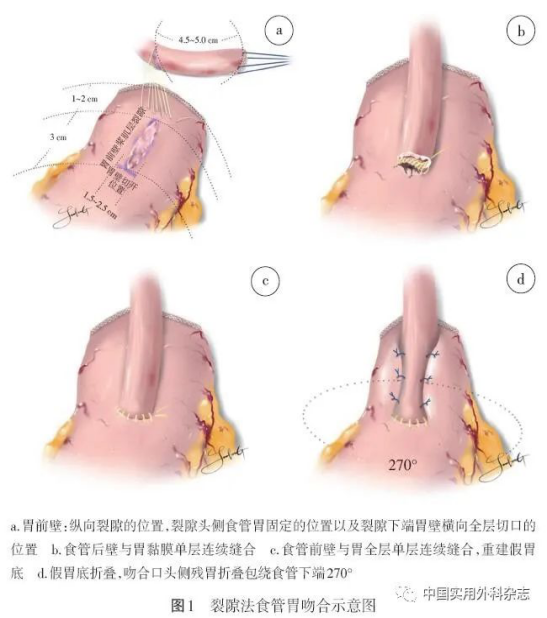
Deputy Director and Chief Physician Nie Peng explained that the slit method esophagogastrostomy (HEFT) was first introduced by Professor Hao Hankun's team at Huashan Hospital in 2021. By employing a technique similar to the Toupet fundoplication to fold the pseudo-fundus, this approach achieves satisfactory anti-reflux effects. The design principle involves creating a single-layer continuous anastomosis between the esophagus and stomach, utilizing the "slit" in the gastric wall to adhere to the posterior wall of the esophagus, thereby forming a valve mechanism. During food intake, the valve expands to increase the anastomotic lumen diameter, while in the non-eating state, the valve retracts and is pushed against the anterior esophageal wall by the pressure from the pseudo-fundus, effectively closing the esophagus. This mechanism not only functions as a valve but also enhances anti-reflux efficacy. Since the slit method does not require gastric muscle flap wrapping around the anastomosis and employs only a single-layer continuous suture for esophagogastric anastomosis, it helps prevent anastomotic stricture. This reconstruction technique represents a promising functional esophagogastric anastomosis method that achieves fundoplication and valve formation through a simple surgical approach. It effectively reduces reflux while simultaneously lowering surgical complexity, making it feasible to perform under total laparoscopy.
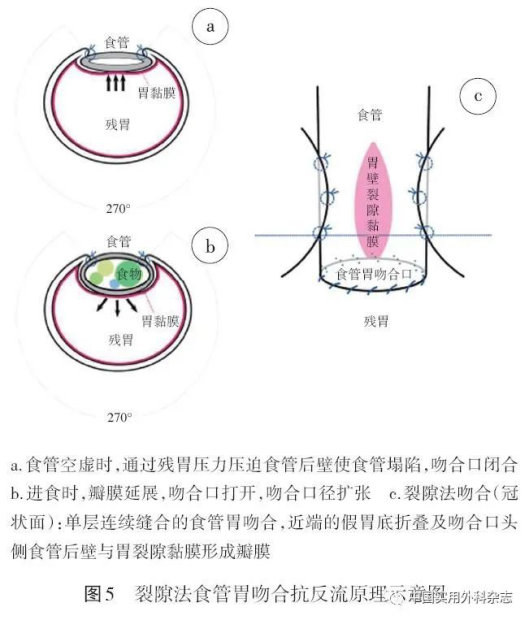
Currently, the HEFT procedure is indicated for patients with upper third gastric body cancers (cT1-3N0M0) and Siewert II/III type adenocarcinoma of the esophagogastric junction (AEG) who are candidates for proximal gastrectomy. Recent studies have demonstrated that this technique offers several advantages, including simplified surgical procedures, reliable safety profile, proven anti-reflux mechanism, and reduced incidence of anastomotic stricture. These benefits are expected to significantly advance the surgical management of upper gastric cancers and esophagogastric junction tumors, ultimately delivering greater clinical benefits to patients.
Department Introduction
The Department of Gastrointestinal Surgery at Wuwei Cancer Hospital in Gansu Province is the third highly specialized department in China's medical field and the only one in Gansu Province dedicated exclusively to the diagnosis and treatment of gastric diseases. It serves as a primary base for clinical practice, research, and teaching in the field of "gastric tumors." The department has a well-established academic team, with 35 beds, including 1 chief physician, 2 associate chief physicians, 3 attending physicians, 3 junior physicians, and 3 master's degree holders. In recent years, the medical staff have continuously enhanced their expertise and improved the diagnostic and treatment techniques for gastric cancer, achieving domestically advanced standards in this field.
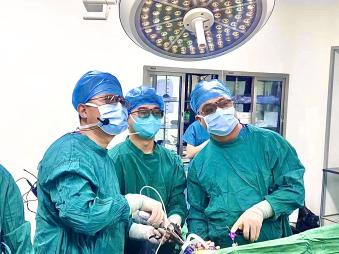
In recent years, under the leadership of Chief Physician Nie Peng, the department has routinely performed a variety of high-standard, high-difficulty comprehensive surgical procedures, including totally laparoscopic radical distal gastrectomy with Roux-en-Y anastomosis/Delta SPLT anastomosis, totally laparoscopic proximal gastrectomy with Side-Overlap anastomosis/double-flap anastomosis (Kamikawa anastomosis)/double-tract anastomosis (DT), totally laparoscopic total gastrectomy with modified Overlap anastomosis/SPLT anastomosis, conversion therapy and neoadjuvant treatment for locally advanced and progressive gastric cancer, and combined laparoscopic-gastroscopic surgery for gastric stromal tumors. Through clinical practice, the department has developed a comprehensive and highly effective gastric cancer treatment protocol that is practical, convenient, efficient, safe, and yields remarkable therapeutic outcomes. To further expand new technologies and services, the department has embraced a pioneering yet cautious, scientific and precise approach to performing totally robotic radical gastrectomy, achieving a success rate of over 99%. Over the past three years, the minimally invasive surgery rate has reached 89.24%, with laparoscopic radical gastrectomy accounting for 86.27% of all gastric cancer surgeries. Robotic surgery metrics have also shown steady growth, with all technical indicators ranking among the top domestically.
As a key focus of the department, the multidisciplinary diagnosis and treatment (MDT) model has fostered a robust academic atmosphere and an orderly clinical environment characterized by "departmental specialization, individual expertise, institutionalized management, and harmonious doctor-patient relationships," thereby significantly improving the comprehensive therapeutic efficacy of gastric cancer through advanced technology and quality care. The department has consistently advanced its clinical, research, and educational development, staying at the forefront of gastric cancer studies by continuously monitoring global research trends and facilitating regular academic exchanges with leading domestic and international gastric surgery centers. Under the leadership of Director Nie Peng, the department has participated in numerous global, national, and multicenter Phase II/III clinical trials, contributing "Wuwei data" to global oncology research. These efforts have not only enhanced treatment outcomes for patients in the region but also reduced their financial burden, improved treatment adherence, and extended survival rates, offering new hope for improved prognosis. To date, the department has joined over 10 clinical trials, screened more than 200 patients, and successfully enrolled over 120 cases. The single-center trial data has ranked among the top nationwide and globally, earning Director Nie Peng repeated invitations to share Wuwei's experience and model at national conferences, where it has received widespread recognition from leading domestic clinical trial centers.
Department staff have undergone advanced training at top-tier gastric cancer centers across China, including Peking University Cancer Hospital, Guangzhou Medical University Cancer Hospital, Fudan University Zhongshan Hospital, Fudan University Huashan Hospital, Xijing Hospital of the Fourth Military Medical University, Tianjin Medical University Cancer Institute and Hospital, Zhejiang Cancer Hospital, Sichuan Cancer Hospital, and Lanzhou General Hospital of Lanzhou Military Command. These learning exchanges have enabled the team to update diagnostic and therapeutic concepts, optimize clinical practices, and ultimately deliver superior medical services to patients in Wuwei and surrounding regions.